
Programowanie
OAuth 2.0 Cookbook. Protect your web applications using Spring Security
Adolfo Eloy Nascimento
OAuth 2.0 is a standard protocol for authorization and focuses on client development simplicity while providing specific authorization flows for web applications, desktop applications, mobile phones, and so on. This book also provides useful recipes for solving real-life problems using Spring Security and creating Android applications.The book starts by presenting you how to interact with some public OAuth 2.0 protected APIs such as Facebook, LinkedIn and Google. You will also be able to implement your own OAuth 2.0 provider with Spring Security OAuth2. Next, the book will cover practical scenarios regarding some important OAuth 2.0 profiles such as Dynamic Client Registration, Token Introspection and how to revoke issued access tokens. You will then be introduced to the usage of JWT, OpenID Connect, and how to safely implement native mobile OAuth 2.0 Clients.By the end of this book, you will be able to ensure that both the server and client are protected against common vulnerabilities.
Christopher Fairbairn, Collin Ruffenach, Johannes Fahrenkrug
Wejdź pewnym krokiem w świat programowania Apple! Jeszcze parę lat temu nie do pomyślenia było, że aplikacje na urządzenia mobilne mogą stanowić tak intratny interes. Jednak urządzenia te podbiły rynek w mgnieniu oka i dziś trudno wyobrazić sobie życie bez nich. Co więcej, dały one jeszcze większe możliwości działania różnym projektantom - praktycznie wszystkie wyposażone są w aparat fotograficzny, odbiornik GPS oraz czujniki położenia. To peryferia, o których programiści tworzący aplikacje na standardowe komputery mogą tylko pomarzyć. Zastanawiasz się, jak wykorzystać ten potencjał? Ta książka dostarczy Ci odpowiedzi. W trakcie lektury nauczysz się tworzyć atrakcyjne aplikacje na platformę iOS. Jest ona wykorzystywana w urządzeniach firmy Apple, których nikomu nie trzeba przedstawiać. Podczas tworzenia aplikacji dla tej platformy będziesz korzystał z języka Objective-C oraz środowiska XCode 4. Zawarta tu wiedza i liczne przykłady krok-po-kroku pozwolą Ci błyskawicznie opanować trudniejsze partie materiału. Książka ta jest idealną pozycją dla wszystkich programistów chcących rozpocząć przygodę z platformą iOS. Sprawdź: jak przygotować środowisko pracy XCode jaka jest składnia języka Objective-C jak uruchomić swoją pierwszą aplikację Twój przewodnik do pierwszej aplikacji na system iOS! Christopher Fairbairn, Johannes Fahrenkrug i Collin Ruffenach są profesjonalnymi twórcami oprogramowania działającego na platformach mobilnych. Każdy z nich ma więcej niż dziesięcioletnie doświadczenie w używaniu różnych systemów, takich jak iOS, Palm, Windows Mobile i Java.
Objective-C. Vademecum profesjonalisty. Wydanie III
Stephen G. Kochan
Praktyczny podręcznik tworzenia aplikacji na systemy iOS i Mac OS X! Techniki definiowania klas i sposoby wysyłania komunikatów do obiektów Praca z typami danych, pętlami, klasami i obiektami Korzystanie z bibliotek Foundation oraz Cocoa i Cocoa Touch Tak jak iPhone, iPad czy iPod Touch błyskawicznie stały się obiektem pożądania milionów ludzi na całym świecie, tak samo szybko rynek upomniał się o specjalistów od tworzenia aplikacji na te innowacyjne urządzenia. Mimo że od 2007 roku, gdy Apple opublikowało zaktualizowaną wersję języka Objective-C, oznaczoną jako 2.0, minęło już trochę czasu, programistów znających ten język wciąż jest niewielu, a zapotrzebowanie na programy dla systemów iOS i Mac OS X stale rośnie. Warto zatem opanować ten potężny język, zarazem prosty i oferujący ogromne perspektywy zawodowe. Zwłaszcza że można go wykorzystać także na wielu innych platformach z kompilatorem gcc, a więc między innymi w systemach Unix, Linux i Windows. Oto książka stworzona z myślą o programistach stawiających pierwsze kroki w języku Objective-C. Do wykorzystania zawartej tu wiedzy nie jest potrzebna znajomość języka C ani żadnego innego obiektowego języka programowania. Podstawą do nauki są dziesiątki ciekawych przykładów i ćwiczeń, ilustrujących użycie poszczególnych cech i ułatwiających zrozumienie poznawanych zagadnień. Książkę podzielono na trzy części. Pierwsza zawiera podstawowe wiadomości na temat języka Objective-C 2.0, a w drugiej znajdziesz opis klas dostępnych w bibliotece Foundation. Część trzecia poświęcona została niezwykle ważnym bibliotekom Cocoa i Cocoa Touch. Na końcu książki zamieszczono kurs pisania programów dla systemu iOS przy użyciu Software Development Kit iOS oraz biblioteki UIKit. Poznaj Objective-C i czerp z tego korzyści! Proces tworzenia pierwszego programu w języku Objective-C Klasy, obiekty i metody, czyli podstawy programowania obiektowego Typy danych i wyrażenia oraz sposoby ich używania w programach Rodzaje pętli, których można używać w programach: for, while i do Szczegółowy opis technik pracy z klasami i obiektami Wprowadzenie do pojęcia dziedziczenia Polimorfizm oraz typowanie i wiązanie dynamiczne Techniki inicjacji obiektów, bloki, protokoły, kategorie, preprocesor oraz niektóre elementy języka C Obiekty liczbowe i łańcuchowe, kolekcje, systemy plików Techniki zarządzania pamięcią oraz proces kopiowania i archiwizowania obiektów Wprowadzenie do Cocoa i Cocoa Touch Pisanie programów dla systemu iOS i wprowadzenie do SDK iOS oraz biblioteki UIKit Zacznij pisać własne, funkcjonalne programy na iPhone’a, iPada oraz iPoda Touch! Stephen G. Kochan jest autorem lub współautorem kilku uznanych książek na temat języka C, między innymi Programming in C, Programming in ANSI C i Topics in C Programming, a także kilku publikacji dotyczących Uniksa, np. Exploring the Unix System i Unix Shell Programming. Pisze programy dla komputerów Macintosh od samego początku ich istnienia, a więc od roku 1984, kiedy pojawił się pierwszy Mac. Napisał książkę Programming C for the Mac wydaną w serii Apple Press Library, a także książkę Beginning AppleScript.
Stoyan STEFANOV
JavaScript is the behavior, the third pillar in today's paradigm that looks at web pages as something that consists of clearly distinguishable parts: content (HTML), presentation (CSS) and behavior (JavaScript). Using JavaScript, you can create not only web pages but also desktop widgets, browser and application extensions, and other pieces of software. It's a pretty good deal: you learn one language and then code all kinds of different applications. While there's one chapter specifically dedicated to the web browser environment including DOM, Events and AJAX tutorials, the rest is applicable to the other environmentsMany web developers have tried coding or adopting some bits of JavaScript, but it is time to man up and learn the language properly because it is the language of the browser and is, virtually, everywhere. This book starts from zero, not assuming any prior JavaScript programming knowledge and takes you through all the in-depth and exciting futures hidden behind the facade. Once listed in the nice to have sections of job postings, these days the knowledge of JavaScript is a deciding factor when it comes to hiring web developers. After reading this book you'll be prepared to ace your JavaScript job interview and even impress with some bits that the interviewer maybe didn't know. You should read this book if you want to be able to take your JavaScript skills to a new level of sophistication.
Stoyan STEFANOV, Ved Antani
JavaScript is an object-oriented programming language that is used for website development. Web pages developed today currently follow a paradigm that has three clearly distinguishable parts: content (HTML), presentation (CSS), and behavior (JavaScript). JavaScript is one important pillar in this paradigm, and is responsible for the running of the web pages.This book will take your JavaScript skills to a new level of sophistication and get you prepared for your journey through professional web development. Updated for ES6, this book covers everything you will need to unleash the power of object-oriented programming in JavaScript while building professional web applications. The book begins with the basics of object-oriented programming in JavaScript and then gradually progresses to cover functions, objects, and prototypes, and how these concepts can be used to make your programs cleaner, more maintainable, faster, and compatible with other programs/libraries. By the end of the book, you will have learned how to incorporate object-oriented programming in your web development workflow to build professional JavaScript applications.
Aleksander Bies
Object-Oriented Programming is a textbook that will enable any reader, regardless of their level, to understand the basic principles of structured and object-oriented programming. A beginner will have the opportunity to learn almost from scratch, and an advanced programmer will be able to consolidate, practice, and significantly expand his or her knowledge. In the book, the author has gathered a large amount of basic programming concepts, explaining the concept of data, its types and more complex structures, i.e. collections, along with the ways of referring to them through names and pointers. He discussed conditional statements, iteration, functions, objects and classes, as well as inheritance, polymorphism and access rules. An additional advantage of the content discussed is the questions and exercises with answers and the source codes of all programs with the possibility of downloading them directly to the computer. The author of the book is Aleksander Bies, a teacher of programming, a graduate of Computer Science and Applied Computer Science at the Faculty of Science and Technology of the University of Silesia, a doctoral candidate in the field of artificial intelligence methods in complex systems. He is the co-author of a machine learning model that won 2nd place in the international Orange Datahack with Energy competition. Translations: Joanna Margowniczny an English teacher at Primary School No. 13 in Jaworzno and ZDZ in Sosnowiec, International IT ESSENTIALS instructor, OKE examiner.
Gastón C. Hillar
Object-Oriented Programming (OOP) is a programming paradigm based on the concept of objects; these are data structures that contain data in the form of fields, often known as attributes and code. Objects are everywhere, and so it is very important to recognize elements, known as objects, from real-world situations and know how they can easily be translated into object-oriented code.Object-Oriented Programming with Swift is an easy-to-follow guide packed full of hands-on examples of solutions to common problems encountered with object-oriented code in Swift. It starts by helping you to recognize objects using real-life scenarios and demonstrates how working with them makes it simpler to write code that is easy to understand and reuse. You will learn to protect and hide data with the data encapsulation features of Swift. Then, you will explore how to maximize code reuse by writing code capable of working with objects of different types. After that, you'll discover the power of parametric polymorphism and will combine generic code with inheritance and multiple inheritance. Later, you move on to refactoring your existing code and organizing your source for easy maintenance and extensions.By the end of the book, you will be able to create better, stronger, and more reusable code, which will help you build better applications.
Rob Chapman, Peter Holmes
To overcome application monitoring and observability challenges, Grafana Labs offers a modern, highly scalable, cost-effective Loki, Grafana, Tempo, and Mimir (LGTM) stack along with Prometheus for the collection, visualization, and storage of telemetry data.Beginning with an overview of observability concepts, this book teaches you how to instrument code and monitor systems in practice using standard protocols and Grafana libraries. As you progress, you’ll create a free Grafana cloud instance and deploy a demo application to a Kubernetes cluster to delve into the implementation of the LGTM stack. You’ll learn how to connect Grafana Cloud to AWS, GCP, and Azure to collect infrastructure data, build interactive dashboards, make use of service level indicators and objectives to produce great alerts, and leverage the AI & ML capabilities to keep your systems healthy. You’ll also explore real user monitoring with Faro and performance monitoring with Pyroscope and k6. Advanced concepts like architecting a Grafana installation, using automation and infrastructure as code tools for DevOps processes, troubleshooting strategies, and best practices to avoid common pitfalls will also be covered.After reading this book, you’ll be able to use the Grafana stack to deliver amazing operational results for the systems your organization uses.
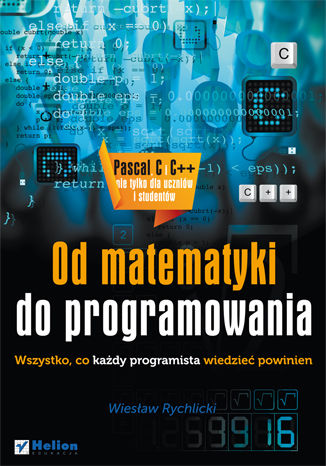
Od matematyki do programowania. Wszystko, co każdy programista wiedzieć powinien
Wiesław Rychlicki
"Wędrówka do źródła kodu" Popularna definicja programowania określa je jako "proces projektowania, tworzenia, testowania i utrzymywania kodu źródłowego programów komputerowych lub urządzeń mikroprocesorowych". Wspomniany kod źródłowy może być napisany w różnych językach programowania, z użyciem określonych reguł. Każdy z języków pozwala na wykorzystanie odpowiednich stylów programowania, a wybór konkretnego języka może zależeć od indywidualnych upodobań, polityki firmy lub funkcji, jakie końcowa aplikacja ma realizować. W zasadzie nie istnieje odpowiedź na pytanie, który z języków jest najlepszy. Dlatego w tej książce nie znajdziesz typowego abecadła. Zapoznasz się za to z danym problemem, a następnie programem komputerowym służącym do jego rozwiązania. Jeśli chcesz wreszcie rozpocząć przygodę z programowaniem i nawiązać dialog ze swoim komputerem, ta publikacja jest właśnie dla Ciebie! Różnorodne obliczenia, mniej lub bardziej skomplikowane, znane Ci z lekcji matematyki lub nieznacznie wykraczające poza program nauczania, stanowią tutaj podstawę do zdobywania informacji na temat programowania w wybranych językach. Wybrane zadania zaprezentowane są w popularnych językach programowania: Pascal, C i C++. Stosowane algorytmy wymagają także sięgnięcia po różne funkcje matematyczne, dostępne standardowo w bibliotekach języków programowania oraz konstruowane na podstawie wzorów. Zostań informatycznym poliglotą. Programuj każdego dnia!
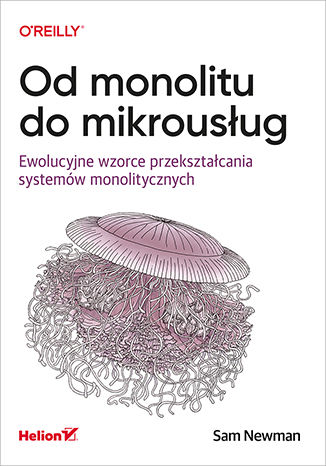
Od monolitu do mikrousług. Ewolucyjne wzorce przekształcania systemów monolitycznych
Sam Newman
Mikrousługi są relatywnie świeżą koncepcją w świecie systemów IT, mimo to coraz więcej organizacji decyduje się na wdrażanie opartej na nich architektury. Uznaje się, że zapewnia ona wówczas lepszą skalowalność, łatwość łączenia poszczególnych niezależnych elementów, a przede wszystkim możliwość szybszej reakcji na zmiany i skuteczniejsze wdrażanie nowych funkcjonalności. Zanim jednak organizacja da się skusić tymi obietnicami, powinna gruntownie przeanalizować swoją sytuację i decyzję o ewentualnej migracji systemu oprzeć na racjonalnych przesłankach. Konieczne jest również opracowanie planu takiego przejścia, zwłaszcza jeśli nie można sobie pozwolić na dłuższe przestoje w działalności. To wyczerpujący poradnik dla inżynierów, którzy stoją przed wyzwaniem przekształcenia monolitycznego systemu w architekturę opartą na mikrousługach bez przerywania funkcjonowania firmy. Książka jest przeznaczona dla organizacji, które muszą płynnie zmienić istniejący system, a nie zbudować go od nowa. Zawiera wiele cennych wskazówek odnoszących się do celowości samej migracji oraz przedstawia liczne scenariusze i strategie przekształcania: od etapu planowania aż po dekompozycję aplikacji i baz danych. Znalazł się tu zestaw sprawdzonych wzorców i technik wraz z omówieniem sytuacji, w jakich można je bezpiecznie zastosować. Nie zabrakło ważnych szczegółów związanych z wzorcami refaktoryzacji architektury czy problematyki naruszeń integralności w wyniku podziału baz danych. W tej książce między innymi: podstawowe koncepcje związane z mikrousługami ocena przydatności mikrousług w konkretnych sytuacjach planowanie wdrażania architektury opartej na mikrousługach wzorce migracji, dekompozycja aplikacji i inne zagadnienia techniczne wykrywanie i rozwiązywanie problemów związanych z mikrousługami Dążysz do sukcesu? Obierz kurs na mikrousługi!
Steven Cheng
Odata (Open Data Protocol) is a Web protocol for querying and updating data that provides a way to unlock your data and free it from silos that exist in applications today. OData enables data access among a variety of applications, services, and stores by adopting existing Web technologies such as HTTP, XML, and JSON. This book deals with common OData programming cases over the Microsoft .NET Framework platform and eases the learning curve for a .NET developer to start incorporating OData in data service development.This book provides a collection of recipes that help .NET developers to get familiar with OData programming in a quick and efficient manner. The recipes cover most OData features from the former ADO.NET Data Service to the current WCF Data Service platform. In addition, all the sample cases here are based on real-world scenarios and issues that .NET developers might come across when programming with OData in application development.This book will be your handy guide with basic to advanced walkthroughs of common OData programming cases for the Microsoft .NET Framework platform. You will learn quick solutions to necessary tasks to integrate the power of OData at both server-side and client-side.This book will help you master the use of OData with .NET Framework by taking you through hands-on and practical recipes. It starts by talking about the common means for building OData services and consuming OData services in client applications. Then, some more specific topics like hosting, configuration and security are discussed. The book also covers many popular and interesting topics such as integrating OData in web applications, and developing data-driven mobile applications with OData. Moreover, you can also find quite a few recipes discussing real-world OData producers and new features in latest and future versions.Within OData Programming Cookbook for .NET Developers, all the recipes are selected based on real-world scenarios that you will commonly come across. Each recipe covers a specific topic, going from the description of the problem, through a conceptual solution, to a solution containing sample code. By following these recipes, you can acquire how to program with OData in a simple, effective, and easy manner.
Mantavya Gajjar
Odoo is a Python-based ERP system and is completely open source. Odoo is a comprehensive suite of business applications offering a wealth of functionalities that can be deployed to meet your business needs.This book will help you manage the different functionalities of your business and optimize it. You will learn in detail about the various facets of the business process such as sales, accounting, purchases, manufacturing, and inventory. We will cover each of these topics in detail and learn how Odoo handles all these tasks with much ease. With its modular approach, you will be able to build customized solutions, take advantage of the Odoo 10 system in your organization, and master basic administration. We will cover modules and applications in Odoo that will help optimize quality checks. You will also be able to customize major reporting functions for your teams and set up forms and documents for sales, purchase, inventory, and so on. By the end of the book, you will be able to use the major functionalities of Odoo 10 and fully implement them into your business.
Alexandre Fayolle, Holger Brunn
Odoo is a full-featured open source ERP with a focus on extensibility. The flexibility and sustainability of open source are also a key selling point of Odoo. It is built on a powerful framework for rapid application development, both for back-end applications and front-end websites. Version 11 offers better usability and speed: a new design (as compared to the current Odoo Enterprise version) and a mobile interface.The book starts by covering Odoo installation and administration and Odoo Server deployment. It then delves into the implementation of Odoo modules, the different inheritance models available in Odoo. You will then learn how to define access rules for your data; how to make your application available in different languages; how to expose your data models to end users on the back end and on the front end; and how to create beautiful PDF versions of your data. By the end of the book, you will have a thorough knowledge of Odoo and will be able to build effective applications by applying Odoo development best practices
Parth Gajjar, Alexandre Fayolle, Holger Brunn, Daniel...
Odoo is a powerful framework known for rapid application development. Its latest release, Odoo 12, introduces tons of new features. With this book, you’ll learn how to develop powerful Odoo applications from scratch, using all the latest features.This Odoo cookbook starts by covering Odoo installation and deployment on the server. Next, you’ll explore the Odoo framework with real-world examples. You’ll create a new Odoo module from the ground up and progress to advanced framework concepts. You’ll also learn how to modify existing applications, including Point of Sale (POS). This book is not just limited to backend development; the advanced JavaScript recipes for creating new views and widgets will help you build beautiful UI elements. As you move forward, you’ll gain insights into website development and become a quality Odoo developer by studying performance optimization, debugging, and automated tests. Finally, you’ll learn the latest concepts like multi-website, In-App Purchasing (IAP), Odoo.sh, and IoT Box.By the end of the book, you’ll have all the knowledge you need to build powerful Odoo applications. The development best practices used in this book will undoubtedly come handy when you are working with the Odoo framework.
Parth Gajjar, Alexandre Fayolle, Holger Brunn, Daniel...
With its latest iteration, the powerful Odoo framework released a wide variety of features for rapid application development. This updated Odoo development cookbook will help you explore the new features in Odoo 14 and learn how to use them to develop Odoo applications from scratch. You'll learn about the new website concepts in Odoo 14 and get a glimpse of Odoo's new web-client framework, the Odoo Web Library (OWL).Once you've completed the installation, you'll begin to explore the Odoo framework with real-world examples. You'll then create a new Odoo module from the ground up and progress to advanced framework concepts. You'll also learn how to modify existing applications, including Point of Sale (POS) applications. This book isn't just limited to backend development; you'll discover advanced JavaScript recipes for creating new views and widgets. As you progress, you'll learn about website development and become a quality Odoo developer by studying performance optimization, debugging, and automated testing. Finally, you'll delve into advanced concepts such as multi-website, In-App Purchasing (IAP), Odoo.sh, the IoT Box, and security.By the end of the book, you'll have all the knowledge you need to build impressive Odoo applications and you'll be well versed in development best practices that will come in handy when working with the Odoo framework.
Husen Daudi, Jay Vora, Parth Gajjar, Alexandre...
The latest version of the powerful Odoo framework uncovers a wide variety of features for rapid application development. Written by seasoned Odoo experts, this updated Odoo Development Cookbook will help you explore Odoo 17’s new features and use them to develop applications from scratch.You'll learn about website development concepts and get to grips with the Odoo Web Library (OWL), as well as create a new Odoo module from the ground up before progressing to advanced framework concepts. The book also shows you how to modify existing applications, including Point of Sale (POS) applications. Going beyond backend development, you'll discover advanced JavaScript recipes for creating new views and widgets. You'll get a clear understanding of website development and be on your way to becoming a proficient Odoo developer by studying performance optimization, debugging, and automated testing.By the end of this book, you'll have the knowledge you need to build impressive applications and be well-versed in Odoo development best practices.