
Programowanie
Niezależnie czy dopiero rozpoczynacie swoją przygodę z programowaniem, czy jesteście już uznanymi na rynku profesjonalistami, to w kategorii Programowanie na pewno znajdziecie podręczniki, które pomogą Wam w przebiegu pracy, czy też w nauce podstaw programowania.
W książkach z tego działu zawarta jest wiedza zarówno związana z czysto technicznymi sprawami typu składnia języków, ale także z umiejętnościami bardziej "miękkimi" jak obsługa i wykorzystanie pełnych możliwości środowisk programistycznych, czy też projektowanie oprogramowania lub metody numeryczne czy oraz struktury danych.
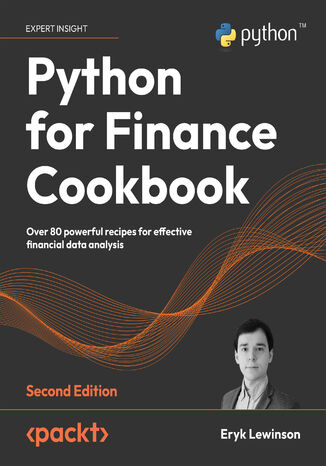
Eryk Lewinson
Python is one of the most popular programming languages in the financial industry, with a huge collection of accompanying libraries. In this new edition of the Python for Finance Cookbook, you will explore classical quantitative finance approaches to data modeling, such as GARCH, CAPM, factor models, as well as modern machine learning and deep learning solutions.You will use popular Python libraries that, in a few lines of code, provide the means to quickly process, analyze, and draw conclusions from financial data. In this new edition, more emphasis was put on exploratory data analysis to help you visualize and better understand financial data. While doing so, you will also learn how to use Streamlit to create elegant, interactive web applications to present the results of technical analyses.Using the recipes in this book, you will become proficient in financial data analysis, be it for personal or professional projects. You will also understand which potential issues to expect with such analyses and, more importantly, how to overcome them.
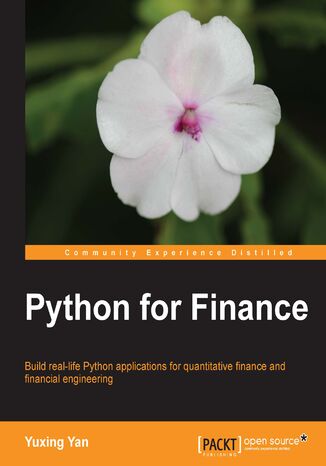
Yuxing Yan
A hands-on guide with easy-to-follow examples to help you learn about option theory, quantitative finance, financial modeling, and time series using Python. Python for Finance is perfect for graduate students, practitioners, and application developers who wish to learn how to utilize Python to handle their financial needs. Basic knowledge of Python will be helpful but knowledge of programming is necessary.
Muhammad Asif
Python is a multipurpose language that can be used for multiple use cases. Python for Geeks will teach you how to advance in your career with the help of expert tips and tricks.You'll start by exploring the different ways of using Python optimally, both from the design and implementation point of view. Next, you'll understand the life cycle of a large-scale Python project. As you advance, you'll focus on different ways of creating an elegant design by modularizing a Python project and learn best practices and design patterns for using Python. You'll also discover how to scale out Python beyond a single thread and how to implement multiprocessing and multithreading in Python. In addition to this, you'll understand how you can not only use Python to deploy on a single machine but also use clusters in private as well as in public cloud computing environments. You'll then explore data processing techniques, focus on reusable, scalable data pipelines, and learn how to use these advanced techniques for network automation, serverless functions, and machine learning. Finally, you'll focus on strategizing web development design using the techniques and best practices covered in the book.By the end of this Python book, you'll be able to do some serious Python programming for large-scale complex projects.
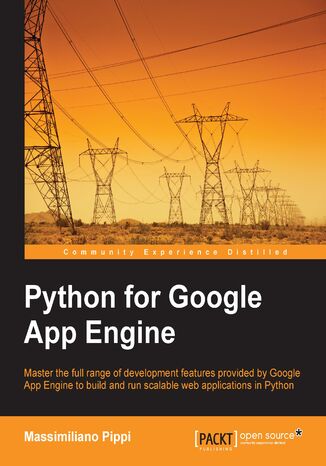
Massimiliano Pippi
If you are a Python developer, whether you have experience in web applications development or not, and want to rapidly deploy a scalable backend service or a modern web application on Google App Engine, then this book is for you.
Hussam Khrais
Python is an easy-to-learn and cross-platform programming language that has unlimited third-party libraries. Plenty of open source hacking tools are written in Python, which can be easily integrated within your script.This book is packed with step-by-step instructions and working examples to make you a skilled penetration tester. It is divided into clear bite-sized chunks, so you can learn at your own pace and focus on the areas of most interest to you. This book will teach you how to code a reverse shell and build an anonymous shell. You will also learn how to hack passwords and perform a privilege escalation on Windows with practical examples. You will set up your own virtual hacking environment in VirtualBox, which will help you run multiple operating systems for your testing environment.By the end of this book, you will have learned how to code your own scripts and mastered ethical hacking from scratch.
Steven F. Lott
Python is easy to learn and extensible programming language that allows any manner of secret agent to work with a variety of data. Agents from beginners to seasoned veterans will benefit from Python's simplicity and sophistication. The standard library provides numerous packages that move beyond simple beginner missions. The Python ecosystem of related packages and libraries supports deep information processing.This book will guide you through the process of upgrading your Python-based toolset for intelligence gathering, analysis, and communication. You'll explore the ways Python is used to analyze web logs to discover the trails of activities that can be found in web and database servers. We'll also look at how we can use Python to discover details of the social network by looking at the data available from social networking websites.Finally, you'll see how to extract history from PDF files, which opens up new sources of data, and you’ll learn about the ways you can gather data using an Arduino-based sensor device.
Steven F. Lott
If you are a Python beginner who is looking to learn the language through interesting projects, this book is for you. A basic knowledge of programming and statistics is beneficial to get the most out of the book.
Michael Diener
Geospatial development links your data to places on the Earth’s surface. Its analysis is used in almost every industry to answer location type questions. Combined with the power of the Python programming language, which is becoming the de facto spatial scripting choice for developers and analysts worldwide, this technology will help you to solve real-world spatial problems.This book begins by tackling the installation of the necessary software dependencies and libraries needed to perform spatial analysis with Python. From there, the next logical step is to prepare our data for analysis; we will do this by building up our tool box to deal with data preparation, transformations, and projections. Now that our data is ready for analysis, we will tackle the most common analysis methods for vector and raster data. To check or validate our results, we will explore how to use topology checks to ensure top-quality results. This is followed with network routing analysis focused on constructing indoor routes within buildings, over different levels.Finally, we put several recipes together in a GeoDjango web application that demonstrates a working indoor routing spatial analysis application. The round trip will provide you all the pieces you need to accomplish your own spatial analysis application to suit your requirements.
Erik Westra
If you are an experienced Python developer and wish to get up-to-speed with geospatial programming, then this book is for you. While familiarity with installing third-party Python libraries would be an advantage, no prior knowledge of geospatial programming is required.
Erik Westra
Geospatial development links your data to places on the Earth's surface. Writing geospatial programs involves tasks such as grouping data by location, storing and analyzing large amounts of spatial information, performing complex geospatial calculations, and drawing colorful interactive maps. In order to do this well, you'll need appropriate tools and techniques, as well as a thorough understanding of geospatial concepts such as map projections, datums and coordinate systems.Python Geospatial Development - Second Edition teaches you everything you need to know about writing geospatial applications using Python. No prior knowledge of geospatial concepts, tools or techniques is required. The book guides you through the process of installing and using various toolkits, obtaining geospatial data for use in your programs, and building complete and sophisticated geospatial applications in Python.Python Geospatial Development teaches you everything you need to know about writing geospatial applications using Python. No prior knowledge of geospatial concepts, tools or techniques is required. The book guides you through the process of installing and using various toolkits, obtaining geospatial data for use in your programs, and building complete and sophisticated geospatial applications in Python.This book provides an overview of the major geospatial concepts, data sources and toolkits. It teaches you how to store and access spatial data using Python, how to perform a range of spatial calculations, and how to store spatial data in a database. Because maps are such an important aspect of geospatial programming, the book teaches you how to build your own “slippy map” interface within a web application, and finishes with the detailed construction of a geospatial data editor using Geodjango.Whether you want to write quick utilities to solve spatial problems, or develop sophisticated web applications based around maps and geospatial data, this book includes everything you need to know.
Karim Bahgat
This book is ideal for Python programmers who are tasked with or wish to make a special-purpose GIS application. Analysts, political scientists, geographers, and GIS specialists seeking a creative platform to experiment with cutting-edge spatial analysis, but who are still only beginners in Python, will also find this book beneficial. Familiarity with Tkinter application development in Python is preferable but not mandatory.
Alan D. Moore, B. M. Harwani
A responsive graphical user interface (GUI) helps you interact with your application, improves user experience, and enhances the efficiency of your applications. With Python, you’ll have access to elaborate GUI frameworks that you can use to build interactive GUIs that stand apart from the rest.This Learning Path begins by introducing you to Tkinter and PyQt, before guiding you through the application development process. As you expand your GUI by adding more widgets, you'll work with networks, databases, and graphical libraries that enhance its functionality. You'll also learn how to connect to external databases and network resources, test your code, and maximize performance using asynchronous programming. In later chapters, you'll understand how to use the cross-platform features of Tkinter and Qt5 to maintain compatibility across platforms. You’ll be able to mimic the platform-native look and feel, and build executables for deployment across popular computing platforms.By the end of this Learning Path, you'll have the skills and confidence to design and build high-end GUI applications that can solve real-world problems.This Learning Path includes content from the following Packt products:Python GUI Programming with Tkinter by Alan D. MooreQt5 Python GUI Programming Cookbook by B. M. Harwani
Burkhard Meier
Python is a multi-domain, interpreted programming language that is easy to learn and implement. With its wide support for frameworks to develop GUIs, you can build interactive and beautiful GUI-based applications easily using Python. This third edition of Python GUI Programming Cookbook follows a task-based approach to help you create effective GUIs with the smallest amount of code. Every recipe in this book builds upon the last to create an entire, real-life GUI application. These recipes also help you solve problems that you might encounter while developing GUIs. This book mainly focuses on using Python’s built-in tkinter GUI framework. You'll learn how to create GUIs in Python using simple programming styles and object-oriented programming (OOP). As you add more widgets and expand your GUI, you will learn how to connect to networks, databases, and graphical libraries that greatly enhance the functionality of your GUI. You’ll also learn how to use threading to ensure that your GUI doesn't become unresponsive. Toward the end, you’ll learn about the versatile PyQt GUI framework, which comes along with its own visual editor that allows you to design GUIs using drag and drop features. By the end of the book, you’ll be an expert in designing Python GUIs and be able to develop a variety of GUI applications with ease.
Burkhard Meier
Python is a multi-domain, interpreted programming language. It is a widely used general-purpose, high-level programming language. It is often used as a scripting language because of its forgiving syntax and compatibility with a wide variety of different eco-systems. Its flexible syntax enables developers to write short scripts while at the same time, they can use object-oriented concepts to develop very large projects.Python GUI Programming Cookbook follows a task-based approach to help you create beautiful and very effective GUIs with the least amount of code necessary. This book uses the simplest programming style, using the fewest lines of code to create a GUI in Python, and then advances to using object-oriented programming in later chapters. If you are new to object-oriented programming (OOP), this book will teach you how to take advantage of the OOP coding style in the context of creating GUIs written in Python.Throughout the book, you will develop an entire GUI application, building recipe upon recipe, connecting the GUI to a database. In the later chapters, you will explore additional Python GUI frameworks, using best practices. You will also learn how to use threading to ensure your GUI doesn’t go unresponsive.By the end of the book, you will be an expert in Python GUI programming to develop a common set of GUI applications.
Burkhard Meier
Python is a multi-domain, interpreted programming language. It is a widely used general-purpose, high-level programming language. It is often used as a scripting language because of its forgiving syntax and compatibility with a wide variety of different eco-systems. Python GUI Programming Cookbook follows a task-based approach to help you create beautiful and very effective GUIs with the least amount of code necessary.This book will guide you through the very basics of creating a fully functional GUI in Python with only a few lines of code. Each and every recipe adds more widgets to the GUIs we are creating. While the cookbook recipes all stand on their own, there is a common theme running through all of them. As our GUIs keep expanding, using more and more widgets, we start to talk to networks, databases, and graphical libraries that greatly enhance our GUI’s functionality. This book is what you need to expand your knowledge on the subject of GUIs, and make sure you’re not missing out in the long run.
Alan D. Moore
Tkinter is widely used to build GUIs in Python due to its simplicity. In this book, you’ll discover Tkinter’s strengths and overcome its challenges as you learn to develop fully featured GUI applications.Python GUI Programming with Tkinter, Second Edition, will not only provide you with a working knowledge of the Tkinter GUI library, but also a valuable set of skills that will enable you to plan, implement, and maintain larger applications. You’ll build a full-blown data entry application from scratch, learning how to grow and improve your code in response to continually changing user and business needs. You’ll develop a practical understanding of tools and techniques used to manage this evolving codebase and go beyond the default Tkinter widget capabilities. You’ll implement version control and unit testing, separation of concerns through the MVC design pattern, and object-oriented programming to organize your code more cleanly.You’ll also gain experience with technologies often used in workplace applications, such as SQL databases, network services, and data visualization libraries. Finally, you’ll package your application for wider distribution and tackle the challenge of maintaining cross-platform compatibility.