
Programowanie
Mark J. Price
Using .NET for web development is a powerful way to build professional-grade websites and services. But moving from a basic project to a full-scale, production-ready system takes more than just business logic and views—it requires a deep understanding of architecture, maintainability, and scalability. Real-World Web Development with .NET 10 bridges that gap, guiding developers who want to build robust, secure, and maintainable web solutions using battle-tested .NET technologies.You’ll start by designing structured websites using ASP.NET Core MVC, separating concerns, managing dependencies, and writing clean, testable code. From there, you’ll build RESTful services with Web API and use OData for rich, queryable endpoints. The book walks you through testing strategies and containerizing your applications. The final section introduces Umbraco CMS, showing you how to integrate content management into your site so end users can manage content independently.By the end of the book, you'll be ready to build controller-based websites and services that are scalable, secure, and ready for real-world use while mastering Umbraco’s flexible, content-driven solutions—skills that are increasingly in demand across organizations and industries.*Email sign-up and proof of purchase required
Mark J. Price
Real-World Web Development with .NET 9 equips you to build professional websites and services using proven technologies like ASP.NET Core MVC, Web API, and OData—trusted by organizations for delivering robust web applications.You’ll learn to design and build efficient web applications with ASP.NET Core MVC, creating well-structured, maintainable code that follows industry best practices. From there, you’ll focus on Web API, building RESTful services that are both secure and scalable. Along the way, you’ll also explore testing, authentication, and containerization for deployment, ensuring that your solutions are fully production ready.In the final part of the book, you will be introduced to Umbraco CMS, a popular content management system for .NET. By mastering this tool, you’ll learn how to empower users to manage website content independently.By the end of this book, you'll not only have a solid grasp of controller-based development but also the practical know-how to build dynamic, content-driven websites using a popular .NET CMS.
Aleksandar Pavic
In a variety of online project management tools, Redmine markets itself as offering flexibility. Choosing the right management tool can mean the difference between the success and failure of a project. Flexible project management tools bend themselves to fit your needs, whether that’s communication regarding a simple project, or collaboration, or more complex project methodology such as SCRUM, or an issue-code relationship, or the need of different methodology for your project. Whether you are project manager or system administrator, this book provides valuable recipes to get the best possible performance out of your team, organization, infrastructure, and Redmine itself. Through a series of carefully crafted recipes covering the nitty-gritty of Redmine, you’ll be guided through the installation of Redmine, as well as how to fine-tune and customize your Redmine installation. Finally, we walk you through integrating Redmine with other softwares and databases like Tortoise SVN and Visual Studio and troubleshooting Redmine.
Redux Quick Start Guide. A beginner's guide to managing app state with Redux
James Lee, Tao Wei, Suresh Kumar Mukhiya
Starting with a detailed overview of Redux, we will follow the test-driven development (TDD) approach to develop single-page applications. We will set up JEST for testing and use JEST to test React, Redux, Redux-Sage, Reducers, and other components. We will then add important middleware and set up immutableJS in our application. We will use common data structures such as Map, List, Set, and OrderedList from the immutableJS framework. We will then add user interfaces using ReactJS, Redux-Form, and Ant Design.We will explore the use of react-router-dom and its functions. We will create a list of routes that we will need in order to create our application, and explore routing on the server site and create the required routes for our application. We will then debug our application and integrate Redux Dev tools.We will then set up our API server and create the API required for our application. We will dive into a modern approach to structuring our server site components in terms of Model, Controller, Helper functions, and utilities functions. We will explore the use of NodeJS with Express to build the REST API components. Finally, we will venture into the possibilities of extending the application for further research, including deployment and optimization.
Matt Eland, Steve Smith
Software projects start as brand-new greenfield projects, but invariably become muddied in technical debt far sooner than you’d expect. In Refactoring with C#, you'll explore what technical debt is and how it arises before walking through the process of safely refactoring C# code using modern tooling in Visual Studio and more recent C# language features using C# 12 and .NET 8. This book, written by a Microsoft MVP, will guide you through the process of refactoring safely through advanced unit testing with XUnit and libraries like Moq, Snapper, and Scientist .NET. You'll explore maintainable code through SOLID principles and defensive coding techniques made possible in newer versions of C#. You'll also find out how to run code analysis and write custom Roslyn analyzers to detect and resolve issues unique to your code.The nature of coding is changing, and you'll explore how to use AI with the GitHub Copilot Chat to refactor, test, document, and generate code before ending with a discussion about communicating technical debt to leadership and getting organizational buy-in to refactor your code in enterprise organizations and in agile teams.By the end of this book, you'll understand the nature of refactoring and see how you can safely, effectively, and repeatably pay down the technical debt in your application while adding value to your business.

Refaktoryzacja. Ulepszanie struktury istniejącego kodu. Wydanie II
Martin Fowler
Refaktoryzacja ma na celu ulepszanie istniejącego kodu. Poprawia jego strukturę, czytelność i wydajność. Prowadzona poprawnie, cechuje się zdyscyplinowaniem metody, systematycznością i konsekwencją w działaniu, a także ciągłym minimalizowaniem ryzyka wprowadzenia błędów. Niemniej refaktoryzacja jest ryzykowna. Polega na wprowadzaniu zmian do działającego kodu, co może doprowadzić do powstania trudno wykrywalnych błędów. Ryzyko wzrasta, jeśli refaktoryzacja jest przeprowadzana w sposób nieprzemyślany. Okazuje się, że transformacja kodu, która ma doprowadzić do jego ulepszenia, to spore wyzwanie. Ta książka jest zaktualizowanym wydaniem praktycznego przewodnika po refaktoryzacji. Choć jest przeznaczona dla profesjonalnego programisty, znalazło się tu zrozumiałe wprowadzenie do tego zagadnienia z opisem celów, technik i możliwości refaktoryzacji. Wspomniano także o problemach związanych z refaktoryzacją. Natomiast zasadniczą część książki stanowi znakomicie uzupełniony i wzbogacony katalog przekształceń refaktoryzacyjnych. Do zilustrowania poszczególnych technik refaktoryzacji autorzy wybrali język JavaScript, jednak kod został przedstawiony w taki sposób, aby prezentowane koncepcje bez trudu zrozumiał każdy programista. W tej książce między innymi: solidne wprowadzenie do refaktoryzacji przekształcenia refaktoryzacyjne: zasady, sposoby, testy enkapsulacja w refaktoryzacji upraszczanie wyrażeń oraz porządkowanie danych, zmiennych i pól refaktoryzacja klas i API Refaktoryzacja: czytelny kod, wydajne działanie i brak błędów! »» Spis wszystkich odwołań do stron w książce
Matt Eland
Termin dług techniczny oznacza zbiór skrótów, niedociągnięć i potworków projektowych, które powstają w trakcie ewolucyjnego rozwoju programu. Jeśli się ich nie zlikwiduje, mogą dramatycznie spowolnić pracę nad programem. Rozwiązywanie tego typu problemów jest nazywane refaktoryzacją i każdy programista powinien umieć ją przeprowadzać. Dzięki tej przystępnej, świetnie napisanej książce dowiesz się, czym jest dług techniczny, co prowadzi do jego powstawania i w jaki sposób można go bezpiecznie zrefaktoryzować przy użyciu nowoczesnych narzędzi dostępnych w środowisku Visual Studio, a także najnowszych składników języka C# 12 i platformy .NET 8. Nauczysz się też korzystać z zaawansowanych testów jednostkowych tworzonych przy użyciu xUnit i takich bibliotek jak Moq, Snapper czy Scientist.NET. Dowiesz się, jak stosować zasady SOLID, aby tworzyć łatwy w utrzymaniu kod, poznasz również techniki programowania defensywnego, które można stosować w nowszych wersjach C#. Ponadto nauczysz się przeprowadzać analizy kodu i pisać własne analizatory Roslyn do wykrywania i rozwiązywania problemów typowych dla Twojego projektu. Najciekawsze zagadnienia: najważniejsze informacje o długu technicznym różne sposoby refaktoryzacji klas, metod i wierszy kodu efektywne testy jednostkowe zasady SOLID i tworzenie kodu łatwego w utrzymaniu korzystanie ze sztucznej inteligencji GitHub Copilot standardy kodowania w zwinnych zespołach

Reguły programowania. Jak pisać lepszy kod
Chris Zimmerman
Młody programista szybko sobie uzmysławia, że opanowanie języka programowania nie oznacza umiejętności pisania dobrego kodu. Zanim się jej nabędzie, trzeba spędzić wiele bezsennych nocy na próbach usunięcia błędów czy rozwiązania innych problemów. Programowanie jest po prostu trudną sztuką. Czy istnieje sposób, aby choć trochę ją ułatwić? W książce znajdziesz inspirujące spostrzeżenia zarówno dla początkującyc, jak i doświadczonych programistów! Paul Daugherty, Group Chief Executive of Technology i CTO, Accenture Właśnie w tym celu powstał ten przewodnik po filozofii oprogramowania. Znajdziesz w nim 21 pragmatycznych reguł, którymi kierują się najlepsi programiści. Dzięki spostrzeżeniom zawartym w książce zmienisz podejście do programowania i szybko się przekonasz, że pozwoli Ci to na pisanie lepszego, czytelniejszego i niezawodnego kodu. Poszczególne reguły zostały zilustrowane jego rzeczywistymi przykładami, ułatwiającymi zrozumienie prezentowanych treści. Ten zajmująco i zabawnie napisany przewodnik nie tylko zainspiruje Cię do programistycznego rozwoju, ale również będzie nieocenioną pomocą przy szkoleniu nowych członków zespołu. Poznaj reguły, którymi kierują się najlepsi: Tak prosty, jak to możliwe, ale nie prostszy Pierwsza lekcja optymalizacji: nie optymalizuj Błędy są zaraźliwe Kod, który nie jest wykonywany, nie działa I wiele innych! Oto świetne wskazówki dla początkujących i subtelne lekcje dla ekspertów! Mark Cerny, Lead System Architect, PlayStation 4 i 5

Andrea Lonza
Reinforcement Learning (RL) is a popular and promising branch of AI that involves making smarter models and agents that can automatically determine ideal behavior based on changing requirements. This book will help you master RL algorithms and understand their implementation as you build self-learning agents.Starting with an introduction to the tools, libraries, and setup needed to work in the RL environment, this book covers the building blocks of RL and delves into value-based methods, such as the application of Q-learning and SARSA algorithms. You'll learn how to use a combination of Q-learning and neural networks to solve complex problems. Furthermore, you'll study the policy gradient methods, TRPO, and PPO, to improve performance and stability, before moving on to the DDPG and TD3 deterministic algorithms. This book also covers how imitation learning techniques work and how Dagger can teach an agent to drive. You'll discover evolutionary strategies and black-box optimization techniques, and see how they can improve RL algorithms. Finally, you'll get to grips with exploration approaches, such as UCB and UCB1, and develop a meta-algorithm called ESBAS.By the end of the book, you'll have worked with key RL algorithms to overcome challenges in real-world applications, and be part of the RL research community.

Remote Usability Testing. Actionable insights in user behavior across geographies and time zones
Inge De Bleecker, Rebecca Okoroji
Usability testing is a subdiscipline of User Experience. Its goal is to ensure that a given product is easy to use and the user's experience with the product is intuitive and satisfying. Usability studies are conducted with study participants who are representative of the target users to gather feedback on a user interface. The feedback is then used to refine and improve the user interface.Remote studies involve fewer logistics, allow participation regardless of location and are quicker and cheaper to execute compared to in person studies, while delivering valuable insights. The users are not inhibited by being in a new environment under observation; they can act naturally in their familiar environment. Remote unmoderated studies additionally have the advantage of being independent of time zones.This book will teach you how to conduct qualitative remote usability studies, in particular remote moderated and unmoderated studies. Each chapter provides actionable tips on how to use each methodology and how to compensate for the specific nature of each methodology. The book also provides material to help with planning and executing each study type.
Alex Libby, Gaurav Gupta, Asoj Talesra
Responsive web design (RWD) is a web design approach aimed at crafting sites to provide an optimal viewing and interaction experience—providing easy reading and navigation with minimum resizing, panning, and scrolling—and all of this across a wide range of devices from desktop computer monitors to mobile phones. Responsive web design is becoming more important as the amount of mobile traffic now accounts for more than half of the Internet’s total traffic.This book will give you in depth knowledge about the basics of responsive web design. You will embark on a journey of building effective responsive web pages that work across a range of devices, from mobile phones to smart TVs, with nothing more than standard markup and styling techniques.You'll begin by getting an understanding of what RWD is and its significance to the modern web. Building on the basics, you'll learn about layouts and media queries. Following this, we’ll dive into creating layouts using grid based templates. We’ll also cover the important topic of performance management, and discover how to tackle cross-browser challenges.
Ben Frain
Tablets, smart phones and even televisions are being used increasingly to view the web. There's never been a greater range of screen sizes and associated user experiences to consider. Web pages built to be responsive provide the best possible version of their content to match the viewing devices of not just today's devices but tomorrow's too.Learn how to design websites according to the new responsive designù methodology, allowing a website to display beautifully on every screen size. Follow along, building and enhancing a responsive web design with HTML5 and CSS3. The book provides a practical understanding of these new technologies and techniques that are set to be the future of front-end web development. Starting with a static Photoshop composite, create a website with HTML5 and CSS3 which is flexible depending on the viewer's screen size.With HTML5, pages are leaner and more semantic. A fluid grid design and CSS3 media queries means designs can flex and adapt for any screen size. Beautiful backgrounds, box-shadows and animations will be added ñ all using the power, simplicity and flexibility of CSS3.Responsive web design with HTML5 and CSS3 provides the necessary knowledge to ensure your projects won't just be built right for today but also the future.
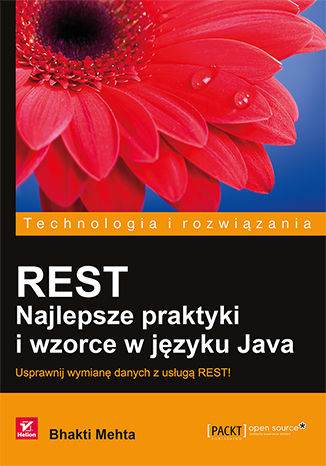
REST. Najlepsze praktyki i wzorce w języku Java
Bhakti Mehta
Usprawnij wymianę danych z usługą REST! Postępująca cyfryzacja współczesnego świata wymaga coraz większej integracji przeróżnych systemów informatycznych. Nierzadko są to systemy znajdujące się w odległych lokalizacjach, napisane z wykorzystaniem różnych języków programowania i technologii. Jak zapewnić możliwość wymiany informacji między nimi? Usługi typu REST to jeden z najwygodniejszych sposobów! Co to jest REST? Jak przygotować usługę tego typu? Jak ustrzec się przed błędami? Na te i wiele innych pytań odpowiada ta książka. Znajdziesz w niej najlepsze praktyki tworzenia usług REST z wykorzystaniem języka Java. Sięgnij po nią i dowiedz się, jak projektować zasoby i zapewniać im bezpieczeństwo oraz w jaki sposób przygotowywać usługi REST dla różnych wersji językowych. Odkryj, jak testować udostępnione zasoby i zagwarantować ich najwyższą wydajność oraz jaka przyszłość czeka usługi tego typu. Sprawdź też, jak wygląda API takich usług, jak GitHub, Twitter i Facebook (API Graph). Ta książka jest doskonałą lekturą dla wszystkich programistów chcących bezproblemowo tworzyć wydajne usługi typu REST. Tematy opisane w książce: Tworzenie usług typu RESTful przy użyciu API JAX-RS 2.0 Zaawansowane techniki wykorzystania protokołu OAuth i zabezpieczeń w usługach typu RESTful Metody buforowania, weryfikacji danych, ograniczania liczby żądań, asynchronicznego wykonywania działań oraz najlepsze praktyki pozwalające zwiększyć interaktywność aplikacji Najlepsze metody stronicowania, dokumentowania i testowania usług typu RESTful HATEOAS i architektura mikrousługowa w budowanie aplikacji wykorzystujących usługi typu RESTful Przyszłość technologii REST, nowe standardy i sposób ich wykorzystania przez różne przedsiębiorstwa Porównanie technologii WebHook, WebSocket oraz Server-Sent Events umożliwiających dostarczanie informacji klientom na bieżąco Wydajne usługi REST w Twoim zasięgu!
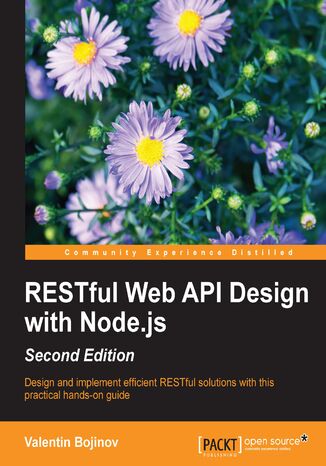
Valentin Bojinov
In this era of cloud computing, every data provisioning solution is built in a scalable and fail-safe way. Thus, when building RESTful services, the right choice for the underlying platform is vital. Node.js, with its asynchronous, event-driven architecture, is exactly the right choice to build RESTful APIs.This book will help you enrich your development skills to create scalable, server-side, RESTful applications based on the Node.js platform.Starting with the fundamentals of REST, you will understand why RESTful web services are better data provisioning solution than other technologies. You will start setting upa development environment by installing Node.js, Express.js, and other modules. Next, you will write a simple HTTP request handler and create and test Node.js modules using automated tests and mock objects. You will then have to choose the most appropriate data storage type, having options between a key/value or document data store, and also you will implement automated tests for it. This module will evolve chapter by chapter until it turns into a full-fledged and secure Restful service.
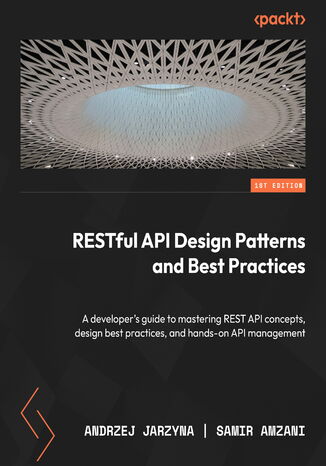
Andrzej Jarzyna, Samir Amzani, Mike Amundsen
Designing scalable, user-focused, and robust APIs that last isn’t just a technical challenge but a design imperative. Written by API leaders with over 30 years of combined experience in API strategy, governance, and community, this book is your comprehensive guide to API design, focusing on domain-driven, consumer-centric APIs that meet real user needs while remaining flexible and maintainable over time. It covers modern REST API design, tools like OpenAPI and JSON Schema, and the importance of a product-based approach. The chapters help you explore best practices, potential pitfalls, and anti-patterns, extending beyond the design phase.Starting with the “why” behind building an API, its intended users, and value, this book walks you through the API lifecycle, the role of contracts, and applying domain-driven design. You’ll develop a solid foundation in REST API design as you discover different styles, constraints, and more. Beyond design, the book covers testing techniques, API evolution, maintenance, and deprecation.By the end, you’ll not only know how to design great APIs but understand how to treat them as products, manage their lifecycle, and deliver real value by keeping your APIs relevant and reliable long after release.*Email sign-up and proof of purchase required
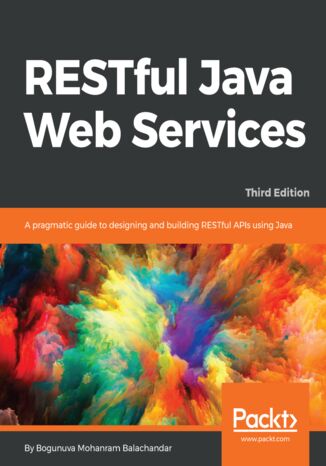
Balachandar Bogunuva Mohanram
Representational State Transfer (REST) is a simple yet powerful software architecture style to create lightweight and scalable web services. The RESTful web services use HTTP as the transport protocol and can use any message formats, including XML, JSON(widely used), CSV, and many more, which makes it easily inter-operable across different languages and platforms.This successful book is currently in its 3rd edition and has been used by thousands of developers. It serves as an excellent guide for developing RESTful web services in Java.This book attempts to familiarize the reader with the concepts of REST. It is a pragmatic guide for designing and developing web services using Java APIs for real-life use cases following best practices and for learning to secure REST APIs using OAuth and JWT. Finally, you will learn the role of RESTful web services for future technological advances, be it cloud, IoT or social media.By the end of this book, you will be able to efficiently build robust, scalable, and secure RESTful web services using Java APIs.