
Programowanie
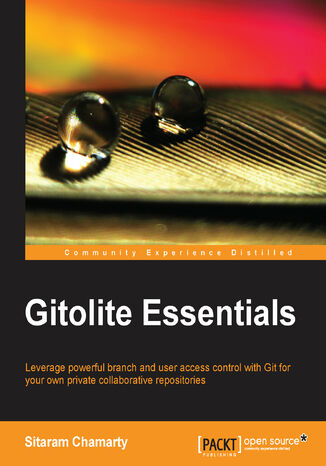
Sitaram Chamarty
The book is written to suit an easy-reading style, using typical problems in access control to illustrate the need for each Gitolite feature explained. This book is for system administrators or development managers who need to keep a lid on Git-based development workflows. Basic knowledge of Git as well as of the Unix shell is helpful.
Go: Building Web Applications. Building Web Applications
Nathan Kozyra, Mat Ryer
Go is an open source programming language that makes it easy to build simple, reliable, and efficient software. It is a statically typed language with syntax loosely derived from that of C, adding garbage collection, type safety, some dynamic-typing capabilities, additional built-in types such as variable-length arrays and key-value maps, and a large standard library.This course starts with a walkthrough of the topics most critical to anyone building a new web application. Whether it’s keeping your application secure, connecting to your database, enabling token-based authentication, or utilizing logic-less templates, this course has you covered. Scale, performance, and high availability lie at the heart of the projects, and the lessons learned throughout this course will arm you with everything you need to build world-class solutions. It will also take you through the history of concurrency, how Go utilizes it, how Go differs from other languages, and the features and structures of Go's concurrency core. It will make you feel comfortable designing a safe, data-consistent, and high-performance concurrent application in Go.This course is an invaluable resource to help you understand Go's powerful features to build simple, reliable, secure, and efficient web applications.
Go Cookbook. Build modular, readable, and testable applications in Go
Aaron Torres
Go (a.k.a. Golang) is a statically-typed programming language first developed at Google. It is derived from C with additional features such as garbage collection, type safety, dynamic-typing capabilities, additional built-in types, and a large standard library.This book takes off where basic tutorials on the language leave off. You can immediately put into practice some of the more advanced concepts and libraries offered by the language while avoiding some of the common mistakes for new Go developers. The book covers basic type and error handling. It explores applications that interact with users, such as websites, command-line tools, or via the file system. It demonstrates how to handle advanced topics such as parallelism, distributed systems, and performance tuning. Lastly, it finishes with reactive and serverless programming in Go.
Go Design Patterns. Best practices in software development and CSP
Mario Castro Contreras
Go is a multi-paradigm programming language that has built-in facilities to create concurrent applications. Design patterns allow developers to efficiently address common problems faced during developing applications. Go Design Patterns will provide readers with a reference point to software design patterns and CSP concurrency design patterns to help them build applications in a more idiomatic, robust, and convenient way in Go. The book starts with a brief introduction to Go programming essentials and quickly moves on to explain the idea behind the creation of design patterns and how they appeared in the 90’s as a common language between developers to solve common tasks in object-oriented programming languages. You will then learn how to apply the 23 Gang of Four (GoF) design patterns in Go and also learn about CSP concurrency patterns, the killer feature in Go that has helped Google develop software to maintain thousands of servers. With all of this the book will enable you to understand and apply design patterns in an idiomatic way that will produce concise, readable, and maintainable software.

Vladimir Vivien, Mario Castro Contreras, Mat Ryer
The Go programming language has firmly established itself as a favorite for building complex and scalable system applications. Go offers a direct and practical approach to programming that lets programmers write correct and predictable code using concurrency idioms and a full-featured standard library. This practical guide is full of real-world examples to help you get started with Go in no time at all. You’ll start by understanding the fundamentals of Go, then get a detailed description of the Go data types, program structures, and Maps. After that, you’ll learn how to use Go concurrency idioms to avoid pitfalls and create programs that are exact in expected behavior. Next, you will get familiar with the tools and libraries that are available in Go to write and exercise tests, benchmarking, and code coverage. After that, you will be able to utilize some of the most important features of GO such as Network Programming and OS integration to build efficient applications. Then you’ll start applying your skills to build some amazing projects in Go. You will learn to develop high-quality command-line tools that utilize the powerful shell capabilities and perform well using Go’s built-in concurrency mechanisms. Scale, performance, and high availability lie at the heart of our projects, and the lessons learned throughout the sections will arm you with everything you need to build world-class solutions. You will get a feel for app deployment using Docker and Google App Engine. Each project could form the basis of a start-up, which means they are directly applicable to modern software markets. With these skills in hand, you will be able to conquer all your fears of application development and go on to build large, robust and succinct apps in Go.This Learning Path combines some of the best that Packt has to offer in one complete, curated package. It includes content from the following Packt products:1. Learning Go Programming2. Go Design Patterns3. Go Programming Blueprints, Second Edition
Mat Ryer
Go is the language of the Internet age, and the latest version of Go comes with major architectural changes. Implementation of the language, runtime, and libraries has changed significantly. The compiler and runtime are now written entirely in Go. The garbage collector is now concurrent and provides dramatically lower pause times by running in parallel with other Go routines when possible.This book will show you how to leverage all the latest features and much more. This book shows you how to build powerful systems and drops you into real-world situations. You will learn to develop high quality command-line tools that utilize the powerful shell capabilities and perform well using Go's in-built concurrency mechanisms. Scale, performance, and high availability lie at the heart of our projects, and the lessons learned throughout this book will arm you with everything you need to build world-class solutions. You will get a feel for app deployment using Docker and Google App Engine. Each project could form the basis of a start-up, which means they are directly applicable to modern software markets.
Aaron Torres
Go (or Golang) is a statically typed programming language developed at Google. Known for its vast standard library, it also provides features such as garbage collection, type safety, dynamic-typing capabilities, and additional built-in types. This book will serve as a reference while implementing Go features to build your own applications.This Go cookbook helps you put into practice the advanced concepts and libraries that Golang offers. The recipes in the book follow best practices such as documentation, testing, and vendoring with Go modules, as well as performing clean abstractions using interfaces. You'll learn how code works and the common pitfalls to watch out for. The book covers basic type and error handling, and then moves on to explore applications, such as websites, command-line tools, and filesystems, that interact with users. You'll even get to grips with parallelism, distributed systems, and performance tuning.By the end of the book, you'll be able to use open source code and concepts in Go programming to build enterprise-class applications without any hassle.
Jay McGavren
Język Go, zwany także golangiem, został opracowany w firmie Google i zaprezentowany światu w 2009 roku. Zaprojektowano go pod kątem wydajności przetwarzania sieciowego i wieloprocesorowego. Autorzy chcieli, aby łączył łatwość pisania aplikacji z wydajnością języków kompilowanych. Podobnie jak JavaScript czy Python, Go jest językiem, który można szybko zrozumieć, a dzięki temu bezzwłocznie zacząć tworzyć funkcjonalny kod. Niemniej, aby zyskać uznanie potencjalnego pracodawcy i swojego nowego zespołu, poza wiedzą o składni i instrukcjach sterujących oraz praktyczną umiejętnością kodowania trzeba poznać określone konwencje i techniki. Ta książka, podobnie jak inne pozycje serii Rusz głową!, została przygotowana zgodnie z najnowszymi odkryciami nauk poznawczych, teorii uczenia się i neurofizjologii. Oznacza to tyle, że dzięki niej będziesz się uczyć zgodnie z zasadami pracy swojego mózgu: zaangażujesz umysł, wykorzystasz wiele zmysłów i niepostrzeżenie przyswoisz język programowania Go. Innymi słowy: w naturalny sposób zaczniesz programować! Niecodzienny wygląd i struktura książki sprawiają, że zamiast klasycznego podręcznika otrzymujesz polisensoryczne doświadczenie poznawcze, zaprojektowane tak, aby uzyskać umiejętności przydatne każdemu deweloperowi! Nawet jeśli musisz posługiwać się innymi językami programowania, dzięki tej pozycji nauczysz się technik i praktyk, które będziesz stale wykorzystywać podczas kodowania! W tej książce między innymi: solidne podstawy tworzenia kodu, który będzie przejrzysty i łatwy w utrzymaniu metody, funkcje, pakiety... testowanie kodu i obsługa błędów dynamiczne aplikacje internetowe szablony HTML Go: rusz głową i programuj!