
Programowanie
Niezależnie czy dopiero rozpoczynacie swoją przygodę z programowaniem, czy jesteście już uznanymi na rynku profesjonalistami, to w kategorii Programowanie na pewno znajdziecie podręczniki, które pomogą Wam w przebiegu pracy, czy też w nauce podstaw programowania.
W książkach z tego działu zawarta jest wiedza zarówno związana z czysto technicznymi sprawami typu składnia języków, ale także z umiejętnościami bardziej "miękkimi" jak obsługa i wykorzystanie pełnych możliwości środowisk programistycznych, czy też projektowanie oprogramowania lub metody numeryczne czy oraz struktury danych.
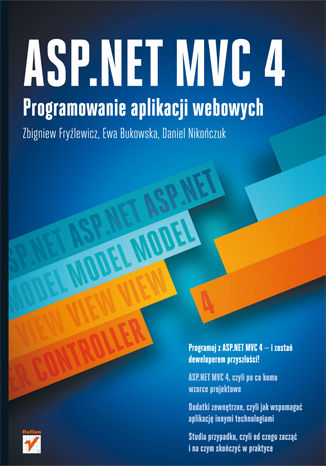
ASP.NET MVC 4. Programowanie aplikacji webowych
Zbigniew Fryźlewicz, Ewa Bukowska, Daniel Nikończuk
Programuj z ASP.NET MVC 4 - i zostań deweloperem przyszłości! ASP.NET MVC 4, czyli po co komu wzorce projektowe Dodatki zewnętrzne, czyli jak wspomagać aplikację innymi technologiami Studia przypadku, czyli od czego zacząć i na czym skończyć w praktyce ASP.NET MVC to technologia, której poznanie pozwala na szybkie tworzenie eleganckich, prostych w utrzymaniu, lecz wyrafinowanych w działaniu średnich i dużych aplikacji webowych. Współpraca z najważniejszymi standardami internetowymi, takimi jak HTML5, CSS, jQuery czy chmurą Windows Azure, możliwość projektowania aplikacji dla urządzeń mobilnych i uproszczenie budowy modelu domenowego to tylko próbka najnowszych funkcjonalności, jakie zapewnia wersja 4 tego znakomitego frameworka. Jeśli chcesz zostać rozchwytywanym specjalistą pracującym z użyciem ASP.NET MVC 4, nie znajdziesz lepszej książki. W części pierwszej opisano powstanie i warianty wzorca MVC, a także warstwy kontrolerów, widoków i modeli. Jej lektura pozwoli Ci poznać zasady działania frameworka, zorientować się w jego strukturze i opanować korzystanie z komponentów zewnętrznych, takich jak jQuery czy AJAX. Natomiast część druga zawiera cztery studia przypadku, czyli szczegółowe omówienie procesu budowania czterech różnych aplikacji, korzystających z różnych technologii pomocniczych i osadzonych w różnych środowiskach. Dzięki temu uda Ci się zobaczyć w praktyce, jak to wszystko działa. Model-Widok-Kontroler Framework ASP.NET MVC 4 Kontrolery Widoki Modele Routing, czyli przekierowania AJAX Entity Framework + Database Migrations Studium przypadku: serwis Subskrypcja Studium przypadku: serwis Portal Usług Studium przypadku: serwis Moje-Zdjęcia w Windows Azure Studium przypadku: serwis Planner Bibliografia ASP.NET MVC 4 + ta książka = sukces w programowaniu!
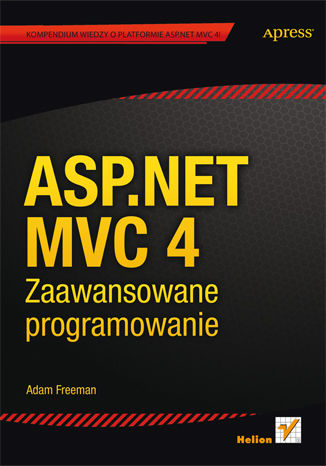
ASP.NET MVC 4. Zaawansowane programowanie
Adam Freeman, Steven Sanderson
Kompendium wiedzy o platformie ASP.NET MVC 4! ASP.NET MVC jest rewelacyjną alternatywą dla ASP.NET Web Forms. Pozwala na połączenie efektywności ze schludnością architektury model–widok–kontroler (MVC). Nowa wersja platformy - ASP.NET MVC 4 - to kolejny milowy krok w rozwoju platformy ASP.NET, stworzonej przez giganta z Redmond. Dzięki ASP.NET MVC 4 błyskawicznie stworzysz łatwe w utrzymaniu i rozwojowe aplikacje internetowe. Lektura tej książki pozwoli Ci zapoznać się z technikami programowania w oparciu o testy (TDD). Przekonasz się, jak działa wzorzec MVC w praktyce. Ponadto uda Ci się szczegółowo poznać całą platformę ASP.NET MVC oraz zauważyć różnice, wady i zalety ASP.NET MVC względem klasycznego ASP.NET. Przekonasz się, jak zastosowanie filtrów może ułatwić Ci życie oraz jak niezwykle istotną kwestią jest zapewnienie bezpieczeństwa Twojej aplikacji. Książka ta jest doskonałym i kompletnym źródłem wiedzy na temat ASP.NET MVC. Obowiązkowa lektura dla każdego programisty tej platformy! Sięgnij po książkę i sprawdź: jak wykorzystanie architektury MVC może ułatwić Ci pracę jaki wpływ na jakość Twojego kodu ma architektura MVC jak zapewnić bezpieczeństwo Twojej aplikacji w jaki sposób implementowana jest architektura MVC Lektura obowiązkowa każdego programisty!
Associations and Correlations. Unearth the powerful insights buried in your data
Lee Baker
Associations and correlations are ways of describing how a pair of variables change together as a result of their connection. By knowing the various available techniques, you can easily and accurately discover and visualize the relationships in your data. This book begins by showing you how to classify your data into the four distinct types that you are likely to have in your dataset. Then, with easy-to-understand examples, you’ll learn when to use the various univariate and multivariate statistical tests. You’ll also discover what to do when your univariate and multivariate results do not match. As the book progresses, it describes why univariate and multivariate techniques should be used as a tag team, and also introduces you to the techniques of visualizing the story of your data. By the end of the book, you’ll know exactly how to select the most appropriate univariate and multivariate tests, and be able to use a single strategic framework to discover the true story of your data.
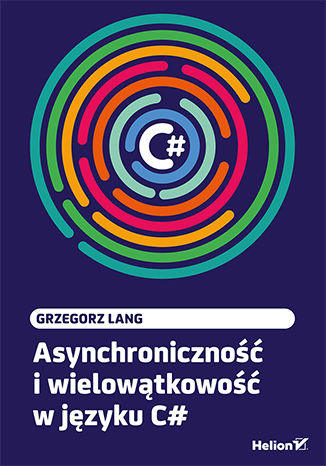
Asynchroniczność i wielowątkowość w języku C#
Grzegorz Lang
Przejdź na wyższy poziom C# Programowanie wielowątkowe pozwala wykonywać różne czynności z wykorzystaniem więcej niż jednego wątku. W efekcie zwiększa się wydajność operacji, które były ograniczone parametrami procesora. W dodatku dzięki zastosowaniu programowania wielowątkowego zadania można wykonywać w tle, bez pogorszenia responsywności aplikacji. Asynchroniczność umożliwia także zachowanie responsywności aplikacji użytkowych oraz zwiększenie skalowalności aplikacji serwerowych. Brzmi obiecująco. Niestety, programowanie z wykorzystaniem wątków i asynchroniczności nie należy do najprostszych. Jest to dziedzina z natury skomplikowana i błędogenna, także w języku C#. Ten poradnik zbiera i zwięźle tłumaczy wszystkie zagadnienia związane z asynchronicznością i wielowątkowością w C#. Poszczególne tematy uzupełniono przykładami, pomagającymi lepiej zrozumieć problem, którego rozwiązanie można zastosować później w praktyce. Dla wygody w korzystaniu z książki każdy koncept opisano oddzielnie, jednak by go zrozumieć, trzeba przyswoić wiedzę z poprzednich rozdziałów. Dowiedz się, na czym polega wielowątkowość w C# Opanuj zasady programowania równoległego Naucz się programować asynchronicznie Poznaj podstawowe zasady synchronizacji
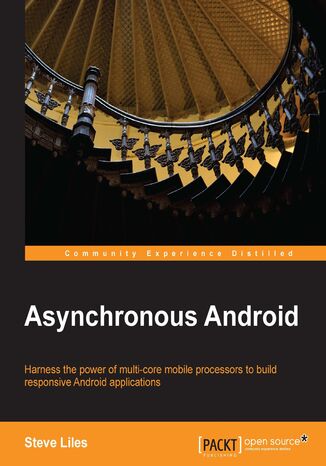
Steve Liles
With more than a million apps available from Google Play, it is more important than ever to build apps that stand out from the crowd. To be successful, apps must react quickly to user input, deliver results in a flash, and sync data in the background. The key to this is understanding the right way to implement asynchronous operations that work with the platform, instead of against it. Asynchronous Android is a practical book that guides you through the concurrency constructs provided by the Android platform, illustrating the applications, benefits, and pitfalls of each.Learn to use AsyncTask correctly to perform operations in the background, keeping user-interfaces running smoothly while avoiding treacherous memory leaks. Discover Handler, HandlerThread and Looper, the related and fundamental building blocks of asynchronous programming in Android. Escape from the constraints of the Activity lifecycle to load and cache data efficiently across your entire application with the Loader framework. Keep your data fresh with scheduled tasks, and understand how Services let your application continue to run in the background, even when the user is busy with something else.Asynchronous Android will help you to build well-behaved apps with smooth, responsive user-interfaces that delight users with speedy results and data that's always fresh, and keep the system happy and the battery charged by playing by the rules.
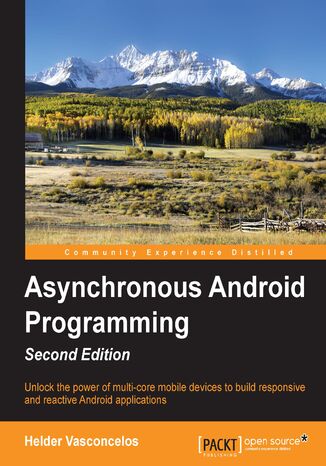
Helder Vasconcelos, Steve Liles
Asynchronous programming has acquired immense importance in Android programming, especially when we want to make use of the number of independent processing units (cores) available on the most recent Android devices. With this guide in your hands you’ll be able to bring the power of Asynchronous programming to your own projects, and make your Android apps more powerful than ever before!To start with, we will discuss the details of the Android Process model and the Java Low Level Concurrent Framework, delivered by Android SDK. We will also guide you through the high-level Android-specific constructs available on the SDK: Handler, AsyncTask, and Loader. Next, we will discuss the creation of IntentServices, Bound Services and External Services, which can run in the background even when the user is not interacting with it. You will also discover AlarmManager and JobScheduler APIs, which are used to schedule and defer work without sacrificing the battery life. In a more advanced phase, you will create background tasks that are able to execute CPU-intensive tasks in a native code-making use of the Android NDK. You will be then guided through the process of interacting with remote services asynchronously using the HTTP protocol or Google GCM Platform. Using the EventBus library, we will also show how to use the Publish-Subscribe software pattern to simplify communication between the different Android application components by decoupling the event producer from event consumer.Finally, we will introduce RxJava, a popular asynchronous Java framework used to compose work in a concise and reactive way. Asynchronous Android will help you to build well-behaved applications with smooth responsive user interfaces that delight the users with speedy results and data that’s always fresh.
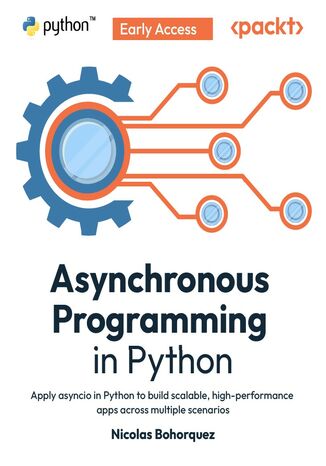
Nicolas Bohorquez
Asynchronous programming is one of the most effective but often misunderstood techniques for building fast, scalable, and responsive systems in Python. While it can significantly improve performance, efficiency, and sustainability, using async without a clear understanding of its trade-offs can lead to fragile designs and hard-to-debug issues.This book offers a structured approach to applying asynchronous programming in Python. It begins with a conceptual framework to help you distinguish between synchronous and asynchronous execution models, and shows how async relates to other concurrency strategies such as multithreading and multiprocessing. From there, you will explore the core tools available for building async applications in Python.You will also learn how to measure the impact of async programming in practical scenarios, profile and debug asynchronous code, and evaluate performance improvements using real-world metrics. The final chapters focus on applying async techniques to common cloud-based systems, such as web frameworks, database interactions, and data-pipelines tools.Designed for developers looking to apply async programming with confidence, this book blends real-world examples with core concepts to help you write efficient, maintainable Python code.
Nicolas Bohorquez
Asynchronous programming is one of the most effective but often misunderstood techniques for building fast, scalable, and responsive systems in Python. While it can significantly improve performance, efficiency, and sustainability, using async without a clear understanding of its trade-offs can lead to fragile designs and hard-to-debug issues.This book offers a structured approach to applying asynchronous programming in Python. It begins with a conceptual framework to help you distinguish between synchronous and asynchronous execution models, and shows how async relates to other concurrency strategies such as multithreading and multiprocessing. From there, you will explore the core tools available for building async applications in Python.You will also learn how to measure the impact of async programming in practical scenarios, profile and debug asynchronous code, and evaluate performance improvements using real-world metrics. The final chapters focus on applying async techniques to common cloud-based systems, such as web frameworks, database interactions, and data-pipelines tools.Designed for developers looking to apply async programming with confidence, this book blends real-world examples with core concepts to help you write efficient, maintainable Python code.
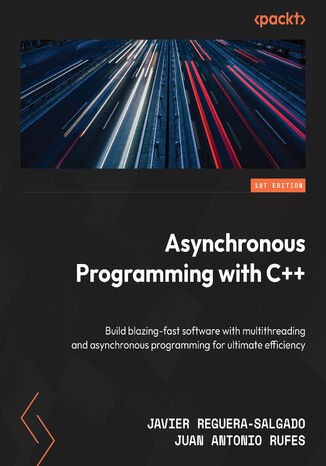
Javier Reguera-Salgado, Juan Antonio Rufes
As hardware advancements continue to accelerate, bringing greater memory capacity and more CPU cores, software must evolve to adapt to efficiently use all available resources and reduce idle CPU cycles. In this book, two seasoned software engineers with about five decades of combined experience will teach you how to implement concurrent and asynchronous solutions in C++.You’ll gain a comprehensive understanding of parallel programming paradigms—covering concurrent, asynchronous, parallel, multithreading, reactive, and event-driven programming, as well as dataflows—and see how threads, processes, and services are related. Moving into the heart of concurrency, the authors will guide you in creating and managing threads and exploring C++’s thread-safety mechanisms, including mutual exclusion, atomic operations, semaphores, condition variables, latches, and barriers. With this solid foundation, you’ll focus on pure asynchronous programming, discovering futures, promises, the async function, and coroutines. The book takes you step by step through using Boost.Asio and Boost.Cobalt to develop network and low-level I/O solutions, proven performance and optimization techniques, and testing and debugging asynchronous software.By the end of this C++ book, you’ll be able to implement high-performance software using modern asynchronous C++ techniques.