
Programowanie
Niezależnie czy dopiero rozpoczynacie swoją przygodę z programowaniem, czy jesteście już uznanymi na rynku profesjonalistami, to w kategorii Programowanie na pewno znajdziecie podręczniki, które pomogą Wam w przebiegu pracy, czy też w nauce podstaw programowania.
W książkach z tego działu zawarta jest wiedza zarówno związana z czysto technicznymi sprawami typu składnia języków, ale także z umiejętnościami bardziej "miękkimi" jak obsługa i wykorzystanie pełnych możliwości środowisk programistycznych, czy też projektowanie oprogramowania lub metody numeryczne czy oraz struktury danych.
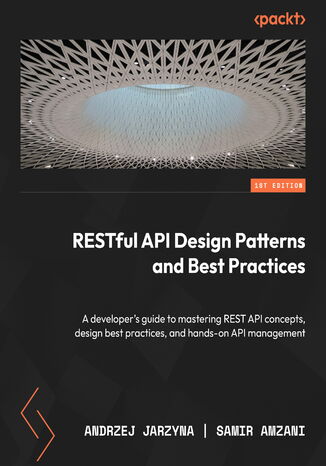
Andrzej Jarzyna, Samir Amzani, Mike Amundsen
Designing scalable, user-focused, and robust APIs that last isn’t just a technical challenge but a design imperative. Written by API leaders with over 30 years of combined experience in API strategy, governance, and community, this book is your comprehensive guide to API design, focusing on domain-driven, consumer-centric APIs that meet real user needs while remaining flexible and maintainable over time. It covers modern REST API design, tools like OpenAPI and JSON Schema, and the importance of a product-based approach. The chapters help you explore best practices, potential pitfalls, and anti-patterns, extending beyond the design phase.Starting with the “why” behind building an API, its intended users, and value, this book walks you through the API lifecycle, the role of contracts, and applying domain-driven design. You’ll develop a solid foundation in REST API design as you discover different styles, constraints, and more. Beyond design, the book covers testing techniques, API evolution, maintenance, and deprecation.By the end, you’ll not only know how to design great APIs but understand how to treat them as products, manage their lifecycle, and deliver real value by keeping your APIs relevant and reliable long after release.*Email sign-up and proof of purchase required
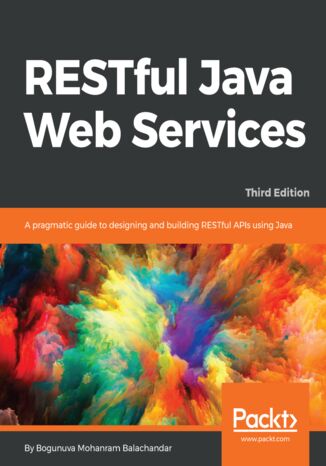
Balachandar Bogunuva Mohanram
Representational State Transfer (REST) is a simple yet powerful software architecture style to create lightweight and scalable web services. The RESTful web services use HTTP as the transport protocol and can use any message formats, including XML, JSON(widely used), CSV, and many more, which makes it easily inter-operable across different languages and platforms.This successful book is currently in its 3rd edition and has been used by thousands of developers. It serves as an excellent guide for developing RESTful web services in Java.This book attempts to familiarize the reader with the concepts of REST. It is a pragmatic guide for designing and developing web services using Java APIs for real-life use cases following best practices and for learning to secure REST APIs using OAuth and JWT. Finally, you will learn the role of RESTful web services for future technological advances, be it cloud, IoT or social media.By the end of this book, you will be able to efficiently build robust, scalable, and secure RESTful web services using Java APIs.
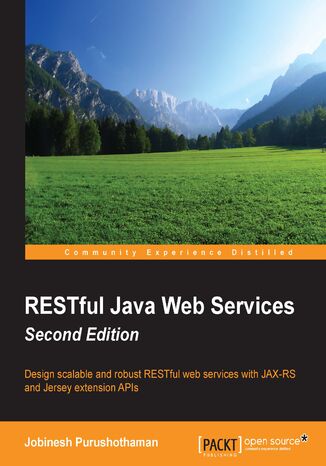
Jobinesh Purushothaman
REST (REpresentational State Transfer) is a simple yet powerful software architecture style to create scalable web services and allow them to be simple, lightweight, and fast. The REST API uses HTTP and JSON, so that it can be used with many programming languages such as Ruby, Java, Python, and Scala. Its use in Java seems to be the most popular though, because of the API's reusability.This book is a guide to developing RESTful web services in Java using the popular RESTful framework APIs available today. You will begin with gaining an in-depth knowledge of the RESTful software architectural style and its relevance in modern applications. Further, you will understand the APIs to parse, generate, transform, and query JSON effectively. Then, you will see how to build a simple RESTful service using the popular JAX-RS 2.0 API along with some real-world examples. This book will introduce you to the Jersey framework API, which is used to simplify your web services.You will also see how to secure your services with various authentication mechanisms. You will get to grips with various solutions to describe, produce, consume, and visualize RESTful web services. Finally, you will see how to design your web services to equip them for the future technological advances, be it Cloud or mobile computing.By the end of this book, you will be able to efficiently build robust, scalable, and secure RESTful web services, making use of the JAX-RS and Jersey framework extensions.
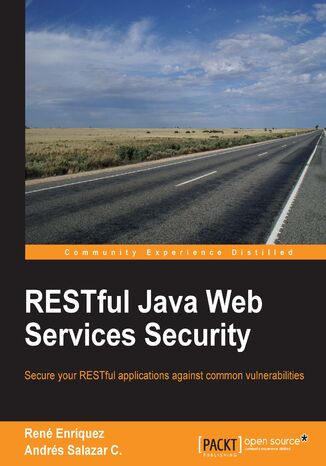
René Enríquez
A sequential and easy-to-follow guide which allows you to understand the concepts related to securing web apps/services quickly and efficiently, since each topic is explained and described with the help of an example and in a step-by-step manner, helping you to easily implement the examples in your own projects. This book is intended for web application developers who use RESTful web services to power their websites. Prior knowledge of RESTful is not mandatory, but would be advisable.
Robot Operating System Cookbook. Over 70 recipes to help you master advanced ROS concepts
Kumar Bipin
This book will leverage the power of ROS with an introduction to its core and advanced concepts through exciting recipes. You will get acquainted with the use of different synchronous and asynchronous communication methods, including messages, services, and actions. You will learn how to use the various debugging and visualization tools used in development and how to interface sensors and actuators with the ROS framework.Firstly, you will get to grips with ROS simulation frameworks, such as Gazebo and RotorS for modeling and simulating any physical robot and virtual environment. You will also cover mobile robotics, micro-aerial vehicles, and robotic arms, which are the leading branches of robotic applications. Robot Operating System Cookbook will also guide you in the development of an autonomous navigation framework for both mobile robots and micro-aerial vehicles.Finally, you will explore ROS-Industrial, an open source project that extends the advanced capabilities of ROS software to manufacturing industries.
Husan Mahey
With an increase in the number of organizations deploying RPA solutions, Robotic Process Automation (RPA) is quickly becoming the most desired skill set for both developers starting their career and seasoned professionals. This book will show you how to use Automation Anywhere A2019, one of the leading platforms used widely for RPA.Starting with an introduction to RPA and Automation Anywhere, the book will guide you through the registration, installation, and configuration of the Bot agent and Control Room. With the help of easy-to-follow instructions, you’ll build your first bot and discover how you can automate tasks with Excel, Word, emails, XML, and PDF files. You’ll learn from practical examples based on real-world business scenarios, and gain insights into building more robust and resilient bots, executing external scripts such as VBScripts and Python, and adding error handling routines.By the end of this RPA book, you’ll have developed the skills required to install and configure an RPA platform confidently and have a solid understanding of how to build complex and robust, yet performant, bots.
Robust Cloud integration with Azure. Unleash the power of serverless integration with Azure
Mahindra Morar, Abhishek Kumar, Martin Abbott, Gyanendra...
Any software developers, architects, and technical managers lookng to learn about Azure IaaS essentials need look no further. This book is ideal for Microsoft Enterprise developers, DevOps or any IT professionals looking to connect cloud-based and on-premises systems with Azure.
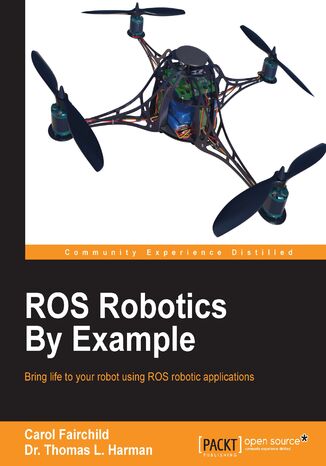
ROS Robotics By Example. Bring life to your robot using ROS robotic applications
Carol Fairchild, Dr. Thomas L. Harman
The visionaries who created ROS developed a framework for robotics centered on the commonality of robotic systems and exploited this commonality in ROS to expedite the development of future robotic systems. From the fundamental concepts to advanced practical experience, this book will provide you with an incremental knowledge of the ROS framework, the backbone of the robotics evolution. ROS standardizes many layers of robotics functionality from low-level device drivers to process control to message passing to software package management. This book provides step-by-step examples of mobile, armed, and flying robots, describing the ROS implementation as the basic model for other robots of these types. By controlling these robots, whether in simulation or in reality, you will use ROS to drive, move, and fly robots using ROS control.