
Programowanie
Bass Jobsen, Ian Whitney, David Cochran
Packed with trade secrets, this second edition is your one-stop solution to creating websites that will provide the best experience for your users. We cover six popular, real-world examples, where each project teaches you about the various functionalities of Bootstrap 4 and their implementation.The book starts off by getting you up and running with the new features of Bootstrap 4 before gradually moving on to customizing your blog with Bootstrap and SASS, building a portfolio site, and turning it into a WordPress theme. In the process, you will learn to recompile Bootstrap files using SASS, design a user interface, and integrate JavaScript plugins. Towards the end of the book, you will also be introduced to integrating Bootstrap 4 with popular application frameworks such as Angular 2, Ruby on Rails, and React.
Pieter van der Westhuizen
One of the leading open source frontend frameworks, Bootstrap has undergone a significant change and introduced several features that make designing compelling, next-generation UIs much simpler. Integrating Bootstrap with ASP.NET's powerful components can further enhance its capabilities.This book guides you through the process of creating an ASP.NET MVC website from scratch using Bootstrap. After a primer on the fundamentals of Bootstrap, you will learn your way around and create a new ASP.NET MVC project in Visual Studio. You will move on to learn about the various Bootstrap components as well as techniques to include them in your own projects. The book includes practical examples to show you how to use open-source plugins with Bootstrap and ASP.NET MVC and guides you through building an ASP.NET MVC website using Bootstrap, utilizing layout and user-interface components. At the end of this book, you will find some valuable tips and tricks to help you get the most out of your Bootstrap-integrated and ASP.NET MVC-integrated website.
Jurij Laznik
The Business Process Execution Language (BPEL) has become the de-facto standard for orchestrating web services. BPEL and web services are both clamped into Service-oriented Architecture (SOA). Development of efficient SOA composites too often requires usage of other technologies or languages, like Java. This Cookbook explains through the use of examples how to efficiently integrate BPEL with custom Java functionality.If you need to use BPEL programming to develop web services in SOA development, this book is for you.BPEL and Java Cookbook will show you how to efficiently integrate custom Java functionality into BPEL processes. Based on practical examples, this book shows you the solutions to a number of issues developers come across when designing SOA composite applications. The integration between the two technologies is shown two-fold; the book focuses on the ways that Java utilizes the BPEL and vice-versa.With this book, you will take a journey through a number of recipes that solve particular problems with developing SOA composite applications. Each chapter works on a different set of recipes in a specific area. The recipes cover the whole lifecycle of developing SOA composites: from specification, through design, testing and deployment.BPEL and Java Cookbook starts off with recipes that cover initiation of BPEL from Java and vice-versa. It then moves on to logging and tracing facilities, validation and transformation of BPEL servers, embedding of third-party Java libraries into BPEL. It also covers manipulation with variables in BPEL different techniques of Java code wrapping for web service usage and utilization of XML fa?ßades.After reading BPEL and Java Cookbook you will be able to circumvent many of the issues that developers experience during SOA composite application development.
Budowanie aplikacji biznesowych za pomocą Windows Presentation Foundation i wzorca Model View ViewM
Garofalo Raffaele
Twórz bogate, elastyczne i łatwe w utrzymaniu aplikacje biznesowe przy pomocy wzorca projektowego MVVM Projektuj aplikacje biznesowe w prostszy i lepszy sposób stosując wzorzec MVVM dla Windows Presentation Foundation (WPF) i Microsoft Silverlight 4. Dzięki temu przewodnikowi wykorzystasz MVVM do wiązania danych, poleceń i zachowań tworząc interfejsy użytkownika luźno powiązane z logiką biznesową. MVVM idealnie nadaje się dla programistów .NET pracujących z WPF i Silverlight niezależnie od posiadanego doświadczenia w budowaniu aplikacji korporacyjnych. Odkryj, jak: Zagłębić się w tajniki wzorca MVVM i dowiedzieć się, czym różni się on od innych wzorców projektowych interfejsu użytkownika Zbudować prostą aplikację do zarządzania relacjami z klientami, którą można adaptować do swoich własnych projektów Implementować MVVM w celu utrzymywania podziału pomiędzy deklaratywną składnią interfejsu użytkownika a kodem logiki prezentacyjnej Tworzyć model domenowy definiujący kontekst biznesowy aplikacji Pisać dynamiczny kod dla warstwy dostępu do danych przy pomocy Microsoft Entity Framework i NHibernate Wymuszać złożone scenariusze sprawdzania poprawności danych przy użyciu Windows Workflow Foundation 4 Implementować MVVM przy użyciu platform i zestawów narzędzi, takich jak Microsoft Prism
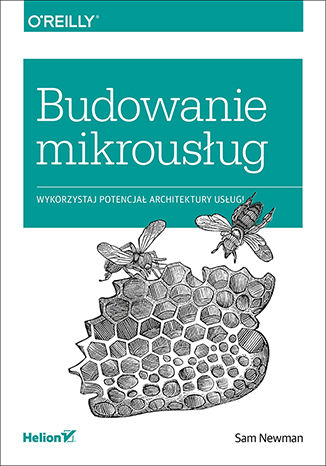
Sam Newman
Wykorzystaj potencjał architektury usług! Architektura mikrousług to sposób na odejście od dużych, monolitycznych aplikacji. Wyspecjalizowane usługi realizujące konkretne zadania i komunikujące się z otoczeniem pozwalają na lepsze zapanowanie nad kodem, są łatwiejsze do przetestowania oraz bardziej elastyczne. Jednak oprócz zalet mają też wady. Sięgnij po tę książkę i dowiedz się, jak najlepiej radzić sobie z architekturą mikrousług! Autor przedstawia w książce skuteczne techniki projektowania i korzystania z architektury mikrousług. W trakcie lektury kolejnych rozdziałów poznasz w szczegółach ideę mikrousług, korzyści ich stosowania, sposoby modelowania usług oraz skuteczne techniki dzielenia dużej aplikacji na mikrousługi. Ponadto zapoznasz się z możliwymi sposobami integracji: zdalne wywołanie procedur, REST i zdarzenia — to tylko niektóre z poruszanych kwestii. Na sam koniec zaznajomisz się z najlepszymi metodami testowania i monitorowania usług, zapewnisz im bezpieczeństwo dzięki kluczom API oraz innym technikom. Ta książka jest obowiązkową lekturą dla wszystkich osób chcących tworzyć nowoczesne systemy bazujące na architekturze mikrousług. Odkryj, jak można dostosować projekt systemu do celów Twojej organizacji stosując architekturę mikrousług Zapoznaj się z możliwościami integracji usług z pozostałą częścią systemu Zastosuj przyrostowe podejście do podziału monolitycznych baz kodu Wdrażaj pojedyncze mikrousługi korzystając z techniki ciągłej integracji Zbadaj złożoność testowania i monitorowania rozproszonych usług Zarządzaj zabezpieczeniami stosując modele użytkownik-usługa oraz usługa-usługa Zapoznaj się z wyzwaniami skalowania architektury mikrousług Przekonaj się, jak architektura mikrousług zmieni Twoje spojrzenie na aplikacje!
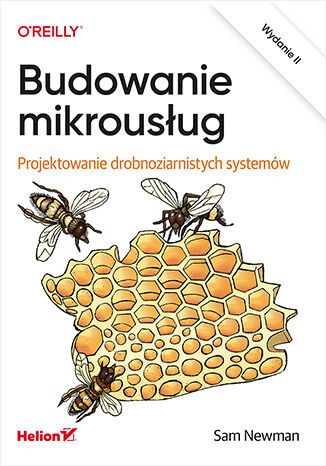
Budowanie mikrousług. Projektowanie drobnoziarnistych systemów. Wydanie II
Sam Newman
Mikrousługi są dla wielu organizacji wspaniałą alternatywą. Systemy rozproszone złożone ze współpracujących ze sobą mikrousług pozwalają na efektywne i elastyczne dostarczanie oprogramowania, które ściśle odpowiada na wymagania użytkowników. Dodatkową zaletą jest możliwość relatywnie szybkiego wprowadzania modyfikacji w systemie, co ułatwia płynne zaspokajanie zmieniających się potrzeb. Pewnym wyzwaniem dla programistów jednak może być złożoność powodowana przez właściwości architektury systemów rozproszonych, a także pojawiające się wciąż nowe technologie i metodyki, które znacząco zmieniają sposób korzystania z mikrousług. To drugie wydanie praktycznego przewodnika po projektowaniu, tworzeniu, wdrażaniu, skalowaniu i utrzymaniu systemów opartych na drobnoziarnistych mikrousługach. Publikacja została uzupełniona o informacje dotyczące najnowszych trendów i technologii związanych z mikrousługami. Sporo miejsca poświęcono na staranne przeanalizowanie przykładów dotyczących opisywanych koncepcji, a także pokazanie optymalnych sposobów rozwiązywania różnych problemów. Opisano również najnowsze rozwiązania dotyczące modelowania, integracji, testowania, wdrażania i monitorowania autonomicznych usług. Bardzo interesującą częścią są studia przypadków, w których przeanalizowano, jak organizacjom udaje się w praktyce w pełni wykorzystywać możliwości mikrousług. Dzięki książce dowiesz się, jak: przeprowadzać orkiestrację kontenerów i wdrażać rozwiązania bezserwerowe dostosowywać projekt systemu do potrzeb organizacji wybrać najlepszy sposób integracji usługi z systemem samodzielnie wdrażać mikrousługi skutecznie testować i monitorować usługi rozproszone zarządzać zabezpieczeniami dla rozszerzonej zawartości Architektura mikrousług: naucz się podejmować najlepsze decyzje projektowe!
Detrick DeBurr
Gamification involves the process of leveraging the features of real games into real life. A gamified website has the potential to increase user engagement, ROI, and learning. This book will help you build gamified websites with PHP and jQuery by making you understand the gamification design process to implement game mechanics in practical applications.Gamified websites are very popular amongst Internet users. The gamification of a web content draws users into action to empower them and help them develop new skills. Games engage user attention into the task and each task accomplished will mean the development and enhancement of new skills. This book will help you to apply the essence of games into real word applications such as business and education.Build Gamified Websites with PHP and jQuery aims at empowering and educating the users with an educational gamified website. The book walks through the process of developing a gamified website. Through the course of the book, you will learn gamification development process. The book emphasizes on the application of game mechanics to motivate the user. You will then use the Fogg behaviour model to influence the user behaviour. By the end of the book, you will see yourself building more engaging yet simple websites based on rational principles.
Clinton L. Jeffery
There are many reasons to build a programming language: out of necessity, as a learning exercise, or just for fun. Whatever your reasons, this book gives you the tools to succeed.You’ll build the frontend of a compiler for your language and generate a lexical analyzer and parser using Lex and YACC tools. Then you’ll explore a series of syntax tree traversals before looking at code generation for a bytecode virtual machine or native code. In this edition, a new chapter has been added to assist you in comprehending the nuances and distinctions between preprocessors and transpilers. Code examples have been modernized, expanded, and rigorously tested, and all content has undergone thorough refreshing. You’ll learn to implement code generation techniques using practical examples, including the Unicon Preprocessor and transpiling Jzero code to Unicon. You'll move to domain-specific language features and learn to create them as built-in operators and functions. You’ll also cover garbage collection.Dr. Jeffery’s experiences building the Unicon language are used to add context to the concepts, and relevant examples are provided in both Unicon and Java so that you can follow along in your language of choice.By the end of this book, you'll be able to build and deploy your own domain-specific language.