
Techniki programowania

Jeff Hendrickson, Travis Wissink
UX analytics is a field that recognizes the significance of understanding human behavior and emotions in designing user experiences. It goes beyond mere metrics and embraces a people-centric approach. With the help of this comprehensive guide, you’ll acquire essential skills, knowledge, and techniques to establish a top-notch UX analytics practice.Unleashing the Power of UX Analytics will equip you with the strategies and tactics necessary to effectively collect, analyze, and interpret data, empowering you to make informed decisions that enhance the overall user experience. It emphasizes the importance of empathy in comprehending user needs and desires, enabling you to create meaningful and impactful design solutions. As you advance, this book walks you through the entire UX analytics process, from setting goals and defining key performance indicators (KPIs) to implementing various research methods and tools. You'll gain insights into user interview best practices, usability testing, and techniques for gathering qualitative and quantitative data.Armed with the knowledge of data analysis and interpretation, you'll be able to uncover patterns, trends, and user preferences to make data-driven decisions.

Satheesh P.V, Satheesh PV
Unreal Engine 4 is a complete suite of game development tools that gives you power to develop your game and seamlessly deploy it to iOS and Android devices. It can be used for the development of simple 2D games or even stunning high-end visuals. Unreal Engine features a high degree of portability and is a tool used by many game developers today.This book will introduce you to the most popular game development tool called Unreal Engine 4 with hands-on instructions for building stunning video games. You will begin by creating a new project or prototype by learning the essentials of Unreal Engine by getting familiar with the UI and Content Browser. Next, we'll import a sample asset from Autodesk 3ds max and learn more about Material Editor. After that we will learn more about Post Process. From there we will continue to learn more about Blueprints, Lights, UMG, C++ and more.
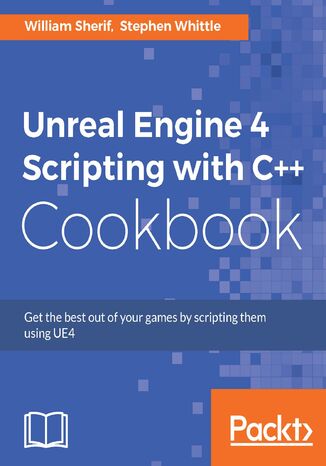
Stephen Whittle, William Sherif
Unreal Engine 4 (UE4) is a complete suite of game development tools made by game developers, for game developers. With more than 100 practical recipes, this book is a guide showcasing techniques to use the power of C++ scripting while developing games with UE4. It will start with adding and editing C++ classes from within the Unreal Editor. It will delve into one of Unreal's primary strengths, the ability for designers to customize programmer-developed actors and components. It will help you understand the benefits of when and how to use C++ as the scripting tool. With a blend of task-oriented recipes, this book will provide actionable information about scripting games with UE4, and manipulating the game and the development environment using C++. Towards the end of the book, you will be empowered to become a top-notch developer with Unreal Engine 4 using C++ as the scripting language.

Benjamin Carnall
With Unreal Engine 4 being made free to use, for any keen game developer it is quickly becoming the most popular game engine in today’s development industry. The engine offers a rich feature set that can be customized and built upon through the use of C++. This book will cover how to work with Unreal Engine’s tool set all the way from the basics of the editor and the visual scripting system blueprint to the in-depth low-level creation of content using C++.This book will provide you with the skills you need to create feature-rich, captivating, and refined game titles with Unreal Engine 4. This book will take you through the creation of four unique game projects, designed so that you will be ready to apply the engine’s rich development capabilities. You will learn not only to take advantage of the visual tools of the engine, but also the vast and powerful programming feature set of Unreal Engine 4.
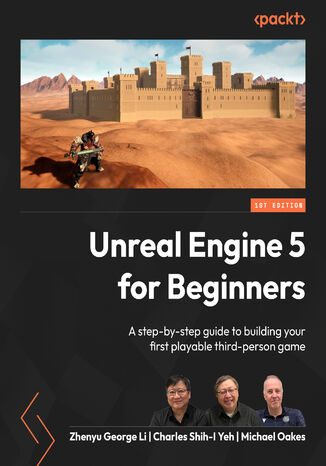
Zhenyu George Li, Charles Shih-I Yeh, Michael...
Unreal Engine 5 for Beginners is a hands-on guide designed for aspiring developers, students, and hobbyists with little or no prior experience. Instead of overwhelming technical jargon, it takes a clear, step-by-step approach that helps readers quickly get comfortable with Unreal’s powerful tools.You’ll begin by installing Unreal Engine, setting up your first project, and exploring the editor to build and light simple levels. As you progress, you’ll learn how to script gameplay with Blueprints, create characters with animations, and set up player inputs for smooth control. Later chapters introduce AI-driven enemies, gameplay rules, and mission objectives that bring your world to life.The book also covers building user interfaces with UMG, producing cinematic cutscenes using Sequencer, and adding polish with visual and audio effects. Finally, you’ll learn optimization techniques and packaging workflows to prepare your game for distribution.By the end of this book, you’ll have built a fully playable third-person game and gained a solid foundation in Unreal Engine 5. Whether you want to create interactive 3D experiences, prepare for more advanced projects, or take the first step toward a career in game development, this guide gives you the confidence and skills to begin your journey.

Nicola Valcasara
With the arrival of Unreal Engine 4, a new wonderful tool was born: Blueprint. This visual scripting tool allows even non-programmers to develop the logic for their games, allowing almost anyone to create entire games without the need to write a single line of code. The range of features you can access with Blueprint script is pretty extensive, making it one of the foremost choices for many game developers.Unreal Engine Game Development Blueprints helps you unleash the real power of Unreal by helping you to create engaging and spectacular games. It will explain all the aspects of developing a game, focusing on visual scripting, and giving you all the information you need to create your own games.We start with an introductory chapter to help you move fluidly inside the Blueprint user interface, recognize its different components, and understand any already written Blueprint script. Following this, you will learn how to modify generated Blueprint classes to produce a single player tic-tac-toe game and personalize it. Next, you will learn how to create simple user interfaces, and how to extend Blueprints through code. This will help you make an informed decision between choosing Blueprint or code. You will then see the real power of Unreal unleashed as you create a beautiful scene with moving, AI controlled objects, particles, and lights. Then, you will learn how to create AI using a behavior tree and a global level Blueprint, how to modify the camera, and how to shoot custom bullets. Finally, you will create a complex game using Blueprintable components complete with a menu, power-up, dangerous objects, and different weapons.
John P. Doran, Nitish Misra, Joanna Lee
Unreal Engine technology powers hundreds of games. This Learning Path will help you create great 2D and 3D games that are distributed across multiple platforms.The first module, Learning Unreal Engine Game Development, starts with small, simple game ideas and playable projects. It starts by showing you the basics in the context of an individual game level. Then, you'll learn how to add details such as actors, animation, effects, and so on to the game. This module aims to equip you with the confidence and skills to design and build your own games using Unreal Engine 4. By the end of this module, you will be able to put into practise your own content.After getting familiar with Unreal Engine’s core concepts, it’s time that you dive into the field of game development. In this second module, Unreal Engine Game Development Cookbook we show you how to solve development problems using Unreal Engine, which you can work through as you build your own unique project. Every recipe provides step-by-step instructions, with explanations of how these features work, and alternative approaches and research materials so you can learn even more. You will start by building out levels for your game, followed by recipes to help you create environments, place meshes, and implement your characters. By the end of this module, you will see how to create a health bar and main menu, and then get your game ready to be deployed and published.The final step is to create your very own game that will keep mobile users hooked.This is what you'll be learning in our third module, Learning Unreal Engine Android Game Development,Once you get the hang of things, you will start developing our game, wherein you will graduate from movement and character control to AI and spawning. Once you've created your application, you will learn how to port and publish your game to the Google Play Store.With this course, you will be inspired to come up with your own great ideas for your future game development projects.
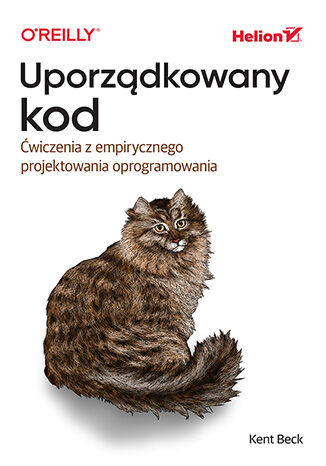
Uporządkowany kod. Ćwiczenia z empirycznego projektowania oprogramowania
Kent Beck
Niechlujny kod to koszmar programisty. Utrudnia zrozumienie logiki programu i często prowadzi do problemów z debugowaniem. Komplikuje modyfikację i rozbudowę programu, pogarsza współpracę z zespołem. Z kolei uporządkowany kod jest zrozumiały i łatwy w utrzymaniu. To proste: czysty kod to szczęśliwy programista! To ważna książka na ważny temat! Dave Farley, założyciel i dyrektor Continuous Delivery Ltd. Ta zwięzła publikacja przyda się profesjonalistom, którzy lubią drobne ulepszenia prowadzące do dużych korzyści. Zrozumiale wyjaśniono w niej, na czym polega proces tworzenia czystego i niezawodnego kodu. W rozsądnej dawce podano zagadnienia teoretyczne, takie jak sprzężenie, kohezja, zdyskontowane przepływy pieniężne i opcjonalność. Porządkowanie kodu jest tu przedstawione jako element codziennej pracy programisty, prowadzący do poprawy struktury całego projektu. W książce znalazło się mnóstwo praktycznych przykładów, dzięki którym można wypróbować wybrane techniki, najlepiej sprawdzające się w danym przypadku. W tej książce znajdziesz praktyczne rady dotyczące ulepszania kodu. Sam Newman, autor książek Budowanie mikrousług i Od monolitu do mikrousług Najciekawsze zagadnienia: teoretyczne podstawy projektowania oprogramowania różnica między zmianami działania systemu a zmianami jego struktury najlepszy czas na sprzątanie kodu dokonywanie dużych zmian małymi krokami projektowanie oprogramowania jako ćwiczenie z obszaru relacji międzyludzkich Tę książkę polecam każdemu, komu zależy na czystym i czytelnym kodzie! Gergely Orosz, autor newslettera The Pragmatic Engineer