
Python
W kategorii Python zostały zebrane podręczniki poruszające tematykę programowania z zastosowaniem praktycznie niezależnego sprzętowo, dostępnego na licencji Open Source języka. Książki przedstawią Wam wszechstronności i elastyczności Pythona a także różne typy tworzenia kodu poprzez programowanie strukturalne, obiektowe czy funkcjonalne.
Nauczycie się tworzyć aplikacje sieciowe o dowolnym przeznaczeniu, komunikujące się z systemami operacyjnymi, lub korzystające z baz danych. Techniki analizy składni, przetwarzanie tekstu czy rozłożenie obciążenia programu na wiele wątków i procesów przestanie być problematyczne.
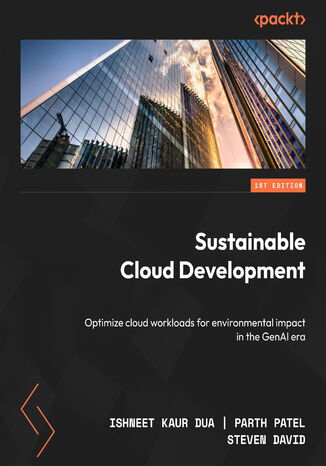
Sustainable Cloud Development. Optimize cloud workloads for environmental impact in the GenAI era
Parth Girish Patel, Ishneet Kaur Dua, Steven...
Written by three seasoned AWS solution architects, sustainability mentors, and thought leaders, Sustainable Cloud Development equips cloud professionals with actionable strategies to design, build, and optimize workloads that minimize environmental impact, while maintaining performance and scalability.This book combines practical insights, best practices, and case studies to help you align your cloud operations with global sustainability goals. From foundational concepts such as carbon footprint measurement to advanced techniques such as sustainable software architecture, generative AI lifecycle optimization, and cost-efficient cloud practices, this book covers every aspect of sustainable cloud development. You’ll get to grips with key tools, including AWS Cost Explorer, for analyzing costs and usage over time to right-size deployments; auto scaling for automatically scaling compute resources dynamically based on demand; Amazon Trusted Advisor for reviewing optimization recommendations across critical areas such as cost, performance, and security; and Amazon CloudWatch for detailed monitoring and threshold-based alerting around all resources and applications.This book serves as a practical blueprint for optimizing your cloud workloads for both high performance and a minimal environmental footprint.
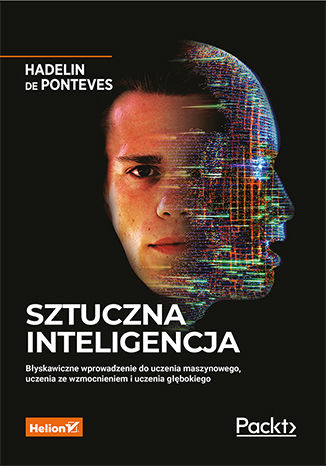
Hadelin de Ponteves
Grono entuzjastów sztucznej inteligencji stale rośnie. Jest już bowiem jasne, że stanowi ona dostępną metodę zmiany świata na lepsze. Pełnymi garściami ze zdobyczy AI czerpią naukowcy, analitycy danych, przedsiębiorcy i menedżerowie, a nawet politycy i ekonomiści. Jej możliwości wydają się dziś nieograniczone - aby je wykorzystać, wystarczy zdobyć gruntowną wiedzę i dobrze zrozumieć podstawy sztucznej inteligencji. Na pierwszy rzut oka nie są to trudne zadania. Choćby ze względu na dostęp do wielu artykułów, kursów czy książek o technologiach sztucznej inteligencji. Jednak w tym nadmiarze materiałów bardzo trudno dokonać właściwego dla siebie wyboru. To kompletny, zwięzły przewodnik po świecie sztucznej inteligencji. Znalazły się tu przejrzyście wyłożone podstawy i bardziej zaawansowane zagadnienia. Wyjaśniono, jak najlepiej zabrać się do tworzenia systemów AI wykorzystujących uczenie ze wzmacnianiem oraz głębokie uczenie. Krok po kroku pokazano, jak zrealizować pięć praktycznych projektów. To książka skierowana zarówno do studentów, jak i naukowców, menedżerów czy przedsiębiorców - dowiedzą się z niej, jak zbudować inteligentne oprogramowanie przy użyciu najlepszych i najprostszych narzędzi do programowania AI. Co ważne, aby w pełni z niej skorzystać, nie trzeba posiadać umiejętności programowania. Dzięki tej książce: opanujesz kluczowe umiejętności związane z uczeniem maszynowym zrozumiesz Q-learning oraz głęboki Q-learning poznasz takie narzędzia jak TensorFlow, Keras czy PyTorch będziesz samodzielnie tworzyć takie projekty jak wirtualny samochód wykorzystasz AI do rozwiązywania rzeczywistych problemów biznesowych nauczysz się budować inteligentne roboty Oto Twoja świetlana przyszłość w świecie AI!
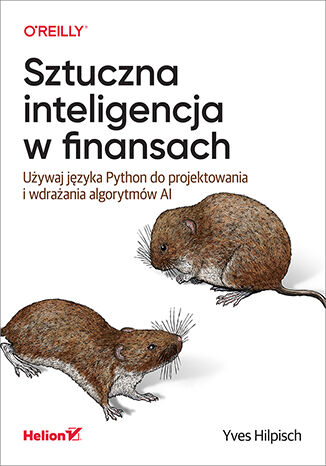
Sztuczna inteligencja w finansach. Używaj języka Python do projektowania i wdrażania algorytmów AI
Yves Hilpisch
W świecie finansów sztuczna inteligencja okazała się przełomową technologią - w połączeniu z odpowiednim zastosowaniem algorytmów i dużych zbiorów danych bowiem pozwala na poprawę jakości usług finansowych. Autor tej książki zdaje sobie z tego sprawę - ma wieloletnie doświadczenie i kompleksową wiedzę na temat projektowania i wdrażania zaawansowanych mechanizmów AI w największych podmiotach z branży. Swoją wiedzą dzieli się z czytelnikami. Dr Yves Hilpisch szczegółowo opisuje zarówno podstawy teoretyczne, jak i praktyczne aspekty używania algorytmów sztucznej inteligencji w ramach usług i produktów finansowych. Opierając się na przykładach z języka Python, pokazuje metodyki, modele, założenia i techniki wdrażania AI, a także analizuje problemy mogące utrudniać to zadanie i przybliża ich rozwiązania. Znajdziemy tutaj skomplikowane zagadnienia wytłumaczone w logiczny i zrozumiały sposób. Autor z powodzeniem łączy teorię z praktyką, a jego podejście do tematu i prezentowane przypadki bazujące na doświadczeniu są cennym źródłem wiedzy dla każdego, kto chce poznać tajniki dotyczące zastosowania sztucznej inteligencji, uczenia maszynowego, algorytmów i zbiorów danych w szeroko pojętym świecie finansów. Dzięki książce dowiesz się: na czym polega zastosowanie AI w usługach i produktach finansowych dlaczego i w jaki sposób użycie sztucznej inteligencji fundamentalnie zmienia sektor finansowy i jakie ma to skutki dla niego i konsumentów jak w języku Python konstruować i wdrażać algorytmy bazujące na rozbudowanych zbiorach danych jak dzięki AI i uczeniu maszynowemu usprawniać usługi i produkty finansowe
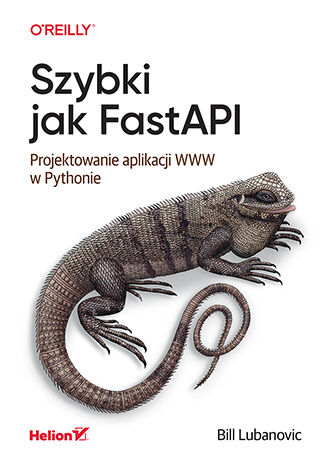
Szybki jak FastAPI. Projektowanie aplikacji WWW w Pythonie
Bill Lubanovic
Internet rozwija się w niesamowitym tempie. Dawniej sieć WWW była prostsza ― projektanci łączyli kod PHP, HTML i zapytania do MySQL w jednym pliku. Z czasem urosła do miliardów stron, co radykalnie zmieniło jej kształt. Zmieniły się też narzędzia i sposób pracy. Dziś idealnym wyborem dewelopera aplikacji WWW jest FastAPI, nowoczesne narzędzie, które wykorzystuje nowe cechy Pythona i z powodzeniem rywalizuje z podobnymi frameworkami języka Golang. Książka zawiera wszechstronne omówienie FastAPI i otaczającego ten framework ekosystemu! William Jamir Silva, starszy inżynier oprogramowania, Adjust GmbH Dzięki znajomości Pythona i temu praktycznemu poradnikowi zaczniesz z sukcesem używać FastAPI i docenisz, jak szybko można budować aplikacje WWW. Zrozumiesz zasady pracy z tym frameworkiem i będziesz je stosować przy tworzeniu własnych projektów. Przyswoisz różne nieznane powszechnie techniki i dowiesz się, jakie praktyki najlepiej sprawdzają się w codziennej pracy. Poznasz takie zagadnienia jak formularze, dostęp do baz danych, grafika i mapy. Nauczysz się również korzystać z interfejsów RESTful API, prowadzić walidację danych, autoryzację i zapewniać wysoką wydajność swojego kodu. W książce: budowa aplikacji WWW z użyciem FastAPI różnice pomiędzy FastAPI, Starlette i Pydantic stosowanie funkcji asynchronicznych, sprawdzanie typów danych i walidacja nowe cechy Pythona 3.8+, w tym adnotacje typów tworzenie kodu synchronicznego i asynchronicznego korzystanie z zewnętrznych API i usług FastAPI przedstawione w prosty sposób! Książka wyposaża w praktyczną wiedzę i umożliwia szybki start. Ganesh Harke, starszy inżynier oprogramowania, Citibank
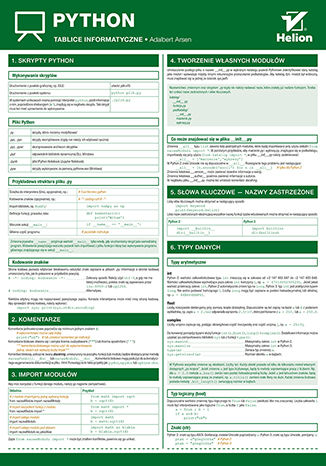
Adalbert Arsen
Programowanie w Pythonie? Z tablicami to nic trudnego! Poznaj konstrukcje języka Python Utrwal wiedzę o instrukcjach i typach danych Odkryj metody pisania wydajnych skryptów Python to jeden z najpopularniejszych dynamicznych języków programowania. Nie od dziś znajduje on zastosowanie w różnych dziedzinach informatyki, zwłaszcza jako doskonały język skryptowy. Jeśli korzystasz z niego na co dzień i chcesz szybko wyszukiwać niezbędne informacje lub odświeżyć swoją wiedzę, sięgnij po odpowiednią ściągę! Tablice informatyczne stanowią zwięzłe, lecz wyczerpujące źródło wiadomości na temat Pythona, które można – i warto! – zawsze mieć pod ręką. Niezależnie od tego, czy jesteś profesjonalistą wykorzystującym ten język w pracy, czy też amatorem, który dopiero zaczyna się go uczyć, tablice okażą się dla Ciebie nieocenioną pomocą! Rodzaje plików Pythona Uruchamianie skryptów Korzystanie z modułów Typy danych i rzutowanie Operatory i instrukcje Debugowanie kodu Testowanie kodu Tworzenie wykresów Sięgnij po źródło skondensowanej wiedzy o Pythonie!
TDD w praktyce. Niezawodny kod w języku Python
Harry Percival
„Ta książka to znacznie więcej niż tylko wprowadzenie do programowania sterowanego testami w Pythonie. To jest pełny kurs przedstawiający najlepsze praktyki, od początku do końca na przykładzie nowoczesnego programowania aplikacji sieciowej w Pythonie.” — Kenneth Reitz, członek Python Software Foundation Twórz niezawodne aplikacje w języku Python! Każdy programista marzy o pracy z przejrzystym kodem, który został w całości pokryty testami. Niestety, rzeczywistość bywa często daleka od ideału. A może da się go jednak osiągnąć? Odpowiedzią na to pytanie jest TDD (ang. Test-Driven Development), czyli wytwarzanie oprogramowania sterowane testami. Jak zacząć stosować tę technikę? Na to i wiele innych pytań odpowiada ta książka. Zacznij w praktyce realizować koncepcje płynące z TDD w połączeniu z językiem Python. Na początku dowiedz się, jak skonfigurować Django za pomocą testu funkcjonalnego, oraz skorzystaj z modułu unittest. Zdobądź też bezcenną wiedzę na temat testowania widoków, szablonów i adresów URL oraz naucz się testować układy strony i style. Sprawdź, jak zapewnić ciągłą integrację z wykorzystaniem systemu Jenkins oraz najlepszych praktyk w tworzeniu testowalnego kodu. Książka ta jest doskonałą lekturą dla wszystkich programistów tworzących aplikacje internetowe w języku Python. Twój kod może być naprawdę łatwy w utrzymaniu! Poznaj sposób pracy wykorzystujący podejście TDD, między innymi cykl test jednostkowy i tworzenie kodu, a później refaktoryzacja. Używaj testów jednostkowych dla klas i funkcji oraz testów funkcjonalnych pozwalających na symulowanie działań podejmowanych przez użytkownika w przeglądarce internetowej. Dowiedz się kiedy i jak używać obiektów imitacji, a także poznaj wady i zalety testów odizolowanych i zintegrowanych. Przetestuj i automatyzuj wdrożenie za pomocą serwera prowizorycznego. Zastosuj testy względem przygotowanych przez firmy trzecie wtyczek, które integrujesz z witryną. Używaj środowiska ciągłej integracji w celu automatycznego wykonywania testów. Poznaj techniki TDD w połączeniu z Pythonem!
Palanisamy
With deep reinforcement learning, you can build intelligent agents, products, and services that can go beyond computer vision or perception to perform actions. TensorFlow 2.x is the latest major release of the most popular deep learning framework used to develop and train deep neural networks (DNNs). This book contains easy-to-follow recipes for leveraging TensorFlow 2.x to develop artificial intelligence applications.Starting with an introduction to the fundamentals of deep reinforcement learning and TensorFlow 2.x, the book covers OpenAI Gym, model-based RL, model-free RL, and how to develop basic agents. You'll discover how to implement advanced deep reinforcement learning algorithms such as actor-critic, deep deterministic policy gradients, deep-Q networks, proximal policy optimization, and deep recurrent Q-networks for training your RL agents. As you advance, you’ll explore the applications of reinforcement learning by building cryptocurrency trading agents, stock/share trading agents, and intelligent agents for automating task completion. Finally, you'll find out how to deploy deep reinforcement learning agents to the cloud and build cross-platform apps using TensorFlow 2.x.By the end of this TensorFlow book, you'll have gained a solid understanding of deep reinforcement learning algorithms and their implementations from scratch.
Tony Holdroyd
TensorFlow is one of the most popular machine learning frameworks in Python. With this book, you will improve your knowledge of some of the latest TensorFlow features and will be able to perform supervised and unsupervised machine learning and also train neural networks.After giving you an overview of what's new in TensorFlow 2.0 Alpha, the book moves on to setting up your machine learning environment using the TensorFlow library. You will perform popular supervised machine learning tasks using techniques such as linear regression, logistic regression, and clustering. You will get familiar with unsupervised learning for autoencoder applications. The book will also show you how to train effective neural networks using straightforward examples in a variety of different domains.By the end of the book, you will have been exposed to a large variety of machine learning and neural network TensorFlow techniques.
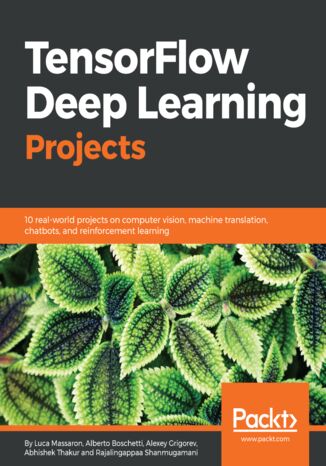
Alexey Grigorev, Srinivas Kulkarni, Rajalingappaa Shanmugamani
TensorFlow is one of the most popular frameworks used for machine learning and, more recently, deep learning. It provides a fast and efficient framework for training different kinds of deep learning models, with very high accuracy. This book is your guide to master deep learning with TensorFlow with the help of 10 real-world projects.TensorFlow Deep Learning Projects starts with setting up the right TensorFlow environment for deep learning. You'll learn how to train different types of deep learning models using TensorFlow, including Convolutional Neural Networks, Recurrent Neural Networks, LSTMs, and Generative Adversarial Networks. While doing this, you will build end-to-end deep learning solutions to tackle different real-world problems in image processing, recommendation systems, stock prediction, and building chatbots, to name a few. You will also develop systems that perform machine translation and use reinforcement learning techniques to play games.By the end of this book, you will have mastered all the concepts of deep learning and their implementation with TensorFlow, and will be able to build and train your own deep learning models with TensorFlow confidently.
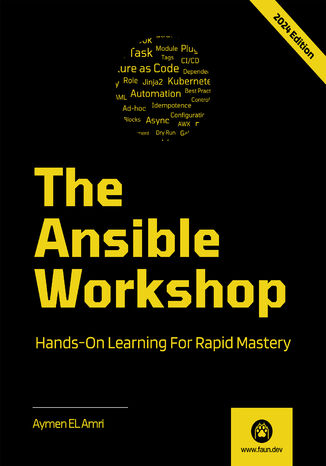
The Ansible Workshop. Hands-On Learning For Rapid Mastery
Aymen El Amri
The Ansible Workshop offers a comprehensive journey through the world of Ansible, guiding readers from foundational concepts to advanced applications in automation. Readers delve into creating and managing inventories, an essential aspect of organizing systems for automation.As the journey progresses, the book covers the creation and use of playbooks, providing step-by-step instructions and practical examples. Readers learn how to gather and utilize Ansible facts, debug issues effectively, and manage sensitive data with Ansible Vault. The exploration of Ansible blocks, modules, plugins, and filters further enhances the reader's ability to customize and extend Ansible's functionality.The book then introduces the concept of Ansible roles, enabling readers to structure and reuse their automation tasks efficiently. Performance optimization techniques are also discussed, ensuring that automation workflows are both fast and reliable. The practical applications of Ansible are showcased through chapters on managing Docker and Docker Compose, as well as automating Kubernetes, highlighting Ansible's versatility in modern IT environments. To provide a quick reference and reinforce learning, an Ansible cheat sheet is included, summarizing key commands and concepts.
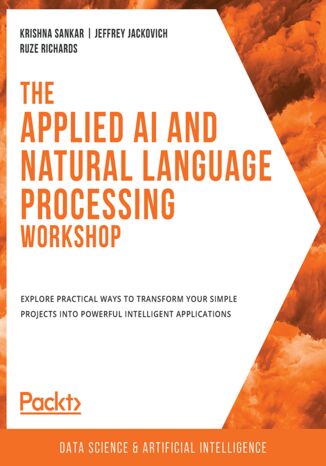
Krishna Sankar , Jeffrey Jackovich , Ruze...
Are you fascinated with applications like Alexa and Siri and how they accurately process information within seconds before returning accurate results? Are you looking for a practical guide that will teach you how to build intelligent applications that can revolutionize the world of artificial intelligence? The Applied AI and NLP Workshop will take you on a practical journey where you will learn how to build artificial intelligence (AI) and natural language processing (NLP) applications with Amazon Web services (AWS).Starting with an introduction to AI and machine learning, this book will explain how Amazon S3, or Amazon Simple Storage Service, works. You’ll then integrate AI with AWS to build serverless services and use Amazon’s NLP service Comprehend to perform text analysis on a document. As you advance, the book will help you get to grips with topic modeling to extract and analyze common themes on a set of documents with unknown topics. You’ll also work with Amazon Lex to create and customize a chatbot for task automation and use Amazon Rekognition for detecting objects, scenes, and text in images.By the end of The Applied AI and NLP Workshop, you’ll be equipped with the knowledge and skills needed to build scalable intelligent applications with AWS.
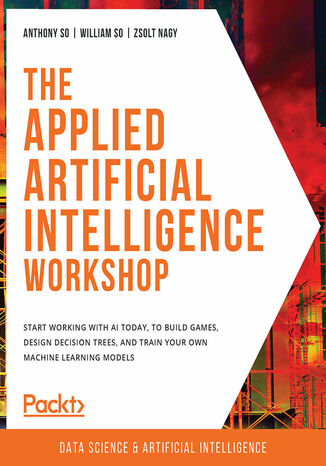
Anthony So , William So , Zsolt...
You already know that artificial intelligence (AI) and machine learning (ML) are present in many of the tools you use in your daily routine. But do you want to be able to create your own AI and ML models and develop your skills in these domains to kickstart your AI career?The Applied Artificial Intelligence Workshop gets you started with applying AI with the help of practical exercises and useful examples, all put together cleverly to help you gain the skills to transform your career.The book begins by teaching you how to predict outcomes using regression. You will then learn how to classify data using techniques such as k-nearest neighbor (KNN) and support vector machine (SVM) classifiers. As you progress, you’ll explore various decision trees by learning how to build a reliable decision tree model that can help your company find cars that clients are likely to buy. The final chapters will introduce you to deep learning and neural networks. Through various activities, such as predicting stock prices and recognizing handwritten digits, you’ll learn how to train and implement convolutional neural networks (CNNs) and recurrent neural networks (RNNs).By the end of this applied AI book, you’ll have learned how to predict outcomes and train neural networks and be able to use various techniques to develop AI and ML models.
Alex Galea, Paul Van Branteghem, Guillermina Bea...
From banking and manufacturing through to education and entertainment, using data science for business has revolutionized almost every sector in the modern world. It has an important role to play in everything from app development to network security.Taking an interactive approach to learning the fundamentals, this book is ideal for beginners. You’ll learn all the best practices and techniques for applying data science in the context of real-world scenarios and examples.Starting with an introduction to data science and machine learning, you’ll start by getting to grips with Jupyter functionality and features. You’ll use Python libraries like sci-kit learn, pandas, Matplotlib, and Seaborn to perform data analysis and data preprocessing on real-world datasets from within your own Jupyter environment. Progressing through the chapters, you’ll train classification models using sci-kit learn, and assess model performance using advanced validation techniques. Towards the end, you’ll use Jupyter Notebooks to document your research, build stakeholder reports, and even analyze web performance data.By the end of The Applied Data Science Workshop, you’ll be prepared to progress from being a beginner to taking your skills to the next level by confidently applying data science techniques and tools to real-world projects.
Harveen Singh Chadha , Luis Capelo ,...
Machine learning gives computers the ability to learn like humans. It is becoming increasingly transformational to businesses in many forms, and a key skill to learn to prepare for the future digital economy.As a beginner, you’ll unlock a world of opportunities by learning the techniques you need to contribute to the domains of machine learning, deep learning, and modern data analysis using the latest cutting-edge tools.The Applied TensorFlow and Keras Workshop begins by showing you how neural networks work. After you’ve understood the basics, you will train a few networks by altering their hyperparameters. To build on your skills, you’ll learn how to select the most appropriate model to solve the problem in hand. While tackling advanced concepts, you’ll discover how to assemble a deep learning system by bringing together all the essential elements necessary for building a basic deep learning system - data, model, and prediction. Finally, you’ll explore ways to evaluate the performance of your model, and improve it using techniques such as model evaluation and hyperparameter optimization.By the end of this book, you'll have learned how to build a Bitcoin app that predicts future prices, and be able to build your own models for other projects.
Chinmay Arankalle , Gareth Dwyer , Bas...
Social networking sites see an average of 350 million uploads daily - a quantity impossible for humans to scan and analyze. Only AI can do this job at the required speed, and to leverage an AI application at its full potential, you need an efficient and scalable data storage pipeline. The Artificial Intelligence Infrastructure Workshop will teach you how to build and manage one.The Artificial Intelligence Infrastructure Workshop begins taking you through some real-world applications of AI. You’ll explore the layers of a data lake and get to grips with security, scalability, and maintainability. With the help of hands-on exercises, you’ll learn how to define the requirements for AI applications in your organization. This AI book will show you how to select a database for your system and run common queries on databases such as MySQL, MongoDB, and Cassandra. You’ll also design your own AI trading system to get a feel of the pipeline-based architecture. As you learn to implement a deep Q-learning algorithm to play the CartPole game, you’ll gain hands-on experience with PyTorch. Finally, you’ll explore ways to run machine learning models in production as part of an AI application.By the end of the book, you’ll have learned how to build and deploy your own AI software at scale, using various tools, API frameworks, and serialization methods.
Hafsa Asad , Vishwesh Ravi Shrimali ,...
Computer Vision (CV) has become an important aspect of AI technology. From driverless cars to medical diagnostics and monitoring the health of crops to fraud detection in banking, computer vision is used across all domains to automate tasks. The Computer Vision Workshop will help you understand how computers master the art of processing digital images and videos to mimic human activities.Starting with an introduction to the OpenCV library, you'll learn how to write your first script using basic image processing operations. You'll then get to grips with essential image and video processing techniques such as histograms, contours, and face processing. As you progress, you'll become familiar with advanced computer vision and deep learning concepts, such as object detection, tracking, and recognition, and finally shift your focus from 2D to 3D visualization. This CV course will enable you to experiment with camera calibration and explore both passive and active canonical 3D reconstruction methods.By the end of this book, you'll have developed the practical skills necessary for building powerful applications to solve computer vision problems.