
Big data
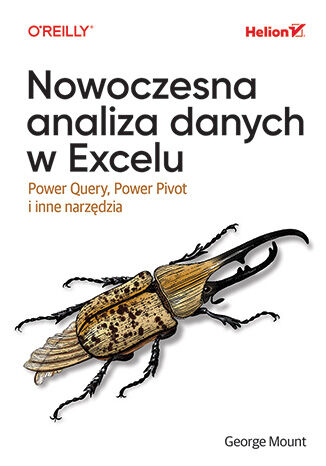
Nowoczesna analiza danych w Excelu. Power Query, Power Pivot i inne narzędzia
George Mount
Organizacje stosują zaawansowane narzędzia i techniki, aby umożliwić podejmowanie decyzji na podstawie danych. Jeszcze do niedawna MS Excel nie był w stanie sprostać wymaganiom analityków, obecnie jest wschodzącą gwiazdą w świecie nowoczesnej analizy danych. Kluczem do sukcesu stało się opanowanie takich narzędzi jak Power Pivot czy Power Query. Dzięki tej praktycznej książce przekonasz się, że w Excelu możesz przeprowadzić dogłębną analizę danych i wyciągnąć z nich cenną wiedzę. Wystarczy, że skorzystasz z najnowszych funkcji i narzędzi Excela. W poradniku pokazano, jak za pomocą Power Query budować przepływy pracy porządkujące dane i jak projektować w skoroszycie relacyjne modele danych przy użyciu Power Pivot. Ponadto odkryjesz nowe możliwości przeprowadzania analiz, w tym dynamiczne funkcje tablicowe i pozyskiwanie wartościowych informacji z wykorzystaniem sztucznej inteligencji. Dowiesz się również, jak za sprawą integracji z Pythonem zautomatyzować analizę danych i budować raporty. W książce: tworzenie procesów porządkujących dane w Excelu za pomocą Power Query relacyjne modele danych i wskaźniki analityczne w Power Pivot korzystanie z dynamicznych funkcji tablicowych zastosowanie AI do identyfikacji wzorców i trendów w danych integracja funkcjonalności Pythona z Excelem Książka jest łatwa w odbiorze, praktyczna i pomocna dla analityków, a także zwykłych użytkowników! Meghan Finley, autorka i redaktorka tekstów technicznych
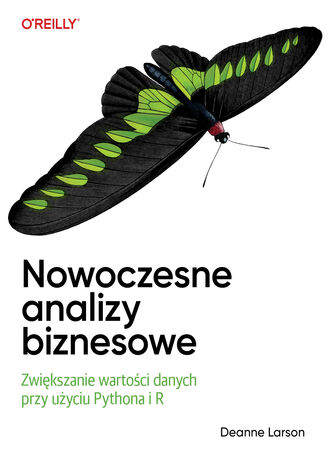
Nowoczesne analizy biznesowe. Zwiększanie wartości danych przy użyciu Pythona i R
Deanne Larson
"Lektura obowiązkowa dla wszystkich analityków biznesowych i danetyków." Balaji Dhamodharan, światowy lider w dziedzinie danetyki, NXP Semiconductors "Ta książka to niezastąpione źródło wiedzy dla każdego, kto pragnie opanować szybko zmieniający się świat analityki." Lipi Deepaakshi Patnaik, starszy inżynier oprogramowania, Zeta Wydobycie wartości biznesowej z ogromu danych to trudny i wymagający proces. Przekształcenie surowych danych w użyteczne informacje wymaga od analityka biegłego posługiwania się wieloma technologiami, takimi jak bazy danych, narzędzia programistyczne czy komercyjne narzędzia analityczne. Ten praktyczny przewodnik pokazuje programistom rozumiejącym koncepcje analizy, jak rozwijać umiejętności niezbędne do uzyskania wartości biznesowej. Autorka, zajmująca się danetyką zarówno od strony praktycznej, jak i naukowej, pomaga połączyć światy biznesu i techniki, aby spełnić te wymagania. Rozwiń umiejętności posługiwania się językami R i Python na z życia wziętych przykładach. Dowiedz się również, jak wykorzystywać właściwe metodologie w celu skutecznego realizowania celów. Metodyka uczenia się połączona z narzędziami open source jest kluczem do dostarczania rzeczywistych wartości biznesowych. Książka ta pokazuje, jak: - Stosować metodologie analityki biznesowej, aby osiągnąć pomyślne wyniki - Czyścić i przekształcać dane przy użyciu R i Pythona - Używać R i Pythona do wykonywania eksploracyjnej analizy danych - Tworzyć modele predykcyjne do rozwiązywania problemów biznesowych w R i Pythonie - Używać Pythona, R i narzędzi analitycznych do obsługi wielkich wolumenów danych - Współpracować z inżynierami danych i danetykami - Mierzyć skuteczność analiz biznesowych Dr. Deanne Larson jest eksperktą w dziedzinie danetyki oraz edukatorką, która pomaga największym firmom odblokować wartości biznesowe dzięki analityce. Dzięki wykładom w zakresie analiz, sztucznej inteligencji i przywództwa prowadzonym na takich uczelniach, jak MIT, Harvard, Stanford i NYU, stała się poszukiwanym wykładowcą i oddanym mentorem swojej dziedziny.
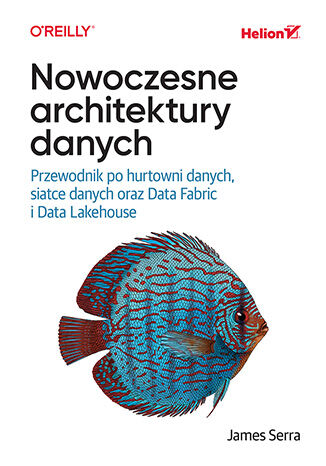
James Serra
Architektury data fabric i data lakehouse, a także siatka danych pojawiły się niedawno jako alternatywy hurtowni danych. Te nowe architektury mają swoje mocne strony, ale podczas projektowania rzeczywistych rozwiązań musisz pamiętać o odróżnianiu faktów od przesadnych pochwał i niejasności. Nie zawsze jest to proste i oczywiste zadanie. Niezwykłość tej książki polega na przekształcaniu złożonych zagadnień technicznych w jasne i zrozumiałe objaśnienia. Annie Xu, starszy inżynier danych, Google Dzięki temu praktycznemu przewodnikowi profesjonaliści zajmujący się danymi dobrze zrozumieją wady i zalety poszczególnych rozwiązań. Omówiono tu typowe zagadnienia dotyczące architektur danych, w tym ich rozwój i możliwości. Żadna architektura nie jest na tyle uniwersalna, by być odpowiednia w każdej sytuacji, dlatego w książce znajdziesz rzetelne porównanie cech poszczególnych architektur. Dowiesz się, jakie kompromisy towarzyszą każdej z nich, niezależnie od popularności. W ten sposób o wiele łatwiej przyjdzie Ci wybór rozwiązania, które najlepiej odpowiada Twoim potrzebom. Najciekawsze zagadnienia: praktyczne działanie architektur danych, ich mocne i słabe strony wybór najlepszej architektury pod kątem konkretnego zastosowania różnice między hurtowniami i "jeziorami" danych wspólne koncepcje architektur danych i ich historyczny rozwój sesje projektowania architektury, organizacja zespołów i najważniejsze uwarunkowania Połóż tę książkę na biurku. Będziesz często po nią sięgać! Sawyer Nyquist, autor, właściciel The Data Shop
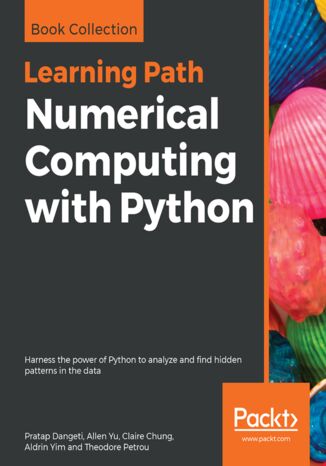
Pratap Dangeti, Allen Yu, Claire Chung, Aldrin...
Data mining, or parsing the data to extract useful insights, is a niche skill that can transform your career as a data scientist Python is a flexible programming language that is equipped with a strong suite of libraries and toolkits, and gives you the perfect platform to sift through your data and mine the insights you seek. This Learning Path is designed to familiarize you with the Python libraries and the underlying statistics that you need to get comfortable with data mining.You will learn how to use Pandas, Python's popular library to analyze different kinds of data, and leverage the power of Matplotlib to generate appealing and impressive visualizations for the insights you have derived. You will also explore different machine learning techniques and statistics that enable you to build powerful predictive models.By the end of this Learning Path, you will have the perfect foundation to take your data mining skills to the next level and set yourself on the path to become a sought-after data science professional.This Learning Path includes content from the following Packt products:• Statistics for Machine Learning by Pratap Dangeti• Matplotlib 2.x By Example by Allen Yu, Claire Chung, Aldrin Yim• Pandas Cookbook by Theodore Petrou
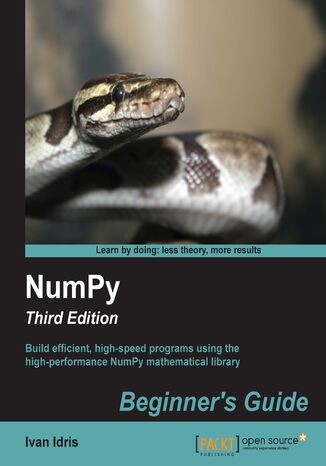
Ivan Idris
This book is for the scientists, engineers, programmers, or analysts looking for a high-quality, open source mathematical library. Knowledge of Python is assumed. Also, some affinity, or at least interest, in mathematics and statistics is required. However, I have provided brief explanations and pointers to learning resources.
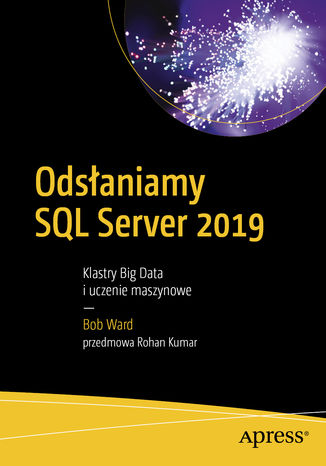
Odsłaniamy SQL Server 2019: Klastry Big Data i uczenie maszynowe
Bob Ward
Nabierz prędkości dzięki przełomowym zmianom w SQL Server 2019. Nie jest to już jedynie silnik bazodanowy, ale nowatorskie narzędzie wyposażone we wsparcie dla uczenia maszynowego, analiz Big Data, możliwość działania w systemie Linux, kontenery, Kubernetes, Javę czy wirtualizację danych w Azure. Ta książka nie zajmuje się tradycyjną administracją bazami danych w środowisku SQL Server. Koncentruje się na tym wszystkim, co nowe w jednej z najskuteczniej modernizowanych platform danych w branży. To książka dla profesjonalistów danych, którzy znają już podstawy SQL Server i chcą się rozwijać, rozbudowując umiejętności w najgorętszych obszarach nowych technologii. Zagłębimy się w szczegóły kluczowych nowych możliwości SQL Server 2019 przy użyciu podejścia „nauka przez przykład”. Zajmiemy się zagadnieniami Intelligent Performance, zabezpieczeń, dostępności i funkcjonalności oczekiwanych przez współczesnych programistów. Omówimy usprawnienia w SQL Server 2019 dla systemu Linux oraz wykorzystanie kontenerów i klastrów Kubernetes. Pokażemy, jak zwirtualizować dostęp do danych przy użyciu Polybase dla Oracle, MongoDB, Hadoop i Azure, co pozwala zredukować potrzebę stosowania kosztownych aplikacji ETL. Nauczymy się również, jak budować wszechstronne rozwiązania Big Data Clusters, sztandarowej funkcjonalności wydania 2019, zapewniającej dostęp do środowisk Spark, SQL Server HDFS i dowiemy się, jak wbudować inteligencję w nasze własne dane i wdrażać kompletne aplikacje uczenia maszynowego. Dowiedz się, jak: • Implementować Big Data Clusters przy użyciu SQL Server, Spark i HDFS • Tworzyć węzły danych z połączeniami do Oracle, Azure, Hadoop i innych źródeł • Łączyć SQL i Spark w celu zbudowania platformy uczenia maszynowego dla aplikacji AI • Zwiększyć wydajność bez zmieniania aplikacji przy użyciu Intelligent Performance • Podnieść zabezpieczenia SQL Server dzięki mechanizmom Secure Enclaves i Data Classification • Zmaksymalizować czas działania bazy danych poprzez indeksowanie online i Accelerated Database Recovery • Budować nowoczesne aplikacje przy użyciu narzędzi Graph, ML Services i T-SQL Extensibility dla języka Java • Zwiększyć możliwości wdrażania SQL Server w systemie Linux • Uruchamiać SQL Server w kontenerach i Kubernetes • Korzystać z najnowszych narzędzi i metod migracji bazy danych do SQL Server 2019 • Zastosować wiedzę na temat SQL Server 2019 w środowisku Azure
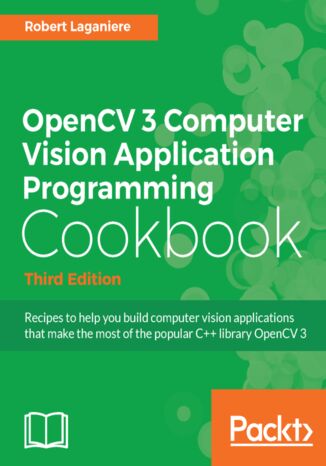
Robert Laganiere
Making your applications see has never been easier with OpenCV. With it, you can teach your robot how to follow your cat, write a program to correctly identify the members of One Direction, or even help you find the right colors for your redecoration.OpenCV 3 Computer Vision Application Programming Cookbook Third Edition provides a complete introduction to the OpenCV library and explains how to build your first computer vision program. You will be presented with a variety of computer vision algorithms and exposed to important concepts in image and video analysis that will enable you to build your own computer vision applications.This book helps you to get started with the library, and shows you how to install and deploy the OpenCV library to write effective computer vision applications following good programming practices. You will learn how to read and write images and manipulate their pixels. Different techniques for image enhancement and shape analysis will be presented. You will learn how to detect specific image features such as lines, circles or corners. You will be introduced to the concepts of mathematical morphology and image filtering. The most recent methods for image matching and object recognition are described, and you’ll discover how to process video from files or cameras, as well as how to detect and track moving objects. Techniques to achieve camera calibration and perform multiple-view analysis will also be explained. Finally, you’ll also get acquainted with recent approaches in machine learning and object classification.
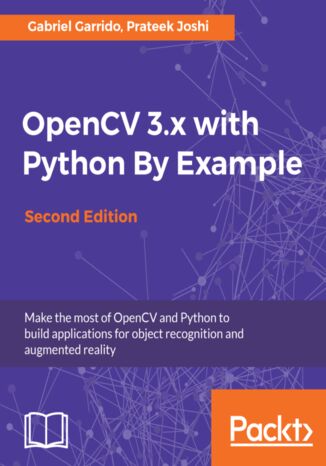
Gabriel Garrido Calvo, Prateek Joshi
Computer vision is found everywhere in modern technology. OpenCV for Python enables us to run computer vision algorithms in real time. With the advent of powerful machines, we have more processing power to work with. Using this technology, we can seamlessly integrate our computer vision applications into the cloud. Focusing on OpenCV 3.x and Python 3.6, this book will walk you through all the building blocks needed to build amazing computer vision applications with ease.We start off by manipulating images using simple filtering and geometric transformations. We then discuss affine and projective transformations and see how we can use them to apply cool advanced manipulations to your photos like resizing them while keeping the content intact or smoothly removing undesired elements. We will then cover techniques of object tracking, body part recognition, and object recognition using advanced techniques of machine learning such as artificial neural network. 3D reconstruction and augmented reality techniques are also included. The book covers popular OpenCV libraries with the help of examples.This book is a practical tutorial that covers various examples at different levels, teaching you about the different functions of OpenCV and their actual implementation. By the end of this book, you will have acquired the skills to use OpenCV and Python to develop real-world computer vision applications.