
Systemy operacyjne
Tutaj dowiecie się jak prawidłowo zainstalować i skonfigurować wybrany system operacyjny, naprawić ewentualne błędy lub zwiększyć wydajność komputera. Znajdziecie przydatne informacje na temat administracji OS, nauczycie się optymalnie wykorzystywać oparte na nim aplikacje oraz w pełni opanować potencjał waszego systemu.
Poszczególne pozycje odkrywają tajemnice wszystkich, mniej lub bardziej popularnych systemów operacyjnych, od DOS, Unix, Mac OS, poprzez wszelkie dystrybucje Linuxa, zarówno desktopowe, serwerowe i typu live-CD, aż po większość wersji Microsoft Windows, także wersje serwerowe. Książki napisane są przystępnym i zrozumiałym językiem, przeznaczone zarówno dla zwykłego użytkownika, stanowią również cenne źródło informacji dla profesjonalnych administratorów.
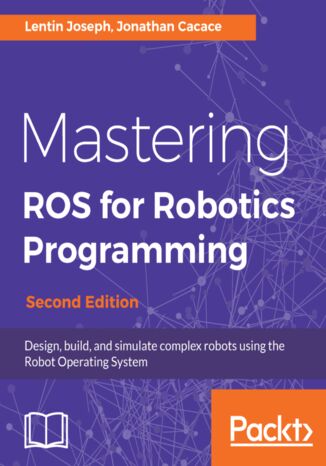
Lentin Joseph, Jonathan Cacace
In this day and age, robotics has been gaining a lot of traction in various industries where consistency and perfection matter. Automation is achieved via robotic applications and various platforms that support robotics. The Robot Operating System (ROS) is a modular software platform to develop generic robotic applications. This book focuses on the most stable release of ROS (Kinetic Kame), discusses advanced concepts, and effectively teaches you programming using ROS.We begin with aninformative overview of the ROS framework, which will give you a clear idea of how ROS works. During the course of this book, you’ll learn to build models of complex robots, and simulate and interface the robot using the ROS MoveIt! motion planning library and ROS navigation stacks. Learn to leverage several ROS packages to embrace your robot models.After covering robot manipulation and navigation, you’ll get to grips with the interfacing I/O boards, sensors, and actuators of ROS. Vision sensors are a key component of robots, and an entire chapter is dedicated to the vision sensor and image elaboration, its interface in ROS and programming. You’ll also understand the hardware interface and simulation of complex robots to ROS and ROS Industrial.At the end of this book, you’ll discover the best practices to follow when programming using ROS.
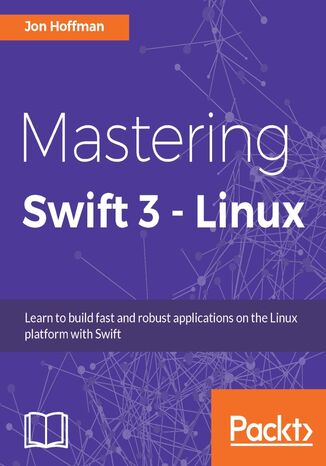
Jon Hoffman
Swift is a modern, fast, and safe programming language created by Apple. Writing Swift is interactive and fun, the syntax is concise yet expressive, and the code runs lightning-fast. Swift’s move to open source has been embraced with open arms and has seen increased adoption in the Linux platform.Our book will introduce you to the Swift language, further delving into all the key concepts you need to create applications for desktop, server, and embedded Linux platforms. We will teach you the best practices to design an application with Swift 3 via design patterns and Protocol-Oriented Programming. Further on, you will learn how to catch and respond to errors within your application. When you have gained a strong knowledge of using Swift in Linux, we’ll show you how to build IoT and robotic projects using Swift on single board computers. By the end of the book, you will have a solid understanding of the Swift Language with Linux and will be able to create your own applications with ease.
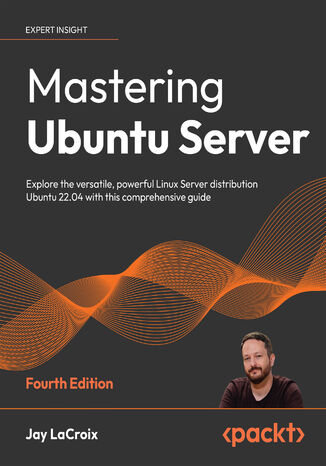
Jay LaCroix
Ubuntu Server is taking the server world by storm - and for a good reason! The server-focused spin of Ubuntu is a stable, flexible, and powerful enterprise-class distribution of Linux with a focus on running servers both small and large.Mastering Ubuntu Server is a book that will teach you everything you need to know in order to manage real Ubuntu-based servers in actual production deployments. This book will take you from initial installation to deploying production-ready solutions to empower your small office network, or even a full data center. You'll see examples of running an Ubuntu Server in the cloud, be walked through set up popular applications (such as Nextcloud), host your own websites, and deploy network resources such as DHCP, DNS, and others. You’ll also see how to containerize applications via LXD to maximize efficiency and learn how to build Kubernetes clusters. This new fourth edition updates the popular book to cover Ubuntu 22.04 LTS, which takes advantage of the latest in Linux-based technologies.By the end of this Ubuntu book, you will have gained all the knowledge you need in order to work on real-life Ubuntu Server deployments and become an expert Ubuntu Server administrator who is well versed in its feature set.
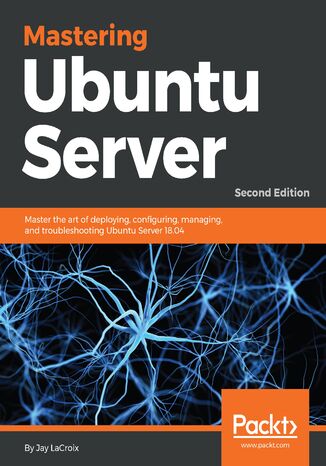
Jay LaCroix
Ubuntu Server has taken the data centers by storm. Whether you're deploying Ubuntu for a large-scale project or for a small office, it is a stable, customizable, and powerful Linux distribution that leads the way with innovative and cutting-edge features. For both simple and complex server deployments, Ubuntu's flexible nature can be easily adapted to meet to the needs of your organization. With this book as your guide, you will learn all about Ubuntu Server, from initial deployment to creating production-ready resources for your network. The book begins with the concept of user management, group management, and filesystem permissions. Continuing into managing storage volumes, you will learn how to format storage devices, utilize logical volume management, and monitor disk usage. Later, you will learn how to virtualize hosts and applications, which will cover setting up KVM/QEMU, as well as containerization with both Docker and LXD. As the book continues, you will learn how to automate configuration with Ansible, as well as take a look at writing scripts. Lastly, you will explore best practices and troubleshooting techniques when working with Ubuntu Server that are applicable to real-world scenarios. By the end of the book, you will be an expert Ubuntu Server administrator who is well-versed in its advanced concepts.
Mastering Ubuntu Server. Upgrade your Ubuntu skills
Jay LaCroix
Ubuntu is a Debian-based Linux operating system, and has various versions targeted at servers, desktops, phones, tablets and televisions. The Ubuntu Server Edition, also called Ubuntu Server, offers support for several common configurations, and also simplifies common Linux server deployment processes.With this book as their guide, readers will be able to configure and deploy Ubuntu Servers using Ubuntu Server 16.04, with all the skills necessary to manage real servers. The book begins with the concept of user management, group management, as well as file-system permissions. To manage your storage on Ubuntu Server systems, you will learn how to add and format storage and view disk usage. Later, you will also learn how to configure network interfaces, manage IP addresses, deploy Network Manager in order to connect to networks, and manage network interfaces. Furthermore, you will understand how to start and stop services so that you can manage running processes on Linux servers. The book will then demonstrate how to access and share files to or from Ubuntu Servers. You will learn how to create and manage databases using MariaDB and share web content with Apache. To virtualize hosts and applications, you will be shown how to set up KVM/Qemu and Docker and manage virtual machines with virt-manager. Lastly, you will explore best practices and troubleshooting techniques when working with Ubuntu Servers.By the end of the book, you will be an expert Ubuntu Server user well-versed in its advanced concepts.
Chris Childerhose, Rick Vanover, Nikola Pejková
In today’s evolving threat landscape, protecting data across virtual, physical, and cloud workloads is critical. Veeam Backup & Replication remains a leading modern data protection platform, and version 13 elevates it with AI-driven intelligence, hardened security, and a reimagined appliance architecture. This new edition equips IT professionals and backup administrators to design, deploy, and manage a resilient Veeam v13 infrastructure.This edition covers major new features added to the application, such as Veeam Intelligence AI-driven insights, Universal Continuous Data Protection, and the Veeam Software Appliance with built-in High Availability clustering. This guides you through implementing modern data protection solutions for your cloud and virtual infrastructure with Veeam while helping you master advanced concepts such as Zero Trust security hardening and enhanced Active Directory integration. You'll dive deep into other new features as well, such as improved automation through PowerShell enhancements, and learn about CDP and disaster recovery from a service provider perspective with Veeam Cloud Connect.By the end of this book, you'll be able to successfully implement Veeam Backup & Replication to secure your environment and ensure reliable disaster recovery across your entire infrastructure.
Mastering VMware Horizon 7. Virtualization that can transform your organization - Second Edition
Peter von Oven, Barry Coombs
Desktop virtualization can be a bit of a headache. But VMware Horizon 7 changes all that. With a rich and adaptive UX, improved security and a range of useful features for storage and networking optimization, there’s plenty to love.But to properly fall in love with it, you need to know how to use it. And that means venturing deeper into the software, taking advantage of its extensive range of features, many of which are underused and underpromoted. This guide will take you through everything you need to know to not only successfully virtualize your desktop infrastructure but also to maintain and optimize the infrastructure to keep all your users happy.We’ll show you how to assess and analyze your infrastructure, and how to use that analysis to design a solution that meets your organizational and user needs. Once you’ve done that, you’ll find out how to build your virtualized environment, before deploying your virtualized solution. But more than that, we’ll also make sure you know everything you need to know about the full range of features on offer, including mobile cloud, so you can use them to take full control of your virtualized infrastructure.
Peter von Oven, Barry Coombs
Desktop virtualization can be tough, but VMware Horizon 7.8 changes all that. With a rich and adaptive UX, improved security,and a range of useful features for storage and networking optimization, there's plenty to love.But to properly fall in love with it, you need to know how to use it, and that means venturing deeper into the software and taking advantage of its extensive range of features, many of which are underused and underpromoted. This guide will take you through everything you need to know to not only successfully virtualize your desktop infrastructure, but also to maintain and optimize it to keep all your users happy.We'll show you how to assess and analyze your infrastructure, and how to use that analysis to design a solution that meets your organizational and user needs. Once you've done that, you'll find out how to build your virtualized environment, before deploying your virtualized solution. But more than that,we'll also make sure you know everything you need to know about the full range of features on offer, including the mobile cloud, so that you can use them to take full control of your virtualized infrastructure.