
Biznes IT

Potoki danych. Leksykon kieszonkowy. Przenoszenie i przetwarzanie danych na potrzeby ich analizy
James Densmore
Poprawnie zaprojektowane i wdrożone potoki danych mają kluczowe znaczenie dla pomyślnej analizy danych, a także w trakcie uczenia maszynowego. Pozyskanie ogromnych ilości danych z różnych źródeł najczęściej nie stanowi problemu. Nieco trudniejsze jest zaprojektowanie procesu ich przetwarzania w celu dostarczenia kontekstu w taki sposób, aby efektywnie korzystać z posiadanych danych w codziennej pracy organizacji i podejmować dzięki nim rozsądne decyzje. Oto zwięzły przewodnik przeznaczony dla inżynierów danych, którzy chcą poznać zasady implementacji potoków danych. Wyjaśnia najważniejsze pojęcia związane z potokami danych, opisuje zasady ich tworzenia i implementacji, prezentuje także najlepsze praktyki stosowane przez liderów w branży analizy danych. Dzięki książce zrozumiesz, w jaki sposób potoki danych działają na nowoczesnym stosie danych, poznasz też typowe zagadnienia, które trzeba przemyśleć przed podjęciem decyzji dotyczących implementacji. Dowiesz się, jakie są zalety samodzielnego opracowania rozwiązania, a jakie - zakupu gotowego produktu. Poznasz również podstawowe koncepcje, które mają zastosowanie dla frameworków typu open source, produktów komercyjnych i samodzielnie opracowywanych rozwiązań. Dowiedz się: czym jest potok danych i na czym polega jego działanie jak się odbywa przenoszenie i przetwarzanie danych w nowoczesnej infrastrukturze jakie narzędzia są szczególnie przydatne do tworzenia potoków danych jak używać potoków danych do analizy i tworzenia raportów jakie są najważniejsze aspekty obsługi potoków, ich testowania i rozwiązywania problemów Poznaj najlepsze praktyki projektowania i implementacji potoków danych!

Power Query w Excelu i Power BI. Zbieranie i przekształcanie danych
Gil Raviv
Czy praca na danych kojarzy Ci się z frustrującym ręcznym wklejaniem i oczyszczaniem danych w Excelu? A może tracisz mnóstwo energii na importowanie nieuporządkowanych danych pochodzących z różnych źródeł? Być może podejrzewasz, że Twoje arkusze kryją mnóstwo wartościowych informacji, ale nie wiesz, w jaki sposób je wydobyć i ile godzin musisz na to poświęcić? A może spędzasz sporo czasu na tworzeniu skomplikowanych raportów w Power BI lub programowaniu baz danych SQL Server? Dzięki wiedzy zawartej w tej książce wykonasz te zadania prościej i szybciej, a efekty będą o wiele bardziej niezawodne! Ten praktyczny przewodnik po narzędziu Power Query nauczy Cię efektywnie przetwarzać dane w Excelu: importować, oczyszczać, przekształcać i wydobywać potrzebne informacje. Dowiesz się, jak sprawnie wykonywać typowe zadania i prace analityczne, jak zwiększyć swoją skuteczność dzięki opanowaniu podstaw języka M oraz jak zautomatyzować proces przygotowywania danych do przetwarzania. Zapoznasz się z możliwościami Microsoft Cognitive Services oraz konektora Power Query Web, a także z wykorzystaniem sztucznej inteligencji do rozpoznawania treści tekstu. Nabyte umiejętności będziesz mógł przetestować w realistycznym projekcie, któremu poświęcono ostatni rozdział! W książce między innymi: solidne podstawy pracy z narzędziem Power Query automatyzacja operacji na danych proste i zaawansowane techniki dekompozycji tabel tworzenie procedur w języku M pozyskiwanie informacji z danych tekstowych i sieci społecznościowych Power Query i Power BI: sprostasz wyzwaniu przetwarzania danych!

Power Query w Excelu i Power BI. Zbieranie i przekształcanie danych. Wydanie II
Daniil Maslyuk, Gil Raviv
Czy chcesz dokonywać cudów z danymi, unikać powtarzalnej pracy i oszczędzać nawet 80 procent czasu? Zautomatyzować kopiowanie i żmudne oczyszczanie danych, aby doprowadzić je do odpowiedniego stanu? A może chcesz ze spokojem podchodzić do podejmowania racjonalnych decyzji opartych na ogromnych ilościach niejednorodnych danych? Teraz możesz łatwo sprostać takim wyzwaniom i uzyskiwać niezwykłe rezultaty. Wystarczy, że skorzystasz z narzędzi dostępnych w Excelu ― i z tej książki. To zaktualizowane wydanie praktycznego przewodnika po Power Query. Pozwoli Ci opanować umiejętność efektywnego przetwarzania danych i wydobywania z nich wartościowych informacji. Dowiesz się, jak wykonywać złożone prace analityczne i jak używać procedur w języku M. Znajdziesz tu ponad 70 ćwiczeń i 200 plików, dzięki którym nauczysz się importować bezładne, rozdzielone tabele danych i automatycznie przekształcać je w ustrukturyzowane zbiory gotowe do analizy. Większość opisanych technik z łatwością zapamiętasz i użyjesz do swoich potrzeb. W książce między innymi: solidne podstawy pracy z narzędziem Power Query proste i zaawansowane techniki dekompozycji tabel tworzenie elastycznych procedur w języku M pozyskiwanie informacji z danych tekstowych i sieci społecznościowych profilowanie danych i poprawianie wydajności zapytań Power Query i Power BI: więcej i lepiej w krótszym czasie!
Nataraj Dasgupta
Big Data analytics relates to the strategies used by organizations to collect, organize, and analyze large amounts of data to uncover valuable business insights that cannot be analyzed through traditional systems. Crafting an enterprise-scale cost-efficient Big Data and machine learning solution to uncover insights and value from your organization’s data is a challenge. Today, with hundreds of new Big Data systems, machine learning packages, and BI tools, selecting the right combination of technologies is an even greater challenge. This book will help you do that. With the help of this guide, you will be able to bridge the gap between the theoretical world of technology and the practical reality of building corporate Big Data and data science platforms. You will get hands-on exposure to Hadoop and Spark, build machine learning dashboards using R and R Shiny, create web-based apps using NoSQL databases such as MongoDB, and even learn how to write R code for neural networks.By the end of the book, you will have a very clear and concrete understanding of what Big Data analytics means, how it drives revenues for organizations, and how you can develop your own Big Data analytics solution using the different tools and methods articulatedin this book.
Emily Carr
Transform your IT project and make change stick with this step-by-step guide.In today’s fast-paced world of change, companies expect you to do more, with less. Drawing on over a decade of Change Management experience as a consultant with Fortune 500 companies including IBM and NCR, Emily Carr shares the secrets to making change happen smoothly.If your company is like most, the number one reason that projects have failed over the years don’t have to do with technology. They have to do with people. People didn’t like the new technology. People weren’t trained properly on the change. People hadn’t received adequate communications and didn’t understand the change. Sound familiar?Project teams rarely forget to work on the technology, but they often forget to work with the people, and no matter how amazing your new technology is, it’s useless unless people use it efficiently.This book will help you focus on the people.Packed with templates, checklists, and real-life examples, this user-friendly guide will provide you with the insights and guidance of an expert consultant, for a fraction of the price. You’ll follow a clearly laid out path from Change Management novice to confident and prepared change manager. You’ll be introduced to the Five Pillars of Change: Sponsorship, Stakeholder Management, Communication, Training, and Organization Design. You will work step-by-step through templates in each pillar to build and run a comprehensive Change Management plan tailor-made to your project and organization.
Abhinav Dadhich
In this book, you will find several recently proposed methods in various domains of computer vision. You will start by setting up the proper Python environment to work on practical applications. This includes setting up libraries such as OpenCV, TensorFlow, and Keras using Anaconda. Using these libraries, you'll start to understand the concepts of image transformation and filtering. You will find a detailed explanation of feature detectors such as FAST and ORB; you'll use them to find similar-looking objects.With an introduction to convolutional neural nets, you will learn how to build a deep neural net using Keras and how to use it to classify the Fashion-MNIST dataset. With regard to object detection, you will learn the implementation of a simple face detector as well as the workings of complex deep-learning-based object detectors such as Faster R-CNN and SSD using TensorFlow. You'll get started with semantic segmentation using FCN models and track objects with Deep SORT. Not only this, you will also use Visual SLAM techniques such as ORB-SLAM on a standard dataset. By the end of this book, you will have a firm understanding of the different computer vision techniques and how to apply them in your applications.
Practical Convolutional Neural Networks. Implement advanced deep learning models using Python
Mohit Sewak, Md. Rezaul Karim, Pradeep Pujari
Convolutional Neural Network (CNN) is revolutionizing several application domains such as visual recognition systems, self-driving cars, medical discoveries, innovative eCommerce and more.You will learn to create innovative solutions around image and video analytics to solve complex machine learning and computer vision related problems and implement real-life CNN models. This book starts with an overview of deep neural networkswith the example of image classification and walks you through building your first CNN for human face detector. We will learn to use concepts like transfer learning with CNN, and Auto-Encoders to build very powerful models, even when not much of supervised training data of labeled images is available.Later we build upon the learning achieved to build advanced vision related algorithms for object detection, instance segmentation, generative adversarial networks, image captioning, attention mechanisms for vision, and recurrent models for vision. By the end of this book, you should be ready to implement advanced, effective and efficient CNN models at your professional project or personal initiatives by working on complex image and video datasets.
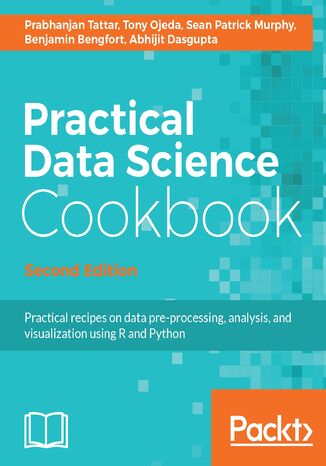
RATNADIP ADHIKARI, Rajib Bhattacharya, Prabhanjan Narayanachar Tattar,...
As increasing amounts of data are generated each year, the need to analyze and create value out of it is more important than ever. Companies that know what to do with their data and how to do it well will have a competitive advantage over companies that don’t. Because of this, there will be an increasing demand for people that possess both the analytical and technical abilities to extract valuable insights from data and create valuable solutions that put those insights to use. Starting with the basics, this book covers how to set up your numerical programming environment, introduces you to the data science pipeline, and guides you through several data projects in a step-by-step format. By sequentially working through the steps in each chapter, you will quickly familiarize yourself with the process and learn how to apply it to a variety of situations with examples using the two most popular programming languages for data analysis—R and Python.