
Biznes IT
Reinier van Altena
This practical guide on no-code development with Betty Blocks will take you through the different features, no-code functionalities, and capabilities of the Betty Blocks platform using real-world use cases. The book will equip you with the tools to develop business apps based on various data models, business processes, and more.You’ll begin with an introduction to the basic concepts of the Betty Blocks no-code platform, such as developing IT solutions on various use cases including reporting apps, data tracking apps, workflows, and business processes. After getting to grips with the basics, you’ll explore advanced concepts such as building powerful applications that impact the business straight away with no-code application development and quickly creating prototypes. The concluding chapters will help you get a solid understanding of rapid application development, building customer portals, building dynamic web apps, drag-and-drop front ends, visual modelling capabilities, and complex data models.By the end of this book, you’ll have gained a comprehensive understanding of building your own applications as a citizen developer using the Betty Blocks no-code platform.
Fanny Ip, Jeremiah Crowley
Artificial intelligence (AI) enables enterprises to optimize business processes that are probabilistic, highly variable, and require cognitive abilities with unstructured data. Many believe there is a steep learning curve with AI, however, the goal of our book is to lower the barrier to using AI. This practical guide to AI with UiPath will help RPA developers and tech-savvy business users learn how to incorporate cognitive abilities into business process optimization. With the hands-on approach of this book, you'll quickly be on your way to implementing cognitive automation to solve everyday business problems.Complete with step-by-step explanations of essential concepts, practical examples, and self-assessment questions, this book will help you understand the power of AI and give you an overview of the relevant out-of-the-box models. You’ll learn about cognitive AI in the context of RPA, the basics of machine learning, and how to apply cognitive automation within the development lifecycle. You’ll then put your skills to test by building three use cases with UiPath Document Understanding, UiPath AI Center, and Druid.By the end of this AI book, you'll be able to build UiPath automations with the cognitive capabilities of intelligent document processing, machine learning, and chatbots, while understanding the development lifecycle.
Govindakumar Madhavan
Beginning with basic concepts like central tendency, dispersion, and types of distribution, this course will help you build a robust understanding of data analysis. It progresses to more advanced topics, including hypothesis testing, outliers, and the intricacies of dependent versus independent variables, ensuring you grasp the statistical tools necessary for data-driven decision-making.Moving ahead, you'll explore the mathematical frameworks crucial for machine learning algorithms. Learn about the significance of percentiles, the distinction between population and sample, and the vital role of precision versus accuracy in data science. Chapters on linear algebra and regression will enhance your ability to implement and interpret complex models, while practical lessons on measuring algorithm accuracy and understanding key machine learning concepts will round out your expertise.The course culminates with an in-depth look at specific machine learning techniques such as decision trees, k-nearest neighbors (kNN), and gradient descent. Each chapter builds on the last, guiding you through a logical progression of knowledge and skills. By the end, you will have not only mastered the theoretical aspects but also gained practical insights into applying these techniques in real-world scenarios.
Design Thinking. Jak wykorzystać myślenie projektowe do zwiększenia zysków Twojej firmy
Danuta Piasecka
Zweryfikuj swoje pomysły biznesowe. Szybko i skutecznie! Design thinking, czyli myślenie projektowe. Wbrew pozorom ten sposób podejścia do biznesu nie jest przypisany wyłącznie do wielkich korporacji. Pracować w duchu design thinking może i powinna każda firma, której właścicielowi zależy na zwiększeniu wydajności, szybkim realizowaniu dobrych pomysłów i jeszcze szybszym wycofywaniu się z tych nietrafionych. Jeżeli zatem myślisz o tym, by w swojej - małej lub większej - firmie działać szybciej, a tym samym skuteczniej i z większym zyskiem, ta kursoksiążka jest dla Ciebie. Dlaczego kursoksiążka? Ponieważ jest to pozycja, w której informacje teoretyczne dotyczące samego pojęcia myślenia projektowego ograniczono do minimum. Autorka, bizneswoman, trenerka i moderatorka DT, stawia na wiedzę praktyczną i umiejętność myślenia projektowego, a także dostarczenie Ci narzędzi gotowych do zastosowania od zaraz. Za pośrednictwem kursoksiążki krok po kroku przeprowadzi Cię przez proces projektowania nowych produktów i usług, dzięki którym zwiększysz zyski Twojej firmy.
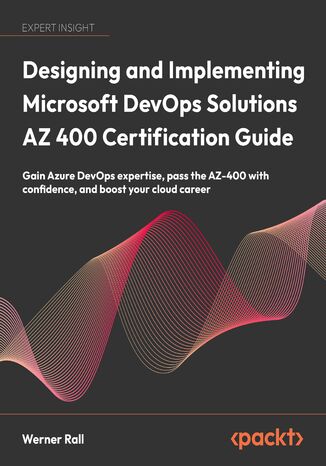
Werner Rall
The AZ-400 certification proves your ability to design and implement DevOps practices on Microsoft Azure, making it a key step forward for cloud engineers and DevOps professionals. This comprehensive study guide is designed to help you pass the AZ-400 exam on your first attempt, covering every objective in detail.You’ll find clear explanations, end-of-chapter review questions, full-length mock exams, and hands-on solutions that reinforce your understanding. Key topics include continuous integration, continuous delivery, infrastructure as code, containerization, security, and automation.Through practical labs and real-world scenarios, you'll gain the experience needed to apply these concepts in live environments. The book also explores advanced topics such as site reliability engineering, cloud transformation strategies, and compliance.By the end, you will have a solid foundation in Azure DevOps, the ability to deliver secure and reliable deployments, and the confidence to excel in the AZ-400 exam and your DevOps career.
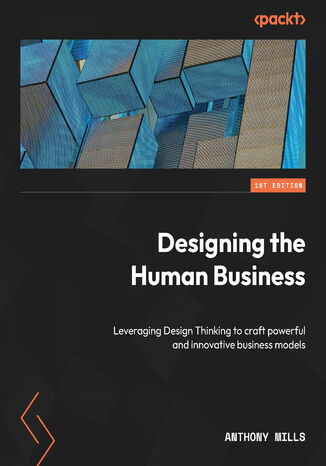
Anthony Mills
Globally, 275,000 new business ventures get launched every single day, and ninety percent of them fail. One of the most fundamental reasons for that is that they don’t solve a real market problem that a real market population has, in a way that resonates with that market and sells their solution. Consequently, they struggle to gain traction and attain scale.In this book, you’ll learn what business models are. Additionally, you’ll find out what business model innovation is and, ultimately, how to use Design Thinking to identify not just a winning value proposition but also bring that value proposition to the market in a way that resonates with customers. In doing so, you’ll be able to unlock maximum value for your business, allowing it to attain maximum scale through growing waves of adopters.By the end of this book, you’ll understand what you need to do to uncover your target markets’ ‘reason to buy’, as well as how to wrap a winning business model around that reason so that your business can gain traction and achieve scale.
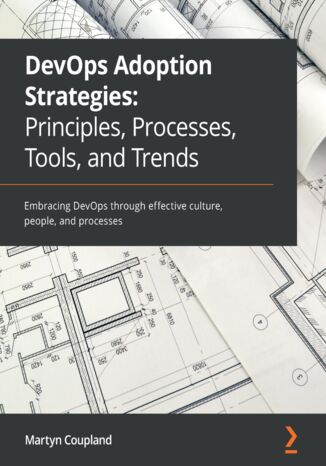
Martyn Coupland
DevOps is a set of best practices enabling operations and development teams to work together to produce higher-quality work and, among other things, quicker releases. This book helps you to understand the fundamentals needed to get started with DevOps, and prepares you to start deploying technical tools confidently.You will start by learning the key steps for implementing successful DevOps transformations. The book will help you to understand how aspects of culture, people, and process are all connected, and that without any one of these elements DevOps is unlikely to be successful. As you make progress, you will discover how to measure and quantify the success of DevOps in your organization, along with exploring the pros and cons of the main tooling involved in DevOps. In the concluding chapters, you will learn about the latest trends in DevOps and find out how the tooling changes when you work with these specialties.By the end of this DevOps book, you will have gained a clear understanding of the connection between culture, people, and processes within DevOps, and learned why all three are critically important.
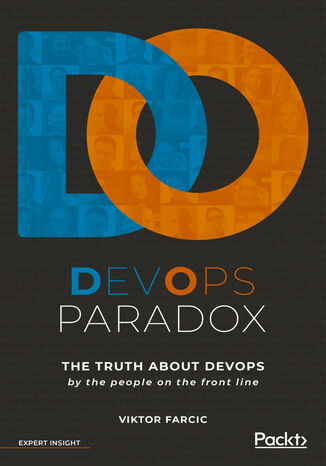
DevOps Paradox. The truth about DevOps by the people on the front line
Viktor Farcic
DevOps promises to break down silos, uniting organizations to deliver high quality output in a cross-functional way. In reality it often results in confusion and new silos: pockets of DevOps practitioners fight the status quo, senior decision-makers demand DevOps paint jobs without committing to true change. Even a clear definition of what DevOps is remains elusive.In DevOps Paradox, top DevOps consultants, industry leaders, and founders reveal their own approaches to all aspects of DevOps implementation and operation. Surround yourself with expert DevOps advisors. Viktor Farcic draws on experts from across the industry to discuss how to introduce DevOps to chaotic organizations, align incentives between teams, and make use of the latest tools and techniques.With each expert offering their own opinions on what DevOps is and how to make it work, you will be able to form your own informed view of the importance and value of DevOps as we enter a new decade. If you want to see how real DevOps experts address the challenges and resolve the paradoxes, this book is for you.