
.NET - Programowanie
Dino Esposito
Co robić w każdej fazie projektowania czystej architektury aplikacji .NET Opanuj zaawansowane techniki .NET, skupiając się na rzeczywistej wartości zapewnianej przez pracę w modularnej, czystej architekturze. Autor, posiadacz tytułu MVP dla Microsoft Data Platform, wyjaśnia kluczowe koncepcje czystej architektury, które z domieszką pragmatyzmu i dyscypliny projektowej pomagają zastosować tę wiedzę w rzeczywistym projekcie. Zaczynając od poszukiwań architektury modularnej i przedstawienia metodologii projektowania dziedzinowego (DDD), Esposito podkreśla rolę, jaką modularyzacja odgrywa w zarządzaniu złożonością w wytwarzaniu oprogramowania. Kolejne warstwy architektury, która jest modularna i łatwa w utrzymaniu, prezentuje poprzez przykładowy projekt, który nie jest jedynie kolejną zabawką, ale rzeczywistym narzędziem przydatnym dla czytelnika. Na koniec przechodzi do typowych dylematów, przed którymi stoją programiści i operatorzy, łącząc historyczne osiągnięcia z praktycznymi rozwiązaniami na dziś. Ta książka pomoże Ci: Zrozumieć znaczenie architektury modularnej w historii oprogramowania Poznać koncepcje projektowania dziedzinowego - zarówno strategiczne, jak i praktyczne Stosować techniki analizy modularnej w swoich projektach Uzyskać najwięcej korzyści z architektury warstwowej Szczegółowo poznać indywidualne warstwy - prezentacji, aplikacji, domenowej i infrastruktury Zrozumieć celowość używania usług domenowych do oddzielenia surowych zadań przechowywania danych od zadań biznesowych Poznać szereg najlepszych praktyk C# dla modelowania klas na podstawie bytów ze świata rzeczywistego Zrozumieć zalety mikrousług w porównaniu do monolitów modularnych Poznać typowe problemy wdrożeniowe po stronie klienta i serwera Skonfigurować swoją architekturę, przetestować założenia i uzyskać jeszcze więcej pomocy Dla profesjonalistów IT Dla profesjonalistów oprogramowania, architektów, czołowych programistów, wykładowców, konsultantów i analityków Dla każdego, kto chce zostać architektem oprogramowania i poznać zalety czystej, warstwowej i modularnej architektury O autorze Dino Esposito napisał do tej pory ponad 20 książek i przeszło tysiąc artykułów. Jego kariera programisty obejmuje ponad trzy dekady. Powszechnie uznaje się, że jego książki i artykuły pomogły w rozwoju profesjonalnym tysięcy programistów .NET. Zaczynał w roku 1992 jako programista C i był świadkiem debiutu .NET, powstania i upadku Silverlight, dziewięciu wcieleń JavaScript oraz pojawiania się i znikania rozmaitych wzorców architektonicznych dla przetwarzania rozproszonego. Po dwóch latach pracy jako konsultant w branży energetycznej, obecnie kieruje zespołem IT, który zbudował i utrzymuje (w ASP.NET) działającą non-stop platformę do obsługi rozgrywek zawodowego tenisa. Jego inny zespół buduje oprogramowanie wspierające terapie na potrzeby szpitala watykańskiego. Można się z nim skontaktować poprzez stronę https://youbiquitous.net albo LinkedIn.
Matt Eland
As the fields of data science, machine learning, and artificial intelligence rapidly evolve, .NET developers are eager to leverage their expertise to dive into these exciting domains but are often unsure of how to do so. Data Science in .NET with Polyglot Notebooks is the practical guide you need to seamlessly bring your .NET skills into the world of analytics and AI. With Microsoft’s .NET platform now robustly supporting machine learning and AI tasks, the introduction of tools such as .NET Interactive kernels and Polyglot Notebooks has opened up a world of possibilities for .NET developers. This book empowers you to harness the full potential of these cutting-edge technologies, guiding you through hands-on experiments that illustrate key concepts and principles. Through a series of interactive notebooks, you’ll not only master technical processes but also discover how to integrate these new skills into your current role or pivot to exciting opportunities in the data science field. By the end of the book, you’ll have acquired the necessary knowledge and confidence to apply cutting-edge data science techniques and deliver impactful solutions within the .NET ecosystem.
DAX for Humans. The No CALCULATE Guide that Makes DAX Easy
Greg Deckler
Although DAX has been around for over a decade, many struggle to master the language primarily because DAX is often taught through the CALCULATE function, which is the most complex and unintuitive function in all of DAX. But what if DAX could be taught without CALCULATE? The result would be an incredibly intuitive and easy way to learn DAX.DAX for Humans stands the traditional approach to learning DAX on its head, foregoing the traditional, legacy methods of learning DAX for a more modern approach that focuses on core DAX concepts and not any specific function. Even if you know nothing about DAX, from the very first chapter you will learn the essentials of the DAX language, as well as a single pattern to solve the majority of DAX problems. From that point forward, you’ll explore how to work with the basic building blocks of the DAX language and apply what you learn to real-world business scenarios across customers, human resources, projects, finance, operations, and more.By the end of this book, you’ll be able to apply your DAX skills to simple, complex, and advanced scenarios; understand how to optimize and debug your DAX code; and even know how to efficiently apply artificial intelligence to help you write and debug your DAX code.
Subhajit Chatterjee
API-centric architectures are foundational to delivering omnichannel experiences for an enterprise. With this book, developers will learn techniques to design loosely coupled, cloud-based, business-tier interfaces that can be consumed by a variety of client applications.Using real-world examples and case studies, the book helps you get to grips with the cloudbased design and implementation of reliable and resilient API-centric solutions. Starting with the evolution of enterprise applications, you'll learn how API-based integration architectures drive digital transformation. You'll then learn about the important principles and practices that apply to cloud-based API architectures and advance to exploring the different architecture styles and their implementation in Azure. This book is written from a practitioner's point of view, so you'll discover ideas and practices that have worked successfully in various customer scenarios.By the end of this book, you'll be able to architect, design, deploy, and monetize your API solutions in the Azure cloud while implementing best practices and industry standards.
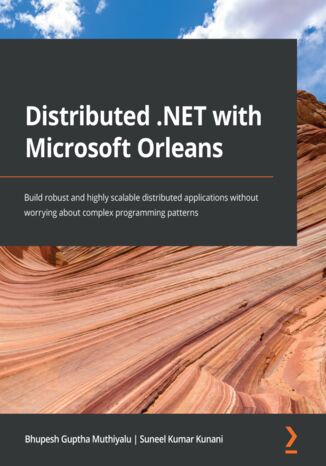
Bhupesh Guptha Muthiyalu, Suneel Kumar Kunani
Building distributed applications in this modern era can be a tedious task as customers expect high availability, high performance, and improved resilience. With the help of this book, you'll discover how you can harness the power of Microsoft Orleans to build impressive distributed applications.Distributed .NET with Microsoft Orleans will demonstrate how to leverage Orleans to build highly scalable distributed applications step by step in the least possible time and with minimum effort. You'll explore some of the key concepts of Microsoft Orleans, including the Orleans programming model, runtime, virtual actors, hosting, and deployment. As you advance, you'll become well-versed with important Orleans assets such as grains, silos, timers, and persistence. Throughout the book, you'll create a distributed application by adding key components to the application as you progress through each chapter and explore them in detail.By the end of this book, you'll have developed the confidence and skills required to build distributed applications using Microsoft Orleans and deploy them in Microsoft Azure.
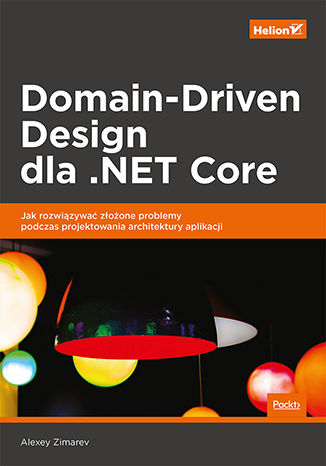
Alexey Zimarev
Wdrożenie zasad projektowania dziedzinowego (DDD) jest szansą na uzyskanie doskonałych wyników projektowania oprogramowania dla złożonych wymagań biznesowych. Aby podejście DDD ujawniło swoje zalety, konieczne jest zrozumienie potrzeb użytkowników i zidentyfikowanie właściwych problemów do rozwiązania. Dopiero potem można przystąpić do budowania modeli. Zaangażowanie zainteresowanych stron biznesowych w ten proces nie zawsze jednak przebiega efektywnie. Konieczne jest zrozumienie natury modeli dziedzinowych opartych na zachowaniu oraz tego, jaką rolę odgrywają one w budowie zwinnych i zmodularyzowanych systemów. Dzięki tej książce zrozumiesz praktyczne znaczenie złożoności dziedziny i behawioralnych aspektów języka dziedzinowego. Poznasz podstawowe zasady DDD i nauczysz się używać takich narzędzi jak EventStorming, Event Sourcing i CQRS. Dowiesz się, jak stosuje się DDD do różnych stylów architektonicznych, takich jak REST, systemy reaktywne i mikrousługi. Nauczysz się pracować we frameworku .NET Core 2.2, aby przetłumaczyć modele dziedzinowe na wykonywalny kod C#, oraz Vue.js, aby zbudować frontend aplikacji. Nie zabrakło tutaj również zagadnień refaktoryzacji kodu, numerowania wersji zdarzeń i migracji. W rezultacie poszczególne zespoły w organizacji będą mogły pracować elastyczniej i efektywniej dzięki ulepszonym usługom i oddzielonym interakcjom. W książce między innymi: angażowanie interesariuszy biznesowych do rozwiązywania złożoności dziedziny koncepcja kontekstu ograniczonego i agregatu projektowanie modeli tymczasowych na podstawie zachowania wzorzec CQRS i modele odczytu wykorzystujące rzutowania jednokierunkowy przepływ interfejsu użytkownika w Vue.js praktyczne stosowanie zasad projektowania dziedzinowego Programowanie dziedzinowe: tak się trafia w sedno potrzeb!
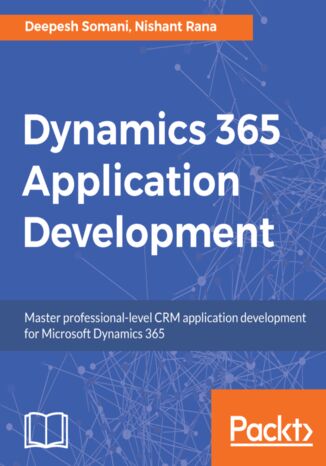
Deepesh Somani, Nishant Rana
Microsoft Dynamics 365 CRM is the most trusted name in enterprise-level customer relationship management. The latest version of Dynamics CRM comes with the important addition of exciting features guaranteed to make your life easier. It comes straight off the shelf with a whole new frontier of updated business rules, process enhancements, SDK methods, and other enhancements.This book will introduce you to the components of the new designer tools, such as SiteMap, App Module, and Visual Designer for Business Processes. Going deeper, this book teaches you how to develop custom SaaS applications leveraging the features of PowerApps available in Dynamics 365. Further, you will learn how to automate business processes using Microsoft Flow, and then we explore Web API, the most important platform update in Dynamics 365 CRM. Here, you'll also learn how to implement Web API in custom applications. You will learn how to write an Azure-aware plugin to design and integrate cloud-aware solutions. The book concludes with configuring services using newly released features such as Editable grids, Data Export Service, LinkedIn Integration, Relationship Insights, and Live Assist
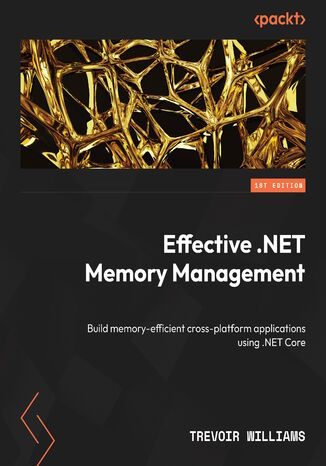
Effective .NET Memory Management. Build memory-efficient cross-platform applications using .NET Core
Trevoir Williams
In today’s software development landscape, efficient memory management is crucial for ensuring application performance and scalability. Effective .NET Memory Management addresses this need by explaining the intricacies of memory utilization within .NET Core apps, from fundamental concepts to advanced optimization techniques. Starting with an overview of memory management basics, you’ll quickly go through .NET’s garbage collection system. You’ll grasp the mechanics of memory allocation and gain insights into the distinctions between stack and heap memory and the nuances of value types and reference types. Building on this foundation, this book will help you apply practical strategies to address real-world app demands, spanning profiling memory usage, spotting memory leaks, and diagnosing performance bottlenecks, through clear explanations and hands-on examples. This book goes beyond theory, detailing actionable techniques to optimize data structures, minimize memory fragmentation, and streamline memory access in scenarios involving multithreading and asynchronous programming for creating responsive and resource-efficient apps that can scale without sacrificing performance. By the end of this book, you’ll have gained the knowledge to write clean, efficient code that maximizes memory usage and boosts app performance.