
Hacking
W kategorii Hacking zebrano publikacje dotyczące nie tylko hackerów, crackerów i ich technik działania, ale także opisujące różne aspekty bezpieczeństwa komputerów i danych na nich przechowywanych. Poznacie technikę przeprowadzania audytów bezpieczeństwa oraz sposoby zabezpieczania się przed atakami hackerów, programami szpiegującymi czy zwykłą plagą wirusów.
Nauczycie się chronić nie tylko poszczególne komputery ale całe sieci komputerowe przez opracowanie i wdrożenie odpowiedniej polityki bezpieczeństwa, poprawne użycie firewalli czy odpowiednie skonfigurowanie serwerów pracujących pod Waszym nadzorem, a także opanujecie sposoby bezpiecznego surfowania po internecie.
Preston Miller, Chapin Bryce
This book will illustrate how and why you should learn Python to strengthen your analysis skills and efficiency as you creatively solve real-world problems through instruction-based tutorials. The tutorials use an interactive design, giving you experience of the development process so you gain a better understanding of what it means to be a forensic developer.Each chapter walks you through a forensic artifact and one or more methods to analyze the evidence. It also provides reasons why one method may be advantageous over another. We cover common digital forensics and incident response scenarios, with scripts that can be used to tackle case work in the field. Using built-in and community-sourced libraries, you will improve your problem solving skills with the addition of the Python scripting language. In addition, we provide resources for further exploration of each script so you can understand what further purposes Python can serve. With this knowledge, you can rapidly develop and deploy solutions to identify critical information and fine-tune your skill set as an examiner.

Preston Miller, Chapin Bryce
Digital forensics plays an integral role in solving complex cybercrimes and helping organizations make sense of cybersecurity incidents. This second edition of Learning Python for Forensics illustrates how Python can be used to support these digital investigations and permits the examiner to automate the parsing of forensic artifacts to spend more time examining actionable data.The second edition of Learning Python for Forensics will illustrate how to develop Python scripts using an iterative design. Further, it demonstrates how to leverage the various built-in and community-sourced forensics scripts and libraries available for Python today. This book will help strengthen your analysis skills and efficiency as you creatively solve real-world problems through instruction-based tutorials.By the end of this book, you will build a collection of Python scripts capable of investigating an array of forensic artifacts and master the skills of extracting metadata and parsing complex data structures into actionable reports. Most importantly, you will have developed a foundation upon which to build as you continue to learn Python and enhance your efficacy as an investigator.
Learning Python Web Penetration Testing. Automate web penetration testing activities using Python
Christian Martorella
Web penetration testing is the use of tools and code to attack a website or web app in order to assess its vulnerability to external threats. While there are an increasing number of sophisticated, ready-made tools to scan systems for vulnerabilities, the use of Python allows you to write system-specific scripts, or alter and extend existing testing tools to find, exploit, and record as many security weaknesses as possible. Learning Python Web Penetration Testing will walk you through the web application penetration testing methodology, showing you how to write your own tools with Python for each activity throughout the process. The book begins by emphasizing the importance of knowing how to write your own tools with Python for web application penetration testing. You will then learn to interact with a web application using Python, understand the anatomy of an HTTP request, URL, headers and message body, and later create a script to perform a request, and interpret the response and its headers. As you make your way through the book, you will write a web crawler using Python and the Scrappy library. The book will also help you to develop a tool to perform brute force attacks in different parts of the web application. You will then discover more on detecting and exploiting SQL injection vulnerabilities. By the end of this book, you will have successfully created an HTTP proxy based on the mitmproxy tool.
Miroslav Vitula
A penetration test is one of the most important methods to secure a network or any individual machine. Having knowledge of these methods can enable a user to protect himself/herself from any kinds of attacks. Penetration tests can also be used to discover flaws or loop holes in one's security system, which if not fixed, can be exploited by an unwanted entity.This book starts off with an introduction to what penetration testing is, and how it can be performed on Android using zANTI2. Once you are aware of the basics, we move on to teach you the different types of scans that can be performed to search for targets. You will then learn how to connect to open ports and intrude into an unsecured computer. From here you will explore vulnerabilities and their usage, including ShellShock and SSL Poodle vulnerability.When connected to an open network, a user is susceptible to password and session hijacking, and a number of other cyber attacks. The book therefore ends with one of the main aspects of cyber security: the Man in the Middle attack. You will get to know everything about the MITM attack, how it works, and how one can be protected against it.

Selma Lagerlöf
Klasyczny tekst w nowoczesnej formie ebooka. Pobierz go już dziś na swój podręczny czytnik i ciesz się lekturą!

Rob VandenBrink
With Linux gaining popularity, more network services are being deployed on it due to its cost-effectiveness and flexibility. If you are a networking professional or an infrastructure engineer involved with networks, in-depth knowledge of Linux networking is paramount.Linux for Networking Professionals, Second Edition, is a comprehensive guide to building a strong foundation of Linux networking concepts. From basic Linux network configurations to major distributions and picking the right distro for your specific needs – this book covers it all.As you progress through the chapters, you’ll also find insights into diagnosing network issues, setting up robust firewall protection, and using Linux as a host for network services. The book takes you through a wide range of network services, explains why they're important, and how to configure them in an enterprise environment. With real-world examples, you'll learn how to securely configure various services and safeguard them against common attacks.As you advance to the final chapters, you’ll be well on your way towards building the foundation for an all-Linux data center. By the end of this book, you'll be able to not only configure common Linux network services confidently, but also use tried-and-tested methodologies for future Linux installations.
Linux Networking Cookbook. Over 40 recipes to help you set up and configure Linux networks
Gregory Boyce
Linux can be configured as a networked workstation, a DNS server, a mail server, a firewall, a gateway router, and many other things. These are all part of administration tasks, hence network administration is one of the main tasks of Linux system administration. By knowing how to configure system network interfaces in a reliable and optimal manner, Linux administrators can deploy and configure several network services including file, web, mail, and servers while working in large enterprise environments.Starting with a simple Linux router that passes traffic between two private networks, you will see how to enable NAT on the router in order to allow Internet access from the network, and will also enable DHCP on the network to ease configuration of client systems. You will then move on to configuring your own DNS server on your local network using bind9 and tying it into your DHCP server to allow automatic configuration of local hostnames. You will then future enable your network by setting up IPv6 via tunnel providers.Moving on, we’ll configure Samba to centralize authentication for your network services; we will also configure Linux client to leverage it for authentication, and set up a RADIUS server that uses the directory server for authentication.Toward the end, you will have a network with a number of services running on it, and will implement monitoring in order to detect problems as they occur.
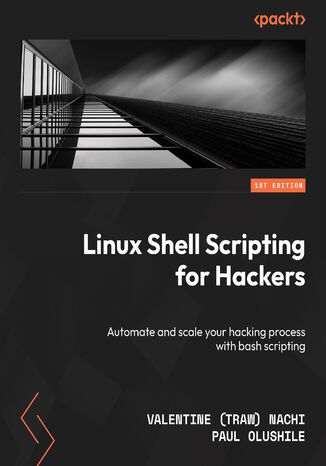
Linux Shell Scripting for Hackers. Automate and scale your hacking process with bash scripting
Valentine G. Nachi, Donald A. Tevault
Linux shell scripting is a foundational skill for ethical hackers and penetration testers who want to automate repetitive tasks and build powerful command-line tools. This practical guide shows you how to use bash scripting for cybersecurity automation, helping you streamline reconnaissance, exploitation, and post-exploitation workflows on Linux systems.You’ll progress from advanced bash techniques to real-world penetration testing applications, learning how to automate reconnaissance processes, parse logs, extract indicators, and develop custom exploitation utilities. Using tools such as awk, sed, grep, and regular expressions, you’ll manipulate data efficiently and craft scripts that solve real security challenges.A dedicated section on network scripting demonstrates how to build scripts that interact with remote systems, perform scanning tasks, and gather actionable information. You’ll also explore system hardening automation and learn best practices for writing secure, modular, and maintainable shell scripts.By the end of this book, you’ll have the confidence to integrate Linux shell scripting into your ethical hacking toolkit, scale your penetration testing workflow, and build reusable security tools tailored to real-world cybersecurity scenarios.

Łamanie i zabezpieczanie aplikacji w systemie iOS
Jonathan Zdziarski
Twoja lektura obowiązkowa! iOS to obecnie jeden z najpopularniejszych systemów operacyjnych, wykorzystywany w urządzeniach firmy Apple. Jednak dzięki tej popularności jest on też łakomym kąskiem dla hakerów. Uzyskanie dostępu do danych przechowywanych w telefonie może mieć katastrofalne skutki. Dlatego jeżeli tworzysz aplikacje na platformę iOS, ta książka jest dla Ciebie pozycją obowiązkową. Jak obronić się przed atakiem? Wszystkie niezbędne informacje znajdziesz w tym wyjątkowym podręczniku. W trakcie lektury dowiesz się, jak działają hakerzy, jak wyszukują słabe punkty aplikacji oraz jak modyfikują jej kod. Ponadto nauczysz się utrudniać śledzenie kodu Twojej aplikacji oraz bezpiecznie usuwać pliki (tak, aby nie było możliwe ich odtworzenie). Wśród poruszanych tematów znajdziesz również te związane z transmisją danych: wykorzystanie protokołu SSL to nie wszystko, musisz zadbać także o to, żeby nie było możliwe przejęcie sesji SSL. Weź książkę do ręki i obroń się przed atakiem! Dzięki tej książce: zrozumiesz, jak działają hakerzy zabezpieczysz swoją aplikację przez nieuprawnionymi zmianami ochronisz swoje bezpieczne połączenia bezpowrotnie usuniesz niepotrzebne pliki zagwarantujesz bezpieczeństwo danych użytkownikom Twojej aplikacji Zadbaj o bezpieczeństwo danych użytkowników Twojej aplikacji!
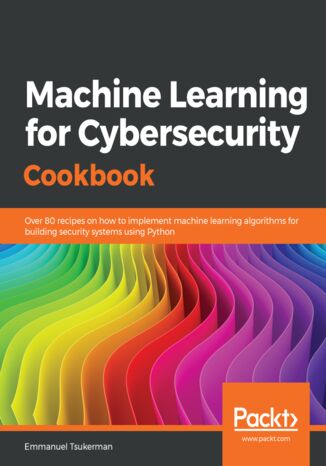
Emmanuel Tsukerman
Organizations today face a major threat in terms of cybersecurity, from malicious URLs to credential reuse, and having robust security systems can make all the difference. With this book, you'll learn how to use Python libraries such as TensorFlow and scikit-learn to implement the latest artificial intelligence (AI) techniques and handle challenges faced by cybersecurity researchers.You'll begin by exploring various machine learning (ML) techniques and tips for setting up a secure lab environment. Next, you'll implement key ML algorithms such as clustering, gradient boosting, random forest, and XGBoost. The book will guide you through constructing classifiers and features for malware, which you'll train and test on real samples. As you progress, you'll build self-learning, reliant systems to handle cybersecurity tasks such as identifying malicious URLs, spam email detection, intrusion detection, network protection, and tracking user and process behavior. Later, you'll apply generative adversarial networks (GANs) and autoencoders to advanced security tasks. Finally, you'll delve into secure and private AI to protect the privacy rights of consumers using your ML models. By the end of this book, you'll have the skills you need to tackle real-world problems faced in the cybersecurity domain using a recipe-based approach.
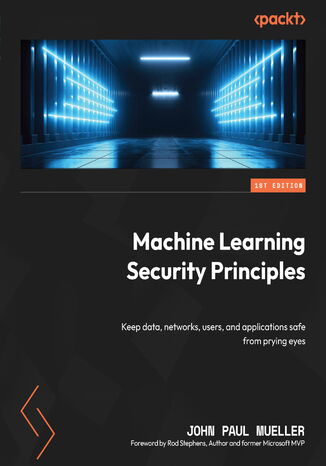
John Paul Mueller
Businesses are leveraging the power of AI to make undertakings that used to be complicated and pricy much easier, faster, and cheaper. The first part of this book will explore these processes in more depth, which will help you in understanding the role security plays in machine learning.As you progress to the second part, you’ll learn more about the environments where ML is commonly used and dive into the security threats that plague them using code, graphics, and real-world references.The next part of the book will guide you through the process of detecting hacker behaviors in the modern computing environment, where fraud takes many forms in ML, from gaining sales through fake reviews to destroying an adversary’s reputation. Once you’ve understood hacker goals and detection techniques, you’ll learn about the ramifications of deep fakes, followed by mitigation strategies.This book also takes you through best practices for embracing ethical data sourcing, which reduces the security risk associated with data. You’ll see how the simple act of removing personally identifiable information (PII) from a dataset lowers the risk of social engineering attacks.By the end of this machine learning book, you'll have an increased awareness of the various attacks and the techniques to secure your ML systems effectively.
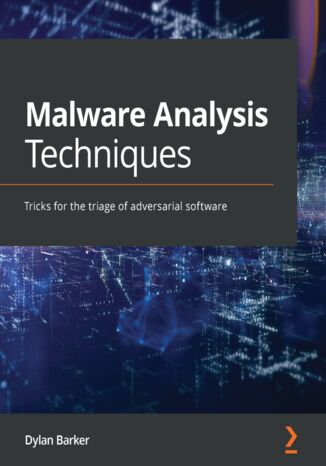
Malware Analysis Techniques. Tricks for the triage of adversarial software
Dylan Barker
Malicious software poses a threat to every enterprise globally. Its growth is costing businesses millions of dollars due to currency theft as a result of ransomware and lost productivity. With this book, you'll learn how to quickly triage, identify, attribute, and remediate threats using proven analysis techniques. Malware Analysis Techniques begins with an overview of the nature of malware, the current threat landscape, and its impact on businesses. Once you've covered the basics of malware, you'll move on to discover more about the technical nature of malicious software, including static characteristics and dynamic attack methods within the MITRE ATT&CK framework. You'll also find out how to perform practical malware analysis by applying all that you've learned to attribute the malware to a specific threat and weaponize the adversary's indicators of compromise (IOCs) and methodology against them to prevent them from attacking. Finally, you'll get to grips with common tooling utilized by professional malware analysts and understand the basics of reverse engineering with the NSA's Ghidra platform. By the end of this malware analysis book, you’ll be able to perform in-depth static and dynamic analysis and automate key tasks for improved defense against attacks.
Zhassulan Zhussupov
Malware Development for Ethical Hackers is a comprehensive guide to the dark side of cybersecurity within an ethical context.This book takes you on a journey through the intricate world of malware development, shedding light on the techniques and strategies employed by cybercriminals. As you progress, you’ll focus on the ethical considerations that ethical hackers must uphold. You’ll also gain practical experience in creating and implementing popular techniques encountered in real-world malicious applications, such as Carbanak, Carberp, Stuxnet, Conti, Babuk, and BlackCat ransomware. This book will also equip you with the knowledge and skills you need to understand and effectively combat malicious software.By the end of this book, you'll know the secrets behind malware development, having explored the intricate details of programming, evasion techniques, persistence mechanisms, and more.*Email sign-up and proof of purchase required

Dominik Robakowski
Kryptologia jest trudna? Może, ale na pewno nie z tą książką! Jeśli słowo "szyfr" budzi w Tobie przyjemny dreszczyk emocji, mamy dla Ciebie prawdziwą gratkę. Już za chwilę poznasz największe tajemnice ludzkości. Prezentowane w tej książce tajemnicze kody służyły dyplomatom, armiom pierwszej i drugiej wojny światowej, wreszcie zimnowojennym szpiegom. Były kamyczkami, które wywołały lawinę rewolucji informatycznej. Bez żadnej przesady - oto szyfry, które decydowały o losach świata. I wciąż o nich decydują. Kryptologia bardzo intensywnie się rozwija. Dziś jest wręcz niezbędna do naszego funkcjonowania. Warto poznać jej podstawy, tak samo jak wypada się orientować w historii, fizyce czy biologii - choćby po to, by być na bieżąco ze współczesną nauką. Poza tym szyfrowanie i deszyfrowanie stanowi znakomitą gimnastykę dla umysłu i dobry sposób na kreatywne spędzenie czasu. Co więcej, prezentowane sposoby ukrywania wiadomości mogą nadal służyć zgodnie ze swoim pierwotnym przeznaczeniem - do ukrywania tego, co niekoniecznie chcemy przekazać wprost...

Managing AI Risk. A practical approach to responsibly managing AI with ISO 42001
IT Governance Publishing, Andrew Pattison
This book is a comprehensive guide to understanding and managing the risks associated with artificial intelligence (AI) technologies. It begins by exploring the fundamental aspects of AI, from its ethical and philosophical dimensions to its impact on organizational risk.As the book progresses, it delves into the creation of a risk-aware AI strategy, integrating AI risk management into existing organizational frameworks. It offers practical insights on identifying and assessing various risks, including data privacy, algorithmic transparency, and operational challenges related to AI deployment and maintenance.This book is designed for professionals, risk managers, and AI practitioners who seek to navigate the complexities of AI in organizations. Whether you’re just beginning to explore AI risks or looking to refine your existing strategies, this book equips you with the tools needed for effective management.By the end of this book, you will have gained a solid understanding of AI-related risks, be able to implement effective AI risk management frameworks, and integrate AI strategies within your organization.
Andrew Block, Austin Dewey
Containerization is one of the best ways to implement DevOps, and learning how to execute it effectively is an essential part of a developer’s skillset. Kubernetes is the current industry standard for container orchestration. This book will help you discover the efficiency of managing applications running on Kubernetes with Helm.Starting with a brief introduction to Helm and its impact on users working with containers and Kubernetes, you’ll delve into the primitives of Helm charts and their architecture and use cases. From there, you’ll understand how to write Helm charts in order to automate application deployment on Kubernetes and work your way toward more advanced strategies. These enterprise-ready patterns are focused on concepts beyond the basics so that you can use Helm optimally, looking at topics related to automation, application development, delivery, lifecycle management, and security.By the end of this book, you’ll have learned how to leverage Helm to build, deploy, and manage applications on Kubernetes.