
Hacking
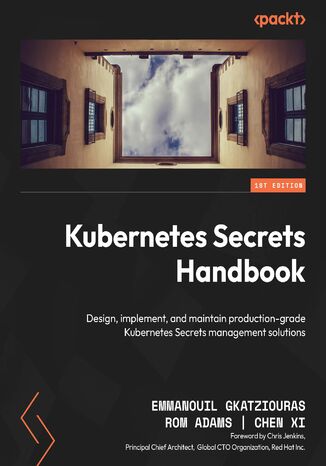
Emmanouil Gkatziouras, Chris Jenkins, Rom Adams, Chen...
Securing Secrets in containerized apps poses a significant challenge for Kubernetes IT professionals. This book tackles the critical task of safeguarding sensitive data, addressing the limitations of Kubernetes encryption, and establishing a robust Secrets management system for heightened security for Kubernetes.Starting with the fundamental Kubernetes architecture principles and how they apply to the design of Secrets management, this book delves into advanced Kubernetes concepts such as hands-on security, compliance, risk mitigation, disaster recovery, and backup strategies. With the help of practical, real-world guidance, you’ll learn how to mitigate risks and establish robust Secrets management as you explore different types of external secret stores, configure them in Kubernetes, and integrate them with existing Secrets management solutions.Further, you'll design, implement, and operate a secure method of managing sensitive payload by leveraging real use cases in an iterative process to enhance skills, practices, and analytical thinking, progressively strengthening the security posture with each solution.By the end of this book, you'll have a rock-solid Secrets management solution to run your business-critical applications in a hybrid multi-cloud scenario, addressing operational risks, compliance, and controls.
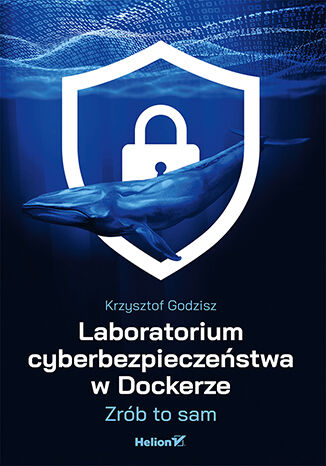
Laboratorium cyberbezpieczeństwa w Dockerze. Zrób to sam
Krzysztof Godzisz
Izolacja procesów i środowisk to dziś jeden z najważniejszych mechanizmów zapewniania bezpieczeństwa systemów IT. Dzięki temu możemy nie tylko bezpiecznie uruchamiać niezaufane zasoby, ale przede wszystkim przeprowadzać testy penetracyjne i badać złośliwe oprogramowanie bez ryzyka, że zainfekuje ono natywne środowisko. Jedną z najwyższych form izolacji jest konteneryzacja - użytkownik ma wówczas praktycznie całkowitą kontrolę na relacją pomiędzy kontenerem a systemem operacyjnym hosta. W ostatnich latach na lidera konteneryzacji wyrosło środowisko uruchomieniowe Docker. Dzięki funkcjonalności, wygodnej obsłudze i szerokiej kompatybilności z różnymi systemami operacyjnymi stanowi on dziś techniczny standard. Docker otwiera przed badaczami cyberbezpieczeństwa nowe możliwości testowania oprogramowania pod kątem bezpieczeństwa i analizy wszelkiej maści malware bez konieczności budowania kosztownej infrastruktury - dzięki Dockerowi i konteneryzacji swoje laboratorium można zbudować w obrębie pojedynczej stacji roboczej. Laboratorium cyberbezpieczeństwa w Dockerze. Zrób to sam to przewodnik instruujący krok po kroku, jak zbudować własne laboratorium w kontenerze Dockera. Szczegółowo omawia proces instalacji środowiska na różnych dystrybucjach Linuksa i jego konfiguracji, a także kwestie związane z zarządzaniem kontenerami i budowaniem zależności. Najważniejsze zagadnienia: instalacja i konfiguracja Dockera zarządzanie kontenerami budowanie sieci Dockera obsługa narzędzi pentesterskich budowanie i uruchamianie multikontenerów zarządzanie podatnościami Zbuduj własny cybersec lab - najlepiej w Dockerze!
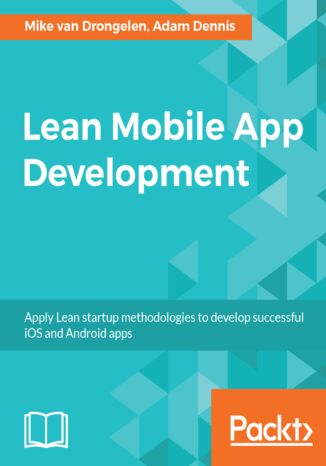
Mike van Drongelen, Aravind Krishnaswamy, Adam Dennis
Lean is the ultimate methodology for creating a startup that succeeds. Sounds great from a theoretical point of view, but what does that mean for you as an a technical co-founder or mobile developer? By applying the Lean Start-up methodology to your mobile App development, it will become so much easier to build apps that take Google Play or the App Store by storm. This book shows you how to bring together smarter business processes with technical know-how.It makes no sense to develop a brilliant app for six months or longer only to find out later that nobody is interested in it. Build a Minimum Viable Product (MVP) first. Validate your hypotheses early and often. Discover effective product development strategies that let you put Facebook's famous axiom move fast and break thingsinto practice. A great app without visibility and marketing clout is nothing, so use this book to market your app, making use of effective metrics that help you track and iterate all aspects of project performance.
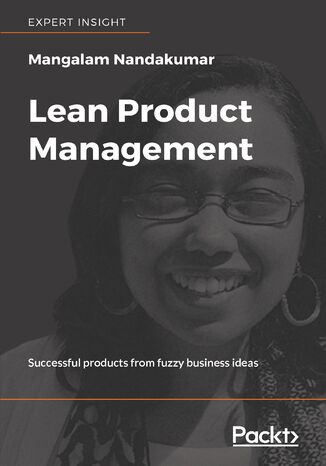
Lean Product Management. Successful products from fuzzy business ideas
Mangalam Nandakumar
Lean Product Management is about finding the smartest way to build an Impact Driven Product that can deliver value to customers and meet business outcomes when operating under internal and external constraints. Author, Mangalam Nandakumar, is a product management expert, with over 17 years of experience in the field. Businesses today are competing to innovate. Cost is no longer the constraint, execution is. It is essential for any business to harness whatever competitive advantage they can, and it is absolutely vital to deliver the best customer experience possible. The opportunities for creating impact are there, but product managers have to improvise on their strategy every day in order to capitalize on them. This is the Agile battleground, where you need to stay Lean and be able to respond to abstract feedback from an ever shifting market. This is where Lean Product Management will help you thrive.Lean Product Management is an essential guide for product managers, and to anyone embarking on a new product development. Mangalam Nandakumar will help you to align your product strategy with business outcomes and customer impact. She introduces the concept of investing in Key Business Outcomes as part of the product strategy in order to provide an objective metric about which product idea and strategy to pursue. You will learn how to create impactful end-to-end product experiences by engaging stakeholders and reacting to external feedback.
Kamil Mrzygłód
Complete with the latest advancements in Azure services, this second edition of Learn Azure Administration is a comprehensive guide to scaling your cloud administration skills, offering an updated exploration of Azure fundamentals and delving into the intricacies of Azure Resource Manager and Azure Active Directory.Starting with infrastructure as code (IaC) basics, this book guides you through the seamless migration to Azure Bicep and ARM templates. From Azure virtual networks planning to deployment, you’ll get to grips with the complexities of Azure Load Balancer, virtual machines, and configuring essential virtual machine extensions. You'll handle the identity and security for users with the Microsoft Entra ID and centralize access using policies and defined roles. Further chapters strengthen your grasp of Azure Storage security, supplemented by an overview of tools such as Network Watcher.By the end of the book, you’ll have a holistic grasp of Azure administration principles to tackle contemporary challenges and expand your proficiency to administer your Azure-based cloud environment using various tools like Azure CLI, Azure PowerShell, and infrastructure as code.
Richard Diver, Gary Bushey
Azure Sentinel is a Security Information and Event Management (SIEM) tool developed by Microsoft to integrate cloud security and artificial intelligence (AI). Azure Sentinel not only helps clients identify security issues in their environment, but also uses automation to help resolve these issues. With this book, you’ll implement Azure Sentinel and understand how it can help find security incidents in your environment with integrated artificial intelligence, threat analysis, and built-in and community-driven logic.This book starts with an introduction to Azure Sentinel and Log Analytics. You’ll get to grips with data collection and management, before learning how to create effective Azure Sentinel queries to detect anomalous behaviors and patterns of activity. As you make progress, you’ll understand how to develop solutions that automate the responses required to handle security incidents. Finally, you’ll grasp the latest developments in security, discover techniques to enhance your cloud security architecture, and explore how you can contribute to the security community.By the end of this book, you’ll have learned how to implement Azure Sentinel to fit your needs and be able to protect your environment from cyber threats and other security issues.
Kirankalyan Kulkarni
Blockchain is a distributed database that enables permanent, transparent, and secure storage of data. Blockchain technology uses cryptography to keep data secure. Learn Bitcoin and Blockchain is the perfect entry point to the world of decentralized databases.This book will take you on a journey through the blockchain database, followed by advanced implementations of the blockchain concept. You will learn about Bitcoin basics and their technical operations. As you make your way through the book, you will gain insight into this leading technology and its implementation in the real world. You will also cover the technical foundation of blockchain and understand the fundamentals of cryptography and how they keep data secure. In the concluding chapters, you’ll get to grips with the mechanisms behind cryptocurrencies.By the end of this book, you will have learned about decentralized digital money, advanced blockchain concepts, and Bitcoin and blockchain security.
Learn Computer Forensics. A beginner's guide to searching, analyzing, and securing digital evidence
William Oettinger
A computer forensics investigator must possess a variety of skills, including the ability to answer legal questions, gather and document evidence, and prepare for an investigation. This book will help you get up and running with using digital forensic tools and techniques to investigate cybercrimes successfully. Starting with an overview of forensics and all the open source and commercial tools needed to get the job done, you'll learn core forensic practices for searching databases and analyzing data over networks, personal devices, and web applications. You'll then learn how to acquire valuable information from different places, such as filesystems, e-mails, browser histories, and search queries, and capture data remotely. As you advance, this book will guide you through implementing forensic techniques on multiple platforms, such as Windows, Linux, and macOS, to demonstrate how to recover valuable information as evidence. Finally, you'll get to grips with presenting your findings efficiently in judicial or administrative proceedings.By the end of this book, you'll have developed a clear understanding of how to acquire, analyze, and present digital evidence like a proficient computer forensics investigator.