
Informatyka
High Performance with MongoDB. Best practices for performance tuning, scaling, and architecture
Asya Kamsky, Ger Hartnett, Alex Bevilacqua, MongoDB...
With data as the new competitive edge, performance has become the need of the hour. As applications handle exponentially growing data and user demand for speed and reliability rises, three industry experts distill their decades of experience to offer you guidance on designing, building, and operating databases that deliver fast, scalable, and resilient experiences.MongoDB’s document model and distributed architecture provide powerful tools for modern applications, but unlocking their full potential requires a deep understanding of architecture, operational patterns, and tuning best practices. This MongoDB book takes a hands-on approach to diagnosing common performance issues and applying proven optimization strategies from schema design and indexing to storage engine tuning and resource management.Whether you’re optimizing a single replica set or scaling a sharded cluster, this book provides the tools to maximize deployment performance. Its modular chapters let you explore query optimization, connection management, and monitoring or follow a complete learning path to build a rock-solid performance foundation. With real-world case studies, code examples, and proven best practices, you’ll be ready to troubleshoot bottlenecks, scale efficiently, and keep MongoDB running at peak performance in even the most demanding production environments.
John Mannion
Moodle is an open source virtual learning environment that is coming to be used in more and more schools worldwide. History and Moodle complement each other perfectly in terms of content and delivery. This book will show you how to set up tasks and activities that will enable your students to forge a greater understanding of complex issues, bringing History into the 21st century.History Teaching with Moodle 2 presents new and exciting ideas for the delivery of History content making use of tried-and-trusted methods of teaching the subject. By following a sample course, you will find it easy to transform your existing lesson plans into a Moodle course that will become even more efficient, attractive, and useful over time. Make the past come to life using a range of tasks and activities that can consolidate learning for some, enhance understanding for others, and enthuse all. Learn how to add an RSS feed to your home page to display daily 'On this day in history' posts. Create a one-minute quiz about how the Second World War began. Post video footage of a trip to a castle and set some questions for students in anticipation of their next visit. Set up a wiki so that student groups can create their own story about 'murder at a monastery'. Moodle's built-in features allow students to get a better grasp of historical concepts and will rejuvenate their interest in the subject.
Onur Dundar
This book is for anyone who wants to learn Intel Galileo for home automation and cross-platform software development. No knowledge of programming with Intel Galileo is assumed, but knowledge of the C programming language is essential.
Lucas Santos
Node.js makes it easy to get started, but just as easy to get things wrong.How Not to Node.js takes a practical, no-nonsense approach to uncovering the most common mistakes developers make, and shows you exactly how to avoid them.The book is structured around real-world anti-patterns, guiding you through how to identify, understand, and fix problematic code. You’ll start by learning how patterns and anti-patterns shape application design, before diving into asynchronous pitfalls, event loop behavior, and error handling. As you progress, you’ll explore architectural concerns such as logging, middleware design, environment management, and API reliability.By the end, you won’t just know how to write Node.js code, you’ll know how to avoid writing bad Node.js code, building applications that are clean, scalable, and production-ready.
Alex Forrester, Eran Boudjnah, Alexandru Dumbravan, Jomar...
Looking to kick-start your app development journey with Android 13, but don’t know where to start? How to Build Android Apps with Kotlin is a comprehensive guide that will help jump-start your Android development practice.This book starts with the fundamentals of app development, enabling you to utilize Android Studio and Kotlin to get started with building Android projects. You'll learn how to create apps and run them on virtual devices through guided exercises. Progressing through the chapters, you'll delve into Android's RecyclerView to make the most of lists, images, and maps, and see how to fetch data from a web service.You'll also get to grips with testing, learning how to keep your architecture clean, understanding how to persist data, and gaining basic knowledge of the dependency injection pattern. Finally, you'll see how to publish your apps on the Google Play store.You'll work on realistic projects that are split up into bitesize exercises and activities, allowing you to challenge yourself in an enjoyable and attainable way. You'll build apps to create quizzes, read news articles, check weather reports, store recipes, retrieve movie information, and remind you where you parked your car.By the end of this book, you'll have the skills and confidence to build your own creative Android applications using Kotlin.
How to Prove Anything. 30 absurd research papers no one else was brave enough to publish
B. McGraw
This book collects popular essays from the renowned Cranberry-Lemon University Press’s most illustrious scholars. Despite their questionable research methods, bizarre obsessions, personal vendettas, and often stunning lack of impartiality, the authors have irrefutably broken new ground academically. How to Prove Anything sheds new light on a wide range of topics. Famed academics Dr. Tiffany Love and Dr. Chad Broman present a glimpse into their shared life via a series of papers that unravel the mysteries of modern romance. From time series analysis of mood swings to Pavlovian behavioral modification to sub-Nyquist sampling for balancing relationship attention with videogame performance, Chad and Tiffany find new and often startling uses for tried-and-true algorithms, gaining insights from which we can all benefit. Can I avoid arguments by predicting moods with time series analysis? Can linear programming help us determine who should do the dishes? And, most pressingly of all… Can I fix him? Academic writing has brought new knowledge into the world for hundreds of years. This book may be the most vital contribution of all. While some of the applications in this book may be niche even obscure reading will provide intellectual stimulation, spiritual enlightenment or, at the very least, some entertainment.
How to Test a Time Machine. A practical guide to test architecture and automation
Noemí Ferrera, Joe Colantonio
From simple websites to complex applications, delivering quality is crucial for achieving customer satisfaction. How to Test a Time Machine provides step-by-step explanations of essential concepts and practical examples to show you how you can leverage your company's test architecture from different points in the development life cycle.You'll begin by determining the most effective system for measuring and improving the delivery of quality applications for your company, and then learn about the test pyramid as you explore it in an innovative way. You'll also cover other testing topics, including cloud, AI, and VR for testing.Complete with techniques, patterns, tools, and exercises, this book will help you enhance your understanding of the testing process. Regardless of your current role within development, you can use this book as a guide to learn all about test architecture and automation and become an expert and advocate for quality assurance.By the end of this book, you'll be able to deliver high-quality applications by implementing the best practices and testing methodologies included in the book.
HTML and CSS. The Comprehensive Guide
Rheinwerk Publishing, Inc, Jürgen Wolf
This comprehensive guide immerses readers in the core technologies of front-end web development, starting with HTML fundamentals such as document structure, semantic elements, and form creation. Readers then explore CSS styling principles, including selectors, the box model, inheritance, and responsive design techniques that ensure websites look great across all devices. The book also introduces CSS preprocessors like Sass, offering advanced tools to write scalable, maintainable stylesheets.Beyond styling, the guide presents an accessible introduction to JavaScript, equipping readers with the skills to add interactivity and dynamic behavior to their web pages. It covers essential JavaScript concepts such as variables, functions, events, and DOM manipulation, allowing for richer user experiences.Throughout, practical code examples and clear explanations enable readers to confidently build and style modern websites, while also teaching testing strategies and organization for consistent cross-browser performance. This structured learning path prepares developers to tackle real-world web projects with a solid foundation in front-end technologies.
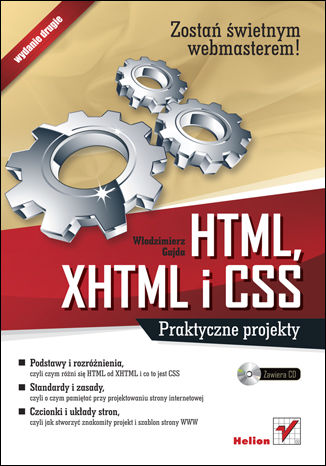
HTML, XHTML i CSS. Praktyczne projekty. Wydanie II
Włodzimierz Gajda
Zostań świetnym webmasterem! Podstawy i rozróżnienia, czyli czym różni się HTML od XHTML i co to jest CSS Standardy i zasady, czyli o czym pamiętać przy projektowaniu strony internetowej Czcionki i układy stron, czyli jak stworzyć znakomity projekt i szablon strony WWW O projektowaniu stron internetowych napisano zapewne grube tysiące książek. Ta dziedzina zmienia się jednak na tyle szybko, a profesjonalnych projektantów, mających dużą wiedzę i obdarzonych umiejętnością jej przekazania, jest na tyle mało, że warto skorzystać z ich doświadczeń. Zwłaszcza, jeśli niezbędne wiadomości podane są w formie praktycznych przykładów, a dotyczą tak istotnych kwestii, jak używanie języków HTML i XHTML oraz kaskadowych arkuszy stylów, zgodność stron z obowiązującymi standardami, komponowanie układu serwisu WWW i tworzenie jego zawartości. Drugie wydanie książki "HTML, XHTML i CSS. Praktyczne projekty" pozwoli Ci od podszewki poznać tajniki projektowania naprawdę przemyślanych stron internetowych, uwzględniających potrzeby ich użytkowników. Dowiesz się, jak zachować poprawność składniową XHTML i CSS. Poznasz semantykę kodu XHTML i opanujesz metodologię pracy zgodnej ze standardami. Zrozumiesz, dlaczego ważne jest zapewnienie dostępności Twoich stron dla osób niepełnosprawnych i co zrobić, by wyszukiwarki mogły bez trudu przeanalizować oraz zaklasyfikować zawartość serwisu. Nauczysz się wybierać czcionki, tło, projektować wygodny interfejs i poszczególne fragmenty strony, a także zapisywać szczególnie udane projekty w formie szablonów. Składnia i poprawność języka XHTML Znaki diakrytyczne i oznaczanie języka dokumentu Praca w trybie standardów Podstawowe elementy XHTML Kaskadowe arkusze stylów — składnia i właściwości Klasy i identyfikatory, rodzaje czcionek Wszystkie atrybuty CSS 2.1 dotyczące czcionek i tekstu Elementy blokowe, liniowe i pływające Obszar zajmowany przez element i metody pozycjonowania elementów blokowych Układy stałej szerokości, płynne i hybrydowe Tekst, listy, tabele, odsyłacze i pozostałe elementy XHTML Właściwości CSS dotyczące tła i przyciski rollover w CSS Struktura funkcjonalna witryny Kolejność elementów w kodzie XHTML i atrybuty XHTML Formularze i powiązania dokumentów Element meta — dodatkowe informacje na temat strony WWW Dostępność strony WWW Semantyczny XHTML Wykorzystaj swoją kreatywność, tworząc zachwycające strony WWW!
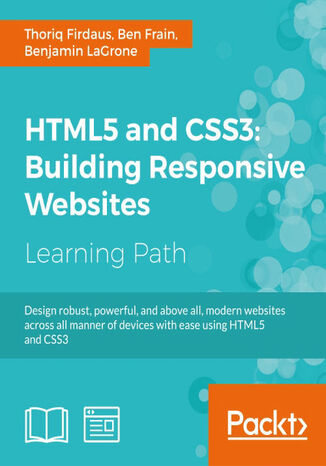
HTML5 and CSS3: Building Responsive Websites. One-stop guide for Responsive Web Design
Thoriq Firdaus, Benjamin LaGrone, Ben Frain
Responsive web design is an explosive area of growth in modern web development due to the huge volume of different device sizes and resolutions that are now commercially available. The Internet is going mobile. Desktop-only websites just aren’t good enough anymore. With mobile internet usage still rising and tablets changing internet consumption habits, you need to know how to build websites that will just “work,” regardless of the devices used to access them. This Learning Path course explains all the key approaches necessary to create and maintain a modern responsive design using HTML5 and CSS3.Our first module is a step-by-step introduction to ease you into the responsive world, where you will learn to build engaging websites. With coverage of Responsive Grid System, Bootstrap, and Foundation, you will discover three of the most robust frameworks in responsive web design. Next, you’ll learn to create a cool blog page, a beautiful portfolio site, and a crisp professional business site and make them all totally responsive.Packed with examples and a thorough explanation of modern techniques and syntax, the second module provides a comprehensive resource for all things “responsive.” You’ll explore the most up-to-date techniques and tools needed to build great responsive designs, ensuring that your projects won’t just be built “right” for today, but in the future too.The last and the final module is your guide to obtaining full access to next generation devices and browser technology. Create responsive applications that make snappy connections for mobile browsers and give your website the latest design and development advantages to reach mobile devices. At the end of this course, you will learn to get and use all the tools you need to build and test your responsive web project performance and take your website to the next level.This Learning Path combines some of the best that Packt has to offer in one complete, curated package. It includes content from the following Packt products:?Responsive Web Design by Example: Beginner’s Guide - Second Edition by Thoriq Firdaus?Responsive Web Design with HTML5 and CSS3 - Second Edition by Ben Frain?HTML5 and CSS3 Responsive Web Design Cookbook by Benjamin LaGrone
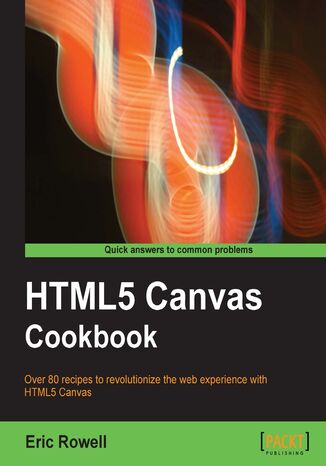
HTML5 Canvas Cookbook. Over 80 recipes to revolutionize the Web experience with HTML5 Canvas
Eric Rowell
The HTML5 canvas is revolutionizing graphics and visualizations on the Web. Powered by JavaScript, the HTML5 Canvas API enables web developers to create visualizations and animations right in the browser without Flash. Although the HTML5 Canvas is quickly becoming the standard for online graphics and interactivity, many developers fail to exercise all of the features that this powerful technology has to offer.The HTML5 Canvas Cookbook begins by covering the basics of the HTML5 Canvas API and then progresses by providing advanced techniques for handling features not directly supported by the API such as animation and canvas interactivity. It winds up by providing detailed templates for a few of the most common HTML5 canvas applications—data visualization, game development, and 3D modeling. It will acquaint you with interesting topics such as fractals, animation, physics, color models, and matrix mathematics.By the end of this book, you will have a solid understanding of the HTML5 Canvas API and a toolbox of techniques for creating any type of HTML5 Canvas application, limited only by the extent of your imagination.
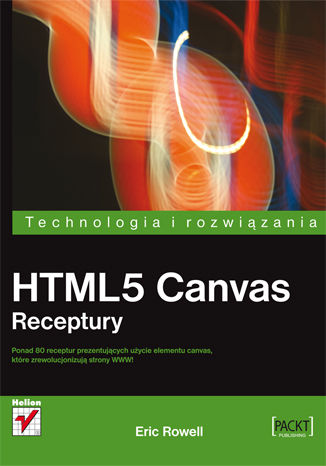
Eric Rowell
Ponad 80 receptur prezentujących użycie elementu canvas, które zrewolucjonizują strony WWW! HTML5 szturmem zdobywa rynek stron (a w zasadzie już aplikacji) WWW. Co sprawia, że tak się dzieje? Ogrom nowych funkcji, które otwierają przed projektantami nowe możliwości. Usługi geolokalizacyjne, lokalne przechowywanie plików lub obsługa plików multimedialnych to tylko niektóre z nich. Wśród nowości jest również ta jedna wzbudzająca najwięcej emocji — canvas (płótno). Jest to element, który rewolucjonizuje grafikę i wizualizację na stronach WWW. Dzięki tej książce błyskawicznie zaczniesz korzystać z potencjału elementu canvas. W trakcie lektury poznasz podstawowe możliwości API tego elementu, a wraz z kolejnymi stronami zaczniesz wykorzystywać coraz bardziej zaawansowane techniki tworzenia animacji, wykonywania operacji na obrazach i pisania gier. Rysowanie łuków, przekształcenia i obroty nie będą stanowiły dla Ciebie żadnego problemu. Ponadto w mgnieniu oka opanujesz zasady tworzenia wykresów oraz wizualizacji przestrzennych. Ta książka zasługuje na Twoją szczególną uwagę. Sięgnij po nią i twórz oszałamiające strony w sieci! Element canvas to: nowość w języku HTML5 nowe możliwości graficzne na Twojej stronie efektowna wizualizacja danych baza do tworzenia gier dla przeglądarek Gotowe przepisy do wykorzystania na Twojej stronie!
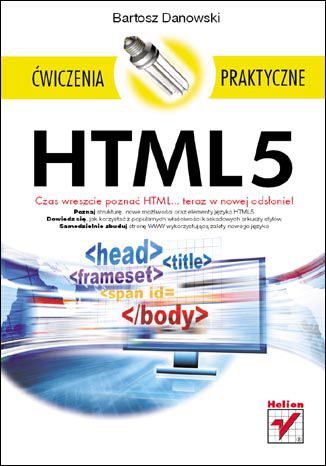
Bartosz Danowski
Czas wreszcie poznać HTML… teraz w nowej odsłonie! Poznaj strukturę, nowe możliwości oraz elementy języka HTML5 Dowiedz się, jak korzystać z popularnych właściwości kaskadowych arkuszy stylów Samodzielnie zbuduj własną stronę WWW, wykorzystującą zalety nowego języka HTML5 jest obecnie jednym z najpopularniejszych języków pozwalających zbudować działającą bez zarzutu witrynę internetową - nawet jeśli nie ma się zbyt dużej wiedzy o programowaniu. Nowy standard zastąpił znacznie mniej funkcjonalny język HTML4, ale jego twórcy zadbali o kompatybilność między obiema wersjami. Wprowadzono tu sporo nowych elementów i znaczników, poprawiono też obsługę błędów podczas parsowania HTML oraz obsługę formularzy. Nowością jest obsługiwanie elementów multimedialnych i graficznych oraz API dla aplikacji internetowych. Wszystko to masz szansę sprawdzić w praktyce podczas wykonywania ćwiczeń zamieszczonych w tej książce. "HTML5. Ćwiczenia praktyczne" to zbiór przemyślnie skomponowanych zadań dla wszystkich, którzy mają choćby niewielkie pojęcie o pracy z komputerem oraz apetyt na wiedzę. Bartosz Danowski, doświadczony, błyskotliwy i bezpośredni autor tego zbioru, zadbał o to, by kolejne kroki prowadziły adepta zgłębiającego tajniki HTML5 w kierunku samodzielnego zbudowania funkcjonalnego serwisu WWW. Dzięki tej książce poznasz najważniejsze założenia i zasady tego języka, zdobędziesz wiedzę o znacznikach i atrybutach oraz zrozumiesz, jak tworzyć optymalną strukturę dokumentów HTML. Nauczysz się wykorzystywać komentarze, listy, tabele, formularze, elementy blokowe, wstawiane i osadzone. Dowiesz się, jak działają kaskadowe arkusze stylów, a potem połączysz to wszystko w całość w praktycznych projektach! Podstawowe informacje o języku HTML Znaczniki i atrybuty Najważniejsze różnice między HTML4 i HTML5 Najważniejsze zasady Struktura dokumentu HTML5 Elementy języka HTML5 Kaskadowe arkusze stylów Praktyczne projekty Dodatek Aplikacja? Witryna? Przećwicz to z HTML5!
Gorgi Kosev, Mite Mitreski
HTML5 is everywhere. From PCs to tablets to smartphones and even TVs, the web is the most ubiquitous application platform and information medium bar. Its becoming a first class citizen in established operating systems such as Microsoft Windows 8 as well as the primary platform of new operating systems such as Google Chrome OS.HTML5 Data and Services Cookbook contains over 100 recipes explaining how to utilize modern features and techniques when building websites or web applications. This book will help you to explore the full power of HTML5 - from number rounding to advanced graphics to real-time data binding.HTML5 Data and Services Cookbook starts with the display of text and related data. Then you will be guided through graphs and animated visualizations followed by input and input controls.Data serialization, validation and communication with the server as well as modern frameworks with advanced features like automatic data binding and server communication will also be covered in detail.This book covers a fast track into new libraries and features that are part of HTML5!
Matthew Fisher
As the support for HTML5 within modern web browsers grows, the appeal of HTML5 development, especially for Flash developers, is at an all-time high. From 3D interactive multi-user content to high definition video streaming, HTML5 can deliver it all, to almost all modern web browsers, desktops, and mobile platforms. HTML5 for Flash Developers is a practical, targeted guide for developers with previous experience in developing applications in Flash who would like to add HTML5 development to their skill set. By understanding key aspects that make HTML5 development different from Flash you will be able to integrate your current skill set into the HTML5 development paradigm. Starting with identifying the key technologies that make up the HTML5 development stack and how they are utilized to create HTML5 content, HTML5 for Flash Developers will cover the traditional HTML5 application development flow chapter by chapter, while covering many other common tools that are regularly used in HTML5 today.In addition to understanding and writing dependency-free HTML5 code, you will also learn how to build your HTML5 applications on top of popular libraries and frameworks such as jQuery and CreateJS. This book covers how to prepare all of your content and media for integration into your HTML5 application using applications such as the Miro Video Converter or Adobe Photoshop. You will learn ways to not only continue to use Adobe Flash in your HTML5 application content preparation flow, but also how to port your existing Flash content right over to HTML5.Once you understand what it takes to build HTML5 content, you will finish up by learning how to debug, optimize, and prepare your content for release on the Web.
Jason Lee Elliott
The introduction of HTML5 has revolutionized the web browser as a legitimate gaming platform with unlimited potential. Making games for the browser has never been simpler, especially with GameMaker Studio. Developers have full control over asset management, built-in systems for physics, particles and path finding. In addition, it offers a rich scripting language and extensions for developers now enabling everyone to create games and monetize them quickly and easily.HTML5 Game Development with GameMaker will show you how to make and release browser based games using practical examples. This book utilizes GameMaker's powerful scripting language allowing you to create your first game in no time. With this guide you will develop a thorough skill set and a coherent understanding of the tools to develop games of increasing complexity, gradually enhancing your coding abilities and taking them to a whole new level. The GameMaker Studio environment allows you to jump right into building browser based games quickly and releasing them online. The chapters focus on core practical elements, such as, artificial intelligence and creating challenging boss battles. This book guides you on how to use advanced features easily and effectively, these include, data structures and demonstrating how to create rigid body physics with simple explanations and visual examples. By the end of this book you will have an in-depth knowledge of developing and publishing online social browser based games with GameMaker.