
Informatyka
Zajrzyj do kategorii Informatyka w księgarni internetowej Ebookpoint. Znajdziesz tutaj bestsellerowe książki, ebooki i kursy video z branży IT. Sięgnij po najlepszą literaturę dla specjalistów i rozwijaj doświadczenie, które już posiadasz, lub rozpocznij swoją przygodę z programowaniem, cyberbezpieczeństwem lub grafiką komputerową. Pogłębiaj swoją wiedzę tak, jak Ci wygodnie - z tradycyjną książką, wygodnym ebookiem lub nowoczesnym videokursem. Sprawdź, jakie tytuły znajdziesz w kategorii Informatyka!
Learning Go Programming. An insightful guide to learning the Go programming language
Vladimir Vivien
The Go programming language has firmly established itself as a favorite for building complex and scalable system applications. Go offers a direct and practical approach to programming that let programmers write correct and predictable code using concurrency idioms and a full-featured standard library.This is a step-by-step, practical guide full of real world examples to help you get started with Go in no time at all. We start off by understanding the fundamentals of Go, followed by a detailed description of the Go data types, program structures and Maps. After this, you learn how to use Go concurrency idioms to avoid pitfalls and create programs that are exact in expected behavior. Next, you will be familiarized with the tools and libraries that are available in Go for writing and exercising tests, benchmarking, and code coverage. Finally, you will be able to utilize some of the most important features of GO such as, Network Programming and OS integration to build efficient applications. All the concepts are explained in a crisp and concise manner and by the end of this book; you would be able to create highly efficient programs that you can deploy over cloud.
Learning Google Apps Script. Customize and automate Google Applications using Apps Script
Ramalingam Ganapathy
Google Apps Script is a cloud-based scripting language based on JavaScript to customize and automate Google applications. Apps Script makes it easy to create and publish add-ons in an online store for Google Sheets, Docs, and Forms.It serves as one single platform to build, code, and ultimately share your App on the Web store.This book begins by covering the basics of the Google application platform and goes on to empower you to automate most of the Google applications.You will learn the concepts of creating a menu, sending mails, building interactive web pages, and implementing all these techniques to develop an interactive Web page as a form to submit sheetsYou will be guided through all these tasks with plenty of screenshots and code snippets that will ensure your success in customizing and automating various Google applicationsThis guide is an invaluable tutorial for beginners who intend to develop the skills to automate and customize Google applications
Douglas Reynolds
With the increasing focus on task automation, the Grunt task runner is a vast platform that allows you to incorporate automation into your workflows.At the outset, you will learn how to use Node.js and NMP through an example. You will then find out how to build a sample app and the development environment for it. You will further delve into the implementation of Grunt plugins and the configuration of Grunt tasks. Furthermore, you will explore the various methods and packages for workflow automation. The final chapter will cover some advanced concepts, such as configuration variables and how to create a Grunt plugin.By the end of the book, you will have gained the fundamentals of Grunt and progressed through advanced concepts, including building a Grunt plugin.
Shashwat Shriparv
If you are an administrator or developer who wants to enter the world of Big Data and BigTables and would like to learn about HBase, this is the book for you.
Patrick Rafael de Oliveira Espake
Learning Heroku Postgres is targeted at developers and database admins. Even if you're new to Heroku Postgres, you'll be able to master both the basic as well as advanced features of Heroku Postgres. Since Heroku Postgres is incredibly user-friendly, no previous experience in computer coding or programming is required.
Joe Kuan
Highcharts is a popular web charting software that produces stunning and smooth animated JavaScript and HTML5 SVG graphs. It is among the leading web charting software in the market and has been used in many different sectors ó from financial to social websites. Although it is built on top of jQuery, it is so simple to construct that you need little programming skill to create a simple web chart. Highcharts works on all modern browsers and is solely based on native browser technologies and doesn't require client side plugins like Flash or Java.Learning Highcharts is a comprehensive tutorial with clear and practical examples. This book follows a step by step approach towards making artistic, presentable, or professional style charts and other types of charts that you won't find elsewhere. It also shows you how to integrate Highcharts with other popular frameworks, such as jQuery, jQuery Mobile, and ExtJS and even how to run it on the server side.The book starts off with an introduction to Highcharts and demonstrates usage of its rich set of options. This is followed by an introduction to each type of basic chart, beginning with simple illustrations and ending with more artistic and productive additions to the charts. The book then guides you how to use the Highcharts API and events handling which are important to build interactive applications. It then goes on to show you how to apply Highcharts onto a popular AJAX Framework or even jQuery, jQuery Mobile and Ext JS. Finally the book shows readers how to set up Highcharts running on server side. Learning Highcharts aims to teach you everything you need to know about Highcharts, and take the advanced leap from Flash to JavaScript, with this extremely productive and effective Charting software available, thus helping you build basic charts and even multiple series and axes charts. The book also shows you the flexibility of Highcharts and how to create other special charts. The programming side of APIs and event handling will benefit the readers in building advanced web applications with Highcharts. The book also guides readers on how to integrate Highcharts with popular frameworks such as jQuery Mobile and Ext JS. By the end of the book, you should be able to use Highcharts to suit your web page or application needs.
Dmitry Anoshin, Sergey Sheypak
Hunk is the big data analytics platform that lets you rapidly explore, analyse, and visualize data in Hadoop and NoSQL data stores. It provides a single, fluid user experience, designed to show you insights from your big data without the need for specialized skills, fixed schemas, or months of development. Hunk goes beyond typical data analysis methods and gives you the power to rapidly detect patterns and find anomalies across petabytes of raw data.This book focuses on exploring, analysing, and visualizing big data in Hadoop and NoSQL data stores with this powerful full-featured big data analytics platform.You will begin by learning the Hunk architecture and Hunk Virtual Index before moving on to how to easily analyze and visualize data using Splunk Search Language (SPL). Next you will meet Hunk Apps which can easy integrate with NoSQL data stores such as MongoDB or Sqqrl. You will also discover Hunk knowledge objects, build a semantic layer on top of Hadoop, and explore data using the friendly user-interface of Hunk Pivot. You will connect MongoDB and explore data in the data store. Finally, you will go through report acceleration techniques and analyze data in the AWS Cloud.
Vinicius R Apolinario
Learning Hyper-V is a practical, hands-on guide designed to help infrastructure engineers, system administrators, cloud professionals, and DevOps teams build, automate, secure, and manage modern Hyper-V environments using current Microsoft technologies and best practices. Starting with virtualization fundamentals and Hyper-V architecture, the book guides readers through deployment, storage, networking, clustering, high availability, disaster recovery, and performance optimization. Readers will then explore advanced enterprise topics such as Hyper-V automation with PowerShell and Infrastructure as Code, Windows containers and Kubernetes integration, Azure hybrid cloud connectivity, Azure Stack HCI, and virtualization security.By the end of the book, readers will be able to confidently deploy and operate production-grade Hyper-V infrastructures across on-premises, hybrid, and cloud-connected environments.
Craig Gilchrist
This book is intended for iOS developers who are curious to learn about iBeacon and want to start building applications for iOS. You will gain everything you need to know to master indoor location functionality using Bluetooth beacon technology. No knowledge of iBeacon is assumed.
Sreelatha Sankaranarayanan
IBM Bluemix is an open standard platform for building, running, and managing applications on the cloud. With Bluemix, developers can build innovative applications using various compute options and value added services , developers can also manage the application lifecycle using the platform provided DevOps services.Learning IBM Bluemix will take you on a journey from the basics of IBM Bluemix to working with the platform to developing and deploying of modern applications. The sample application use cases employed in the book will introduce you to the transformative nexus of cloud, mobile, and security, all enabled through capabilities provided out-of-the-box by IBM Bluemix. By the end of the book, you will have understood the benefits and use cases for IBM Bluemix, and will possess the skills to further explore the platform and thus develop, deploy, and secure your own innovative, new-age applications.
Rahul Malewar
Informatica PowerCenter is an industry-leading ETL tool, known for its accelerated data extraction, transformation, and data management strategies. This book will be your quick guide to exploring Informatica PowerCenter’s powerful features such as working on sources, targets, transformations, performance optimization, scheduling, deploying for processing, and managing your data at speed. First, you’ll learn how to install and configure tools. You will learn to implement various data warehouse and ETL concepts, and use PowerCenter 10.x components to build mappings, tasks, workflows, and so on. You will come across features such as transformations, SCD, XML processing, partitioning, constraint-based loading, Incremental aggregation, and many more. Moreover, you’ll also learn to deliver powerful visualizations for data profiling using the advanced monitoring dashboard functionality offered by the new version. Using data transformation technique, performance tuning, and the many new advanced features, this book will help you understand and process data for training or production purposes. The step-by-step approach and adoption of real-time scenarios will guide you through effectively accessing all core functionalities offered by Informatica PowerCenter version 10.x.
Rahul Malewar
If you wish to deploy Informatica in enterprise environments and make a career in data warehousing, then this book is for you. Whether you are a developer who's new to Informatica or an experienced professional, you will learn all the features of Informatica. Basic knowledge of programming and data warehouse concepts is essential.
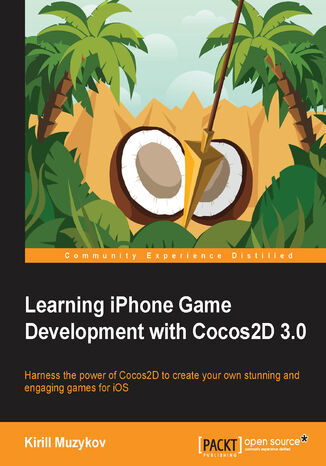
Kirill Muzykov
This book is an easy-to-follow, step-by-step beginner's guide covering the full process of creating a game. It is packed with examples and illustrations, with comprehensive coverage of each topic.If you want to learn how to make games using the Cocos2D framework, this book is for you. If you would like to build a good foundation for a career in game development as an independent game developer or at a game studio, or if you just want to make games as a hobby, then you'll love this book. You should have some basic programming experience with Objective-C and Xcode. To run the code in this book, you will also need an Intel-based Macintosh running OS X Mountain Lion (or later).
Richard M Reese, Richard M. Reese
Functional programming is an increasingly popular technology that allows you to simplify many tasks that are often cumbersome and awkward using an object-oriented approach. It is important to understand this approach and know how and when to apply it. Functional programming requires a different mindset, but once mastered it can be very rewarding.This book simplifies the learning process as a problem is described followed by its implementation using an object-oriented approach and then a solution is provided using appropriate functional programming techniques. Writing succinct and maintainable code is facilitated by many functional programming techniques including lambda expressions and streams. In this book, you will see numerous examples of how these techniques can be applied starting with an introduction to lambda expressions. Next, you will see how they can replace older approaches and be combined to achieve surprisingly elegant solutions to problems.This is followed by the investigation of related concepts such as the Optional class and monads, which offer an additional approach to handle problems. Design patterns have been instrumental in solving common problems. You will learn how these are enhanced with functional techniques.To transition from an object-oriented approach to a functional one, it is useful to have IDE support. IDE tools to refactor, debug, and test functional programs are demonstrated through the chapters. The end of the book brings together many of these functional programming techniques to create a more comprehensive application. You will find this book a very useful resource to learn and apply functional programming techniques in Java.
Learning Java Lambdas. An in-depth look at one of the most important features of modern Java
Toby Weston
In this short book, we take an in-depth look at lambdas in Java, and their supporting features. The book covers essential topics, such as functional interfaces and type inference, and the key differences between lambdas and closures. You will learn about the background to functional programming and lambdas, before moving on to understanding the basic syntax of lambdas and what differentiates these anonymous functions from standard anonymous classes. Lastly, you'll learn how to invoke lambdas and look at the bytecode generated.After reading this book, you'll understand lambdas in depth, their background, syntax, implementation details, and how and when to use them. You'll also have a clear knowledge of the difference between functions and classes, and why that's relevant to lambdas. This knowledge will enable you to appreciate the improvements to type inference that drive a lot of the new features in modern Java, and will increase your understanding of method references and scoping.
Loiane Avancini
This book begins by covering basics of the JavaScript language and introducing ECMAScript 7, before gradually moving on to the current implementations of ECMAScript 6. You will gain an in-depth knowledge of how hash tables and set data structure functions, as well as how trees and hash maps can be used to search files in a HD or represent a database. This book is an accessible route deeper into JavaScript. Graphs being one of the most complex data structures you’ll encounter, we’ll also give you a better understanding of why and how graphs are largely used in GPS navigation systems in social networks.Toward the end of the book, you’ll discover how all the theories presented by this book can be applied in real-world solutions while working on your own computer networks and Facebook searches.