
Informatyka
Zajrzyj do kategorii Informatyka w księgarni internetowej Ebookpoint. Znajdziesz tutaj bestsellerowe książki, ebooki i kursy video z branży IT. Sięgnij po najlepszą literaturę dla specjalistów i rozwijaj doświadczenie, które już posiadasz, lub rozpocznij swoją przygodę z programowaniem, cyberbezpieczeństwem lub grafiką komputerową. Pogłębiaj swoją wiedzę tak, jak Ci wygodnie - z tradycyjną książką, wygodnym ebookiem lub nowoczesnym videokursem. Sprawdź, jakie tytuły znajdziesz w kategorii Informatyka!
This is a hands-on guide that provides exemplary coverage of all the features and concepts related to PTVS. The book is intended for developers who are aiming to enhance their productivity in Python projects with automation tools that Visual Studio provides for the .Net community. Some basic knowledge of Python programming is essential.
Sebastian Raschka
Sprawdź drugie wydanie tej książki >> --- Uczenie maszynowe, zajmujące się algorytmami analizującymi dane, stanowi chyba najciekawszą dziedzinę informatyki. W czasach, w których generuje się olbrzymie ilości danych, samouczące się algorytmy maszynowe stanowią wyjątkową metodę przekształcania tych danych w wiedzę. W ten sposób powstało wiele innowacyjnych technologii, a możliwości uczenia maszynowego są coraz większe. Nieocenioną pomoc w rozwijaniu tej dziedziny stanowią liczne nowe biblioteki open source, które pozwalają na budowanie algorytmów w języku Python, będącym ulubionym, potężnym i przystępnym narzędziem naukowców i analityków danych. Niniejsza książka jest lekturą obowiązkową dla każdego, kto chce rozwinąć swoją wiedzę o danych naukowych i zamierza w tym celu wykorzystać język Python. Przystępnie opisano tu teoretyczne podstawy dziedziny i przedstawiono wyczerpujące informacje o działaniu algorytmów uczenia maszynowego, sposobach ich wykorzystania oraz metodach unikania poważnych błędów. Zaprezentowano również biblioteki Theano i Keras, sposoby przewidywania wyników docelowych za pomocą analizy regresywnej oraz techniki wykrywania ukrytych wzorców metodą analizy skupień. Nie zabrakło opisu technik przetwarzania wstępnego i zasad oceny modeli uczenia maszynowego. W tej książce: podstawowe rodzaje uczenia maszynowego i ich zastosowanie, biblioteka scikit-learn i klasyfikatory uczenia maszynowego, wydajne łączenie różnych algorytmów uczących, analiza sentymentów — przewidywanie opinii osób na podstawie sposobu pisania, praca z nieoznakowanymi danymi — uczenie nienadzorowane, tworzenie i trenowanie sieci neuronowych. Uczenie maszynowe — odkryj wiedzę, którą niosą dane!
Python. Uczenie maszynowe. Wydanie II
Sebastian Raschka, Vahid Mirjalili
Uczenie maszynowe jest wyjątkowo fascynującą dziedziną inżynierii. Coraz częściej spotykamy się z praktycznym wykorzystaniem tego rodzaju innowacyjnych technologii. Samouczące algorytmy maszynowe pozwalają na uzyskiwanie wiedzy z ogromnych ilości danych. Dla osoby planującej rozwój kariery osiągnięcie biegłości w rozwiązywaniu problemów uczenia maszynowego jest nadzwyczaj atrakcyjną ścieżką. Użycie do tego celu Pythona pozwala dodatkowo skorzystać z bardzo przystępnego, wszechstronnego i potężnego narzędzia przeznaczonego do analizowania danych naukowych. Ta książka jest drugim, wzbogaconym i zaktualizowanym wydaniem znakomitego podręcznika do nauki o danych. Wyczerpująco opisano tu teoretyczne podwaliny uczenia maszynowego. Sporo uwagi poświęcono działaniu algorytmów uczenia głębokiego, sposobom ich wykorzystania oraz metodom unikania istotnych błędów. Dodano rozdziały prezentujące zaawansowane informacje o sieciach neuronowych: o sieciach splotowych, służących do rozpoznawania obrazów, oraz o sieciach rekurencyjnych, znakomicie nadających się do pracy z danymi sekwencyjnymi i danymi szeregów czasowych. Poszczególne zagadnienia zostały zilustrowane praktycznymi przykładami kodu napisanego w Pythonie, co ułatwi bezpośrednie zapoznanie się z tematyką uczenia maszynowego. W tej książce: struktury używane w analizie danych, uczeniu maszynowym i uczeniu głębokim metody uczenia sieci neuronowych implementowanie głębokich sieci neuronowych analiza sentymentów i analiza regresywna przetwarzanie obrazów i danych tekstowych najwartościowsze biblioteki Pythona przydatne w uczeniu maszynowym Uczenie maszynowe: oto droga do wiedzy ukrytej w oceanie danych!
Wes McKinney
Analiza danych stała się samodzielną dyscypliną wiedzy interesującą specjalistów z wielu branż: analityków biznesowych, statystyków, architektów oprogramowania czy też osoby zajmujące się sztuczną inteligencją. Wydobywanie informacji ze zbiorów danych pozwala na uzyskanie wiedzy niedostępnej w inny sposób. W tym celu dane trzeba odpowiednio przygotować, oczyścić, przetworzyć i oczywiście poddać analizie. Warto również zadbać o ich wizualizację. Do tych wszystkich zadań najlepiej wykorzystać specjalne narzędzia opracowane w języku Python. Prezentowana książka jest drugim, zaktualizowanym i uzupełnionym, wydaniem klasycznego podręcznika napisanego z myślą o analitykach, którzy dotychczas nie pracowali w Pythonie, oraz o programistach Pythona, którzy nie zajmowali się dotąd analizą danych ani obliczeniami naukowymi. Przedstawiono tu możliwości oferowane przez Pythona 3.6 oraz najnowsze funkcje pakietów Pandas i NumPy, a także środowisk IPython i Jupyter. Przy opisie poszczególnych narzędzi analitycznych wyjaśniono ich działanie i zaprezentowano przykłady ich wykorzystania w sposób efektywny i kreatywny. Ta książka powinna się znaleźć w podręcznej bibliotece każdego analityka danych! Najważniejsze zagadnienia: Eksploracja danych za pomocą powłoki IPython i środowiska Jupyter Korzystanie z pakietów NumPy i Pandas Tworzenie wizualizacji danych za pomocą pakietu Matplotlib Praca z danymi regularnych i nieregularnych szeregów czasowych Rozwiązywanie rzeczywistych problemów analitycznych Python: poznaj idealne narzędzie do analizy danych!

Wes McKinney
Wprawny analityk danych potrafi z nich uzyskać wiedzę ułatwiającą podejmowanie trafnych decyzji. Od kilku lat można do tego używać nowoczesnych narzędzi Pythona, które zbudowano specjalnie do tego celu. Praca z nimi nie wymaga głębokiej znajomości statystyki czy algebry. Aby cieszyć się uzyskanymi rezultatami, wystarczy się wprawić w stosowaniu kilku pakietów i środowisk Pythona. Ta książka jest trzecim, starannie zaktualizowanym wydaniem wyczerpującego przewodnika po narzędziach analitycznych Pythona. Uwzględnia Pythona 3.0 i bibliotekę pandas 1.4. Została napisana w przystępny sposób, a poszczególne zagadnienia bogato zilustrowano przykładami, studiami rzeczywistych przypadków i fragmentami kodu. W trakcie lektury nauczysz się korzystać z możliwości oferowanych przez pakiety pandas i NumPy, a także środowiska IPython i Jupyter. Nie zabrakło wskazówek dotyczących używania uniwersalnych narzędzi przeznaczonych do ładowania, czyszczenia, przekształcania i łączenia zbiorów danych. Pozycję docenią analitycy zamierzający zacząć pracę w Pythonie, jak również programiści Pythona, którzy chcą się zająć analizą danych i obliczeniami naukowymi. Dzięki książce nauczysz się: eksplorować dane za pomocą powłoki IPython i środowiska Jupyter korzystać z funkcji pakietów NumPy i pandas używać pakietu matplotlib do tworzenia czytelnych wizualizacji analizować i przetwarzać dane regularnych i nieregularne szeregi czasowe rozwiązywać rzeczywiste problemy analityczne Wes McKinney zaktualizował swoją książkę, aby była podstawowym źródłem informacji o wszystkich zagadnieniach związanych z analizą danych przy użyciu języka Python i biblioteki pandas. Gorąco polecam tę pozycję! Paul Barry, wykładowca i autor książek
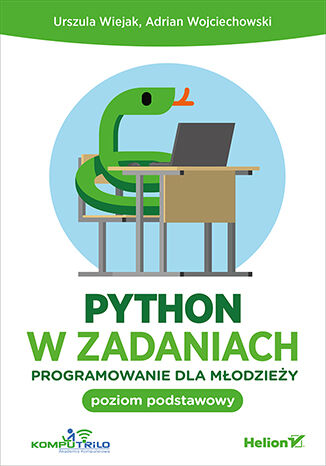
Python w zadaniach. Programowanie dla młodzieży. Poziom podstawowy
Urszula Wiejak, Adrian Wojciechowski
Opanuj Pythona od strony praktycznej! Poznaj konstrukcje języka Python Naucz się stosować je w praktyce Wykorzystaj standardowe biblioteki Rozwiąż 139 zadań i sprawdź swoje rozwiązania Python to bardzo popularny, wydajny i elastyczny język programowania ogólnego przeznaczenia, którego prosta, czytelna i zwięzła składnia zdobyła uznanie rzesz programistów na całym świecie. Duże możliwości, przenośność kodu, możliwość pisania skryptów - wszystko to sprawia, że Python znajduje zastosowanie w najróżniejszych dziedzinach i wspiera rozwój wielu popularnych serwisów internetowych. Bez wątpienia warto się go nauczyć! Jeśli chcesz poznać ten język, jesteś na dobrej drodze! Książka omawia najważniejsze elementy programowania w Pythonie. Co ważne, wiedza została usystematyzowana w formie konkretnych zadań do wykonania. Poznasz dzięki nim typy danych i składnię języka, dowiesz się, jak debugować programy, nauczysz się korzystać z funkcji oferowanych przez biblioteki i opanujesz podstawy tworzenia graficznych interfejsów użytkownika. To podręcznik przeznaczony dla młodzieży, ale doskonale sprawdzi się również w przypadku osób dorosłych, które rozpoczynają przygodę z programowaniem. Instalowanie oraz konfigurowanie środowiska i niezbędnych narzędzi Podstawowe informacje na temat języka i programowania Typy danych, zmienne proste i tablicowe Operatory, instrukcje warunkowe oraz instrukcje pętli Operacje wejścia-wyjścia w konsoli i na plikach Biblioteki graficzne, dźwiękowe i wideo Korzystanie z funkcji wbudowanych i tworzenie własnych Programowanie obiektowe, obsługa wątków i wyjątków Tworzenie graficznych interfejsów użytkownika Zadania do samodzielnego wykonania i praktyczny projekt gry Poznaj Pythona, rozwiązuj zadania, zostań programistą!
Stephen Sadowski, Adam Hopkins
Today’s developers need something more powerful and customizable when it comes to web app development. They require effective tools to build something unique to meet their specific needs, and not simply glue a bunch of things together built by others. This is where Sanic comes into the picture. Built to be unopinionated and scalable, Sanic is a next-generation Python framework and server tuned for high performance.This Sanic guide starts by helping you understand Sanic’s purpose, significance, and use cases. You’ll learn how to spot different issues when building web applications, and how to choose, create, and adapt the right solution to meet your requirements. As you progress, you’ll understand how to use listeners, middleware, and background tasks to customize your application. The book will also take you through real-world examples, so you will walk away with practical knowledge and not just code snippets.By the end of this web development book, you’ll have gained the knowledge you need to design, build, and deploy high-performance, scalable, and maintainable web applications with the Sanic framework.

QGIS 3.14. Tworzenie i analiza map
Bartłomiej Iwańczak
Książka "QGIS 3.14. Tworzenie i analiza map" Barłomieja Iwańczaka zdobyła wyróżnienie w kategorii podręczników w konkursie na Najlepszą Polską Książkę Informatyczną 2022r. organizowanym przez Polskie Towarzystwo Informatyczne. Świat w zasięgu Twojej mapy "Mam narysować mapę? Przecież ja nic nie pamiętam z geografii!" - znasz ten ból? Sama myśl o przedstawieniu jakichś danych przestrzennych, naniesieniu trasy na mapę albo wyborze na niej obiektów powoduje, że czujesz dreszcze? Czy jesteś informatykiem, dziennikarzem, psychologiem, handlowcem, czy logistykiem - te umiejętności mogą Ci się przydać. Jeżeli nie znasz tajników kartografii, dzięki tej książce odkryjesz je bezboleśnie. W dodatku będzie to całkiem przyjemne doświadczenie, bo w zasięgu jednego wskazania myszką czeka na Ciebie QGIS! Dla niewtajemniczonych: QGIS to otwarte, bezpłatne oprogramowanie pozwalające w intuicyjny sposób zarządzać istniejącymi zbiorami geograficznymi dostępnymi w internecie, tworzyć własne dane, wykonywać analizy przestrzenne i - przede wszystkim - publikować ciekawe mapy. Program jest niezwykle prosty w obsłudze, ma ogromną bibliotekę rozszerzeń do bardziej szczegółowych potrzeb, co więcej, występuje w polskiej wersji językowej i wspiera go także polskojęzyczna społeczność. Warto więc nauczyć się z niego korzystać, najlepiej z naszą sympatyczną przewodniczką Ulą, z którą między innymi: opanujesz zarówno podstawowe, jak i zaawansowane funkcje oprogramowania QGIS nauczysz się tworzyć w QGIS czytelne plany i mapy zapoznasz się z praktycznymi wskazówkami, jak poprawnie wykonać swoją pracę dowiesz się, jak przestrzennie przedstawiać i analizować dane z tabel zobaczysz, co jeszcze można zrobić z wykorzystaniem znajomości języków SQL, HTML i R będziesz się nieźle bawić przy odwzorowywaniu swojego świata w formie mapy w komputerze
QGIS Python Programming Cookbook, Second Edition. Automating geospatial development - Second Edition
Joel Lawhead
QGIS is a desktop geographic information system that facilitates data viewing, editing, and analysis. Paired with the most efficient scripting language—Python, we can write effective scripts that extend the core functionality of QGIS. Based on version QGIS 2.18, this book will teach you how to write Python code that works with spatial data to automate geoprocessing tasks in QGIS. It will cover topics such as querying and editing vector data and using raster data. You will also learn to create, edit, and optimize a vector layer for faster queries, reproject a vector layer, reduce the number of vertices in a vector layer without losing critical data, and convert a raster to a vector. Following this, you will work through recipes that will help you compose static maps, create heavily customized maps, and add specialized labels and annotations. As well as this, we’ll also share a few tips and tricks based on different aspects of QGIS.
QGIS Quick Start Guide. A beginner's guide to getting started with QGIS 3.4
Andrew Cutts
QGIS is a user friendly, open source geographic information system (GIS). The popularity of open source GIS and QGIS, in particular, has been growing rapidly over the last few years. This book is designed to help beginners learn about all the tools required to use QGIS 3.4.This book will provide you with clear, step-by-step instructions to help you apply your GIS knowledge to QGIS. You begin with an overview of QGIS 3.4 and its installation. You will learn how to load existing spatial data and create vector data from scratch. You will then be creating styles and labels for maps. The final two chapters demonstrate the Processing toolbox and include a brief investigation on how to extend QGIS. Throughout this book, we will be using the GeoPackage format, and we will also discuss how QGIS can support many different types of data.Finally, you will learn where to get help and how to become engaged with the GIS community.
Anita Graser, Víctor Olaya Ferrero, Oleksandr Bruy,...
The first module Learning QGIS, Third edition covers the installation and configuration of QGIS. You’ll become a master in data creation and editing, and creating great maps. By the end of this module, you’ll be able to extend QGIS with Python, getting in-depth with developing custom tools for the Processing Toolbox. The second module QGIS Blueprints gives you an overview of the application types and the technical aspects along with few examples from the digital humanities. After estimating unknown values using interpolation methods and demonstrating visualization and analytical techniques, the module ends by creating an editable and data-rich map for the discovery of community information. The third module QGIS 2 Cookbook covers data input and output with special instructions for trickier formats. Later, we dive into exploring data, data management, and preprocessing steps to cut your data to just the important areas. At the end of this module, you will dive into the methods for analyzing routes and networks, and learn how to take QGIS beyond the out-of-the-box features with plug-ins, customization, and add-on tools. This Learning Path combines some of the best that Packt has to offer in one complete, curated package. It includes content from the following Packt products: ? Learning QGIS, Third Edition by Anita Graser ? QGIS Blueprints by Ben Mearns ? QGIS 2 Cookbook by Alex Mandel, Víctor Olaya Ferrero, Anita Graser, Alexander Bruy
Miguel Angel Garcia, Barry Harmsen, Stephen Redmond,...
QlikView is one of the most flexible and powerful business intelligence platforms around, and if you want to transform data into insights, it is one of the best options you have at hand. Use this Learning Path, to explore the many features of QlikView to realize the potential of your data and present it as impactful and engaging visualizations.Each chapter in this Learning Path starts with an understanding of a business requirement and its associated data model and then helps you create insightful analysis and data visualizations around it. You will look at problems that you might encounter while visualizing complex data insights using QlikView, and learn how to troubleshoot these and other not-so-common errors. This Learning Path contains real-world examples from a variety of business domains, such as sales, finance, marketing, and human resources.With all the knowledge that you gain from this Learning Path, you will have all the experience you need to implement your next QlikView project like a pro.This Learning Path includes content from the following Packt products:• QlikView for Developers by Miguel Ángel García, Barry Harmsen • Mastering QlikView by Stephen Redmond • Mastering QlikView Data Visualization by Karl Pover
QlikView for Developers. Design and build scalable and maintainable BI solutions
Miguel Angel Garcia, Barry Harmsen
QlikView is one of the most flexible and powerful Business Intelligence platforms around. If you want to build data into your organization, build it around QlikView. Don't get caught in the gap between data and knowledge – find out how QlikView can help you unlock insights and data potential with ease. Whether you're new to QlikView or want to get up to speed with the features and functionality of QlikView, this book starts at a basic level and delves more deeply to demonstrate how to make QlikView work for you, and make it meet the needs of your organization. Using a real-world use-case to highlight the extensive impact of effective business analytics, this book might well be your silver bullet for success.A superb hands-on guide to get you started by exploring the fundamentals of QlikView before learning how to successfully implement it, technically and strategically. You'll learn valuable tips, tricks, and insightful information on loading different types of data into QlikView, and how to model it effectively.You will also learn how to write useful scripts for QlikView to handle potentially complex data transformations in a way that is simple and elegant. From ensuring consistency and clarity in your data models, to techniques for managing expressions using variables, this book makes sure that your QlikView projects are organized in a way that's most productive for you and key stakeholders.

Diane B Blackwood
This book is an effective step-by-step tutoring guide for financial analysis using Qlikview.It begins by teaching you the crucial concepts of Qlikview Finance to help you develop an effective understanding of financial data analysis and finance. The book then goes on to cover real-world, practical examples on the use of Qlikview for financial planning and analysis, expense management, risk management, and more. Moving on, topics such as Asset Management QlikView Dashboard and Retail Sales Analysis are covered in a strategic way. We then shift the focus to deal with the concepts of Inventory, Supply Chain, and Plant Coverage Dashboards. The book then reaches its conclusion by dealing with ways to share your QlikView insights. By the end of this book, you will have a good understanding of how to use Qlikview for numerous applications in finance.
Stephen Redmond
This is a comprehensive guide with a step-by-step approach that enables you to host and manage servers using QlikView Server and QlikView Publisher. If you are a server administrator wanting to learn about how to deploy QlikView Server for server management,analysis and testing, and QlikView Publisher for publishing of business content then this is the perfect book for you. No prior experience with QlikView is expected.
Kyle Wheeler
This book starts with setting up a qmail server and takes you through virtualization, filtering, and other advanced features like hosting multiple domains, mailing lists, and SSL Encryption. Finally, it discusses the log files and how to make qmail work faster.Qmail is a secure, reliable, efficient, simple message transfer agent. It is designed for typical Internet-connected UNIX hosts. Qmail is the second most common SMTP server on the Internet, and has by far the fastest growth of any SMTP server. Qmail's straight-paper-path philosophy guarantees that a message, once accepted into the system, will never be lost. Qmail also optionally supports maildir, a new, super-reliable user mailbox format.