
Informatyka
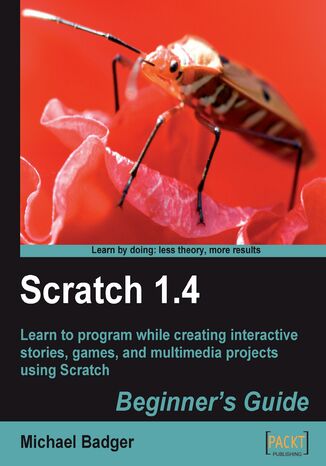
Michael Badger
If you have the imaginative power to design complex multimedia projects but can't adapt to programming languages, then Scratch 1.4: Beginner's Guide is the book for you. Imagine how good you'll feel when you drag-and-drop your way to interactive games, stories, graphic artwork, computer animations, and much more using Scratch even if you have never programmed before.This book provides teachers, parents, and new programmers with a guided tour of Scratch's features by creating projects that can be shared, remixed, and improved upon in your own lesson plans. Soon you will be creating games, stories, and animations by snapping blocks of code together.When you program you solve problems. In order to solve problems, you think, take action, and reflect upon your efforts. Scratch teaches you to program using a fun, accessible environment that's as easy as dragging and dropping blocks from one part of the screen to another.In this book you will program games, stories, and animations using hands-on examples that get you thinking and tinkering. For each project, you start with a series of steps to build something. Then you pause to put our actions into context so that you can relate our code to the actions on Scratch's stage. Throughout each chapter, you'll encounter challenges that encourage you to experiment and learn.One of the things you're really going to love is that, as you begin working through the examples in the book, you won't be able to stop your imagination and the ideas will stream as fast as you can think of them. Write them down. You'll quickly realize there are a lot of young minds in your home, classroom, or community group that could benefit from Scratch's friendly face. Teach them, please.
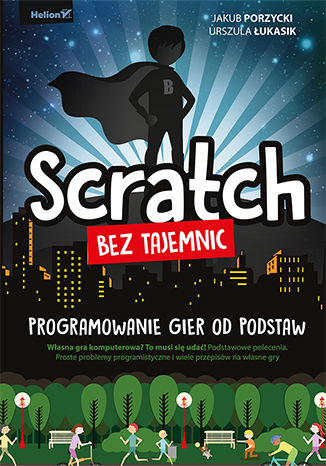
Scratch bez tajemnic. Programowanie gier od podstaw
Jakub Porzycki, Urszula Łukasik
Własna gra komputerowa? To musi się udać! Podstawowe polecenia Proste problemy programistyczne i własne bloczki Twoja pierwsza gra komputerowa ze Scratchem Jeśli sięgasz po tę książkę, na pewno uwielbiasz gry komputerowe i zastanawiasz się, jak samodzielnie stworzyć własną. Albo masz już gotowy pomysł i szukasz sposobów na jego realizację. Ta książka będzie dla Ciebie idealnym przewodnikiem na start. Od czego zacząć i jak nauczyć się programowania, które pozwoli Ci stworzyć swój własny mikroświat w komputerze? Scratch bez tajemnic zawiera kilkanaście projektów prostych gier napisanych w języku Scratch, stworzonym specjalnie do nauki programowania. Zabawne i intrygujące zadania, które Cię tu czekają, będą nie tylko świetną rozrywką, lecz także wstępem do samodzielnego pisania gier. Zobacz, jak przygotować kosmiczną bitwę, zaprojektować zmasowany atak bakterii i stworzyć swoją własną platformówkę. Baw się tymi przykładami, rozbudowuj je i zmieniaj według własnych pomysłów. Programowanie nie jest tak trudne, jak Ci się wydaje! Projekt akwarium Znikający duszek i okrutna matematyka Pogrywamy sobie w kotka i myszkę Przygody w kosmosie i kosmiczna bitwa Żuczek na autostradzie i arkanoid Twoje własne bloczki Inwazja bakterii Rysowanie jest proste Platformówki Wąż Turniej łuczniczy Niech zabrzmią działa Programuj i graj!
Brandon Milonovich
Scratch 2.0 is an easy to use programming language that allows you to animate stories and create interactive games. Scratch also gives you the capability of using programming to calculate complicated calculations for you.Scratch Cookbook will lead you through easy-to-follow recipes that give you everything you need to become a more advanced programmer.Scratch Cookbook will take you through the essential features of Scratch. You'll then work through simple recipes to gain an understanding of the more advanced features of Scratch.You will learn how to create animations using Scratch. Sensory board integration (getting input from the outside environment) will also be covered, along with using Scratch to solve complicated and tedious calculations for you. You'll also learn how to work through the exciting process of project remixing where you build on the work of others.Scratch Cookbook will give you everything you need to get started with building your own programs in Scratch that involve sounds, animations, and user interaction.
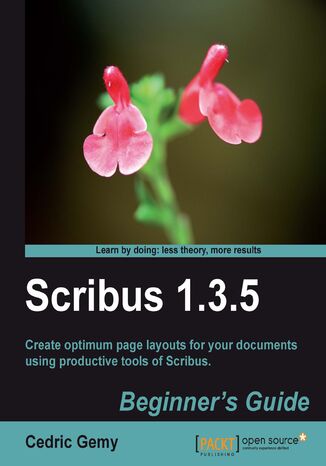
Cedric Gemy
Scribus is an Open Source program that brings award-winning and inexpensive professional page layout to desktop computers with a combination of press-ready output and new approaches to page layout. Creating professional-looking documents using Scribus is not a cakewalk, especially with so many features at your disposal, it’s hard to know where to get started! Scribus Beginners guide walks users step by step through common projects, such as creating a brochure,newsletter, business cards and so on. It also includes guidelines on starting a web newsletter and online PDF (Adobe Acrobat format) newsletter along with basic scripting to extend Scribus as per your requirements. This book begins with the simplest tasks and brings you progressively to adapt your workflow to the most efficient tools. It commences with the description of the graphic tool chain and an overall chapter on how to draw a simple and attractive business card. You'll then see how to manage the pages of your document and organized their structure thanks to guides. Then being invited to fill them with text, you'll be able to import, set text style as well as use replacement and hyphenation tool. Pictures or vector drawing will be added to the documents too. You'll be taught to choose the best format at the best time, modify or distort the shapes to get very custom documents. You will also learn how Scribus handles advanced color features such as transparencies, overprinting, spot colors precisely and be sure they are set well for a print result without bad surprise. At the end, you'll know to produce a perfect PDF file, be it for print jobs or web with effects, buttons and javascript interactivity, extend the document capacities as well as Scribus tools with simple programming especially with the python language.
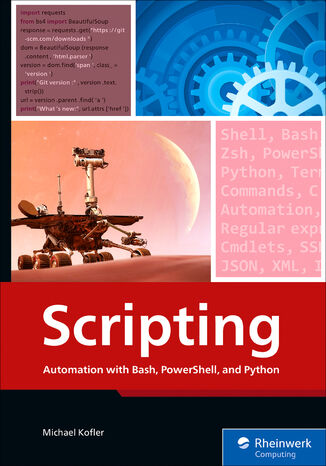
Scripting. Automation with Bash, PowerShell, and Python
Rheinwerk Publishing, Inc, Michael Kofler
This comprehensive scripting guide empowers system administrators, developers, and power users to automate repetitive IT tasks across platforms using three major scripting languages: Bash, PowerShell, and Python. The book opens with foundational scripting concepts and showcases what you can accomplish with just ten lines of code. It continues with in-depth chapters on each language, emphasizing syntax, control structures, error handling, and modularity.Readers will explore practical techniques for managing files, parsing text, utilizing regular expressions, and working with JSON, XML, and INI formats. The book dives into job automation with cron and Task Scheduler, secure communication via SSH, and scripting in professional environments with tools like Visual Studio Code and Git.The final section applies scripting to real-world cases, including system backups, image processing, web scraping, API consumption, database interactions, cloud integration, and virtual machine automation. With this book, readers build a strong scripting toolkit to efficiently manage modern IT workflows.
Scrum. O zwinnym zarządzaniu projektami
Mariusz Chrapko
O metodzie Scrum czyli o zwinnym zarządzaniu projektami - rozmowa, pół żartem pół serio, z Mariuszem Chrapko Poznaj Scrum i bądź efektywny! Zwinne metody projektowania, takie jak Scrum, święcą dziś triumfy jako alternatywne podejście do przeprowadzania skomplikowanych, wieloaspektowych projektów, zwłaszcza z dziedziny IT. W przeciwieństwie do tradycyjnych systemów, Scrum zakłada podział projektu na krótkie iteracje (sprinty), z których każda kończy się przedstawieniem fragmentu działającego produktu. Niezwykle ważną częścią projektu jest działanie w pełnej zgodzie z osiągnięciami psychologii - nic nie dzieje się tu bez uwzględnienia potrzeb członków zespołu projektowego oraz docelowego klienta. Jeśli chcesz dowiedzieć się więcej o zwinnych sposobach prowadzenia projektów i zastosować je we własnej pracy, Mariusz Chrapko podpowie Ci, jak planować takie procesy, rozdzielać role, zbierać informacje i unikać poważniejszych błędów. Wskaże, jak szacować projekty i określać postępy prac. Wszystko to, okraszone mnóstwem konkretnych przykładów, barwnych analogii i dowcipnych anegdot, sprawi, że książka nie tylko bardzo Ci pomoże, ale także dostarczy wiele przyjemności podczas lektury. Myślenie odwrotne w trudnym procesie omijania raf Witaj, Zmiano! - szybka reakcja na zmienne priorytety Scrum na przekór utartym sposobom prowadzenia projektów ScrumMaster i Właściciel Produktu - trudna kooperacja? Hodowanie i pielęgnacja zwinnych zespołów projektowych Zdobywanie potrzebnych wiadomości w procesie… mądrej komunikacji Rewolucyjne narzędzia szacowania projektów Planowanie projektów w Scrumie i uczciwe śledzenie ich postępów Planowanie sprintu i planowanie w dłuższej perspektywie Przegląd i retrospektywa na koniec sprintu Scrum — wykorzystaj jego siłę! To wciągające kompendium wiedzy o metodach Agile i nie tylko… "Zwinnie" wprowadza czytelnika w świat nowego podejścia do wykorzystania potencjału ludzi tworzących oprogramowanie. Lektura obowiązkowa dla softwarowych zawodowców. Ludmiła Pisiewicz, dyrektor Departamentu Rozwoju Aplikacji, PMP, MBA, ING Bank Śląski Świetne połączenie teorii z praktyką, poparte ciekawymi przykładami. Polecam! Piotr Czupryn, kierownik zespołu, Lufthansa Systems Poland Książka zdecydowanie powinna przypaść do gustu wszystkim profesjonalistom poszukującym alternatywy dla tradycyjnych procesów tworzenia oprogramowania. dr Edward Lubkiewicz, kierownik zespołów IT Nokia Siemens Networks Autor doskonale łączy teorię z praktyką. Książkę wyróżnia styl, który sprawia, że czyta się ją niezwykle przyjemnie. Łukasz Łopuszański, redaktor naczelny magazynu "Programista" Temat ujęty w ciekawy, nowatorski sposób. Wiele przykładów podkreślających znaczenie pracy zespołowej. Brawa za praktyczne podejście! Krzysztof Kestranek, QA Manager Autodesk
Scrum. O zwinnym zarządzaniu projektami. Wydanie II rozszerzone
Mariusz Chrapko
<< POBIERZ EBOOK "SCRUMOWO-PYTAJNIKOWO", W KTÓRYM AUTOR ODPOWIADA NA PYTANIA CZYTELNIKÓW Zwinny jak łasica i szybki jak wiatr - od dziś bądź taki dzięki metodzie Scrum! Współczesny świat w dużej mierze przeniósł się do wnętrza komputerów. Nie chodzi tylko o internet, ale także o bazy danych najrozmaitszych firm i urzędów, programy do obsługi maszyn i sprzętów AGD, skomplikowane systemy logistyczne, magazynowe, handlowe i wszelkie inne. Bez odpowiedniego oprogramowania żaden z tych elementów rzeczywistości nie będzie właściwie działał, a to może być przyczyną małych kłopotów lub wielkich zagrożeń. Jednak stworzenie takiego oprogramowania nie jest rzeczą prostą, tym bardziej, że w trakcie pracy nad nim zawsze trzeba liczyć się z modyfikacją pierwotnych założeń. Odpowiedzią na to wyzwanie jest właśnie Scrum. Scrum to metoda pozwalająca tak zorganizować pracę nad projektem, by możliwe było szybkie i bezbolesne wprowadzanie do niego zmian. Z tej książki, napisanej przez praktyka i wybitnego specjalistę, dowiesz się, jak to działa. Na konkretnych przykładach, okraszonych odwołaniami do popularnych filmów czy książek, prześledzisz cały proces tworzenia oprogramowania i zrozumiesz, do czego powinieneś dążyć w swoich własnych projektach z użyciem metody Scrum. Zobaczysz, jak tworzyć zespół i przydzielać role, zarządzać wymaganiami, planować i szacować projekty oraz przeprowadzać sprinty. Jeśli chcesz dogłębnie poznać Scruma i korzystać z niego na co dzień, nie możesz przegapić tej książki! Lekcje pływania - o zwinnym zarządzaniu projektami Kontrabasista - nowe role i obowiązki Ława przysięgłych - o hodowaniu zwinnych zespołów projektowych Platon, idee i ryby - jak zwinnie zarządzać wymaganiami? Lizanie znaczków i chirurgia mózgu - szacowanie projektów w Scrumie O żeglowaniu i obieraniu cebuli - planowanie projektów w Scrumie Biegnij, Forrest, biegnij - sprint W pokoju sztabowym - codzienne scrumy Myślodsiewnia - retrospektywa na koniec sprintu Wspólny rejs - historia z morza wzięta Scrum - sprawdź sam, jak to działa!

Scrum. Praktyczny przewodnik po najpopularniejszej metodyce Agile
Kenneth Rubin
Metodyki zwinne — Twój klucz do sukcesu! Tempo rozwoju współczesnych aplikacji jest zbyt duże, aby wciąż stosować skostniałe, stare metodyki zarządzania projektami. Obecnie należy błyskawicznie dostarczyć klientowi pierwszą wersję aplikacji i dopiero na podstawie jego uwag rozwijać oraz modyfikować program. Zwinne metodyki, w tym Scrum, pozwalają tego dokonać. Takie projekty nie zawsze są perfekcyjnie dopracowane, ale zazwyczaj pozwalają poznać opinię zleceniodawcy i lepiej zaplanować kolejne przebiegi — tzw. sprinty. Ta książka to doskonałe źródło informacji o Scrumie. W trakcie lektury poznasz założenia tej metodyki oraz jej zalety i wady. W kolejnych rozdziałach zaznajomisz się z podstawowymi pojęciami oraz dowiesz się, jak szacować wydajność zespołu. Rozdział IV to gwóźdź programu, ponieważ omawia sprint — kluczowy element tej metodyki. Znajdziesz tu najlepsze metody planowania sprintu, założenia, których należy przestrzegać, oraz definicję jego ukończenia, a ponadto odkryjesz, co to jest dług techniczny oraz jak go pilnować. To jeszcze nie koniec! Kolejne rozdziały tej książki zostały poświęcone rolom pełnionym przez różne osoby w czasie tworzenia projektu oraz etapom wchodzącym w skład projektu. Książka ta jest doskonałym źródłem informacji na temat metodyki Scrum oraz niezbędną lekturą dla osób rozważających jej wdrożenie w swoich projektach. Dzięki tej książce dowiesz się: jak zwinnie zarządzać projektami jakie niespodzianki oraz pułapki kryje metodyka Scrum w jaki sposób oszacować wydajność zespołu jak odnieść sukces w zarządzaniu projektami Sprawdź, jak Scrum może zmienić Twój projekt!
Cody Jackson
This book covers the unexplored secrets of Python, delve into its depths, and uncover its mysteries.You’ll unearth secrets related to the implementation of the standard library, by looking at how modules actually work. You’ll understand the implementation of collections, decimals, and fraction modules. If you haven’t used decorators, coroutines, and generator functions much before, as you make your way through the recipes, you’ll learn what you’ve been missing out on. We’ll cover internal special methods in detail, so you understand what they are and how they can be used to improve the engineering decisions you make. Next, you’ll explore the CPython interpreter, which is a treasure trove of secret hacks that not many programmers are aware of. We’ll take you through the depths of the PyPy project, where you’ll come across several exciting ways that you can improve speed and concurrency. Finally, we’ll take time to explore the PEPs of the latest versions to discover some interesting hacks.
Giovanni Galloro, David Dorbin, Richard Seroter, Nathaniel...
Continuous delivery, a cornerstone of modern software engineering, facilitates quick and secure software delivery using a robust toolkit encompassing automated builds, testing, source code management, artifact storage, and deployment. Whether you integrate tools from different providers or use a set of managed services from a single cloud provider, the goal is to streamline setup, integration, and management. This book focuses on continuous delivery on Google Cloud.Starting with an introduction to continuous delivery and secure software supply chain concepts, this book uses hands-on exercises to demonstrate how to continuously test your application with Skaffold and Cloud Code, leverage AI-assisted code generation with Cloud Code and Cloud Workstations, and automate your continuous integration with Cloud Build. You’ll see how to store and scan your software artifacts on Artifact Registry, orchestrate deployments with Cloud Deploy, and release your software on GKE and Cloud Run, configured to admit only trusted code. Using an example application, you’ll implement tools for creating an end-to-end delivery pipeline using Google Cloud services.By the end of this book, you’ll be able to build a secure software delivery pipeline from development to production using Google Cloud managed services and best practices.
IT Governance Publishing, Lee Newcombe
Cloud computing plays a critical role in modern business, but with it comes a host of security challenges. This book explores the intricacies of securing cloud services, starting with foundational concepts of cloud computing and moving into specific service and deployment models. It provides insights into balancing security benefits with potential risks such as availability issues, shadow IT, and information leakage. The book goes on to focus on security threats, from hackers and insiders to government entities, while offering strategies to mitigate these risks. The practical approach continues with a deep dive into security architecture, providing a structured model to secure cloud environments across IaaS, PaaS, SaaS, and more. Further, it examines the regulatory landscape, including compliance requirements, privacy concerns, and data protection laws that impact cloud service security. Finally, the book concludes with projections about the future of cloud security and emerging challenges. Readers will gain not only the theoretical foundations but also real-world insights that they can apply to strengthen their cloud service security.
Securing Hadoop. Implement robust end-to-end security for your Hadoop ecosystem
Sudheesh Narayan
Security of Big Data is one of the biggest concerns for enterprises today. How do we protect the sensitive information in a Hadoop ecosystem? How can we integrate Hadoop security with existing enterprise security systems? What are the challenges in securing Hadoop and its ecosystem? These are the questions which need to be answered in order to ensure effective management of Big Data. Hadoop, along with Kerberos, provides security features which enable Big Data management and which keep data secure.This book is a practitioner's guide for securing a Hadoop-based Big Data platform. This book provides you with a step-by-step approach to implementing end-to-end security along with a solid foundation of knowledge of the Hadoop and Kerberos security models.This practical, hands-on guide looks at the security challenges involved in securing sensitive data in a Hadoop-based Big Data platform and also covers the Security Reference Architecture for securing Big Data. It will take you through the internals of the Hadoop and Kerberos security models and will provide detailed implementation steps for securing Hadoop. You will also learn how the internals of the Hadoop security model are implemented, how to integrate Enterprise Security Systems with Hadoop security, and how you can manage and control user access to a Hadoop ecosystem seamlessly. You will also get acquainted with implementing audit logging and security incident monitoring within a Big Data platform.

Tom Piens aka 'reaper'
This book builds on the content found in Mastering Palo Alto Networks, focusing on the different methods of establishing remote connectivity, automating log actions, and protecting against phishing attacks through user credential detection.Complete with step-by-step instructions, practical examples, and troubleshooting tips, you will gain a solid understanding of how to configure and deploy Palo Alto Networks remote access products. As you advance, you will learn how to design, deploy, and troubleshoot large-scale end-to-end user VPNs. Later, you will explore new features and discover how to incorporate them into your environment.By the end of this Palo Alto Networks book, you will have mastered the skills needed to design and configure SASE-compliant remote connectivity and prevent credential theft with credential detection.
Luca Masini
Security is a must in modern Enterprise architecture, and WebLogic implements a very complete and complex architecture for configuration and implementation, and we need to deeply know in technologies, terminology and how the security process works between all actors.Transparent security of your applications and Weblogic infrastructure need a good knowledge of the issues you can incur in this long and error prone configuration process.Securing WebLogic Server 12c will simplify a complex world like WebLogic Security, helping the reader to implement and configure. It's the only fast guide that will let you develop and deploy in a production system with best practices both from the development world and the operation world.This book will try to make a clear picture of Java EE Security with clean and simple step-by-step examples that will guide the reader to security implementation and configurationFrom the concepts of Java EE Security to the development of secure application, from the configuration of a realm to the setup of Kerberos Single Sign on, every concept is expressed in simple terms and surrounded by examples and pictures. Finally, also a way to develop WebLogic Security Providers with Maven, so that you can add the security part of your infrastructure to your enterprise best practices.
Akash Mahajan, MADHU AKULA
Security automation is one of the most interesting skills to have nowadays. Ansible allows you to write automation procedures once and use them across your entire infrastructure. This book will teach you the best way to use Ansible for seemingly complex tasks by using the various building blocks available and creating solutions that are easy to teach others, store for later, perform version control on, and repeat.We’ll start by covering various popular modules and writing simple playbooks to showcase those modules. You’ll see how this can be applied over a variety of platforms and operating systems, whether they are Windows/Linux bare metal servers or containers on a cloud platform. Once the bare bones automation is in place, you’ll learn how to leverage tools such as Ansible Tower or even Jenkins to create scheduled repeatable processes around security patching, security hardening, compliance reports, monitoring of systems, and so on. Moving on, you’ll delve into useful security automation techniques and approaches, and learn how to extend Ansible for enhanced security. While on the way, we will tackle topics like how to manage secrets, how to manage all the playbooks that we will create and how to enable collaboration using Ansible Galaxy. In the final stretch, we’ll tackle how to extend the modules of Ansible for our use, and do all the previous tasks in a programmatic manner to get even more powerful automation frameworks and rigs.
Rajneesh Gupta, Santiago Bassett
Strengthen your cybersecurity posture with Wazuh’s powerful security monitoring and compliance capabilities.Security Monitoring with Wazuh is a comprehensive, hands-on guide that helps you deploy, configure, and optimize Wazuh to detect threats, automate incident response, and enforce compliance. With real-world use cases, step-by-step configurations, and tool integrations, this book equips you to build an enterprise-grade defense system.You'll begin by setting up an Intrusion Detection System (IDS) using Wazuh and integrating Suricata to monitor network and host-based threats. Moving forward, you'll explore malware detection, vulnerability assessment, and security automation with SOAR. The book also covers threat intelligence, incident response, and proactive threat hunting, helping you detect and mitigate cybersecurity risks effectively.Beyond detection, you'll enforce compliance with industry standards such as MITRE ATT&CK, PCI DSS, and GDPR, ensuring regulatory adherence and security best practices. By integrating Wazuh with TheHive, Cortex, MISP, and other security tools, you'll streamline threat analysis and response.By the end of this book, you'll master Wazuh's full potential, enabling you to deploy, manage, and enhance security monitoring across your infrastructure—from on-premises to cloud environments.