
Informatyka
Zajrzyj do kategorii Informatyka w księgarni internetowej Ebookpoint. Znajdziesz tutaj bestsellerowe książki, ebooki i kursy video z branży IT. Sięgnij po najlepszą literaturę dla specjalistów i rozwijaj doświadczenie, które już posiadasz, lub rozpocznij swoją przygodę z programowaniem, cyberbezpieczeństwem lub grafiką komputerową. Pogłębiaj swoją wiedzę tak, jak Ci wygodnie - z tradycyjną książką, wygodnym ebookiem lub nowoczesnym videokursem. Sprawdź, jakie tytuły znajdziesz w kategorii Informatyka!

Kim Congleton, Shawn Sissenwein
Unlock the untapped potential of Business Central by harnessing the power of the Power Platform with this comprehensive guide, transforming your cumbersome manual processes and limited customization capabilities into a vast array of extended functionalities and possibilities.You’ll begin by exploring the potential of Power Platform and its seamless integration with both the on-premises and cloud versions of Business Central, amplifying the capabilities of your business operations. You’ll then learn how to set up virtual tables and use Dataverse to create a simple model-driven app. As the book progresses, you’ll leverage Power Apps, including both Canvas apps and model-driven apps, to build apps around Business Central processes. The book also highlights Power Automate’s capabilities to create or modify business processes while incorporating new processes and automation. As you advance, you’ll connect to Business Central APIs that can be implemented to connect with Business Central Data and finally integrate Power BI natively with Business Central, empowering you to construct advanced reports and dashboards.With the hands-on experience gained throughout the book, you’ll build expertise in customizing Business Central with Power Platform to deliver more scalable and maintainable solutions.
Simon Buxton
Dynamics 365 for Operations is the ERP element of Microsoft’s new Dynamics 365 Enterprise Edition. Operations delivers the infrastructure to allow businesses to achieve growth and make better decisions using scalable and contemporary ERP system tools. This book provides a collection of “recipes” to instruct you on how to create—and extend—a real-world solution using Operations. All key aspects of the new release are covered, and insights into the development language, structure, and tools are discussed in detail. New concepts and patterns that are pivotal to elegant solution designs are introduced and explained, and readers will learn how to extend various aspects of the system to enhance both the usability and capabilities of Operations. Together, this gives the reader important context regarding the new concepts and the confidence to reuse in their own solution designs. This “cookbook” provides the ingredients and methods needed to maximize the efficiency of your business management using the latest in ERP software—Dynamics 365 for Operations.
Murray Fife
Dynamics AX is built on a number of foundation products from Microsoft that are used to make it bigger, better, and stronger than the average business system. Taking advantage of these products will make your life easier. Use these tools to maximize the efficiency of your business management, taking advantage of a powerful and centralized tool set.Extending Microsoft Dynamics AX 2012 Cookbook will show you how to use tools that you already have to extend out Dynamics AX and discover potential new directions. You will be surprised at what you can do on a shoestring budget. The book will allow you to streamline your work processes, and use the system's powerful and centralised features to the advantage of your organization.Extending Microsoft Dynamics AX 2012 Cookbook will show you how to maximize the potential of Dynamics AX with common and popular tools to enhance your business management systems. We will begin by exploring how to extend Dynamics AX out with SharePoint. After this, the book will guide you through important elements in maximizing business management efficiency, focusing on key aspects like reports, dashboards, and workflows. The book will then finish by teaching you how to customize your management systems, achieving a comprehensive coverage of the most important extension processes relevant to you and your business with very little programming.This is a book for those of you that want to make the most out of Dynamics AX by using what you already have, and without breaking the bank.
Extending Microsoft Dynamics NAV 2016 Cookbook. Extend Dynamics NAV 2016 to win the business world
Alexander Drogin
Microsoft Dynamics NAV is an enterprise resource planning (ERP) software suite for organizations. The system offers specialized functionality for manufacturing, distribution, government, retail, and other industries. Its integrated development environment enables customizations with minimal disruption to business processes.The book starts explaining the new features of Dynamics NAV along with how to create and modify a simple module. Moving on, you will learn the importance of thinking beyond the boundaries of C/AL development and the possibilities opened by with it. Next, you will get to know how COM can be used to extend the functionalities of Dynamics NAV. You’ll find out how to extend the Dynamics NAV 2016 version using .NET interoperability and will see the steps required to subscribe to .NET events in order to extend Dynamics NAV. Finally, you’ll see the cmdlets available to manage extension packages. By the end of the book, you will have the knowledge needed to become more efficient in selecting the extending methods, developing and deploying them to the Dynamics NAV, and practicing the best practices.
Omar Khedher
OpenStack is a very popular cloud computing platform that has enabled several organizations during the last few years to successfully implement their Infrastructure as a Service (IaaS) platforms. This book will guide you through new features of the latest OpenStack releases and how to bring them into production straightaway in an agile way.It starts by showing you how to expand your current OpenStack setup and how to approach your next OpenStack Data Center generation deployment. You will discover how to extend your storage and network capacity and also take advantage of containerization technology such as Docker and Kubernetes in OpenStack. Additionally, you'll explore the power of big data as a Service terminology implemented in OpenStack by integrating the Sahara project. This book will teach you how to build Hadoop clusters and launch jobs in a very simple way. Then you'll automate and deploy applications on top of OpenStack. You will discover how to write your own plugin in the Murano project. The final part of the book will go through best practices for security such as identity, access management, and authentication exposed by Keystone in OpenStack. By the end of this book, you will be ready to extend and customize your private cloud based on your requirements.
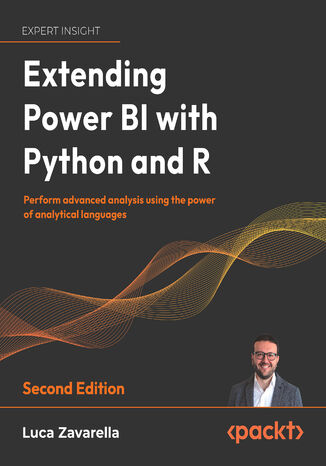
Luca Zavarella, Rajat Talwar
The latest edition of this book delves deep into advanced analytics, focusing on enhancing Python and R proficiency within Power BI. New chapters cover optimizing Python and R settings, utilizing Intel's Math Kernel Library (MKL) for performance boosts, and addressing integration challenges. Techniques for managing large datasets beyond available RAM, employing the Parquet data format, and advanced fuzzy matching algorithms are explored. Additionally, it discusses leveraging SQL Server Language Extensions to overcome traditional Python and R limitations in Power BI. It also helps in crafting sophisticated visualizations using the Grammar of Graphics in both R and Python.This Power BI book will help you master data validation with regular expressions, import data from diverse sources, and apply advanced algorithms for transformation. You'll learn how to safeguard personal data in Power BI with techniques like pseudonymization, anonymization, and data masking. You'll also get to grips with the key statistical features of datasets by plotting multiple visual graphs in the process of building a machine learning model. The book will guide you on utilizing external APIs for enrichment, enhancing I/O performance, and leveraging Python and R for analysis.You'll reinforce your learning with questions at the end of each chapter.
Sebastien Armand
With lots of practical, hands-on, step-by-step examples, this book will lead you through how to extend and optimize your Symfony2 framework. If you have a good understanding of how Symfony works and are now trying to integrate complex tasks in your application, or want to better organize your application by keeping each piece of code where it belongs so it can be decoupled and easily used elsewhere, then this book is for you.
Anup K Shah
To build a rich internet application, you need to integrate a powerful client side JavaScript framework with a server side framework. Ext.NET achieves this by integrating Sencha's Ext JS framework with the power of ASP.NET. The result ñ a sophisticated framework offering a vast array of controls, layout, and powerful AJAX and server bindings, which can be used to build rich, highly usable web applications.Ext.NET Web Application Development shows you how to build rich applications using Ext.NET. Examples guide you through Ext.NET's various components using both ASP.NET Web Forms and MVC examples. You will also see how Ext.NET handles data binding and server integration. You will also learn how to create reusable components and put them together in great looking applications.This book guides you through the various Ext.NET components and capabilities to enable you to create highly usable Ext.NET components and web applications.You will learn about various UI components and numerous layout options through examples. You will see how the AJAX architecture enables you to create powerful data-oriented applications easily. This book will also teach you how to create reusable custom components to suit your needs.Ext.NET Web Application Development shows you how to create rich and usable applications using Ext.NET through numerous examples.
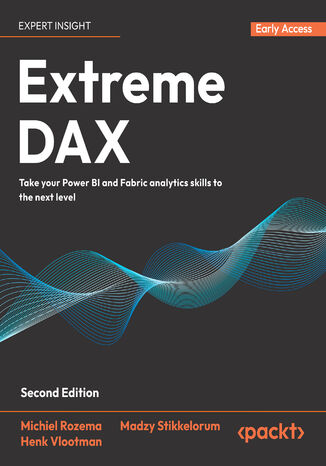
Extreme DAX. Take your Power BI and Fabric analytics skills to the next level - Second Edition
Michiel Rozema, Madzy Stikkelorum, Henk Vlootman, Jeroen...
This book helps experienced analysts unlock the full potential of DAX in Power BI and Microsoft Fabric to build scalable, production-ready analytics solutions.You’ll begin by strengthening your understanding of semantic models, data modeling, and evaluation context—the foundation of reliable analytics. Instead of isolated examples, the book uses real-world scenarios such as inventory analysis, benchmarking, and data security to show how advanced DAX calculations are applied in practice.As you progress, you’ll master advanced techniques including context transition, table functions, calculation groups, field parameters, and custom calendars. You’ll also explore analytical methods such as regression and goal-seeking to generate deeper insights from your data.With step-by-step guidance and practical PBIX examples, you’ll learn how to design efficient models, avoid common pitfalls, and implement reusable calculations. By the end, you’ll be able to create advanced DAX measures and high-performance Power BI solutions for complex analytical requirements.
eZ Publish 4: Enterprise Web Sites Step-by-Step
Francesco Fullone
eZ Publish provides developers with a structure to build highly impressive applications and then quickly deploy them into a live environment. eZ Publish is complex, with a steep learning curve, but with the right direction it offers great flexibility and power. What makes eZ Publish special is not the long list of features, but what's going on behind the scenes.Created specifically for newcomers to eZ Publish, and using an example Magazine web site, this book focuses on designing, building and deploying eZ Publish to create an enterprise site quickly and easily.This tutorial takes eZ Publish's steep learning curve head-on, and walks you through the process of designing and building content-rich web sites. It makes the unrivalled power and flexibility of eZ Publish accessible to all developers.The book is organized around technical topics, which are handled in depth, with a general progression that follows the learning experience of the reader, and features a single magazine web site project from installation to completion and deployment. This hands-on guide helps the reader to understand the Content Management System to create a web 2.0-ready web site by creating new extensions or overriding the existing ones. In turn, it helps you to become confident when working in the eZ Publish administration area and offers an environment in which you can practice while working through the chapters.
Eriawan Kusumawardhono
F# is a functional programming language and is used in enterprise applications that demand high performance. It has its own unique trait: it is a functional programming language and has OOP support at the same time.This book will help you make F# applications run faster with examples you can easily break down and take into your own work. You will be able to assess the performance of the program and identify bottlenecks. Beginning with a gentle overview of concurrency features in F#, you will get to know the advanced topics of concurrency optimizations in F#, such as F# message passing agent of MailboxProcessor and further interoperation with .NET TPL. Based on this knowledge, you will be able to enhance the performance optimizations when implementing and using other F# language features.The book also covers optimization techniques by using F# best practices and F# libraries. You will learn how the concepts of concurrency and parallel programming will help in improving the performance. With this, you would be able to take advantage of multi-core processors and track memory leaks, root causes, and CPU issues. Finally, you will be able to test their applications to achieve scalability.
Michael James Williams
The Facebook platform provides you with an ideal solution for building rich, social experiences on the web to develop an effective user experience application. Combined with Flash which effectively enables social interactions, you can create a fully functional application on Facebook. If you've been waiting to get started with your own applications and games on Facebook, with this book you don't have to wait any longer.This book takes you through everything you need to know to integrate your AS3 apps and games with Facebook accompanied by illustrative screenshots and short quizzes.It presents you with in depth coverage of the key underlying concepts such as creating a basic application that runs inside Facebook and exploring the Graph API which greatly simplifies how developers can retrieve data. This book also covers topics on security, permissions and authentication features on Facebook.This beginner's guide starts off by teaching you about retrieving simple public data and then rapidly working your way up to authenticating users, building powerful searches across the entire database, and uploading photos and other content.Throughout the book, you'll learn by building two fundamental components: an RIA Facebook interface and an AS3 SDK that you can drop into any project to add Facebook integration. This easy-to-understand guide has everything written as AS3-only projects with publicly available components, so you can follow along whether you use Flash Pro, Flex, or MXMLC – as long as you know AS3!This hands-on tutorial will present you with a whole new perspective of the three core aspects of Facebook – searching, retrieving, and updating the data .This practical book focuses on how to set up an application on Facebook and how to deal with different contexts like AIR.By the end of this book, you will be confident enough to set up your own application and create social interactions for users to share on Facebook.
Prasanna Vijayanathan
As generative AI moves into critical applications like hiring, credit decisions, education, and healthcare, the potential for real-world harm escalates. When systems perpetuate stereotypes or skew outcomes based on identity, the impact goes far beyond poor user experience. It results in lost opportunities, violated dignity, and erosion of trust. This book offers practical methods for evaluating and ensuring fairness across text, image, and multimodal GenAI systems. You'll begin with fairness principles that matter for GenAI and learn how to translate philosophical constructs into engineering artifacts. Abstract goals become measurable requirements: what constitutes harm, which groups are in scope, how fairness is defined, and which trade-offs are acceptable. Next, design a benchmarking framework that integrates with existing pipelines. Thereafter, create scenario and prompt libraries, model sensitive attributes and intersections, and run evaluations through an orchestrated pipeline. Implement quantitative metrics and qualitative rubrics, add human review with rater training and agreement checks, and publish results as scorecards and dashboards. Finally, integrate fairness checks into CI and model release gates, monitor drift, and run incident response playbooks so benchmarks stay credible as models and norms evolve.
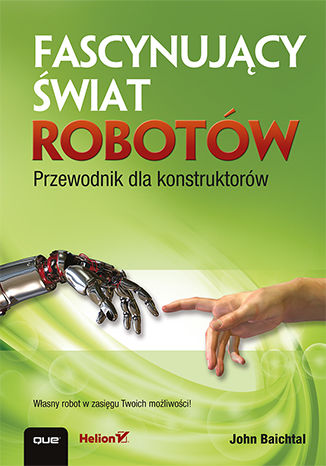
Fascynujący świat robotów. Przewodnik dla konstruktorów
John Baichtal
Własny robot w zasięgu Twoich możliwości! Największym marzeniem każdego majsterkowicza jest skonstruowanie własnego robota, który wyręczy w codziennych, monotonnych pracach. Robota, dzięki któremu majsterkowicz będzie miał więcej czasu na konstruowanie nowych niesamowitych układów. Jeżeli Ty również marzysz o własnym pomocniku, trafiłeś na doskonałą książkę! Błyskawicznie wprowadzi Cię ona w świat budowniczych robotów. Dzięki licznym ilustracjom oraz przejrzystym opisom będzie to niezwykle przyjemna i pouczająca lektura. Zacznij czytać już dzisiaj i sprawdź, jaki silnik dobrać, jak wykorzystać energię słoneczną oraz jak opracować układ zasilania. Po zapoznaniu się z mechanicznymi i elektronicznymi aspektami budowy przejdziesz do tematów związanych z programowaniem Twojego robota. Odkryj, jak budować instrukcje warunkowe, pętle oraz wykorzystać w pełni środowisko platformy Arduino. Zdobądź wiedzę na temat praktycznych zastosowań podczerwieni oraz przekonaj się, czy w Twoim warsztacie są wszystkie niezbędne narzędzia konstruktora robotów. Konstruuj roboty wyposażone w silniki i koła. Buduj roboty zasilane energią słoneczną. Steruj pracą robotów za pomocą modułów radiowych, sieci Wi-Fi, a nawet internetu. Zaprogramuj roboty tak, aby reagowały na sygnały odbierane przez czujniki. Steruj pracą robotów za pomocą standardowego pilota od telewizora. Zbuduj robota, który będzie wykrywał niechcianych gości i strzelał w nich plastikowymi rzutkami. Chwytaj i przenoś przedmioty za pomocą różnych manipulatorów. Wykonaj roboty zdolne do pracy na wodzie i pod wodą. Pracuj nad robotami, które będą malowały lub tworzyły inne dzieła sztuki. Wykonaj moduł umożliwiający Twojemu robotowi wysyłanie wiadomości SMS zawierających informacje o wykonaniu określonych czynności. Odkryj możliwości nowoczesnych zestawów komponentów przeznaczonych do samodzielnego konstruowania robotów. Skompletuj swoją idealną skrzynkę z narzędziami. Poznaj zasady, które pozwolą Ci na bezpieczną pracę nad robotami. Przewodnik konstruktora robotów!
FastAPI Cookbook. Develop high-performance APIs and web applications with Python
Giunio De Luca, Antonio Ferraro
FastAPI is a cutting-edge Python framework that is revolutionizing the way web apps and APIs are built. Known for its speed, simplicity, and scalability, FastAPI empowers developers to create high-performing applications with ease. This book will help you leverage FastAPI’s immense potential to handle high-traffic scenarios and integrate seamlessly with modern Python tools.The book begins by familiarizing you with the basics of setting up and configuring your FastAPI environment before moving to the intricacies of building RESTful APIs, managing data with SQL and NoSQL databases, and handling authentication and authorization. Next, you'll focus on advanced topics such as custom middleware, WebSocket communication, and integration with various Python libraries. Each chapter is meticulously crafted with practical recipes, progressing from foundational concepts to advanced features and best practices. The concluding chapters show you how to optimize performance, implement rate limiting, and execute background tasks, empowering you to become a proficient FastAPI developer.By the end of this book, you'll have gained the skills you need to migrate existing apps to FastAPI, and be equipped to tackle any challenge in the modern web development landscape, ensuring your apps are not only functional, but also efficient, secure, and scalable.
Joydeep Bhattacharjee
Facebook's fastText library handles text representation and classification, used for Natural Language Processing (NLP). Most organizations have to deal with enormous amounts of text data on a daily basis, and gaining efficient data insights requires powerful NLP tools such as fastText. This book is your ideal introduction to fastText. You will learn how to create fastText models from the command line, without the need for complicated code. You will explore the algorithms that fastText is built on and how to use them for word representation and text classification. Next, you will use fastText in conjunction with other popular libraries and frameworks such as Keras, TensorFlow, and PyTorch. Finally, you will deploy fastText models to mobile devices. By the end of this book, you will have all the required knowledge to use fastText in your own applications at work or in projects.