
Informatyka
Zajrzyj do kategorii Informatyka w księgarni internetowej Ebookpoint. Znajdziesz tutaj bestsellerowe książki, ebooki i kursy video z branży IT. Sięgnij po najlepszą literaturę dla specjalistów i rozwijaj doświadczenie, które już posiadasz, lub rozpocznij swoją przygodę z programowaniem, cyberbezpieczeństwem lub grafiką komputerową. Pogłębiaj swoją wiedzę tak, jak Ci wygodnie - z tradycyjną książką, wygodnym ebookiem lub nowoczesnym videokursem. Sprawdź, jakie tytuły znajdziesz w kategorii Informatyka!
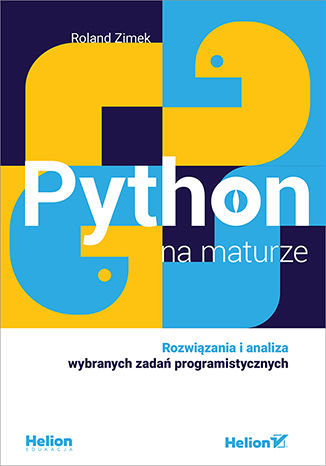
Python na maturze. Rozwiązania i analiza wybranych zadań programistycznych
Roland Zimek
Matura z Pythonem to nic trudnego! Ucz się! Analizuj! Programuj! Nauka programowania na dobre zadomowiła się w szkołach, a umiejętności informatyczne są od lat sprawdzane na egzaminach maturalnych. Jej adepci zapewne zdają sobie sprawę, jakim wzięciem na rynku cieszą się osoby, które mogą się pochwalić znajomością Pythona. To język, który dzięki swoim możliwościom i wszechstronności znajduje zastosowanie w najróżniejszych dziedzinach nauki, przemysłu i biznesu. Książka Python na maturze. Rozwiązania i analiza wybranych zadań programistycznych pozwoli Ci zapoznać się z prawdziwymi zadaniami maturalnymi z kilku ostatnich lat. Będziesz mógł je przeanalizować, a także opracować prawidłowe rozwiązania w języku Python. W efekcie nie tylko zdobędziesz i utrwalisz umiejętności programistyczne, lecz również - co nie mniej ważne - rozwiniesz zdolności w zakresie analizy problemów i wyboru właściwych rozwiązań. Treść zadań maturalnych Analiza problemów Praktyczne rozwiązania Uzasadnienie wybranych technik Typowe pułapki w zadaniach Składnia i instrukcje Pythona Zastosowanie języka w praktyce Naucz się Pythona i zdaj maturę jak prymus!
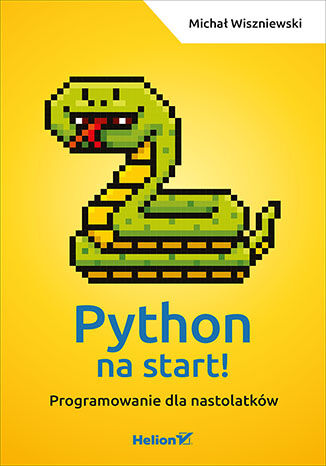
Python na start! Programowanie dla nastolatków
Michał Wiszniewski
Zacznij od skryptów, a skończysz na szczycie! Pierwsze kroki, czyli od czego zacząć przygodę z Pythonem Niezbędne gadżety, czyli z czego i jak budować programy w Pythonie Wędrówka przez style, czyli jak programować strukturalnie, obiektowo i funkcyjnie Czy kiedykolwiek zastanawiałeś się nad tym, dlaczego na świecie istnieje aż tyle języków programowania i czym różnią się one od siebie? I których z tych języków warto się nauczyć? Na pewno co najmniej kilku, ale na Twojej krótkiej liście nie może zabraknąć Pythona! Ten język ma dwie potężne zalety: po pierwsze, jest znacznie łatwiejszy w nauce i bardziej intuicyjny niż choćby C czy C++, a po drugie, umożliwia tworzenie skryptów, czyli funkcjonalnych programów, przydających się na co dzień programistom wszelkiej maści, administratorom sieci i wielu innym ludziom. Python to także fantastyczne narzędzie do tworzenia rozbudowanych projektów. Zresztą, możesz się o tym szybko przekonać. W tej książce znadziesz omówienie wszystkich najważniejszych funkcji i możliwości Pythona. Zobaczysz, jak pracować w środowisku tego języka, jak używać zmiennych, instrukcji warunkowych, funkcji i typów danych. Zobaczysz, w jakich sytuacjach warto wykorzystywać pętle i moduły, jak wykonywać operacje na plikach i jak obsługiwać wyjątki. Sprawdzisz, do czego przydaje się programowanie strukturalne, a do czego obiektowe, i zobaczysz, jak łatwo połączyć je w Pythonie! Krótko mówiąc, zanim się obejrzysz, zaczniesz samodzielnie pisać zaawansowane skrypty. Sprawdź, programuj i baw się dobrze! Pierwszy program, czyli jak zostałem programistą Zmienne są niezbędne... a zmienne znakowe jeszcze bardziej Operacje wejścia – przekaż skryptowi dowolne informacje Instrukcje warunkowe – początek prawdziwego programowania Funkcje – to jest to! Zasięg zmiennych i nieco więcej o instrukcjach warunkowych – trzeba uważać Pętle – czyli jak ułatwić sobie życie Zaawansowane typy danych – to tylko groźnie brzmi! Operacje na plikach – w końcu ciekawy rozdział! Moduły – one są wspaniałe! Wyjątki – czyli błędy w języku Python Obiekty, klasy i metody – czyli programowanie obiektowe Zaklinaj węża, czyli programuj w Pythonie!
Python Network Programming. Conquer all your networking challenges with the powerful Python language
Abhishek Ratan, Eric Chou, Pradeeban Kathiravelu, Dr....
This Learning Path highlights major aspects of Python network programming such as writing simple networking clients, creating and deploying SDN and NFV systems, and extending your network with Mininet. You’ll also learn how to automate legacy and the latest network devices. As you progress through the chapters, you’ll use Python for DevOps and open source tools to test, secure, and analyze your network. Toward the end, you'll develop client-side applications, such as web API clients, email clients, SSH, and FTP, using socket programming.By the end of this Learning Path, you will have learned how to analyze a network's security vulnerabilities using advanced network packet capture and analysis techniques. This Learning Path includes content from the following Packt products:• Practical Network Automation by Abhishek Ratan • Mastering Python Networking by Eric Chou • Python Network Programming Cookbook, Second Edition by Pradeeban Kathiravelu, Dr. M. O. Faruque Sarker
Pradeeban Kathiravelu, Dr. M. O. Faruque Sarker
Python Network Programming Cookbook - Second Edition highlights the major aspects of network programming in Python, starting from writing simple networking clients to developing and deploying complex Software-Defined Networking (SDN) and Network Functions Virtualization (NFV) systems. It creates the building blocks for many practical web and networking applications that rely on various networking protocols. It presents the power and beauty of Python to solve numerous real-world tasks in the area of network programming, network and system administration, network monitoring, and web-application development.In this edition, you will also be introduced to network modelling to build your own cloud network. You will learn about the concepts and fundamentals of SDN and then extend your network with Mininet. Next, you’ll find recipes on Authentication, Authorization, and Accounting (AAA) and open and proprietary SDN approaches and frameworks. You will also learn to configure the Linux Foundation networking ecosystem and deploy and automate your networks with Python in the cloud and the Internet scale.By the end of this book, you will be able to analyze your network security vulnerabilities using advanced network packet capture and analysis techniques.
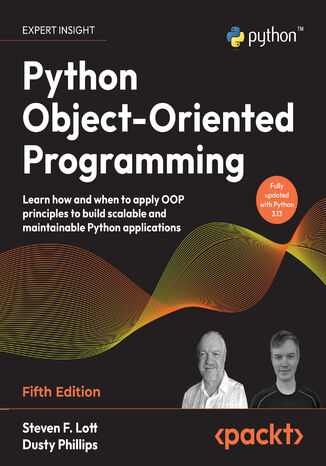
Steven F. Lott, Dusty Phillips
Learn to write effective, maintainable, and scalable Python applications by mastering object-oriented programming with this updated fifth edition. Whether you’re transitioning from scripting to structured development or refining your OOP skills, this book offers a clear, practical path forward.You’ll explore Python’s approach to OOP, from class creation and inheritance to polymorphism and abstraction, while discovering how to make smarter decisions about when and how to use these tools. You’ll apply what you learn through hands-on examples and exercises.Updated for Python 3.13, this edition simplifies complex topics such as abstract base classes, testing with unittest and pytest, and async programming with asyncio. It introduces a new chapter on Python’s type hinting ecosystem—crucial for modern Python development.Written by long-time Python experts Steven Lott and Dusty Phillips, this edition emphasizes clarity, testability, and professional software engineering practices. It helps you move beyond scripting to building well-structured, production-ready Python systems.By the end of this book, you’ll be confident in applying OOP principles, design patterns, type hints, and concurrency tools to create robust and maintainable Python applications.
Python Penetration Testing Essentials. Employ the power of Python to get the best out of pentesting
Mohit Raj
If you are a Python programmer or a security researcher who has basic knowledge of Python programming and want to learn about penetration testing with the help of Python, this book is ideal for you. Even if you are new to the field of ethical hacking, this book can help you find the vulnerabilities in your system so that you are ready to tackle any kind of attack or intrusion.
Christopher Duffy, Mohit Raj, Cameron Buchanan, Andrew...
Cybercriminals are always one step ahead, when it comes to tools and techniques. This means you need to use the same tools and adopt the same mindset to properly secure your software. This course shows you how to do just that, demonstrating how effective Python can be for powerful pentesting that keeps your software safe. Comprising of three key modules, follow each one to push your Python and security skills to the next level.In the first module, we’ll show you how to get to grips with the fundamentals. This means you’ll quickly find out how to tackle some of the common challenges facing pentesters using custom Python tools designed specifically for your needs. You’ll also learn what tools to use and when, giving you complete confidence when deploying your pentester tools to combat any potential threat.In the next module you’ll begin hacking into the application layer. Covering everything from parameter tampering, DDoS, XXS and SQL injection, it will build on the knowledge and skills you learned in the first module to make you an even more fluent security expert.Finally in the third module, you’ll find more than 60 Python pentesting recipes. We think this will soon become your trusted resource for any pentesting situation.This Learning Path combines some of the best that Packt has to offer in one complete, curated package. It includes content from the following Packt products:? Learning Penetration Testing with Python by Christopher Duffy? Python Penetration Testing Essentials by Mohit? Python Web Penetration Testing Cookbook by Cameron Buchanan,Terry Ip, Andrew Mabbitt, Benjamin May and Dave Mound
Srihari Yamanoor, Sai Yamanoor
Raspberry Pi Zero is a super-small and super-affordable product from Raspberry Pi that is packed with a plethora of features and has grabbed the notice of programmers, especially those who use Python. This step-by-step guide will get you developing practical applications in Python using a Raspberry Pi Zero. It will become a valuable resource as you learn the essential details of interfacing sensors and actuators to a Raspberry Pi, as well as acquiring and displaying data. You will get started by writing a Python program that blinks an LED at 1-second intervals. Then you will learn to write simple logic to execute tasks based upon sensor data (for example, to control a motor) and retrieve data from the web (such as to check e-mails to provide a visual alert). Finally, you will learn to build a home automation system with Python where different appliances are controlled using the Raspberry Pi. The examples discussed in each chapter of this book culminate in a project that help improve the quality of people’s lives.