
Verleger: Packt Publishing
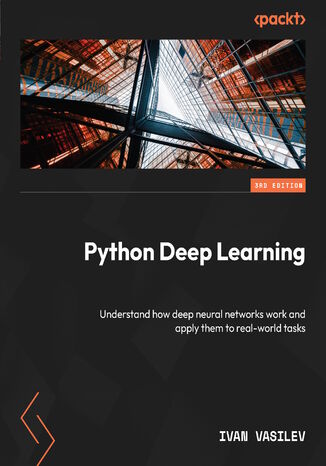
Ivan Vasilev, Valentino Zocca
The field of deep learning has developed rapidly recently and today covers a broad range of applications. This makes it challenging to navigate and hard to understand without solid foundations. This book will guide you from the basics of neural networks to the state-of-the-art large language models in use today.The first part of the book introduces the main machine learning concepts and paradigms. It covers the mathematical foundations, the structure, and the training algorithms of neural networks and dives into the essence of deep learning.The second part of the book introduces convolutional networks for computer vision. We’ll learn how to solve image classification, object detection, instance segmentation, and image generation tasks.The third part focuses on the attention mechanism and transformers – the core network architecture of large language models. We’ll discuss new types of advanced tasks they can solve, such as chatbots and text-to-image generation.By the end of this book, you’ll have a thorough understanding of the inner workings of deep neural networks. You'll have the ability to develop new models and adapt existing ones to solve your tasks. You’ll also have sufficient understanding to continue your research and stay up to date with the latest advancements in the field.
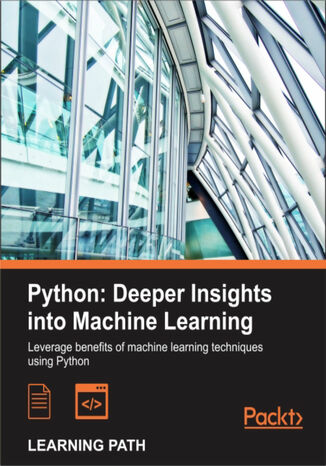
Python: Deeper Insights into Machine Learning. Deeper Insights into Machine Learning
John Hearty, Sebastian Raschka, David Julian
Machine learning and predictive analytics are becoming one of the key strategies for unlocking growth in a challenging contemporary marketplace. It is one of the fastest growing trends in modern computing, and everyone wants to get into the field of machine learning. In order to obtain sufficient recognition in this field, one must be able to understand and design a machine learning system that serves the needs of a project. The idea is to prepare a learning path that will help you to tackle the real-world complexities of modern machine learning with innovative and cutting-edge techniques. Also, it will give you a solid foundation in the machine learning design process, and enable you to build customized machine learning models to solve unique problems.The course begins with getting your Python fundamentals nailed down. It focuses on answering the right questions that cove a wide range of powerful Python libraries, including scikit-learn Theano and Keras.After getting familiar with Python core concepts, it’s time to dive into the field of data science. You will further gain a solid foundation on the machine learning design and also learn to customize models for solving problems.At a later stage, you will get a grip on more advanced techniques and acquire a broad set of powerful skills in the area of feature selection and feature engineering.
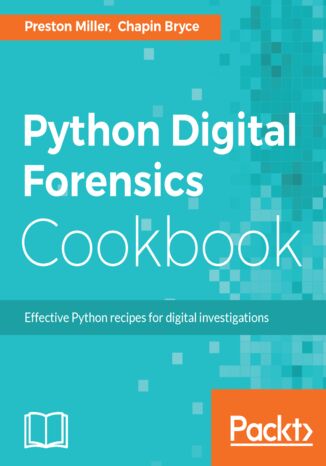
Python Digital Forensics Cookbook. Effective Python recipes for digital investigations
Chapin Bryce, Preston Miller
Technology plays an increasingly large role in our daily lives and shows no sign of stopping. Now, more than ever, it is paramount that an investigator develops programming expertise to deal with increasingly large datasets. By leveraging the Python recipes explored throughout this book, we make the complex simple, quickly extracting relevant information from large datasets. You will explore, develop, and deploy Python code and libraries to provide meaningful results that can be immediately applied to your investigations. Throughout the Python Digital Forensics Cookbook, recipes include topics such as working with forensic evidence containers, parsing mobile and desktop operating system artifacts, extracting embedded metadatafrom documents and executables, and identifying indicators of compromise. Youwill also learn to integrate scripts with Application Program Interfaces (APIs) suchas VirusTotal and PassiveTotal, and tools such as Axiom, Cellebrite, and EnCase. By the end of the book, you will have a sound understanding of Python and how you can use it to process artifacts in your investigations.
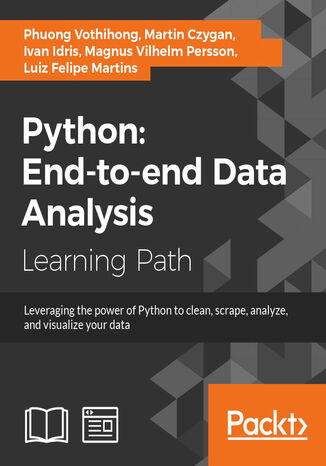
Ivan Idris, Magnus Vilhelm Persson, Luiz Felipe...
Data analysis is the process of applying logical and analytical reasoning to study each component of data present in the system. Python is a multi-domain, high-level, programming language that offers a range of tools and libraries suitable for all purposes, it has slowly evolved as one of the primary languages for data science. Have you ever imagined becoming an expert at effectively approaching data analysis problems, solving them, and extracting all of the available information from your data? If yes, look no further, this is the course you need!In this course, we will get you started with Python data analysis by introducing the basics of data analysis and supported Python libraries such as matplotlib, NumPy, and pandas. Create visualizations by choosing color maps, different shapes, sizes, and palettes then delve into statistical data analysis using distribution algorithms and correlations. You’ll then find your way around different data and numerical problems, get to grips with Spark and HDFS, and set up migration scripts for web mining. You’ll be able to quickly and accurately perform hands-on sorting, reduction, and subsequent analysis, and fully appreciate how data analysis methods can support business decision-making. Finally, you will delve into advanced techniques such as performing regression, quantifying cause and effect using Bayesian methods, and discovering how to use Python’s tools for supervised machine learning.The course provides you with highly practical content explaining data analysis with Python, from the following Packt books:1. Getting Started with Python Data Analysis.2. Python Data Analysis Cookbook.3. Mastering Python Data Analysis.By the end of this course, you will have all the knowledge you need to analyze your data with varying complexity levels, and turn it into actionable insights.
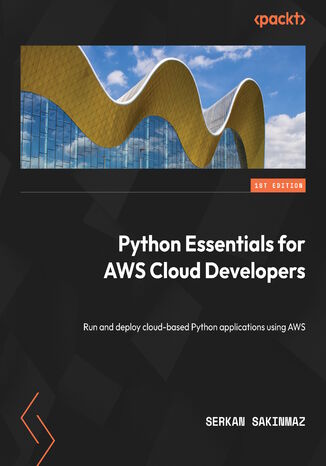
Python Essentials for AWS Cloud Developers. Run and deploy cloud-based Python applications using AWS
Serkan Sakinmaz
AWS provides a vast variety of services for implementing Python applications, which can pose a challenge for those without an AWS background. This book addresses one of the more predominant problems of choosing the right service and stepping into the implementation of exciting Python apps using AWS.The book begins by showing you how to install Python and create an AWS account, before helping you explore AWS Lambda, EC2, Elastic Beanstalk, and S3 for Python programming. You'll then gain hands-on experience in using these services to build the Python application. As you advance, you'll discover how to debug Python apps using PyCharm, and then start deploying the Python applications on Elastic Beanstalk. You’ll also learn how to monitor Python applications using the CloudWatch service, along with creating and publishing APIs on AWS to access the Python application. The concluding chapters will help you get to grips with storing unstructured and semi-structured data using NoSQL and DynamoDB, as well as advance your knowledge using the Glue serverless data integration service in AWS.By the end of this Python book, you’ll be able to take your application development skills up a notch with AWS services and advance in your career.
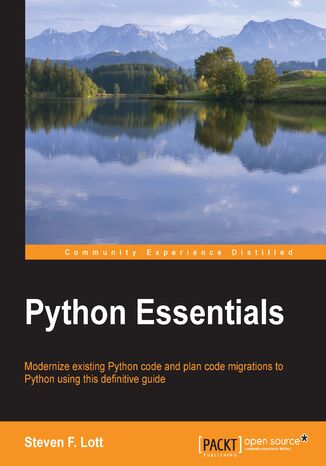
Steven F. Lott
This book is designed for Python 2 developers who want to get to grips with Python 3 in a short period of time. It covers the key features of Python, assuming you are familiar with the fundamentals of Python 2.
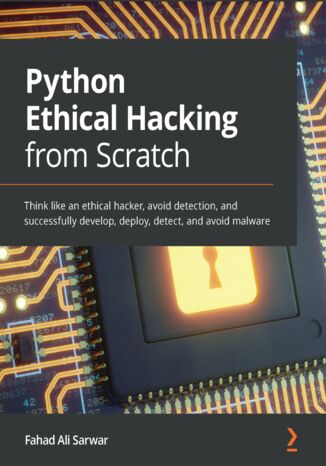
Fahad Ali Sarwar
Penetration testing enables you to evaluate the security or strength of a computer system, network, or web application that an attacker can exploit. With this book, you'll understand why Python is one of the fastest-growing programming languages for penetration testing. You'll find out how to harness the power of Python and pentesting to enhance your system security.Developers working with Python will be able to put their knowledge and experience to work with this practical guide. Complete with step-by-step explanations of essential concepts and practical examples, this book takes a hands-on approach to help you build your own pentesting tools for testing the security level of systems and networks. You'll learn how to develop your own ethical hacking tools using Python and explore hacking techniques to exploit vulnerabilities in networks and systems. Finally, you'll be able to get remote access to target systems and networks using the tools you develop and modify as per your own requirements.By the end of this ethical hacking book, you'll have developed the skills needed for building cybersecurity tools and learned how to secure your systems by thinking like a hacker.
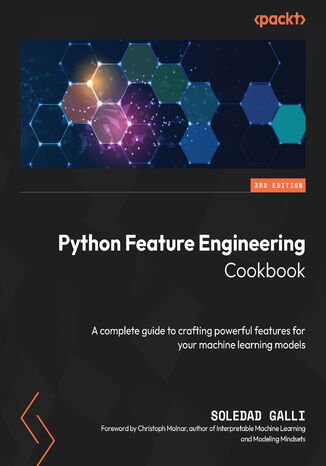
Soledad Galli, Christoph Molnar
Streamline data preprocessing and feature engineering in your machine learning project with this third edition of the Python Feature Engineering Cookbook to make your data preparation more efficient.This guide addresses common challenges, such as imputing missing values and encoding categorical variables using practical solutions and open source Python libraries. You’ll learn advanced techniques for transforming numerical variables, discretizing variables, and dealing with outliers. Each chapter offers step-by-step instructions and real-world examples, helping you understand when and how to apply various transformations for well-prepared data.The book explores feature extraction from complex data types such as dates, times, and text. You’ll see how to create new features through mathematical operations and decision trees and use advanced tools like Featuretools and tsfresh to extract features from relational data and time series.By the end, you’ll be ready to build reproducible feature engineering pipelines that can be easily deployed into production, optimizing data preprocessing workflows and enhancing machine learning model performance.