
Programowanie
Niezależnie czy dopiero rozpoczynacie swoją przygodę z programowaniem, czy jesteście już uznanymi na rynku profesjonalistami, to w kategorii Programowanie na pewno znajdziecie podręczniki, które pomogą Wam w przebiegu pracy, czy też w nauce podstaw programowania.
W książkach z tego działu zawarta jest wiedza zarówno związana z czysto technicznymi sprawami typu składnia języków, ale także z umiejętnościami bardziej "miękkimi" jak obsługa i wykorzystanie pełnych możliwości środowisk programistycznych, czy też projektowanie oprogramowania lub metody numeryczne czy oraz struktury danych.
Mistrz czystego kodu. Kodeks postępowania profesjonalnych programistów
Robert C. Martin
Mistrz czystego kodu. Kodeks postępowania profesjonalnych programistów Podręcznik profesjonalnego programisty! Robert C. Martin, znany jako Uncle Bob, to jeden z prawdziwych gwiazdorów branży IT, człowiek o niezwykłej charyzmie, rewelacyjnym podejściu do słuchaczy i poczuciu humoru. O jego czas wciąż biją się konferencje branżowe. Poza działalnością ekspercką Martin zajmuje się pisaniem książek - m.in. jest autorem znanego każdemu programiście tytułu Czysty kod. Książka, którą trzymasz w rękach, jest udaną kontynuacją tej pozycji. W trakcie lektury dowiesz się, jakie cechy charakteryzują profesjonalnego programistę, a jest ich sporo! W pierwszej kolejności musisz nauczyć się mówić "nie". Są też sytuacje, kiedy trzeba powiedzieć "tak" - dowiesz się, kiedy i jak to robić. Ponadto poznasz najlepsze techniki zarządzania czasem oraz przekonasz się, jak presja, zmęczenie i pośpiech wpływają na jakość Twojego kodu. W kolejnych rozdziałach Robert C. Martin zapozna Cię z różnymi sposobami podejścia do testowania kodu oraz współpracy między programistami a innymi ludźmi. Książka ta jest długo wyczekiwaną pozycją na rynku - nie pozwól, żeby ktoś miał ją przed Tobą! Zobacz, jak Uncle Bob: radzi sobie z presją mówi "nie" i "tak" zarządza czasem tworzy kod wysokiej jakości Obowiązkowa lektura każdego programisty!

Mistrz języka C. Najlepsze zasady, praktyki i wzorce
Christopher Preschern
Język C mimo upływu lat wciąż wydaje się niezastąpiony. Umożliwia pisanie zwięzłego kodu, który działa szybko mimo niewielkich zasobów sprzętowych. Choć wielu programistów używa C, trudno jest znaleźć eksperckie wskazówki dotyczące programowania w tym języku. Tymczasem w profesjonalnych zastosowaniach podjęcie optymalnych decyzji projektowych warunkuje uzyskanie wysokiej jakości gotowego kodu. To świetna pozycja, dzięki której Twój kod będzie bardziej przejrzysty i łatwiejszy w konserwacji. David Griffiths, autor książki Head First C W tym poradniku, skierowanym do początkujących i doświadczonych programistów języka C, zawarto wiele informacji o podejmowaniu decyzji projektowych, pokazano też krok po kroku, jak wpływają one na tworzenie złożonego oprogramowania. Znajdziesz tu odpowiedzi na trudne pytania o projektowanie struktury programów w C, obsługę błędów czy tworzenie elastycznych interfejsów. Liczne wskazówki i przykłady ułatwią Ci przekładanie wiedzy projektowej na działające implementacje. Druga część książki stanowi omówienie zastosowania licznych wzorców projektowych z języka C do tworzenia większych aplikacji. Dowiesz się, jakie wzorce stosuje się w konkretnych sytuacjach, a także w jaki sposób mogą ułatwić Ci pracę dzięki wskazywaniu dobrych decyzji projektowych. W książce omówiono wzorce dotyczące: obsługi błędów i komunikatów o błędach zarządzania pamięcią elastycznych API i interfejsów iteratorów organizowania plików w programach modułowych ucieczki z piekła instrukcji #ifdef Ta książka pokaże początkującym, jak tworzyć w C produkty klasy przemysłowej! Robert Hanmer, architekt oprogramowania
Młody mistrz programowania. Języki Baltie i Scratch dla dzieci
Agnieszka Borkowska, Paweł Borkowski
Czarowanie na ekranie! W krainie Baltiego, czyli poznaj świat czarodzieja Na Skreczowisku, czyli zaprogramuj sobie grę Gry komputerowe to jedna z tych rzeczy, które dzieci lubią najbardziej. Zwykle mogłyby bez końca siedzieć przed ekranem i zabijać kolejne smoki, projektować domy, przedzierać się przez dżunglę lub jeździć wyścigówkami. Jednak rzadko przychodzi im do głowy, że równie wielką przyjemność może sprawić zaprojektowanie i zbudowanie własnej gry! Tu zaczyna się Twoje zadanie. Nie musisz być programistą, żeby pomóc swojemu dziecku odkryć fascynujący świat programowania — wystarczy Ci ta książka. Zainstaluj proste, przyjazne dzieciom środowiska Baltie i Scratch, by rozpocząć podróż po czarodziejskiej krainie. Z pierwszymi zadaniami z powodzeniem poradzą sobie nawet kilkulatki, a im dalej w las, tym ciekawsze stają się wyzwania. Dzieci szybko uczą się, jak działać w świecie duszków, obiektów i poleceń. Co więcej, sprawia im to dużą frajdę. I wreszcie nadchodzi ten moment, gdy wiedzą już, o co chodzi w tym całym programowaniu — a jest to wiedza niezwykle cenna w dzisiejszych czasach! Na pomoc czarodziejowi Korespondencja To, czego nigdy nie było Drugi stopień wtajemniczenia Porwanie Karciane pola Księga Czarów Hokus, fokus, pokus Pierwsze spotkanie z kotem Budujemy grę Najtrudniejsze zagadnienia Łagodnie wprowadź dziecko w świat programowania!
Młody programista. Nauka programowania w Scratchu
Witold Krieser
Baw się ― i ucz się programowania! Programowanie to dziś niezwykle ważna umiejętność. I wszystko wskazuje na to, że jego znaczenie będzie tylko rosło. Warto więc zawczasu pomyśleć o przyszłości swojego dziecka i pomóc mu rozpocząć przygodę z programowaniem. Tym bardziej że istnieje Scratch ― język kodowania, wokół którego skupia się liczna społeczność internetowa ― pozwalający tworzyć własne interaktywne historie, gry i animacje i dzielić się nimi z ludźmi na całym świecie. A że Scratch powstał z myślą o młodych programistach, w wieku 8 – 16 lat, idealnie się sprawdza jako pierwszy język przyszłego informatyka. Na rynku jest dostępnych wiele opracowań poświęconych obsłudze Scratcha. Tę książkę wyróżnia to, że zawiera niezbędne minimum tekstu, za to maksymalnie dużo grafik. Za ich pośrednictwem autor pokazuje podstawowe instrukcje języka i programy pomagające kreować rozmaite kształty. Młody czytelnik będzie w stanie każdy z tych programów przeanalizować, wprowadzić do Scratcha, wreszcie ― sprawdzić jego działanie. Wszystko po to, by samodzielnie tworzyć ciekawe efekty graficzne, animacje i gry.
Młodzi giganci programowania. Scratch
Radosław Kulesza, Sebastian Langa, Dawid Leśniakiewicz, Piotr...
Nauka programowania? Ze Scratchem to nic trudnego! Nudzą Cię już gry komputerowe i zwykłe przeglądanie internetu? Uważasz, że stać Cię na więcej? Masz ochotę zaskoczyć kolegów z klasy? A może po prostu... chcesz nauczyć się programować? Jeśli tak, to dobrze trafiłeś! Scratch to doskonałe narzędzie, dzięki któremu młodzi pasjonaci na całym świecie bez trudu poznają tajniki programowania komputerów od podstaw. Scratch ułatwia rozpoczęcie nauki i umożliwia szybkie tworzenie atrakcyjnych gier, animacji i aplikacji, będąc przy tym narzędziem zupełnie bezpłatnym. Jeśli chcesz dołączyć do społeczności użytkowników Scratcha, jesteś na dobrym tropie! Książka Młodzi giganci programowania. Scratch szybko i bezboleśnie wprowadzi Cię w niezwykły świat. Krok po kroku poznasz sposób tworzenia gier komputerowych i przeżyjesz przy tym wspaniałą przygodę! Ta publikacja sprawdzi się zarówno w przypadku młodych adeptów sztuki programowania, jak i nauczycieli zainteresowanych prowadzeniem zajęć z informatyki dla najmłodszych. Pierwsza część zawiera bardzo dokładny opis środowiska, a druga to doskonałe pomysły na rozbudowane gry komputerowe. Elementy środowiska Scratch i sposoby ich wykorzystania Używanie i edycja postaci, kostiumów oraz teł Korzystanie z możliwości ruchu i efektów dźwiękowych Posługiwanie się danymi, blokami i wyrażeniami Obsługa zdarzeń i czujników, korzystanie z możliwości kontroli Praktyczne pomysły na prawdziwe gry komputerowe Zacznij programować już dziś i szybko opracuj swoją pierwszą grę komputerową!
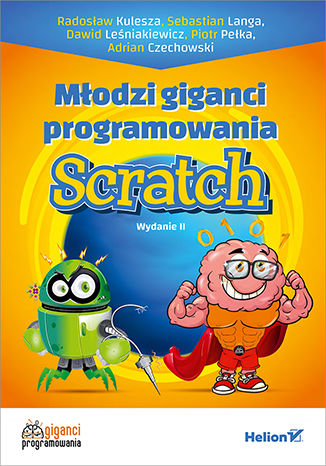
Młodzi giganci programowania. Scratch. Wydanie II
Radosław Kulesza, Sebastian Langa, Dawid Leśniakiewicz, Piotr...
Programowanie? Ze Scratchem to czysta przyjemność! Jeśli masz już dość bezproduktywnego wpatrywania się w ekran komputera lub tabletu i chciałbyś zacząć robić coś naprawdę ciekawego, dobrze trafiłeś! A jeśli przy tym chcesz zabłysnąć w klasie i zostać prawdziwą gwiazdą na lekcji informatyki, to trafiłeś jeszcze lepiej! Scratch to doskonałe narzędzie, dzięki któremu wielu młodych ludzi na całym świecie bez trudu poznało tajniki programowania komputerów. Ułatwia naukę podstaw i umożliwia szybkie tworzenie atrakcyjnych gier, animacji i aplikacji, a do tego jest narzędziem zupełnie bezpłatnym. Aby dołączyć do społeczności użytkowników Scratcha, sięgnij po książkę Młodzi giganci programowania. Scratch. Wydanie II! Szybko i bezboleśnie wprowadzi Cię ona w magiczny świat programowania. Dzięki niej poznasz sposób tworzenia prawdziwej gry komputerowej i przeżyjesz wspaniałą przygodę! Książka sprawdzi się w przypadku zarówno młodych adeptów sztuki programowania, jak i nauczycieli zainteresowanych prowadzeniem zajęć z informatyki dla najmłodszych. Pierwsza część zawiera bardzo dokładny opis środowiska, a druga to doskonałe pomysły na rozbudowane gry komputerowe. Elementy środowiska Scratch i sposoby ich wykorzystania Używanie i edycja postaci, kostiumów oraz teł Korzystanie z możliwości ruchu i efektów dźwiękowych Posługiwanie się danymi, blokami i wyrażeniami Obsługa zdarzeń i czujników, korzystanie z możliwości kontroli Praktyczne pomysły na prawdziwe gry komputerowe Ciekawe zadania z programowania z rozwiązaniami Zostań asem programowania! Napisz swoją pierwszą grę komputerową!
Tom Bray, Ethan Holmes, Sani Yusuf, Hazem...
A great mobile app is rapidly becoming crucial for a huge range of businesses. With a great app, your customers or your readers don’t come to you – you go with them, just a few clicks and swipes away. This Learning Path shows you how to build awesome mobile apps with some of the best tools currently being used by some of the smartest developers in the industry. Taking you through JavaScript impressive development ecosystem – from jQuery Mobile to React, through to Ionic – we’ll show you how to put your skills into practice so you can build your next mobile apps with confidence and style. In this Learning Path, from jQuery to React, to Ionic, we’ll cover everything you need to start In the first module you’ll learn how to get stuck into Apache Cordova and find out how to use it as the key platform for developing your mobile app. It offers an efficient way to develop hybrid apps, which means you won’t have to connect to platform specific APIs or use their UI framework, and can instead harness your JavaScript web development skills. Make sure you have your HTML, CSS and jQuery skills at the ready.In Module 2 we’ll show you how to take advantage of React Native. It has a reputation for having a steep learning curve, but we’ll make it easy for you, making sure you make full use of your existing knowledge and getting you up and running with a sample application. You’ll also learn how to create components, how to create multiple screens, as well as using native UI components and accessing native APIs.In the third and final module you’ll get started with Ionic. With three practical projects you can build yourself, we’ve made sure that you’ll be learning by doing – which means you’ll not only develop new skills much more quickly, but you’ll have produced something tangible at the end of it!This Learning Path combines some of the best that Packt has to offer in one complete, curated package. It includes content from the following Packt products:?JavaScript Mobile Application Development by Hazem Saleh?Getting Started with React Native by Ethan Holmes and Tom Bray?Ionic Framework By Example by Sani Yusuf
Vijay Kumar Velu
Mobile security has come a long way over the last few years. It has transitioned from should it be done? to it must be done!Alongside the growing number of devises and applications, there is also a growth in the volume of Personally identifiable information (PII), Financial Data, and much more. This data needs to be secured. This is why Pen-testing is so important to modern application developers. You need to know how to secure user data, and find vulnerabilities and loopholes in your application that might lead to security breaches.This book gives you the necessary skills to security test your mobile applications as a beginner, developer, or security practitioner. You'll start by discovering the internal components of an Android and an iOS application. Moving ahead, you'll understand the inter-process working of these applications. Then you'll set up a test environment for this application using various tools to identify the loopholes and vulnerabilities in the structure of the applications. Finally, after collecting all information about these security loop holes, we'll start securing our applications from these threats.
Karthikeyan NG, Arun Padmanabhan, Matt Cole
We’re witnessing a revolution in Artificial Intelligence, thanks to breakthroughs in deep learning. Mobile Artificial Intelligence Projects empowers you to take part in this revolution by applying Artificial Intelligence (AI) techniques to design applications for natural language processing (NLP), robotics, and computer vision.This book teaches you to harness the power of AI in mobile applications along with learning the core functions of NLP, neural networks, deep learning, and mobile vision. It features a range of projects, covering tasks such as real-estate price prediction, recognizing hand-written digits, predicting car damage, and sentiment analysis. You will learn to utilize NLP and machine learning algorithms to make applications more predictive, proactive, and capable of making autonomous decisions with less human input. In the concluding chapters, you will work with popular libraries, such as TensorFlow Lite, CoreML, and PyTorch across Android and iOS platforms.By the end of this book, you will have developed exciting and more intuitive mobile applications that deliver a customized and more personalized experience to users.
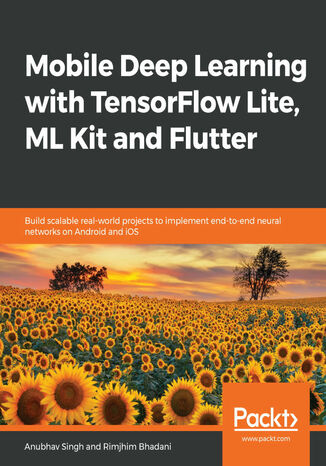
Anubhav Singh, Rimjhim Bhadani
Deep learning is rapidly becoming the most popular topic in the mobile app industry. This book introduces trending deep learning concepts and their use cases with an industrial and application-focused approach. You will cover a range of projects covering tasks such as mobile vision, facial recognition, smart artificial intelligence assistant, augmented reality, and more.With the help of eight projects, you will learn how to integrate deep learning processes into mobile platforms, iOS, and Android. This will help you to transform deep learning features into robust mobile apps efficiently. You’ll get hands-on experience of selecting the right deep learning architectures and optimizing mobile deep learning models while following an application oriented-approach to deep learning on native mobile apps. We will later cover various pre-trained and custom-built deep learning model-based APIs such as machine learning (ML) Kit through Firebase. Further on, the book will take you through examples of creating custom deep learning models with TensorFlow Lite. Each project will demonstrate how to integrate deep learning libraries into your mobile apps, right from preparing the model through to deployment.By the end of this book, you’ll have mastered the skills to build and deploy deep learning mobile applications on both iOS and Android.
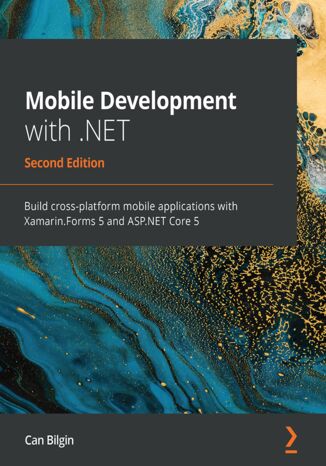
Can Bilgin
Are you a .NET developer who wishes to develop mobile solutions without delving into the complexities of a mobile development platform? If so, this book is a perfect solution to help you build professional mobile apps without leaving the .NET ecosystem.Mobile Development with .NET will show you how to design, architect, and develop robust mobile applications for multiple platforms, including iOS, Android, and UWP using Xamarin, .NET Core, and Azure.With the help of real-world scenarios, you'll explore different phases of application development using Xamarin, from environment setup, design, and architecture to publishing. Throughout the book, you'll learn how to develop mobile apps using Xamarin and .NET Standard. You'll even be able to implement a web-based backend composed of microservices with .NET Core using various Azure services including, but not limited to, Azure Active Directory, Azure Functions. As you advance, you'll create data stores using popular database technologies such as Cosmos DB and data models such as the relational model and NoSQL.By the end of this mobile application development book, you'll be able to create cross-platform mobile applications that can be deployed as cloud-based PaaS and SaaS.
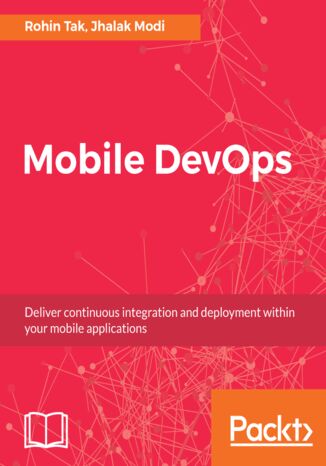
Mobile DevOps. Deliver continuous integration and deployment within your mobile applications
Rohin Tak, Jhalak Modi
Today's world is all about perfection, and there are hundreds of applications that are released each day out of which only a few succeed. Making sure that the app looks, performs, and behaves as expected is one of the biggest challenge developers face today.The main goal of this book is to teach developers to implement DevOps to build, test, and deliver. This book will teach you to implement Mobile DevOps at every stage of your application's lifecycle with Visual Studio and Xamarin Mobile Lifecycle solutions. Later, it will also show you how to leverage Mobile Center's continuous integration and automated testing to develop a high-quality applications. Next, you’ll see how to mobilize your on-premises data to the cloud and increase your productivity with code reuse. Finally, you’ll discover how to find and fix bugs beforehand, improving the efficiency of your application while it is being developed.By the end of this book, you will be well-versed with Mobile DevOps techniques, delivering high quality and high performance mobile apps.
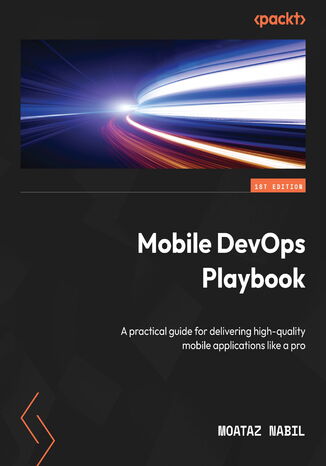
Mobile DevOps Playbook. A practical guide for delivering high-quality mobile applications like a pro
Moataz Nabil
To build mobile apps, you need to understand mobile-first features, tools, and processes that help you build, test, and release robust apps faster and more efficiently. The multitude of challenges stemming from mobile development's inherent complexities, including native iOS and Android app creation, cross-platform frameworks, and the implementation of scalable architectures within extensive teams, collectively contribute to a substantial number of obstacles that can significantly prolong the release process.This book will help you understand and implement the best practices of mobile DevOps for continuous integration, testing, delivery, deployment, and monitoring. You’ll explore different challenges faced by developers due to varied OSs, the unforgiving nature of mobile applications, and continuous updates to mobile phones and learn how to maneuver through these challenges. You’ll also get to grips with the latest trends while discovering the potential future of mobile DevOps, with valuable insights and guidance about integrating mobile development teams into your organization.By the end of this book, you’ll be well-equipped to successfully implement mobile DevOps and build fast, qualitative, and efficient mobile apps for your team or organization.
Will Hacker
Mobile app and website design are two of of the most popular areas of user experience design. Axure RP 7 allows you to design and build mobile prototypes and deploy them to real devices for testing and stakeholder review. It also allows you to create an interactive HTML website wireframe or UI mockup without coding. Axure 7 has new features such as new widget events, page events, adaptive views, and so on, that give you more flexibility while building mobile prototypes.If you have experience with Axure but have never designed anything for mobile devices or responsive design, this book will get you started right away. This book contains working examples of how to complete some common mobile design tasks using Axure and focuses on creating rich, functional prototypes for mobiles, whether they are apps or websites.Using this practical, example-oriented guide, you will learn how Axure RP 7 can be used by user experience designers to create and deploy mobile prototypes on smartphones and tablets.You will also learn how Axure RP 7 can be used to create adaptive views for multi-device designs, sliding menus, mobile-friendly forms, drag and drop interactions, tool bars, and basic transitional animations common to mobile apps. You will get to know how to publish prototypes so that they can be tested or demonstrated on a real mobile device.
Mobile Test Automation with Appium. Mobile application testing made easy
Nishant Verma
Appium is an open source test automation framework for mobile applications. It allows you to test all three types of mobile applications: native, hybrid, and mobile web. It allows you to run the automated tests on actual devices, emulators, and simulators. Today, when every mobile app is made on at least two platforms, iOS and Android, you need a tool that allows you to test across platforms. Having two different frameworks for the same app increases the cost of the product and time to maintain it as well. Appium helps save this cost.With mobile app growth exploding, mobile app automation is mainstream now. In this book, author Nishant Verma provides you with a firm grounding in the concepts of Appium while diving into how to set up appium & Cucumber-jvm test automation framework, implement page object design pattern, automate gestures, test execution on emulators and physical devices, and implement continuous integration with Jenkins. The mobile app we have referenced in this book is Quikr because of its relatively lower learning curve to understand the application. It's a local classifieds shopping app.
S. S. Niranga
With users increasingly accessing the web on mobile devices, it’s crucial to make sure your website is built to seamlessly fit this radical change in user behavior. Mobile Web Performance Optimization is designed to help you do exactly that – it’s been created to help you build fast, and mobile-user-friendly websites and applications. Featuring guidance through a range of techniques and tools essential to modern mobile development, this accessible guide will make sure you’re delivering a seamless and intuitive experience for your website’s users.Begin by exploring the fundamental components of mobile web design and website optimization, before learning how to put the concepts into practice. Featuring cross-platform solutions, insights on developing lightweight yet robust UI, and insights on how to successfully manage data, this application development book takes you through every stage in the development process – so you can be confident that you’re asking the right questions and using the best tools in the most effective way. By the end, you’ll understand implicitly what it means to ‘build for performance’- you’ll be a more confident developer, capable of building projects that adapt to a changing world.