
Programowanie
Niezależnie czy dopiero rozpoczynacie swoją przygodę z programowaniem, czy jesteście już uznanymi na rynku profesjonalistami, to w kategorii Programowanie na pewno znajdziecie podręczniki, które pomogą Wam w przebiegu pracy, czy też w nauce podstaw programowania.
W książkach z tego działu zawarta jest wiedza zarówno związana z czysto technicznymi sprawami typu składnia języków, ale także z umiejętnościami bardziej "miękkimi" jak obsługa i wykorzystanie pełnych możliwości środowisk programistycznych, czy też projektowanie oprogramowania lub metody numeryczne czy oraz struktury danych.
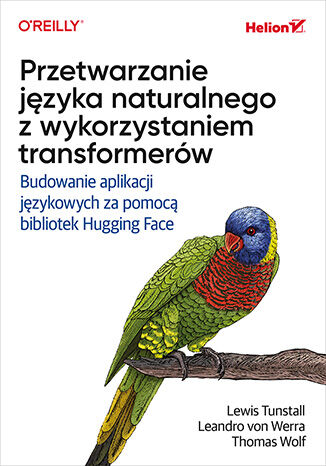
Lewis Tunstall, Leandro von Werra, Thomas Wolf
Modele transformacyjne zmieniły sposób przetwarzania języka naturalnego. Rewolucja rozpoczęła się w 2017 roku, kiedy zaprezentowano światu tę architekturę sieci neuronowej. Kolejnym przełomem okazały się repozytoria modeli, takie jak biblioteka Transformers zespołu Hugging Face, która umożliwia łatwe pobranie wstępnie wytrenowanego modelu, jego konfigurację i użytkowanie. Poznaj niesamowite możliwości: wszędzie tam, gdzie jest mowa lub tekst, istnieją zastosowania NLP. Niezwykle przejrzysty i wnikliwy przewodnik po najważniejszej bibliotece współczesnego NLP. Polecam! Christopher Manning, profesor Uniwersytetu Stanforda Tę książkę docenią praktycy: inżynierowie uczenia maszynowego i analitycy danych, poszukujący sposobu praktycznego zaadaptowania modeli transformacyjnych do swoich potrzeb. Autorzy skupili się na praktycznej stronie tworzenia aplikacji językowych, a w poszczególnych rozdziałach ujęto wszystkie najważniejsze zastosowania transformerów w NLP. Zaczniesz od łatwych w użyciu potoków, następnie przystąpisz do pracy z tokenizatorami, klasami modeli i interfejsu Trainer API, pozwalającymi na trenowanie modeli do konkretnych zastosowań. Dowiesz się również, jak zastąpić interfejs Trainer biblioteką Accelerate, która zapewnia pełną kontrolę nad pętlą treningową i umożliwia trenowanie dużych transformerów od zera! W książce: tworzenie modeli transformacyjnych przeznaczonych do typowych zadań NLP stosowanie transformerów do międzyjęzykowego uczenia transferowego używanie transformerów w rzeczywistych scenariuszach optymalizacja modeli technikami: destylacji, przycinania i kwantyzacji trenowanie modeli transformacyjnych z wykorzystaniem wielu procesorów graficznych w środowisku rozproszonym Autorzy książki są współtwórcami platformy Hugging Face. Wybitna książka poświęcona wybitnej bibliotece - wzór przejrzystości! Jeremy Howard, profesor Uniwersytetu Queensland
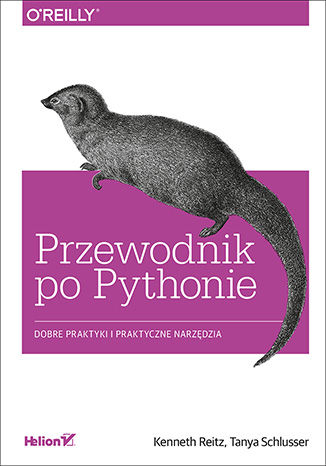
Przewodnik po Pythonie. Dobre praktyki i praktyczne narzędzia
Kenneth Reitz, Tanya Schlusser
Python to potężny, wszechstronny, a do tego cechujący się prostotą i elastycznością język ułatwiający wydajne tworzenie czytelnego kodu. Nadaje się do bardzo różnych zastosowań, włączając w to wysoce specjalistyczne zadania, takie jak analiza danych. Python cieszy się niezwykłym wsparciem społeczności, dzięki czemu powstają nowe ciekawe narzędzia dla programistów. To wszystko sprawia, że dla twórców oprogramowania biegłe posługiwanie się Pythonem staje się bardzo niezbędną umiejętnością. Niniejsza książka jest przeznaczona dla średnio zaawansowanych programistów. Zawarto tu zbiór najlepszych praktyk i opis ulubionych narzędzi entuzjastów Pythona. Przedstawiono doskonałe biblioteki do aplikacji konsolowych, graficznych interfejsów i aplikacji internetowych oraz do analizy danych, obróbki zdjęć i dźwięku, a także biblioteki sieciowe do akcji asynchronicznych, serializacji i kryptografii. Znalazły się tu liczne przykłady fragmentów znakomitego kodu, opisano również dobre praktyki pakietowania i dystrybucji kodu. Książka ta stanowi świetne źródło informacji o konwencjach i praktykach wypracowanych przez społeczność Pythona, co będzie szczególnie cenne dla każdego, kto chce zyskać prawdziwą biegłość w posługiwaniu się tym językiem. Najważniejsze zagadnienia przedstawione w książce: edytory kodu, środowiska programistyczne i interpretery Pythona, styl kodu, konwencje i idiomy oraz struktura aplikacji, techniki testowania aplikacji, operacje na danych, data mining i zastosowania naukowe, praca na bazach danych. Python — poznaj i stosuj narzędzia ekspertów! Kenneth Reitz jest znanym projektantem oprogramowania. Jest członkiem Python Software Foundation. Chętnie propaguje ideę oprogramowania open source — brał udział w tworzeniu wielu takich projektów, na przykład Requests: HTTP for Humans. Tanya Schlusser biegle posługuje się kilkoma językami programowania. Zajmuje się również głęboką analizą danych i ich wykorzystywaniem w podejmowaniu decyzji strategicznych. Jest członkinią Chicago Python User’s Group i Chicago’s PyLadies. Jest niezależną konsultantką — szkoli studentów i firmowe zespoły analityków danych.

Rafał Kubik_
Nazywam się Zygfryd. Tester Zygfryd Zigi to postać fikcyjna - warta poznania! Autor książki, sam będący od wielu lat testerem, wyposażył swojego bohatera we własne doświadczenia. Dołożył do nich trochę "case'ów", które widział, o których słyszał lub czytał, ubrał je w przystępne słowa i sfabularyzował dla podkręcenia opowieści. Część historii wymyślił w taki sposób, aby pokazać konkretne zagadnienie związane z testowaniem nie w postaci nudnej teorii czy definicji, ale w kontekście sytuacji, która mogłaby się wydarzyć w prawdziwym życiu. Rafał Kubik stworzył postać testera Zygfryda i umieścił go w środku akcji, by pokazać zarówno problemy, z jakimi zmagają się testerzy w swojej pracy, jak i ich tok rozumowania, wnioski wyciągane z sukcesów i porażek. Wybrał tematy związane z oddzielnymi dziedzinami testowania i poruszył różne wątki. Czytając o Zigim, początkujący testerzy zobaczą, jak inni, którzy również są na starcie, radzą sobie w projektach, na co zwracają uwagę rekruterzy i czy warto się przebranżowić. Osoby doświadczone zaś znajdą tutaj ciekawe sytuacje z projektów, w których tester Zigi radzi sobie najlepiej, jak potrafi. Na końcu książki znajduje się słowniczek z trudniejszymi pojęciami, na wypadek gdyby przytoczone określenia i skrótowce używane w IT były dla Czytelnika czymś nowym.
Felix Frank, Martin Alfke
Puppet is a configuration management tool that allows you to automate all your IT configurations, giving you control over what you do to each Puppet Agent in a network, and when and how you do it. In this age of digital delivery and ubiquitous Internet presence, it's becoming increasingly important to implement scalable and portable solutions, not only in terms of software, but also the systems that run it. The free Ruby-based tool Puppet has established itself as the most successful solution to manage any IT infrastructure. Ranging from local development environments through complex data center setups to scalable cloud implementations, Puppet allows you to handle them all with a unified approach.Puppet 4 Essentials, Second Edition gets you started rapidly and intuitively as you’ll put Puppet’s tools to work right away. It will also highlight the changes associated with performance improvements as well as the new language features in Puppet 4. We’ll start with a quick introduction to Puppet to get you managing your IT systems quickly. You will then learn about the Puppet Agent that comes with an all-in-one (AIO) package and can run on multiple systems. Next, we’ll show you the Puppet Server for high-performance communication and passenger packages. As you progress through the book, the innovative structure and approach of Puppet will be explained with powerful use cases. The difficulties that are inherent to a complex and powerful tool will no longer be a problem for you as you discover Puppet's fascinating intricacies.By the end of the book, you will not only know how to use Puppet, but also its companion tools Facter and Hiera, and will be able to leverage the flexibility and expressive power implemented by their tool chain.
Puppet 4.10 Beginner's Guide. From newbie to pro with Puppet 4.10 - Second Edition
John Arundel
Puppet 4.10 Beginner’s Guide, Second Edition, gets you up and running with the very latest features of Puppet 4.10, including Docker containers, Hiera data, and Amazon AWS cloud orchestration. Go from beginner to confident Puppet user with a series of clear, practical examples to help you manage every aspect of your server setup.Whether you’re a developer, a system administrator, or you are simply curious about Puppet, you’ll learn Puppet skills that you can put into practice right away. With practical steps giving you the key concepts you need, this book teaches you how to install packages and config files, create users, set up scheduled jobs, provision cloud instances, build containers, and so much more. Every example in this book deals with something real and practical that you’re likely to need in your work, and you’ll see the complete Puppet code that makes it happen, along with step-by-step instructions for what to type and what output you’ll see. All the examples are available in a GitHub repo for you to download and adapt for your own server setup.
Puppet 5 Beginner???s Guide. Go from newbie to pro with Puppet 5 - Third Edition
John Arundel
Puppet 5 Beginner’s Guide, Third Edition gets you up and running with the very latest features of Puppet 5, including Docker containers, Hiera data, and Amazon AWS cloud orchestration. Go from beginner to confident Puppet user with a series of clear, practical examples to help you manage every aspect of your server setup. Whether you’re a developer, a system administrator, or you are simply curious about Puppet, you’ll learn Puppet skills that you can put into practice right away. With practical steps giving you the key concepts you need, this book teaches you how to install packages and config files, create users, set up scheduled jobs, provision cloud instances, build containers, and so much more. Every example in this book deals with something real and practical that you’re likely to need in your work, and you’ll see the complete Puppet code that makes it happen, along with step-by-step instructions for what to type and what output you’ll see. All the examples are available in a GitHub repo for you to download and adapt for your own server setup.
Thomas Uphill
Puppet is a configuration management system that automates all your IT configurations, giving you control of managing each node. Puppet 5 Cookbook will take you through Puppet's latest and most advanced features, including Docker containers, Hiera, and AWS Cloud Orchestration. Updated with the latest advancements and best practices, this book delves into various aspects of writing good Puppet code, which includes using Puppet community style, checking your manifests with puppet-lint, and learning community best practices with an emphasis on real-world implementation.You will learn to set up, install, and create your first manifests with version control, and also learn about various sysadmin tasks, including managing configuration files, using Augeas, and generating files from snippets and templates. As the book progresses, you'll explore virtual resources and use Puppet's resource scheduling and auditing features. In the concluding chapters, you'll walk through managing applications and writing your own resource types, providers, and external node classifiers.By the end of this book, you will have learned to report, log, and debug your system.
Puppet 8 for DevOps Engineers. Automate your infrastructure at an enterprise scale
David Sandilands
As DevOps and platform engineering drive the demand for robust internal development platforms, the need for infrastructure configuration tools has never been greater. Puppet, a powerful configuration management tool, is widely used by leading enterprises and boasts a thriving open source community.This book provides a comprehensive explanation of both the Puppet language and the platform. It begins by helping you grasp the basic concepts and approach of Puppet as a stateful language, and then builds up to explaining how to structure Puppet code to scale and allow flexibility and collaboration among teams. As you advance, you’ll find out how the Puppet platform allows the management and reporting of infrastructure configuration. The book also shows you how the platform can be integrated with other tooling, such as ServiceNow and Splunk. The concluding chapters help you implement Puppet to fit in heavily regulated and audited environments as well as modern hybrid cloud environments.By the end of this book, you’ll have gained a solid understanding of the capabilities of both the Puppet language and platform, and you will have learned how to structure and scale Puppet to create a platform to provide enterprise-grade infrastructure configuration.
Thomas Uphill, John Arundel
This book is for anyone who builds and administers servers, especially in a web operations context. It requires some experience of Linux systems administration, including familiarity with the command line, file system, and text editing. No programming experience is required.
Puppet for Containerization. Manage, orchestrate, and deploy containers with Puppet
Scott Coulton
This book teaches you how to take advantage of the new benefits of containerization systems such as Docker, Kubernetes, Docker Swarm, and Docker UCP, without losing the panoptical power of proper configuration management. You will learn how to integrate your containerized applications and modules with your Puppet workflow. You will also understand how to manage, monitor, and orchestrate hosts to keep deployed containers running seamlessly. With the help of this book, you can efficiently automate and document with containers, as a part of your system.The book will also cover use cases of deploying Puppet within a containerized environment.
Michael Duffy
An easy to follow guide with extensive examples to explain Puppet's reporting capabilities to facilitate effective implementation of Puppet in the real world as a reporting tool.If you are a Puppet developer or a system administrator using Puppet, and you want to extend your expertise to manage and optimize your server resources, then this book is for you.
Venkateshwaran Loganathan, Gopinath Jaganmohan
Elegantly-built GUI applications are always a massive hit among users. PySide is an open source software project that provides Python bindings for the Qt cross-platform UI framework. Combining the power of Qt and Python, PySide provides easy access to the Qt framework for Python developers and also acts as an excellent rapid application development platform.This book will take you through everything you need to know to develop UI applications. You will learn about installing and building PySide in various major operating systems as well as the basics of GUI programming. The book will then move on to discuss event management, signals and slots, and the widgets and dialogs available with PySide. Database interaction and manipulation is also covered.By the end of this book, you will be able to program GUI applications efficiently and master how to develop your own applications and how to run them across platforms.
Denny Lee, Tomasz Drabas
Apache Spark is an open source framework for efficient cluster computing with a strong interface for data parallelism and fault tolerance. The PySpark Cookbook presents effective and time-saving recipes for leveraging the power of Python and putting it to use in the Spark ecosystem.You’ll start by learning the Apache Spark architecture and how to set up a Python environment for Spark. You’ll then get familiar with the modules available in PySpark and start using them effortlessly. In addition to this, you’ll discover how to abstract data with RDDs and DataFrames, and understand the streaming capabilities of PySpark. You’ll then move on to using ML and MLlib in order to solve any problems related to the machine learning capabilities of PySpark and use GraphFrames to solve graph-processing problems. Finally, you will explore how to deploy your applications to the cloud using the spark-submit command.By the end of this book, you will be able to use the Python API for Apache Spark to solve any problems associated with building data-intensive applications.
pytest Quick Start Guide. Write better Python code with simple and maintainable tests
Bruno Oliveira
Python's standard unittest module is based on the xUnit family of frameworks, which has its origins in Smalltalk and Java, and tends to be verbose to use and not easily extensible.The pytest framework on the other hand is very simple to get started, but powerful enough to cover complex testing integration scenarios, being considered by many the true Pythonic approach to testing in Python.In this book, you will learn how to get started right away and get the most out of pytest in your daily work?ow, exploring powerful mechanisms and plugins to facilitate many common testing tasks. You will also see how to use pytest in existing unittest-based test suites and will learn some tricks to make the jump to a pytest-style test suite quickly and easily.
Mercury Learning and Information, Oswald Campesato
This book bridges the gap between theoretical knowledge and practical application in Python programming, machine learning, and using ChatGPT-4 in data science. It starts with an introduction to Pandas for data manipulation and analysis. The book then explores various machine learning classifiers, from kNN to SVMs. Later chapters cover GPT-4's capabilities, enhancing linear regression analysis, and using ChatGPT in data visualization, including AI apps, GANs, and DALL-E.The journey begins with mastering Pandas and machine learning fundamentals. It progresses to applying GPT-4 in linear regression and machine learning classifiers. The final chapters focus on using ChatGPT for data visualization, making complex results accessible and understandable.Understanding these concepts is crucial for modern data scientists. This book transitions readers from basic Python programming to advanced applications of ChatGPT-4 in data science. Companion files with source code, datasets, and figures enhance learning, making this an essential resource for mastering Python, machine learning, and AI-driven data visualization.
Python 3. Kolejne lekcje dla nowych programistów
Zed A. Shaw
Jeśli masz już za sobą napisanie pierwszych programów w Pythonie, to już wiesz, jak bardzo wszechstronny jest ten język i że jego możliwości są imponujące. Python nadaje się do bardzo wielu zastosowań, jednak jeśli chcesz go wykorzystać w pełni, musisz wyjść poza podstawy. Efektywny programista korzysta z wiedzy wykraczającej poza znajomość struktur języka, poza tym jest zdolny do obiektywnej refleksji nad własnymi możliwościami i stara się cały czas doskonalić swój warsztat. Dzięki tej książce, zanim się spostrzeżesz, wykonasz 52 interesujące i świetnie przygotowane projekty, dzięki którym zyskasz kluczowe praktyczne umiejętności i pogłębisz rozumienie sedna pracy programisty. Odkryjesz sposoby analizy problemu i nauczysz się projektować sposób jego implementacji w programie. Później zaczniesz projektować konkretne rozwiązania, dbając o ich prostotę i elegancję. Wystarczy, że wykażesz się dyscypliną, zaangażowaniem i wytrwałością, a już wkrótce zrozumiesz znaczenie procesu, rozwiniesz kreatywność, a przede wszystkim zadbasz o jakość tworzonego kodu. Twoim celem nie będzie już tylko pisanie "kodu, który działa". Zaczniesz tworzyć znakomity kod i staniesz się prawdziwym programistą, biegłym w Pythonie. W tej książce: praca ze złożonymi projektami korzystanie ze struktur danych algorytmy i przetwarzanie struktur danych techniki parsowania i przetwarzania tekstu modelowanie danych za pomocą języka SQL stosowanie prostych i zaawansowanych narzędzi systemu Unix Proces. Kreatywność. Jakość. Python.