
Programowanie
Niezależnie czy dopiero rozpoczynacie swoją przygodę z programowaniem, czy jesteście już uznanymi na rynku profesjonalistami, to w kategorii Programowanie na pewno znajdziecie podręczniki, które pomogą Wam w przebiegu pracy, czy też w nauce podstaw programowania.
W książkach z tego działu zawarta jest wiedza zarówno związana z czysto technicznymi sprawami typu składnia języków, ale także z umiejętnościami bardziej "miękkimi" jak obsługa i wykorzystanie pełnych możliwości środowisk programistycznych, czy też projektowanie oprogramowania lub metody numeryczne czy oraz struktury danych.
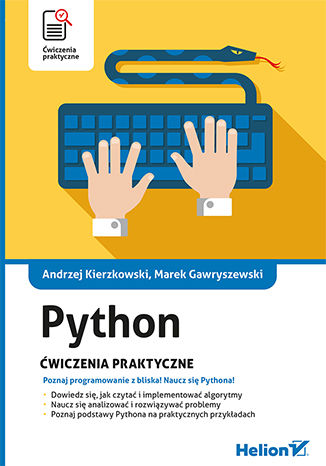
Andrzej Kierzkowski, Marek Gawryszewski
Poznaj programowanie z bliska! Naucz się Pythona! Dowiedz się, jak czytać i implementować algorytmy Naucz się analizować i rozwiązywać problemy Poznaj podstawy Pythona na praktycznych przykładach Python to niezwykle wydajny i wszechstronny język programowania, który znajduje zastosowanie w różnych dziedzinach informatyki. Stanowi fundament rozwiązań wykorzystywanych przez YouTube’a czy aplikacje Google'a. Czytelność i zwięzłość kodu, szeroki wybór bibliotek standardowych oraz wsparcie ze strony producentów różnych systemów operacyjnych sprawiają, że język ten z roku na rok zyskuje coraz większą popularność wśród profesjonalnych programistów i wśród osób amatorsko tworzących wtyczki czy skrypty uruchamiane w aplikacjach komercyjnych. Czas do nich dołączyć! Sięgnij po książkę Python. Ćwiczenia praktyczne, która w prosty i przystępny sposób wprowadzi Cię w świat programowania komputerów przy użyciu jednego z najpopularniejszych języków! Naucz się czytać algorytmy i implementować je na praktycznych przykładach, poznaj podstawy Pythona, odkryj składnię oraz konstrukcje stosowane w tym języku i zacznij myśleć jak zawodowy programista! Tylko krok dzieli Cię od rozpoczęcia przygody z programowaniem, więc nie trać czasu i już dziś weź się do ćwiczeń! Wprowadzenie do algorytmiki Analiza i rozwiązywanie problemów Instalacja i korzystanie z IDE Struktura programu i instrukcje Pythona Zmienne, proste typy danych i operatory Korzystanie z bibliotek standardowych Złożone typy danych i programowanie obiektowe Praktyczne zadania do samodzielnego wykonania Dowiedz się, jak oswoić Pythona!
Avinash Navlani, Cornellius Yudha Wijaya
Data analysis enables you to generate value from small and big data by discovering new patterns, and Python is one of the most popular tools for analyzing a wide variety of data. With this book, you'll get up and running using Python for data analysis by exploring the different phases used in data analysis and learning how to use modern libraries from the Python ecosystem to create efficient data pipelines.Starting with the essential statistical and data analysis fundamentals using Python, you'll perform complex data analysis and modeling, data manipulation, data cleaning, and data visualization using easy-to-follow examples. You'll then understand how to conduct time series analysis and signal processing using ARMA models. As you advance, you'll get to grips with smart processing and data analytics using machine learning algorithms such as regression, classification, Principal Component Analysis (PCA), and clustering. You'll also work on real-world examples to analyze textual and image data using natural language processing (NLP) and image analytics techniques, respectively. Finally, the book will demonstrate parallel computing using Dask.By the end of this data analysis book, you'll be equipped with the skills you need to prepare data for analysis and create meaningful data visualizations for forecasting values from data.
Avinash Navlani, Ivan Idris
Data analysis enables you to generate value from small and big data by discovering new patterns and trends, and Python is one of the most popular tools for analyzing a wide variety of data. With this book, you’ll get up and running using Python for data analysis by exploring the different phases and methodologies used in data analysis and learning how to use modern libraries from the Python ecosystem to create efficient data pipelines.Starting with the essential statistical and data analysis fundamentals using Python, you’ll perform complex data analysis and modeling, data manipulation, data cleaning, and data visualization using easy-to-follow examples. You’ll then understand how to conduct time series analysis and signal processing using ARMA models. As you advance, you’ll get to grips with smart processing and data analytics using machine learning algorithms such as regression, classification, Principal Component Analysis (PCA), and clustering. In the concluding chapters, you’ll work on real-world examples to analyze textual and image data using natural language processing (NLP) and image analytics techniques, respectively. Finally, the book will demonstrate parallel computing using Dask.By the end of this data analysis book, you’ll be equipped with the skills you need to prepare data for analysis and create meaningful data visualizations for forecasting values from data.
Armando Fandango
Data analysis techniques generate useful insights from small and large volumes of data. Python, with its strong set of libraries, has become a popular platform to conduct various data analysis and predictive modeling tasks. With this book, you will learn how to process and manipulate data with Python for complex analysis and modeling. We learn data manipulations such as aggregating, concatenating, appending, cleaning, and handling missing values, with NumPy and Pandas. The book covers how to store and retrieve data from various data sources such as SQL and NoSQL, CSV fies, and HDF5. We learn how to visualize data using visualization libraries, along with advanced topics such as signal processing, time series, textual data analysis, machine learning, and social media analysis.The book covers a plethora of Python modules, such as matplotlib, statsmodels, scikit-learn, and NLTK. It also covers using Python with external environments such as R, Fortran, C/C++, and Boost libraries.
Maria Zervou
Professionals face several challenges in effectively leveraging data in today's data-driven world. One of the main challenges is the low quality of data products, often caused by inaccurate, incomplete, or inconsistent data. Another significant challenge is the lack of skills among data professionals to analyze unstructured data, leading to valuable insights being missed that are difficult or impossible to obtain from structured data alone.To help you tackle these challenges, this book will take you on a journey through the upstream data pipeline, which includes the ingestion of data from various sources, the validation and profiling of data for high-quality end tables, and writing data to different sinks. You’ll focus on structured data by performing essential tasks, such as cleaning and encoding datasets and handling missing values and outliers, before learning how to manipulate unstructured data with simple techniques. You’ll also be introduced to a variety of natural language processing techniques, from tokenization to vector models, as well as techniques to structure images, videos, and audio.By the end of this book, you’ll be proficient in data cleaning and preparation techniques for both structured and unstructured data.
Michael Walker
Getting clean data to reveal insights is essential, as directly jumping into data analysis without proper data cleaning may lead to incorrect results. This book shows you tools and techniques that you can apply to clean and handle data with Python. You'll begin by getting familiar with the shape of data by using practices that can be deployed routinely with most data sources. Then, the book teaches you how to manipulate data to get it into a useful form. You'll also learn how to filter and summarize data to gain insights and better understand what makes sense and what does not, along with discovering how to operate on data to address the issues you've identified. Moving on, you'll perform key tasks, such as handling missing values, validating errors, removing duplicate data, monitoring high volumes of data, and handling outliers and invalid dates. Next, you'll cover recipes on using supervised learning and Naive Bayes analysis to identify unexpected values and classification errors, and generate visualizations for exploratory data analysis (EDA) to visualize unexpected values. Finally, you'll build functions and classes that you can reuse without modification when you have new data. By the end of this Python book, you'll be equipped with all the key skills that you need to clean data and diagnose problems within it.
Nathan Greeneltch
Data mining is a necessary and predictable response to the dawn of the information age. It is typically defined as the pattern and/ or trend discovery phase in the data mining pipeline, and Python is a popular tool for performing these tasks as it offers a wide variety of tools for data mining.This book will serve as a quick introduction to the concept of data mining and putting it to practical use with the help of popular Python packages and libraries. You will get a hands-on demonstration of working with different real-world datasets and extracting useful insights from them using popular Python libraries such as NumPy, pandas, scikit-learn, and matplotlib. You will then learn the different stages of data mining such as data loading, cleaning, analysis, and visualization. You will also get a full conceptual description of popular data transformation, clustering, and classification techniques.By the end of this book, you will be able to build an efficient data mining pipeline using Python without any hassle.
Alberto Boschetti, Luca Massaron
Fully expanded and upgraded, the latest edition of Python Data Science Essentials will help you succeed in data science operations using the most common Python libraries. This book offers up-to-date insight into the core of Python, including the latest versions of the Jupyter Notebook, NumPy, pandas, and scikit-learn.The book covers detailed examples and large hybrid datasets to help you grasp essential statistical techniques for data collection, data munging and analysis, visualization, and reporting activities. You will also gain an understanding of advanced data science topics such as machine learning algorithms, distributed computing, tuning predictive models, and natural language processing. Furthermore, You’ll also be introduced to deep learning and gradient boosting solutions such as XGBoost, LightGBM, and CatBoost.By the end of the book, you will have gained a complete overview of the principal machine learning algorithms, graph analysis techniques, and all the visualization and deployment instruments that make it easier to present your results to an audience of both data science experts and business users
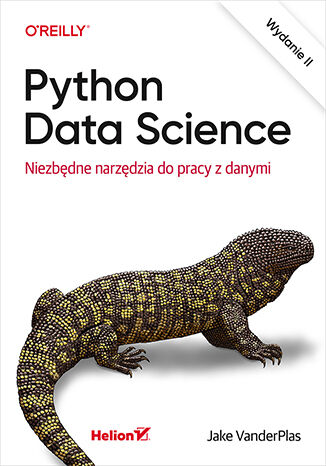
Python Data Science. Niezbędne narzędzia do pracy z danymi. Wydanie II
Jake VanderPlas
Python udostępnia pierwszorzędne narzędzia i biblioteki przeznaczone specjalnie do pracy z danymi. Zdobyły one uznanie wielu naukowców i ekspertów, ceniących ten język za wysoką jakość rozwiązań służących do wydobywania wiedzy z danych. Aby uzyskać najlepsze możliwe efekty, trzeba dobrze poznać zarówno poszczególne biblioteki Pythona, jak i zasady pracy z nimi. Ta książka stanowi wszechstronne omówienie wszystkich bibliotek Pythona, potrzebnych naukowcom i specjalistom pracującym z danymi. Znalazł się tu dokładny opis IPythona, NumPy, Pandas, Matplotlib, Scikit-Learn i innych narzędzi. Podręcznik uwzględnia przede wszystkim ich aspekty praktyczne, dzięki czemu świetnie się sprawdzi w rozwiązywaniu codziennych problemów z manipulowaniem, przekształcaniem, oczyszczaniem i wizualizacją różnych typów danych, a także jako pomoc podczas tworzenia modeli statystycznych i modeli uczenia maszynowego. Docenią go wszyscy, którzy zajmują się obliczeniami naukowymi w Pythonie. To wydanie zawiera jasne przykłady, które pomogą Ci skonfigurować i wykorzystać narzędzia do nauki o danych i uczenia maszynowego. Anne Bonner, założycielka i dyrektor generalna Content Simplicity Nauczysz się: pracować w naukowym środowisku obliczeniowym IPythona korzystać ze specjalistycznych bibliotek przeznaczonych do pracy z danymi stosować typy ndarray i DataFrame do przechowywania i przetwarzania danych tworzyć różnego rodzaju wizualizacje danych za pomocą Matplotlib implementować najważniejsze algorytmy uczenia maszynowego z pakietu Scikit-Learn Wydobywaj z danych mądre odpowiedzi na trudne pytania!
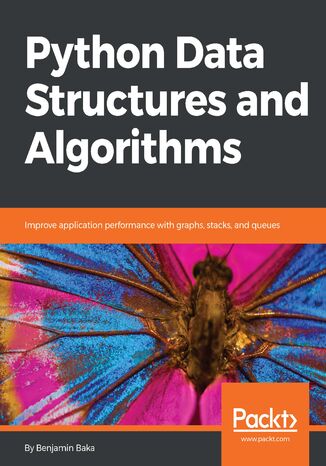
Benjamin Baka
Data structures allow you to organize data in a particular way efficiently. They are critical to any problem, provide a complete solution, and act like reusable code. In this book, you will learn the essential Python data structures and the most common algorithms. With this easy-to-read book, you will be able to understand the power of linked lists, double linked lists, and circular linked lists. You will be able to create complex data structures such as graphs, stacks and queues. We will explore the application of binary searches and binary search trees. You will learn the common techniques and structures used in tasks such as preprocessing, modeling, and transforming data. We will also discuss how to organize your code in a manageable, consistent, and extendable way. The book will explore in detail sorting algorithms such as bubble sort, selection sort, insertion sort, and merge sort. By the end of the book, you will learn how to build components that are easy to understand, debug, and use in different applications.
Mercury Learning and Information, Oswald Campesato
This Pocket Primer book introduces the fundamentals of data structures using Python. It provides a comprehensive yet fast-paced introduction to core Python concepts and data structures, emphasizing their importance in managing large datasets and implementing search and sort algorithms effectively. The course starts with a basic introduction to Python, setting a solid foundation for more complex topics.The journey continues with an exploration of recursion and combinatorics, followed by detailed discussions on strings, arrays, and various search and sort algorithms. Further, the book delves into linked lists, queues, and stacks, illustrating their practical applications with numerous code samples. This structured approach ensures that learners can progressively build their knowledge and skills in data structures, reinforced by hands-on coding examples.With companion files available for download, the book provides additional resources for practice and deeper understanding. This comprehensive guide is ideal for both beginners and those looking to strengthen their grasp of data structures in Python, equipping them with essential tools for managing and manipulating large datasets.
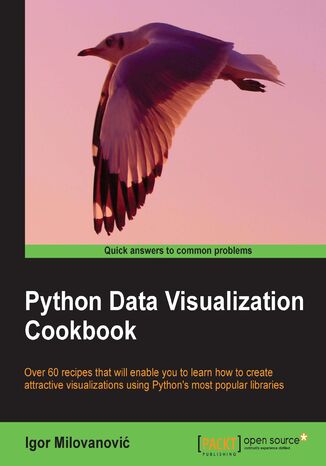
Igor Milovanovic
Today, data visualization is a hot topic as a direct result of the vast amount of data created every second. Transforming that data into information is a complex task for data visualization professionals, who, at the same time, try to understand the data and objectively transfer that understanding to others. This book is a set of practical recipes that strive to help the reader get a firm grasp of the area of data visualization using Python and its popular visualization and data libraries.Python Data Visualization Cookbook will progress the reader from the point of installing and setting up a Python environment for data manipulation and visualization all the way to 3D animations using Python libraries. Readers will benefit from over 60 precise and reproducible recipes that guide the reader towards a better understanding of data concepts and the building blocks for subsequent and sometimes more advanced concepts.Python Data Visualization Cookbook starts by showing you how to set up matplotlib and the related libraries that are required for most parts of the book, before moving on to discuss some of the lesser-used diagrams and charts such as Gantt Charts or Sankey diagrams. During the book, we go from simple plots and charts to more advanced ones, thoroughly explaining why we used them and how not to use them. As we go through the book, we will also discuss 3D diagrams. We will peep into animations just to show you what it takes to go into that area. Maps are irreplaceable for displaying geo-spatial data, so we also show you how to build them. In the last chapter, we show you how to incorporate matplotlib into different environments, such as a writing system, LaTeX, or how to create Gantt charts using Python.This book will help those who already know how to program in Python to explore a new field – one of data visualization. As this book is all about recipes that explain how to do something, code samples are abundant, and they are followed by visual diagrams and charts to help you understand the logic and compare your own results with what is explained in the book.
Ivan Vasilev, Daniel Slater, Gianmario Spacagna, Peter...
With the surge in artificial intelligence in applications catering to both business and consumer needs, deep learning is more important than ever for meeting current and future market demands. With this book, you’ll explore deep learning, and learn how to put machine learning to use in your projects.This second edition of Python Deep Learning will get you up to speed with deep learning, deep neural networks, and how to train them with high-performance algorithms and popular Python frameworks. You’ll uncover different neural network architectures, such as convolutional networks, recurrent neural networks, long short-term memory (LSTM) networks, and capsule networks. You’ll also learn how to solve problems in the fields of computer vision, natural language processing (NLP), and speech recognition. You'll study generative model approaches such as variational autoencoders and Generative Adversarial Networks (GANs) to generate images. As you delve into newly evolved areas of reinforcement learning, you’ll gain an understanding of state-of-the-art algorithms that are the main components behind popular games Go, Atari, and Dota.By the end of the book, you will be well-versed with the theory of deep learning along with its real-world applications.
Ivan Vasilev, Valentino Zocca
The field of deep learning has developed rapidly recently and today covers a broad range of applications. This makes it challenging to navigate and hard to understand without solid foundations. This book will guide you from the basics of neural networks to the state-of-the-art large language models in use today.The first part of the book introduces the main machine learning concepts and paradigms. It covers the mathematical foundations, the structure, and the training algorithms of neural networks and dives into the essence of deep learning.The second part of the book introduces convolutional networks for computer vision. We’ll learn how to solve image classification, object detection, instance segmentation, and image generation tasks.The third part focuses on the attention mechanism and transformers – the core network architecture of large language models. We’ll discuss new types of advanced tasks they can solve, such as chatbots and text-to-image generation.By the end of this book, you’ll have a thorough understanding of the inner workings of deep neural networks. You'll have the ability to develop new models and adapt existing ones to solve your tasks. You’ll also have sufficient understanding to continue your research and stay up to date with the latest advancements in the field.
Python: Deeper Insights into Machine Learning. Deeper Insights into Machine Learning
John Hearty, Sebastian Raschka, David Julian
Machine learning and predictive analytics are becoming one of the key strategies for unlocking growth in a challenging contemporary marketplace. It is one of the fastest growing trends in modern computing, and everyone wants to get into the field of machine learning. In order to obtain sufficient recognition in this field, one must be able to understand and design a machine learning system that serves the needs of a project. The idea is to prepare a learning path that will help you to tackle the real-world complexities of modern machine learning with innovative and cutting-edge techniques. Also, it will give you a solid foundation in the machine learning design process, and enable you to build customized machine learning models to solve unique problems.The course begins with getting your Python fundamentals nailed down. It focuses on answering the right questions that cove a wide range of powerful Python libraries, including scikit-learn Theano and Keras.After getting familiar with Python core concepts, it’s time to dive into the field of data science. You will further gain a solid foundation on the machine learning design and also learn to customize models for solving problems.At a later stage, you will get a grip on more advanced techniques and acquire a broad set of powerful skills in the area of feature selection and feature engineering.
Python Digital Forensics Cookbook. Effective Python recipes for digital investigations
Chapin Bryce, Preston Miller
Technology plays an increasingly large role in our daily lives and shows no sign of stopping. Now, more than ever, it is paramount that an investigator develops programming expertise to deal with increasingly large datasets. By leveraging the Python recipes explored throughout this book, we make the complex simple, quickly extracting relevant information from large datasets. You will explore, develop, and deploy Python code and libraries to provide meaningful results that can be immediately applied to your investigations. Throughout the Python Digital Forensics Cookbook, recipes include topics such as working with forensic evidence containers, parsing mobile and desktop operating system artifacts, extracting embedded metadatafrom documents and executables, and identifying indicators of compromise. Youwill also learn to integrate scripts with Application Program Interfaces (APIs) suchas VirusTotal and PassiveTotal, and tools such as Axiom, Cellebrite, and EnCase. By the end of the book, you will have a sound understanding of Python and how you can use it to process artifacts in your investigations.