
Programowanie
Sztuczna inteligencja w finansach. Używaj języka Python do projektowania i wdrażania algorytmów AI
Yves Hilpisch
W świecie finansów sztuczna inteligencja okazała się przełomową technologią - w połączeniu z odpowiednim zastosowaniem algorytmów i dużych zbiorów danych bowiem pozwala na poprawę jakości usług finansowych. Autor tej książki zdaje sobie z tego sprawę - ma wieloletnie doświadczenie i kompleksową wiedzę na temat projektowania i wdrażania zaawansowanych mechanizmów AI w największych podmiotach z branży. Swoją wiedzą dzieli się z czytelnikami. Dr Yves Hilpisch szczegółowo opisuje zarówno podstawy teoretyczne, jak i praktyczne aspekty używania algorytmów sztucznej inteligencji w ramach usług i produktów finansowych. Opierając się na przykładach z języka Python, pokazuje metodyki, modele, założenia i techniki wdrażania AI, a także analizuje problemy mogące utrudniać to zadanie i przybliża ich rozwiązania. Znajdziemy tutaj skomplikowane zagadnienia wytłumaczone w logiczny i zrozumiały sposób. Autor z powodzeniem łączy teorię z praktyką, a jego podejście do tematu i prezentowane przypadki bazujące na doświadczeniu są cennym źródłem wiedzy dla każdego, kto chce poznać tajniki dotyczące zastosowania sztucznej inteligencji, uczenia maszynowego, algorytmów i zbiorów danych w szeroko pojętym świecie finansów. Dzięki książce dowiesz się: na czym polega zastosowanie AI w usługach i produktach finansowych dlaczego i w jaki sposób użycie sztucznej inteligencji fundamentalnie zmienia sektor finansowy i jakie ma to skutki dla niego i konsumentów jak w języku Python konstruować i wdrażać algorytmy bazujące na rozbudowanych zbiorach danych jak dzięki AI i uczeniu maszynowemu usprawniać usługi i produkty finansowe

Sztuka kodowania. Sekrety wielkich programistów
Peter Seibel
Zajrzyj bezkarnie programiście przez ramię! Czym naprawdę jest programowanie? Jak swoją przygodę rozpoczynali wielcy tej branży? Czy istnieje bezbłędny program? Programiści to tajemnicze osoby, które potrafią zmusić komputery do wykonywania karkołomnych zadań, wymyślanych przez zwykłych użytkowników. Spędzają cały dzień przed komputerem, a ich świat to monitor, klawiatura i hektolitry kawy. Czy to prawda? Na to pytanie odpowiada książka, którą trzymasz w rękach. Dzięki niej spojrzysz na ten zawód z zupełnie innego punktu widzenia. Jej autor przeprowadza wywiady z najbardziej rozpoznawalnymi osobami z tej branży. Mówią one o swoich pierwszych krokach w świecie programowania, opowiadają, jak nauczyły się swojego pierwszego języka oraz jak widzą tę gałąź wiedzy w przyszłości. Czym naprawdę jest programowanie? Rzemiosłem, sztuką, a może nauką? Te pytania stawia autor we wprowadzeniu i ma nadzieję, że wypowiedzi jego gości choć trochę zbliżą go do znalezienia odpowiedzi. Ta unikalna książka pozwoli Ci poznać bliżej wybitne osoby, od lat związane z informatyką. Anegdoty, ciekawe opowieści, wiele przykładów to tylko niektóre z proponowanych przez nią atrakcji. Zagłębiając się w kolejne wypowiedzi, przekonasz się, jak często przypadek decyduje o sukcesie lub porażce. W trakcie lektury będziesz mieć okazję zapoznać się z wypowiedziami takich sław, jak: Jamie Zawinski — wybitny programista Lisp, pracujący przy pierwszych wersjach przeglądarki Netscape Brad Fitzpatrick — najmłodsza osoba w gronie, programista "od zawsze" Douglas Crockford — starszy architekt JavaScript w Yahoo!; pomysłodawca formatu JSON Brendan Eich — twórca języka JavaScript Joshua Bloch — szef Java Architect w Google; w trakcie pracy w Sun Microsystem był kierownikiem zespołu projektującego i implementującego Java Collections Framework Joe Armstrong — autor języka programowania Erlang Simon Peyton Jones — rozpoczął projekt, którego efektem było powstanie języka Haskell Peter Norvig — dyrektor działu badań w Google, wcześniej pracujący dla NASA Guy Steele — znawca języków; Cobol, Fortran, PDP-10, Java, Haskell to tylko niektóre z jego repertuaru Dan Ingalls — współtwórca języka Smalltalk L. Peter Deutsch — programista od końca lat pięćdziesiątych; zaczynał w wieku jedenastu lat Ken Thompson — współtwórca systemu UNIX Fran Allen — przez czterdzieści pięć lat pracował dla firmy IBM; instruktor języka Fortran Bernie Cosell — współautor oprogramowania wykorzystywanego w pierwszych węzłach sieci ARPANET Donald Knuth — autor jedynego najprawdopodobniej bezbłędnego programu — TeX Poznaj tajemny świat programistów, hakerów i wybitnych specjalistów!
Szybki jak FastAPI. Projektowanie aplikacji WWW w Pythonie
Bill Lubanovic
Internet rozwija się w niesamowitym tempie. Dawniej sieć WWW była prostsza ― projektanci łączyli kod PHP, HTML i zapytania do MySQL w jednym pliku. Z czasem urosła do miliardów stron, co radykalnie zmieniło jej kształt. Zmieniły się też narzędzia i sposób pracy. Dziś idealnym wyborem dewelopera aplikacji WWW jest FastAPI, nowoczesne narzędzie, które wykorzystuje nowe cechy Pythona i z powodzeniem rywalizuje z podobnymi frameworkami języka Golang. Książka zawiera wszechstronne omówienie FastAPI i otaczającego ten framework ekosystemu! William Jamir Silva, starszy inżynier oprogramowania, Adjust GmbH Dzięki znajomości Pythona i temu praktycznemu poradnikowi zaczniesz z sukcesem używać FastAPI i docenisz, jak szybko można budować aplikacje WWW. Zrozumiesz zasady pracy z tym frameworkiem i będziesz je stosować przy tworzeniu własnych projektów. Przyswoisz różne nieznane powszechnie techniki i dowiesz się, jakie praktyki najlepiej sprawdzają się w codziennej pracy. Poznasz takie zagadnienia jak formularze, dostęp do baz danych, grafika i mapy. Nauczysz się również korzystać z interfejsów RESTful API, prowadzić walidację danych, autoryzację i zapewniać wysoką wydajność swojego kodu. W książce: budowa aplikacji WWW z użyciem FastAPI różnice pomiędzy FastAPI, Starlette i Pydantic stosowanie funkcji asynchronicznych, sprawdzanie typów danych i walidacja nowe cechy Pythona 3.8+, w tym adnotacje typów tworzenie kodu synchronicznego i asynchronicznego korzystanie z zewnętrznych API i usług FastAPI przedstawione w prosty sposób! Książka wyposaża w praktyczną wiedzę i umożliwia szybki start. Ganesh Harke, starszy inżynier oprogramowania, Citibank

Szybkie projektowanie. Zapanuj nad chaosem zadań i presją czasu
Steve McConnell
Zespoły projektowe borykają się z ciągłym niedostatkiem czasu. Napięte do granic możliwości terminy wymuszają na software developerach narzucenie morderczego tempa pracy. Takie podejście sprawia, że albo dostarczony produkt nie spełnia oczekiwań, albo nie udaje się dotrzymać terminu. Co gorsza, ciągła praca pod presją czasu powoduje chroniczne przemęczenie i problemy zdrowotne, nie wspominając już o braku sił i czasu na rozwój, który w branży IT ma kolosalne znaczenie. Książka ta jest praktycznym, zdroworozsądkowym poradnikiem metod projektowania. Opisane w tej książce strategie pracy pozwolą na usprawnienie procesu projektowego i przyśpieszenie go. Przedstawiono tu również takie zagadnienia, jak zarządzanie ryzykiem, podstawy projektowania aplikacji oraz planowanie cyklu życia projektu. Mimo że nie są bezpośrednio związane z metodami szybkiego projektowania, to jednak mają kluczowe znaczenie dla produktywności zespołu. Naturalnie, nie istnieje jedna magiczna metoda przydatna w każdych warunkach — w tej książce opisano i krytycznie przeanalizowano najprzydatniejsze rozwiązania z różnych branż tworzenia oprogramowania. Najważniejsze zagadnienia przedstawione w książce: strategie szybkiego projektowania i sprawdzone rozwiązania rozwiązania przyśpieszające realizację projektu, takie jak prototypowanie, języki szybkiego projektowania, ale i zasady motywowania zespołu oraz zasady wydajnej współpracy najczęściej popełniane błędy, ich przyczyny i konsekwencje oparte na rzeczywistych wydarzeniach studia przypadków dobieranie właściwych metod do poszczególnych projektów Odzyskaj kontrolę nad swoim projektem i zrealizuj go w terminie! Steve McConnell jest głównym inżynierem oprogramowania i dyrektorem generalnym w spółce Construx Software Builders. Jest także członkiem organizacji IEEE Computer Society oraz ACM. McConnell jest aktywnym programistą, koncentruje się głównie na projektowaniu komercyjnego oprogramowania „celofanowego” (ang. shrink-wrap). Współpracuje z wieloma znanymi firmami, w tym z korporacją Microsoft. Wraz z żoną i z dziećmi mieszka w Bellevue, w stanie Waszyngton.
Andrew Caya
Termin Szybsza Sieć (ang. Faster Web) powstał stosunkowo niedawno. Koncepcja ta skupia się na rozwijaniu wszystkich elementów technologii internetowych oraz interfejsu użytkownika, tak aby przyśpieszyć interakcję między klientem a serwerem oraz działanie samej aplikacji. Efektem tych optymalizacji powinna być poprawa jakości pracy systemu. Aby w pełni przyswoić ideę Szybszej Sieci, trzeba dobrze zrozumieć takie pojęcia jak wydajność, efektywność i postrzegana wydajność. Konieczne jest również opanowanie większości nowych technologii webowych. Dzięki tej książce dowiesz się, w jaki sposób poprawić działanie każdej aplikacji WWW, aby odpowiadała kryteriom Szybszej Sieci. Wkrótce rozpoczniesz pracę z najnowszymi narzędziami do mierzenia wydajności, profilowania i monitorowania dla PHP, MySQL i JavaScriptu. Omówiono tu wszystkie istotne zagadnienia związane z ideą Szybszej Sieci, w tym optymalizację kodu PHP 7, programowanie asynchroniczne i programowanie funkcyjne w JavaScripcie. Sporo miejsca poświęcono najlepszym strategiom optymalizacji. Opisano też techniki profilowania skryptów, pomiaru wydajności bazy danych, optymalizacji zapytań SQL oraz podnoszenia wydajności serwera WWW. Przekonasz się, że dzięki optymalizacji można przekraczać granice efektywności aplikacji! W tej książce między innymi: wprowadzenie do koncepcji Szybszej Sieci i jej formalne aspekty monitorowanie i profilowanie w środowisku ciągłej integracji potencjał struktur danych PHP 7 optymalizacja baz danych i nowoczesne techniki języka SQL najnowsze osiągnięcia JavaScriptu wpływ odpowiedniego projektu interfejsu użytkownika na wydajność aplikacji Przekraczaj granice wydajności. Projektuj szybszy kod!
Tableau Prep Cookbook. Use Tableau Prep to clean, combine, and transform your data for analysis
Hendrik Kleine
Tableau Prep is a tool in the Tableau software suite, created specifically to develop data pipelines. This book will describe, in detail, a variety of scenarios that you can apply in your environment for developing, publishing, and maintaining complex Extract, Transform and Load (ETL) data pipelines.The book starts by showing you how to set up Tableau Prep Builder. You’ll learn how to obtain data from various data sources, including files, databases, and Tableau Extracts. Next, the book demonstrates how to perform data cleaning and data aggregation in Tableau Prep Builder. You’ll also gain an understanding of Tableau Prep Builder and how you can leverage it to create data pipelines that prepare your data for downstream analytics processes, including reporting and dashboard creation in Tableau. As part of a Tableau Prep flow, you’ll also explore how to use R and Python to implement data science components inside a data pipeline. In the final chapter, you’ll apply the knowledge you’ve gained to build two use cases from scratch, including a data flow for a retail store to prepare a robust dataset using multiple disparate sources and a data flow for a call center to perform ad hoc data analysis.By the end of this book, you’ll be able to create, run, and publish Tableau Prep flows and implement solutions to common problems in data pipelines.
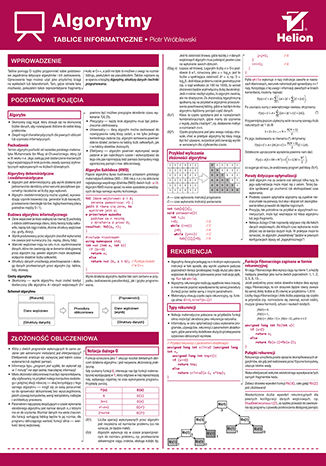
Tablice informatyczne. Algorytmy
Piotr Wróblewski
Cała wiedza w jednym miejscu! Nie pamiętasz jakiegoś algorytmu? Nie wiesz, jaką strukturę danych należy zastosować? Nie masz pojęcia, jak wyznaczyć złożoność obliczeniową algorytmu? Nie martw się, Twoje problemy należą już do przeszłości! Tablice informatyczne. Algorytmy pozwolą Ci szybko odnaleźć i przypomnieć sobie podstawowe zagadnienia dotyczące algorytmów i ich zastosowania. Będą doskonałą ściągą na wykładach lub laboratoriach, a nawet w pracy. Przykłady opracowane w C++ lub pseudokodzie pomogą właściwie zrozumieć i wdrożyć odpowiednie rozwiązania. Podstawowe pojęcia Złożoność obliczeniowa Algorytmy rekurencyjne Wyszukiwanie i sortowanie Typy i struktury danych Grafy i algorytmy grafowe Systemy liczbowe Kodowanie i kompresja Algorytmika nigdy nie była prostsza!
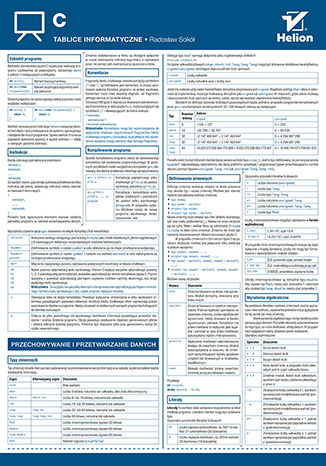
Radosław Sokół
Tablice języka C — zawsze przy komputerze! Tablice informatyczne języka C to ściąga, którą każdy programista powinien mieć zawsze w zasięgu ręki. W końcu trudno zapamiętać wszystkie komendy i metody przeprowadzania operacji, zwłaszcza jeśli nie używa się ich na co dzień. Tutaj znajdziesz informacje o instrukcjach, komentarzach, kompilowaniu programu, a także przechowywaniu i przetwarzaniu danych. Przypomnisz sobie, jak wprowadzać dane i uzyskiwać dane wyjściowe, do czego służą konkretne wyrażenia warunkowe, instrukcje pętli i skoku oraz jak w jaki sposób dynamicznie zarządzać pamięcią. Sprawdzisz, jak przetwarzać tekst, diagnozować przebieg programu, wykorzystywać strumienie i pliki, operować datą i czasem, posługiwać się biblioteką matematyczną. Nie możesz tego przegapić!
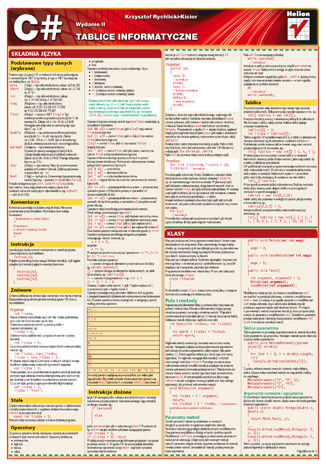
Tablice informatyczne. C#. Wydanie II
Krzysztof Rychlicki-Kicior
Koniec z wertowaniem książek i dokumentacji w poszukiwaniu składni poleceń, typów danych czy struktur języka. W tablicach informatycznych znajdziesz wszystkie podstawowe informacje, których potrzebujesz podczas codziennej pracy, podane w sposób zwięzły i treściwy. Składnia poleceń, struktura programu, funkcje i metody, obiekty, typy danych - jest tu wszystko, nad czym mógłbyś się zastanawiać. Tablice informatyczne. C# to podręczne zestawienie niezbędnych programiście informacji dotyczących języka C#. Pracując pod presją czasu, nie zawsze można znaleźć czas na wertowanie grubych książek. Niezależnie od tego, czy tworzysz aplikacje dla systemu Windows, aplikacje WWW, czy usługi sieciowe, docenisz tablice informatyczne. Znajdziesz w nich zagadnienia dotyczące obsługi w .NET: Komponentów wizualnych i niewizualnych XML (modelu DOM) Plików Strumieni Grafiki 2D LINQ
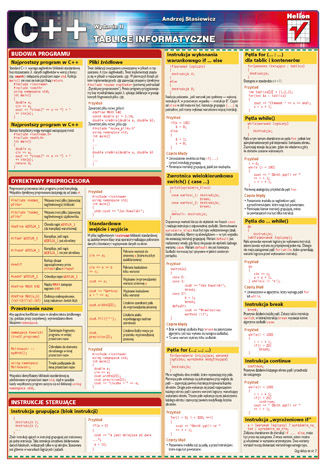
Tablice informatyczne. C++. Wydanie II
Andrzej Stasiewicz
Koniec z wertowaniem książek i dokumentacji w poszukiwaniu składni poleceń, typów danych czy struktur języka. W tablicach informatycznych znajdziesz wszystkie podstawowe informacje, których potrzebujesz podczas codziennej pracy, podane w sposób zwięzły i treściwy. Składnia poleceń, struktura programu, funkcje i metody, obiekty, typy danych -- jest tu wszystko, nad czym mógłbyś się zastanawiać. "Tablice informatyczne. C++" zawierają zestawienie najpotrzebniejszych informacji dotyczących języka C++. Każdy programista doceni je, gdy podczas pracy nie będzie miał czasu na wertowanie kilkunastu książek. W Tablicach uwzględniono najważniejsze propozycje nowego standardu języka C++ i przedstawiono następujące zagadnienia: Dyrektywy dla kompilatora Standardowe wejście i wyjście Standardowe typy danych i operacje na nich Instrukcje sterujące Funkcje Klasy Konwersje typów Wyjątki Wzorce funkcji i klas Wzorzec biblioteczny vector
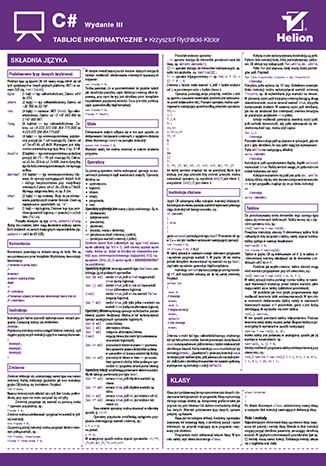
Tablice informatyczne. C#. Wydanie III
Krzysztof Rychlicki-Kicior
Najważniejsza wiedza jest tu! C# to obecnie jeden z najważniejszych, najpopularniejszych i najbardziej wszechstronnych obiektowych języków programowania, nic więc dziwnego, że na rynku dostępnych jest mnóstwo publikacji na jego temat. Niestety, są to przeważnie opasłe tomy, zupełnie nieprzydatne jako pomoc w codziennej pracy. Na szczęście są też Tablice informatyczne. C#, a ich nowe wydanie zawiera większość informacji, które zawsze należy mieć pod ręką! Skoncentrowana treść, zwarta forma, praktyczne przykłady kodu - tu szybko znajdziesz to, czego szukasz! Składnia języka Typy danych Klasy i dziedziczenie LINQ i komponenty WPF Połączenia HTTP Obsługa formatów danych XML i JSON Szukasz podpowiedzi? Sięgnij po tablice!
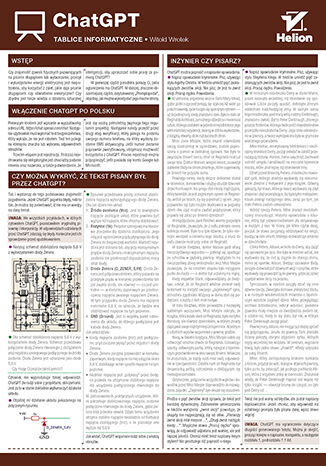
Tablice informatyczne. ChatGPT
Witold Wrotek
W porozumieniu ze sztuczną inteligencją ChatGPT, chatbot opracowany i udostępniony przez firmę OpenAI, szybko stał się obiektem zainteresowania internautów na całym świecie - i na nowo wzbudził gorące dyskusje wokół sztucznej inteligencji. Ludzie mediów prześcigają się w skrajnych wizjach, jedni podchodzą do tematu entuzjastycznie, wypatrując kolejnych, doskonalszych wersji ChatGPT i pokrewnych mu botów, inni kreślą wizje ponure niczym z literatury i filmów science fiction, oczekując momentu, w którym sztuczna inteligencja się zbuntuje i przejmie władzę nad światem... W tej dyskusji nie powinien nam umknąć praktyczny aspekt zagadnienia. Wszak ChatGPT to model językowy opracowany w konkretnym celu - ma w odpowiedni sposób reagować na dane wprowadzane do niego przez użytkownika. Innymi słowy, odpowiadać na zadawane pytania dotyczące rozmaitych dziedzin dostępnej ludziom wiedzy. Jak się z nim poprawnie komunikować? Jak formułować myśli w sposób, który pozwoli nakłonić ChatGPT do podzielenia się pożądanymi przez nas informacjami? Tego dowiesz się z niniejszej pozycji. Jeśli chcesz zaprząc ChatGPT do pracy na swoją rzecz: Poznaj mocne i słabe strony ChatGPT Dowiedz się, w czym i jak może Ci pomóc Naucz się promptować, czyli zadawać właściwe pytania w odpowiedni sposób
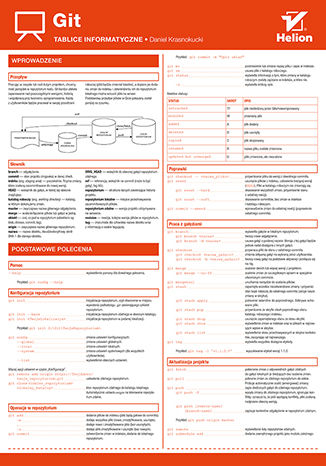
Daniel Krasnokucki
Git — zapanuj nad projektem! Na pewno wiesz już, że praca nad dużym projektem informatycznym bez sensownego, dobrze funkcjonującego systemu kontroli wersji jest po prostu niemożliwa. Git świetnie sprawdza się w tej roli — ostrzega przed popełnianiem błędów, nadpisywaniem wersji, niweczeniem efektów pracy innych członków zespołu. A dodatkowo działa szybko, wydajnie i jest dostępny w ramach wolnego oprogramowania. Tablice informatyczne powinieneś mieć pod ręką zawsze wtedy, gdy pracujesz z wykorzystaniem Gita. Szybko znajdziesz w nich wszystko, co będzie Ci aktualnie potrzebne. Polecenia podzielono tu na podstawowe i zaawansowane, a oprócz tego uporządkowano je tematycznie. Zobaczysz, jak praca z tablicami usprawni i ułatwi Ci poruszanie się po całym projekcie i przyspieszy jego tworzenie. Weź je do ręki i zacznij działać! Podręczna ściąga z Gita — bez niej ani rusz!
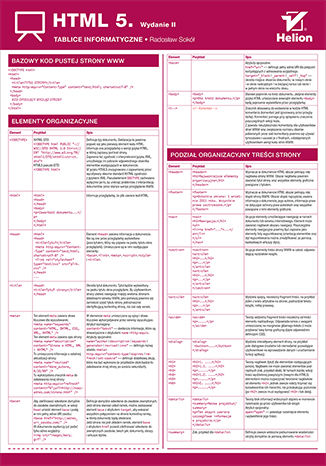
Tablice informatyczne. HTML 5. Wydanie II
Radosław Sokół
Szybka ściąga z HTML-a! Jeśli kiedykolwiek próbowałeś zaprojektować dowolną stronę WWW, na pewno wiesz, że aktualne tablice informatyczne bardzo przyspieszają ten proces. Przejrzysty układ i przemyślana konstrukcja tablic sprawiają, że możesz w mig odnaleźć każdą zmienną, encję czy funkcję. Możesz błyskawicznie sprawdzić elementy potrzebne do tworzenia i formatowania list i tabel, bloków i formularzy, obrazów i stylów. Typy danych, znaczniki, składnia poleceń — znajdziesz tu wszystko, co bywa potrzebne przy projektowaniu witryny, a co łatwo ulatuje z pamięci. Niezależnie od tego, czy na co dzień zajmujesz się stronami WWW czy właśnie zaczynasz przygodę z programowaniem, powinieneś mieć ten minoporadnik zawsze w zasięgu ręki. Ułatw sobie budowanie stron z HTML 5! Bazowy kod pustej strony WWW i elementy organizacyjne Podział organizacyjny treści strony i jej podstawowa treść Proste formatowanie tekstu i najpopularniejsze encje Bloki tekstu, odnośniki i etykiety Ramki, formularze, listy i tabele Obrazy CSS i selektory CSS Programowanie, oznaczenia i kody kolorów
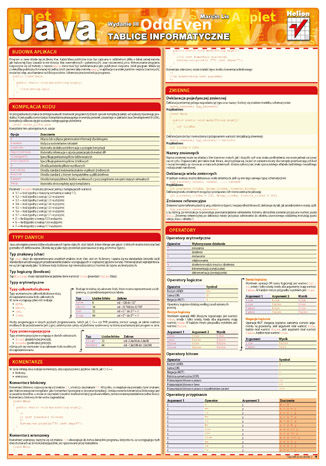
Tablice informatyczne. Java. Wydanie III
Marcin Lis
Bez Javy ani rusz! Od czego zacząć budowanie aplikacji za pomocą Javy? Jakie instrukcje języka i operatory są najważniejsze dla działania aplikacji? Jak optymalnie wykorzystać klasy i obiekty? Java przydaje się do wszystkiego. Jej legendarna elastyczność zyskuje rzesze zwolenników, z których żaden nie może obyć się bez tablic informatycznych, zawierających wszystkie najważniejsze elementy i konstrukcje tego języka. Wśród nich wymienić można chociażby szczegółowo rozpisane typy danych, operatory i instrukcje, a także informacje dotyczące budowy i funkcji klas oraz obiektów czy tworzenia i wykorzystywania interfejsów. Ponadto znajdziesz tu wskazówki dotyczące obsługi wyjątków czy współpracy z systemem plików. Podręczny i poręczny zestaw oferuje Ci możliwość szybkiego przeglądania i odnalezienia konkretnych informacji bez wielogodzinnego ślęczenia nad opasłymi tomami książek. Budowa aplikacji i kompilacja kodu Typy danych i komentarze Zmienne i operatory Instrukcje języka Tablice i interfejsy Klasy i obiekty Typy uogólnione Pakiety i wyjątki Współpraca z systemem Tablice informatyczne - ściąga na każdą okazję!
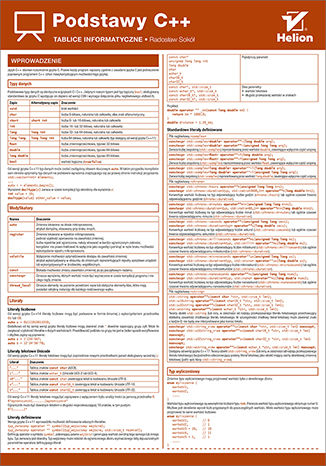
Tablice informatyczne. Podstawy C++
Radosław Sokół
Koduj w C++ i miej ściągę zawsze przy sobie! C++ to język tak fantastyczny i powszechnie doceniany, że nikomu nie trzeba przypominać o jego zaletach. Jeśli posługujesz się tym językiem albo chcesz zacząć w nim programować, koniecznie musisz zaopatrzyć się w tablice informatyczne z najważniejszymi poleceniami C++. Znajdziesz w nich typy danych, modyfikatory, literały i typy wyliczeniowe. Będziesz mógł łatwo odnaleźć wskaźniki i referencje oraz asercje statyczne. Przypomnisz sobie, na czym polegają: iterowanie kolekcji danych i rzutowanie typów danych. Odświeżysz wiadomości o podprogramach, dynamicznym gospodarowaniu pamięcią operacyjną i przestrzeni nazw. Od tej chwili zawsze pod ręką będziesz mieć ważne informacje dotyczące zastosowania klas, obiektów i operatorów, programowania uogólnionego i sytuacji wyjątkowych. Ułatw sobie pracę i połóż na biurku Tablice informatyczne. Podstawy C++. Tablice informatyczne — Twój sposób na unikanie błędów!