
Programowanie
Niezależnie czy dopiero rozpoczynacie swoją przygodę z programowaniem, czy jesteście już uznanymi na rynku profesjonalistami, to w kategorii Programowanie na pewno znajdziecie podręczniki, które pomogą Wam w przebiegu pracy, czy też w nauce podstaw programowania.
W książkach z tego działu zawarta jest wiedza zarówno związana z czysto technicznymi sprawami typu składnia języków, ale także z umiejętnościami bardziej "miękkimi" jak obsługa i wykorzystanie pełnych możliwości środowisk programistycznych, czy też projektowanie oprogramowania lub metody numeryczne czy oraz struktury danych.
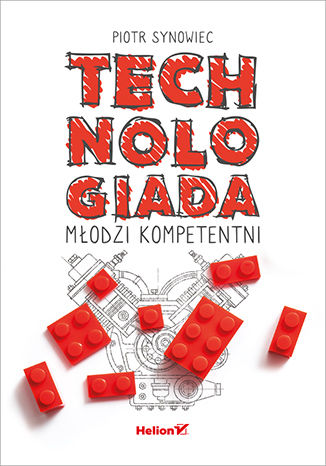
Technologiada. Młodzi kompetentni
Piotr Synowiec
Doświadczyć znaczy zrozumieć Świat biegnie do przodu coraz szybciej i szybciej, w rytmie, w jakim rozwija się ludzka wiedza i technologia, jaka dzięki niej powstaje. Z jednej strony to świetnie - kto czterdzieści lat temu przypuszczał, że nosić będzie w kieszeni mały, supersprawny i wszechwiedzący komputer, dla niepoznaki zwany "telefonem"? Z drugiej, to trochę przerażające. Ciężko nadążyć. Bo choć większość z nas, starszych i młodszych, na co dzień korzysta z nowoczesnych technologii, to jednak rzadko kto je naprawdę rozumie. Bo żeby zrozumieć, żeby się nauczyć i móc pójść dalej, trzeba spróbować: zaprojektować trójwymiarowy obiekt w programie pCon.planner zbudować silnik z klocków LEGO stworzyć animację, a może i grę w Scratchu Potem można ruszyć do przodu. Na ścieżkę twórców, odkrywców, naukowców i inżynierów na miarę XXI wieku. Potem można dorosnąć i przemienić pasję w pracę. Najpierw jednak trzeba sięgnąć do zasobów nieograniczonej w młodym wieku wyobraźni i połączyć ją z możliwościami, jakie daje nam dzisiejszy świat, już teraz pukający do drzwi przyszłości. Z niewielką pomocą tej książki Twoje nastoletnie dziecko bawiąc się aplikacjami i narzędziami dostępnymi na wyciągnięcie ręki i kliknięcie myszką, opanuje umiejętności, które mogą okazać się kluczowe dla jego przyszłego życia. Podaruj mu Technologiadę, a wraz z nią kompetencje przyszłości!
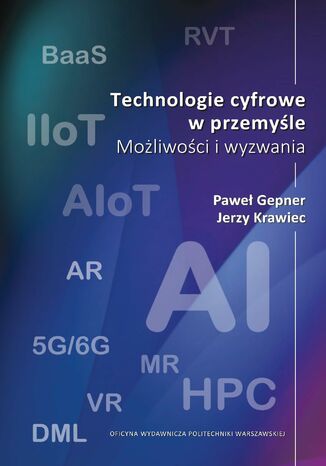
Technologie cyfrowe w przemyśle. Możliwości i wyzwania
Paweł Gepner, Jerzy Krawiec
Publikacja kompleksowo ujmuje implementację technologii cyfrowych w przemyśle w obliczu koncepcji Przemysłu 4.0/5.0/6.0. Szybko postępująca rewolucja technologiczna wprowadza pojęcia, które stały się podstawowymi terminami w dyskusji o przyszłości produkcji i technologii. Chociaż te koncepcje przemysłowe są ze sobą powiązane, znacznie różnią się pod względem podejścia do technologii i roli człowieka w procesie produkcyjnym. Ogólnie rzecz ujmując, Przemysł 4.0, znany również jako czwarta rewolucja przemysłowa, to era, w której dominuje automatyzacja i cyfryzacja procesów przemysłowych. Charakteryzuje się wzajemnym połączeniem systemów, takich jak chmura obliczeniowa, internet rzeczy (IoT), a właściwie przemysłowy internet rzeczy (IIoT) z wykorzystaniem danych do podejmowania decyzji oraz podniesienia wydajności. Jest to etap, w którym technologia i maszyny zaczęły odgrywać kluczową rolę w produkcji, minimalizując udział czynnika ludzkiego w rutynowych procesach.
Ahilan Ponnusamy, Andreas Spanner
Cloud goals, such as faster time to market, lower total cost of ownership (TCO), capex reduction, self-service enablement, and complexity reduction are important, but organizations often struggle to achieve the desired outcomes. With edge computing gaining momentum across industries and making it possible to move workloads seamlessly between cloud and edge locations, organizations need working recipes to find ways of extracting the most value out of their cloud and edge estate.This book provides a practical way to build a strategy-aligned operating model while considering various related factors such as culture, leadership, team structures, metrics, intrinsic motivators, team incentives, tenant experience, platform engineering, operations, open source, and technology choices. Throughout the chapters, you’ll discover how single, hybrid, or multicloud architectures, security models, automation, application development, workload deployments, and application modernization can be reutilized for edge workloads to help you build a secure yet flexible technology operating model. The book also includes a case study which will walk you through the operating model build process in a step-by-step way.By the end of this book, you’ll be able to build your own fit-for-purpose distributed technology operating model for your organization in an open culture way.
Marius Bancila
Learn how the metaprogramming technique enables you to create data structures and functions that allow computation to happen at compile time. With this book, you'll realize how templates help you avoid writing duplicate code and are key to creating generic libraries, such as the standard library or Boost, that can be used in a multitude of programs.The introductory chapters of this book will give you insights into the fundamentals of templates and metaprogramming. You'll then move on to practice writing complex templates and exploring advanced concepts such as template recursion, template argument deduction, forwarding references, type traits, and conditional compilation. Along the way, you'll learn how to write variadic templates and how to provide requirements to the template arguments with C++20 constraints and concepts. Finally, you'll apply your knowledge of C++ metaprogramming templates to implement various metaprogramming patterns and techniques.By the end of this book, you'll have learned how to write effective templates and implement metaprogramming in your everyday programming journey.
Palanisamy
With deep reinforcement learning, you can build intelligent agents, products, and services that can go beyond computer vision or perception to perform actions. TensorFlow 2.x is the latest major release of the most popular deep learning framework used to develop and train deep neural networks (DNNs). This book contains easy-to-follow recipes for leveraging TensorFlow 2.x to develop artificial intelligence applications.Starting with an introduction to the fundamentals of deep reinforcement learning and TensorFlow 2.x, the book covers OpenAI Gym, model-based RL, model-free RL, and how to develop basic agents. You'll discover how to implement advanced deep reinforcement learning algorithms such as actor-critic, deep deterministic policy gradients, deep-Q networks, proximal policy optimization, and deep recurrent Q-networks for training your RL agents. As you advance, you’ll explore the applications of reinforcement learning by building cryptocurrency trading agents, stock/share trading agents, and intelligent agents for automating task completion. Finally, you'll find out how to deploy deep reinforcement learning agents to the cloud and build cross-platform apps using TensorFlow 2.x.By the end of this TensorFlow book, you'll have gained a solid understanding of deep reinforcement learning algorithms and their implementations from scratch.
Jesús Martínez
Computer vision is a scientific field that enables machines to identify and process digital images and videos. This book focuses on independent recipes to help you perform various computer vision tasks using TensorFlow.The book begins by taking you through the basics of deep learning for computer vision, along with covering TensorFlow 2.x’s key features, such as the Keras and tf.data.Dataset APIs. You’ll then learn about the ins and outs of common computer vision tasks, such as image classification, transfer learning, image enhancing and styling, and object detection. The book also covers autoencoders in domains such as inverse image search indexes and image denoising, while offering insights into various architectures used in the recipes, such as convolutional neural networks (CNNs), region-based CNNs (R-CNNs), VGGNet, and You Only Look Once (YOLO). Moving on, you’ll discover tips and tricks to solve any problems faced while building various computer vision applications. Finally, you’ll delve into more advanced topics such as Generative Adversarial Networks (GANs), video processing, and AutoML, concluding with a section focused on techniques to help you boost the performance of your networks.By the end of this TensorFlow book, you’ll be able to confidently tackle a wide range of computer vision problems using TensorFlow 2.x.
Tony Holdroyd
TensorFlow is one of the most popular machine learning frameworks in Python. With this book, you will improve your knowledge of some of the latest TensorFlow features and will be able to perform supervised and unsupervised machine learning and also train neural networks.After giving you an overview of what's new in TensorFlow 2.0 Alpha, the book moves on to setting up your machine learning environment using the TensorFlow library. You will perform popular supervised machine learning tasks using techniques such as linear regression, logistic regression, and clustering. You will get familiar with unsupervised learning for autoencoder applications. The book will also show you how to train effective neural networks using straightforward examples in a variety of different domains.By the end of the book, you will have been exposed to a large variety of machine learning and neural network TensorFlow techniques.
Alexey Grigorev, Srinivas Kulkarni, Rajalingappaa Shanmugamani
TensorFlow is one of the most popular frameworks used for machine learning and, more recently, deep learning. It provides a fast and efficient framework for training different kinds of deep learning models, with very high accuracy. This book is your guide to master deep learning with TensorFlow with the help of 10 real-world projects.TensorFlow Deep Learning Projects starts with setting up the right TensorFlow environment for deep learning. You'll learn how to train different types of deep learning models using TensorFlow, including Convolutional Neural Networks, Recurrent Neural Networks, LSTMs, and Generative Adversarial Networks. While doing this, you will build end-to-end deep learning solutions to tackle different real-world problems in image processing, recommendation systems, stock prediction, and building chatbots, to name a few. You will also develop systems that perform machine translation and use reinforcement learning techniques to play games.By the end of this book, you will have mastered all the concepts of deep learning and their implementation with TensorFlow, and will be able to build and train your own deep learning models with TensorFlow confidently.
Mattias Fjellström
Terraform has revolutionized infrastructure as code, becoming an essential tool for IT professionals. With the Terraform Authoring and Operations Professional certification, you can validate your expertise and stand out in the competitive tech landscape. This guide not only deep dives into the core concepts of Terraform but also highlights practical examples, tips, and best practices to help you master the tool and secure your certification.This study guide covers all six exam objectives in detail, ensuring you are ready to tackle the exam with confidence. The book also covers practical tips to help you with the exam experience.This study guide assumes you have basic knowledge of Terraform workflows and the HCL language. Preferably, you are also familiar with network and compute resources on AWS. If you are willing to put in the extra work, even a novice Terraform and AWS user will benefit from this book.
Mikael Krief
Imagine effortlessly provisioning complex cloud infrastructure across various cloud platforms, all while ensuring robustness, reusability, and security. Introducing the Terraform Cookbook, Second Edition - your go-to guide for mastering Infrastructure as Code (IaC) effortlessly.This new edition is packed with real-world examples for provisioning robust Cloud infrastructure mainly across Azure but also with a dedicated chapter for AWS and GCP. You will delve into manual and automated testing with Terraform configurations, creating and managing a balanced, efficient, reusable infrastructure with Terraform modules. You will learn how to automate the deployment of Terraform configurations through continuous integration and continuous delivery (CI/CD), unleashing Terraform's full potential. New chapters have been added that describe the use of Terraform for Docker and Kubernetes, and explain how to test Terraform configurations using different tools to check code and security compliance. The book devotes an entire chapter to achieving proficiency in Terraform Cloud, covering troubleshooting strategies for common issues and offering resolutions to frequently encountered errors.Get the insider knowledge to boost productivity with Terraform - the indispensable guide for anyone adopting Infrastructure as Code solutions.
Terraform. Krótkie wprowadzenie. Tworzenie infrastruktury za pomocą kodu. Wydanie II
Yevgeniy Brikman
Terraform jest narzędziem open source służącym do tworzenia i wdrażania kodu infrastruktury licznych platform wizualizacji i chmury, takich jak Amazon Web Services, Google Cloud, Azure, oraz zarządzania tym kodem. Migracja korporacyjnych systemów IT do chmury jest niezwykle obiecującą możliwością i wielu menedżerów wysokiego szczebla dostrzega zalety technologii chmurowych. Terraform znakomicie ułatwia wdrażanie rozwiązań opartych na chmurze, jest też narzędziem szczególnie predysponowanym do pracy zgodnej z metodyką DevOps, dzięki której współdziałanie ludzi, procesów i technologii pozwala na zapewnienie wysokiej jakości i niezawodności produktu. Ta książka jest drugim, wzbogaconym i uzupełnionym wydaniem praktycznego samouczka, dzięki któremu rozpoczęcie pracy z Terraform stanie się bardzo łatwe. Zapoznasz się z językiem programowania Terraform i zasadami tworzenia kodu. Szybko zaczniesz go wdrażać i zarządzać infrastrukturą za pomocą zaledwie kilku poleceń. Istotną częścią publikacji jest ukazanie metodologii DevOps w działaniu oraz wyjaśnienie zasad kodowania infrastruktury. Dziesiątki jasnych przykładów kodu, które można samodzielnie wypróbować w akcji, ułatwią zrozumienie podstaw. Niezależnie od tego, czy jesteś początkującym programistą, weteranem DevOps lub doświadczonym administratorem systemów, szybko przejdziesz od podstaw Terraform do przygotowania pełnego stosu, który zapewni obsługę ogromnego ruchu sieciowego i dużych zespołów programistów. W książce między innymi: wprowadzenie do Terraform wraz ze zmianami w kolejnych wydaniach tworzenie wysokiej jakości modułów Terraform testy ręczne i zautomatyzowane kodu wdrażanie klastrów serwerów, mechanizmy równoważenia obciążenia i bazy danych zarządzanie informacjami o stanie infrastruktury zaawansowana składnia Terraform Infrastruktura: koduj, wdrażaj i zarządzaj!
Terraform. Tworzenie infrastruktury za pomocą kodu. Wydanie III
Yevgeniy Brikman
Jeszcze do niedawna praca administratora systemu polegała na ręcznym przygotowywaniu infrastruktury do działania. Mozolne konfigurowanie serwerów, baz danych i elementów sieci niosło za sobą ryzyko przestojów środowiska produkcyjnego i wprowadzenia błędnych ustawień, a wdrożenia przebiegały powoli i łączyły się z nieuchronnym poszukiwaniem błędów. Dziś do tego rodzaju prac służy Terraform, narzędzie open source przeznaczone do tworzenia i wdrażania kodu infrastruktury, a także zarządzania nim; rozwiązanie stosowane w takich platformach jak Amazon Web Services, Google Cloud, Azure i wiele innych. To trzecie, wzbogacone i uzupełnione wydanie praktycznego samouczka, dzięki któremu błyskawicznie rozpoczniesz pracę z Terraform. Zapoznasz się z językiem programowania Terraform i zasadami tworzenia kodu. Szybko zaczniesz wdrażać infrastrukturę i zarządzać nią za pomocą zaledwie kilku poleceń. Istotną częścią książki jest pokazanie metodologii DevOps w działaniu, a także wyjaśnienie zasad kodowania infrastruktury. Dziesiątki jasnych przykładów kodu, które można samodzielnie wypróbować w akcji, ułatwią zrozumienie podstaw. Nie musisz być weteranem DevOps ani doświadczonym administratorem systemów - z tym podręcznikiem nawet początkujący programiści sprawnie przygotują pełny stos, który zapewni obsługę ogromnego ruchu sieciowego w rzeczywistych środowiskach produkcyjnych. Dzięki książce: zrozumiesz, kiedy używać Terraform, a kiedy innych narzędzi wdrożysz klastry serwerów, mechanizmy równoważenia obciążenia i bazy danych nauczysz się tworzyć infrastrukturę Terraform przetestujesz moduły Terraform wieloma metodami skonfigurujesz potoki CI/CD i zaczniesz się posługiwać zaawansowaną składnią Terraform nauczysz się pracować w środowiskach chmurowych Infrastruktura jako kod: od sukcesu dzieli Cię kilka poleceń!
Siddharta Govindaraj
This book starts with a look at the test-driven development process, and how it is different from the traditional way of writing code. All the concepts are presented in the context of a real application that is developed in a step-by-step manner over the course of the book. While exploring the common types of smelly code, we will go back into our example project and clean up the smells that we find.Additionally, we will use mocking to implement the parts of our example project that depend on other systems. Towards the end of the book, we'll take a look at the most common patterns and anti-patterns associated with test-driven development, including integration of test results into the development process.
Adelina Simion
Experienced developers understand the importance of designing a comprehensive testing strategy to ensure efficient shipping and maintaining services in production. This book shows you how to utilize test-driven development (TDD), a widely adopted industry practice, for testing your Go apps at different levels. You’ll also explore challenges faced in testing concurrent code, and learn how to leverage generics and write fuzz tests.The book begins by teaching you how to use TDD to tackle various problems, from simple mathematical functions to web apps. You’ll then learn how to structure and run your unit tests using Go’s standard testing library, and explore two popular testing frameworks, Testify and Ginkgo. You’ll also implement test suites using table-driven testing, a popular Go technique. As you advance, you’ll write and run behavior-driven development (BDD) tests using Ginkgo and Godog. Finally, you’ll explore the tricky aspects of implementing and testing TDD in production, such as refactoring your code and testing microservices architecture with contract testing implemented with Pact. All these techniques will be demonstrated using an example REST API, as well as smaller bespoke code examples.By the end of this book, you’ll have learned how to design and implement a comprehensive testing strategy for your Go applications and microservices architecture.
Test-Driven Development. Podstawy
Rob Myers
Techniki i wskazówki tworzenia wysokiej jakości kodu, który jest łatwy w utrzymaniu. Sterowane testami tworzenie oprogramowania (TDD) to nie tylko sposób na testowanie kodu, ale całościowa metoda tworzenia oprogramowania: sposób myślenia o kodzie, sam proces pisania kodu oraz sposób ciągłej interakcji z kodem tworzonym przez zespół. Podręcznik Test-driven development prowadzi Czytelników przez proces pisania testów przed kodem, który daje gwarancję, że każda funkcja zostanie jasno zdefiniowana, dokładnie zweryfikowana i będzie gotowa do sprostania zmieniającym się potrzebom biznesowym. Książka ta pokazuje, jak TDD może zmienić proces tworzenia oprogramowania, ograniczając liczbę kosztownych błędów i umożliwiając zespołowi niezawodne dostarczanie wartości. Dzięki temu będzie mniej usterek i mniej troski o zakłócenie działania istniejących funkcji podczas wdrażania nowych. Programiści mogą śmiało przekształcać wewnętrzną strukturę kodu, aby dostosować go do nowych funkcji, i poświęcać mniej czasu na usuwanie błędów. Dzięki technikom i praktycznym przykładom zawartym w tej książce TDD staje się przystępne zarówno dla programistów, jak i menedżerów oraz właścicieli produktów. Dowiecie się, jak stworzyć sieć zabezpieczeń w postaci zautomatyzowanych testów, które chronią Waszą inwestycję, przyspieszają wdrażanie i umożliwiają śmiałe wprowadzanie innowacji - niezależnie od tego, czy korzystacie z istniejących systemów czy nowych technologii. Przyjmując podejście oparte na testach, zdobędziecie umiejętności potrzebne do tworzenia oprogramowania, które nie tylko jest niezawodne dzisiaj, ale także odporne na przyszłe zmiany. - Opanowanie podstawowego procesu TDD opartego na zasadzie "Red, Green, Refactor", aby tworzyć iteracyjnie oprogramowanie zorientowane na jakość. - Tworzenie i rozszerzanie zachowania na podstawie jasnych, możliwych do wykonania specyfikacji. - Projektowanie z uwzględnieniem wyjątkowych przypadków i warunków brzegowych, aby uniknąć kosztownych niespodzianek. - Utrzymywanie sprawnego i łatwego w utrzymaniu zestawu testów dzięki sprawdzonym, długoterminowym strategiom. - Wykorzystywanie dublerów testowych do izolowania zależności i zapewniania szybkości oraz precyzji testów. - Zastosowanie technik TDD w istniejących kodach źródłowych, dzięki czemu stare oprogramowanie stanie się łatwiejsze do testowania i bardziej niezawodne. - Zrozumienie korzyści biznesowych wynikających z pełnego wdrożenia TDD: mniej błędów, szybsze wprowadzanie nowych funkcji i większa elastyczność. - Poznanie sposobu, w jaki zasady TDD są stosowane w różnych językach programowania, środowiskach programistycznych i nowoczesnym tworzeniu sztucznej inteligencji opartej na agentach. Książka pozwala na wykonanie praktycznego kroku w kierunku zmniejszenia liczby błędów i płynniejszych wdrożeń, zgłębiając TDD we własnym tempie dzięki konkretnym przykładom i wskazówkom, które naprawdę przydadzą się w praktyce. Rob Myers to doświadczony programista i instruktor z ponad pięćdziesięcioletnim stażem. Szkolił i doradzał zespołom na całym świecie w zakresie TDD i praktyk Agile, pomagając organizacjom różnej wielkości osiągnąć trwałą doskonałość w tworzeniu oprogramowania.
Adam Tibi
Spośród wielu koncepcji tworzenia oprogramowania na szczególną uwagę zasługuje model programowania sterowanego testami - TDD. Zastosowanie podejścia TDD ułatwia utrzymanie wysokiej jakości kodu. Technika ta opiera się na dodawaniu funkcjonalności do produktu dopiero po utworzeniu i przeprowadzeniu testów jednostkowych. TDD coraz częściej jest wyborem szanowanych firm programistycznych. W tej praktycznej książce przedstawiono zasady TDD na rzeczywistych przykładach z użyciem popularnych frameworków, takich jak ASP.NET Core i Entity Framework. Po zapoznaniu się z solidnym wprowadzeniem do koncepcji TDD dowiesz się, jak można używać Visual Studio 2022 do tworzenia aplikacji internetowej z wykorzystaniem Entity Framework, a także baz danych SQL Server i Cosmos DB. Nauczysz się też korzystać z różnych wzorców, takich jak repozytorium, usługi i budowniczy. Ponadto omówiono tu architekturę DDD i inne najlepsze praktyki stosowane podczas tworzenia oprogramowania, w tym reguły SOLID i wskazówki FIRSTHAND. Nie zabrakło przydatnych uwag o biznesowych aspektach podejścia TDD. W książce między innymi: testy jednostkowe i mechanizm wstrzykiwania zależności NSubstitute: imitacje i dublery używane podczas testów zastosowanie TDD dla ASP.NET API, Entity Framework i baz danych tworzenie potoków ciągłej integracji za pomocą GitHub zaawansowane scenariusze używania imitacji korzyści z wdrażania podejścia TDD przez zespoły i firmy TDD wprowadza dobre praktyki i doskonali programistę!