
Programowanie
Niezależnie czy dopiero rozpoczynacie swoją przygodę z programowaniem, czy jesteście już uznanymi na rynku profesjonalistami, to w kategorii Programowanie na pewno znajdziecie podręczniki, które pomogą Wam w przebiegu pracy, czy też w nauce podstaw programowania.
W książkach z tego działu zawarta jest wiedza zarówno związana z czysto technicznymi sprawami typu składnia języków, ale także z umiejętnościami bardziej "miękkimi" jak obsługa i wykorzystanie pełnych możliwości środowisk programistycznych, czy też projektowanie oprogramowania lub metody numeryczne czy oraz struktury danych.
Alex Galea
Get to grips with the skills you need for entry-level data science in this hands-on Python and Jupyter course. You'll learn about some of the most commonly used libraries that are part of the Anaconda distribution, and then explore machine learning models with real datasets to give you the skills and exposure you need for the real world. We'll finish up by showing you how easy it can be to scrape and gather your own data from the open web, so that you can apply your new skills in an actionable context.
Joseph Muli
Making sure that your application runs across different systems as intended is quickly becoming a standard development requirement. With Docker, you can ensure that what you build will behave the way you expect it to, regardless of where it's deployed. By guiding you through Docker from start to finish (from installation, to the Docker Registry, all the way through to working with Docker Swarms), we’ll equip you with the skills you need to migrate your workflow to Docker with complete confidence.
James Cutajar
Learning about data structures and algorithms gives you a better insight on how to solve common programming problems. Most of the problems faced everyday by programmers have been solved, tried, and tested. By knowing how these solutions work, you can ensure that you choose the right tool when you face these problems.This book teaches you tools that you can use to build efficient applications. It starts with an introduction to algorithms and big O notation, later explains bubble, merge, quicksort, and other popular programming patterns. You’ll also learn about data structures such as binary trees, hash tables, and graphs. The book progresses to advanced concepts, such as algorithm design paradigms and graph theory. By the end of the book, you will know how to correctly implement common algorithms and data structures within your applications.
Daniel Bass
Many businesses are rapidly adopting a microservices-first approach to development, driven by the availability of new commercial services like Azure Functions and AWS Lambda. In this book, we’ll show you how to quickly get up and running with your own serverless development on Microsoft Azure. We start by working through a single function, and work towards integration with other Azure services like App Insights and Cosmos DB to handle common user requirements like analytics and highly performant distributed storage. We finish up by providing you with the context you need to get started on a larger project of your own choosing, leaving you equipped with everything you need to migrate to a cloud-first serverless solution.
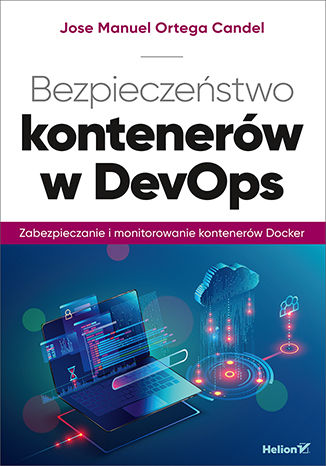
Bezpieczeństwo kontenerów w DevOps. Zabezpieczanie i monitorowanie kontenerów Docker
Jose Manuel Ortega Candel
DevOps jest innowacyjną metodyką prowadzenia projektów, w której wyjątkowe znaczenie ma integracja zespołów programistów i administratorów systemów. Taki sposób rozwijania aplikacji wydaje się szczególnie atrakcyjny w odniesieniu do aplikacji kontenerowych. Technologia kontenerów i orkiestracji jest uważana za bardzo nowoczesną, jednak nawet w przypadku kontenerów Docker i klastrów Kubernetes kwestii bezpieczeństwa nie wolno lekceważyć. Podobnie jak w innych aplikacjach, zabezpieczanie zaczyna się podczas projektowania. O czym więc powinny pamiętać zespoły pracujące zgodnie z DevOps, aby zapewnić bezpieczeństwo swoich kontenerów? W tej książce pokazano związek między metodyką DevOps a praktyką dotyczącą kontenerów Docker i klastrów Kubernetes z perspektywy bezpieczeństwa, monitoringu i zarządzania. Przedstawiono dobre praktyki tworzenia obrazów kontenerów Docker, a także zasady bezpieczeństwa hostów, na których są uruchamiane kontenery, i wszystkich komponentów. Poruszono takie zagadnienia jak statyczna analiza zagrożeń obrazów Docker, podpisywanie obrazów za pomocą Docker Content Trust oraz umieszczanie ich w rejestrze Docker. Opisano też techniki zabezpieczania platformy Kubernetes. Ponadto znalazł się tutaj opis narzędzi do zarządzania kontenerami i aplikacjami, jak również monitorowania aplikacji kontenerowych i tworzenia sieci w platformie Docker. Najciekawsze zagadnienia: gruntowne wprowadzenie do metodyki DevOps czym są platformy kontenerowe: Docker, Kubernetes, Swarm, OpenShift zagrożenia kontenerów i obrazów narzędzia do audytu bezpieczeństwa i zabezpieczania aplikacji kontenerowych zarządzanie kontenerami i ich monitorowanie za pomocą narzędzi: cAdvisor, Sysdig, Portainer i Rancher Niezawodność DevOps to także bezpieczne wdrażanie kontenerów Docker!
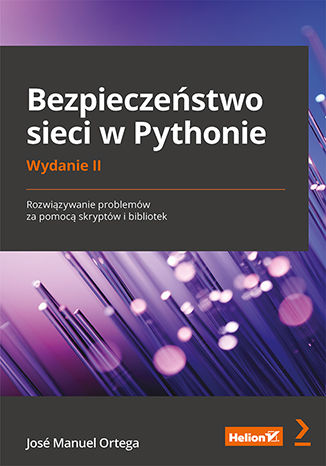
Bezpieczeństwo sieci w Pythonie. Rozwiązywanie problemów za pomocą skryptów i bibliotek. Wydanie II
José Manuel Ortega
Popularność Pythona wynika z jego wszechstronności, prostoty, a także ze zwięzłości i z łatwości pisania kodu. Rozbudowywana z każdą aktualizacją kolekcja narzędzi i bibliotek pozwala na używanie Pythona do coraz bardziej specjalistycznych zadań, takich jak zabezpieczanie sieci. O tym, że skuteczna ochrona sieci ma krytyczne znaczenie dla organizacji, świadczą powtarzające się przypadki cyberataków i utraty cennych danych. Warto więc wykorzystać możliwości Pythona do wykrywania zagrożeń i rozwiązywania różnych problemów związanych z siecią. Tę książkę docenią specjaliści do spraw bezpieczeństwa i inżynierowie sieci. Dzięki niej zapoznasz się z najnowszymi pakietami i bibliotekami Pythona i nauczysz się pisać skrypty, które pozwolą Ci zabezpieczyć sieć na wielu poziomach. Dowiesz się, w jaki sposób przesyłać dane i korzystać z sieci Tor. Nauczysz się też identyfikować podatności systemu na ataki, aby tym skuteczniej zapewnić mu bezpieczeństwo. W naturalny sposób przyswoisz wiedzę, która pozwoli Ci tworzyć w Pythonie bezpieczne aplikacje, zaczniesz również stosować techniki kryptograficzne i steganograficzne. Znajdziesz tu także wskazówki, jak rozwiązywać różne problemy sieciowe, pisać skrypty do wykrywania zagrożeń sieci i stron internetowych, zabezpieczać urządzenia końcowe, pozyskiwać metadane i pisać skrypty kryptograficzne. Najważniejsze zagadnienia: skrypty automatyzujące procedury bezpieczeństwa i testy penetracyjne narzędzia programistyczne służące do zabezpieczania sieci automatyczna analiza serwerów wykrywanie podatności na ataki i analiza bezpieczeństwa praca z siecią Tor stosowanie narzędzi do analizy śledczej Python w sieci: najlepsza ochrona!

Bezpieczne programowanie. Aplikacje hakeroodporne
Jacek Ross
Wyjdź zwycięsko z pojedynku z krakerami! Jak zabezpieczyć aplikację przed krakerami? Jak stworzyć bezpieczne rozwiązania w PHP? Jak utrudnić debugowanie Twojego kodu? Wyobraź sobie sytuację, w której poświęcasz mnóstwo czasu na stworzenie nowego, ciekawego rozwiązania w świecie informatyki. Kosztuje Cię to wiele dni i nocy ogromnego wysiłku. Dokładnie w momencie opuszczenia Twojego bezpiecznego komputera, udostępniony światu, Twój pomysł zostaje wystawiony na ciężką próbę — w sieci działają krakerzy, którzy za wszelką cenę będę próbowali złamać Twoje zabezpieczenia lub wykorzystać luki w Twojej aplikacji. Jak tego uniknąć? Jak tworzyć oprogramowanie odporne na ich ataki? Proste i przejrzyste odpowiedzi na podobnie skomplikowane pytania znajdziesz właśnie w tej książce! Podczas lektury poznasz zagrożenia, na jakie narażony jest programista, oraz proste sposoby utrudniania krakerom zadania. Dodatkowo zdobędziesz wiedzę na temat metod szyfrowania danych i wyznaczania sygnatur. Jednak, co najważniejsze, zobaczysz, jak wykorzystać tę wiedzę w praktyce! W publikacji "Bezpieczne programowanie. Aplikacje hakeroodporne " znajdziesz również sporo ciekawych informacji na temat zabezpieczania aplikacji sieciowych oraz zaawansowane metody, gwarantujące podniesienie bezpieczeństwa Twojego produktu do wysokiego poziomu. To jeszcze nie wszystko! W kolejnych rozdziałach autor prezentuje sposoby ochrony przed debugerami, patenty na bezpieczne tworzenie kodu na platformie .NET oraz psychologiczne aspekty tworzenia hakeroodpornych aplikacji! Przegląd zagrożeń, rodzaje oszustw i naruszeń bezpieczeństwa Zabezpieczenie programu przy użyciu numeru seryjnego Dostępne na rynku systemy zabezpieczania aplikacji Algorytmy szyfrujące Tworzenie skrótów wiadomości Wykorzystanie szyfrowania przy zabezpieczaniu oprogramowania Zabezpieczenia aplikacji wykorzystujących PHP i .NET Ochrona przed atakami typu: wstrzykiwanie SQL, XSS, DOS i DDOS Używanie zaawansowanych metod ochrony oprogramowania Sposoby zaciemniania programu Ochrona kodu przed debugerami Zastosowanie kluczy sprzętowych i technik biometrycznych Psychologiczne aspekty ochrony oprogramowania Dowiedz się, jak tworzyć aplikacje odporne na ataki!
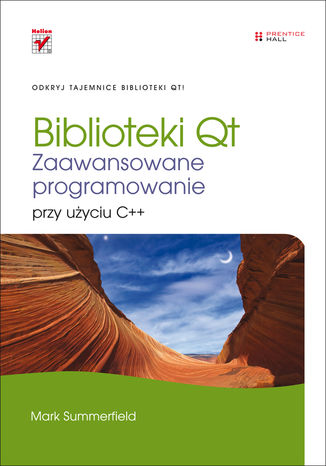
Biblioteki Qt. Zaawansowane programowanie przy użyciu C++
Mark Summerfield
Odkryj tajemnice biblioteki Qt! Qt to popularny zestaw bibliotek pozwalający na tworzenie atrakcyjnego interfejsu użytkownika dla różnych platform, w tym dla systemów: Windows, Mac OS X i Linux. Pierwsza wersja ukazała się w 1992 roku i od tego czasu jest intensywnie rozwijana. Za pomocą najnowszej wersji Qt można tworzyć aplikacje internetowe i mobilne. Zakres jej możliwości jest tak szeroki, że nawet doświadczeni programiści wykorzystują zaledwie ich ułamek. To może się zmienić dzięki tej książce! W trakcie lektury odkryjesz funkcje i możliwości, z których istnienia nie zdawałeś sobie sprawy. Ponadto nauczysz się pisać wydajne programy wielowątkowe, korzystać z silnika WebKit oraz współpracować z biblioteką Phonon. Dowiesz się również, jak sprawnie przy użyciu Qt tworzyć sformatowane dokumenty, a następnie eksportować je do różnych formatów (między innymi PDF, HTML i SVG). W książce znajdziesz wiele przykładów kodu, który został przetestowany przy użyciu Qt 4.6 zarówno na platformie Windows, jak i MacOS X oraz Linux. Wstęp do książki został napisany przez samego współtwórcę Qt - Eirika ChambeEnga. Sięgnij po doskonałe źródło informacji dla programistów! Dzięki tej książce: poznasz zaawansowane zastosowania biblioteki Qt wykorzystasz możliwości silnika WebKit przygotujesz atrakcyjny wizualnie dokument i wyeksportujesz go do popularnych formatów zgłębisz tajniki biblioteki Qt Wykorzystaj zaawansowane funkcje Qt!
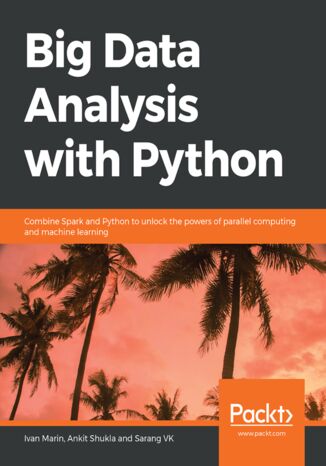
Ivan Marin, Ankit Shukla, Sarang VK
Processing big data in real time is challenging due to scalability, information inconsistency, and fault tolerance. Big Data Analysis with Python teaches you how to use tools that can control this data avalanche for you. With this book, you'll learn practical techniques to aggregate data into useful dimensions for posterior analysis, extract statistical measurements, and transform datasets into features for other systems.The book begins with an introduction to data manipulation in Python using pandas. You'll then get familiar with statistical analysis and plotting techniques. With multiple hands-on activities in store, you'll be able to analyze data that is distributed on several computers by using Dask. As you progress, you'll study how to aggregate data for plots when the entire data cannot be accommodated in memory. You'll also explore Hadoop (HDFS and YARN), which will help you tackle larger datasets. The book also covers Spark and explains how it interacts with other tools.By the end of this book, you'll be able to bootstrap your own Python environment, process large files, and manipulate data to generate statistics, metrics, and graphs.
Big Data Analytics with Java. Data analysis, visualization & machine learning techniques
RAJAT MEHTA
This book covers case studies such as sentiment analysis on a tweet dataset, recommendations on a movielens dataset, customer segmentation on an ecommerce dataset, and graph analysis on actual flights dataset.This book is an end-to-end guide to implement analytics on big data withJava. Java is the de facto language for major big data environments, including Hadoop. This book will teach you how to perform analytics on big data with production-friendly Java. This book basically divided into twosections. The first part is an introduction that will help the readers get acquainted with big data environments, whereas the second part will contain a hardcore discussion on all the concepts in analyticson big data. It will take you from data analysis and data visualization to the core concepts and advantages of machine learning, real-life usage of regression and classification using Naïve Bayes, a deep discussion on the concepts of clustering,and a review of simple neural networkson big data using deepLearning4j or plain Java Spark code. This book is a must-have book for Java developers who want to start learning big data analytics and want to use it in the real world.
Joe Sremack
Big Data forensics is an important type of digital investigation that involves the identification, collection, and analysis of large-scale Big Data systems. Hadoop is one of the most popular Big Data solutions, and forensically investigating a Hadoop cluster requires specialized tools and techniques. With the explosion of Big Data, forensic investigators need to be prepared to analyze the petabytes of data stored in Hadoop clusters. Understanding Hadoop’s operational structure and performing forensic analysis with court-accepted tools and best practices will help you conduct a successful investigation.Discover how to perform a complete forensic investigation of large-scale Hadoop clusters using the same tools and techniques employed by forensic experts. This book begins by taking you through the process of forensic investigation and the pitfalls to avoid. It will walk you through Hadoop's internals and architecture, and you will discover what types of information Hadoop stores and how to access that data. You will learn to identify Big Data evidence using techniques to survey a live system and interview witnesses.After setting up your own Hadoop system, you will collect evidence using techniques such as forensic imaging and application-based extractions. You will analyze Hadoop evidence using advanced tools and techniques to uncover events and statistical information. Finally, data visualization and evidence presentation techniques are covered to help you properly communicate your findings to any audience.
Big Data on Kubernetes. A practical guide to building efficient and scalable data solutions
Neylson Crepalde
In today's data-driven world, organizations across different sectors need scalable and efficient solutions for processing large volumes of data. Kubernetes offers an open-source and cost-effective platform for deploying and managing big data tools and workloads, ensuring optimal resource utilization and minimizing operational overhead. If you want to master the art of building and deploying big data solutions using Kubernetes, then this book is for you.Written by an experienced data specialist, Big Data on Kubernetes takes you through the entire process of developing scalable and resilient data pipelines, with a focus on practical implementation. Starting with the basics, you’ll progress toward learning how to install Docker and run your first containerized applications. You’ll then explore Kubernetes architecture and understand its core components. This knowledge will pave the way for exploring a variety of essential tools for big data processing such as Apache Spark and Apache Airflow. You’ll also learn how to install and configure these tools on Kubernetes clusters. Throughout the book, you’ll gain hands-on experience building a complete big data stack on Kubernetes.By the end of this Kubernetes book, you’ll be equipped with the skills and knowledge you need to tackle real-world big data challenges with confidence.
Tiago Antao
Bioinformatics is an active research field that uses a range of simple-to-advanced computations to extract valuable information from biological data.This book covers next-generation sequencing, genomics, metagenomics, population genetics, phylogenetics, and proteomics. You'll learn modern programming techniques to analyze large amounts of biological data. With the help of real-world examples, you'll convert, analyze, and visualize datasets using various Python tools and libraries.This book will help you get a better understanding of working with a Galaxy server, which is the most widely used bioinformatics web-based pipeline system. This updated edition also includes advanced next-generation sequencing filtering techniques. You'll also explore topics such as SNP discovery using statistical approaches under high-performance computing frameworks such as Dask and Spark.By the end of this book, you'll be able to use and implement modern programming techniques and frameworks to deal with the ever-increasing deluge of bioinformatics data.
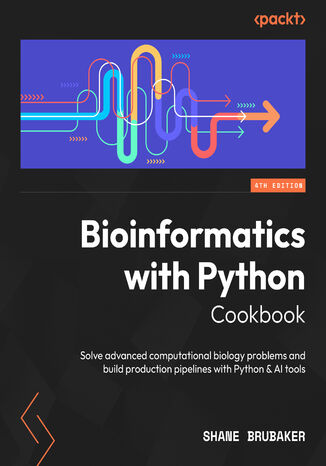
Shane Brubaker
If you've ever felt overwhelmed by the vast number of Python tools available for bioinformatics, you're not alone. The Bioinformatics with Python Cookbook is a recipe-based guide that explores practical approaches for solving classic bioinformatics challenges, showing you which Python packages work best for each task.You’ll start with the essential Python libraries for data science and bioinformatics, then move through key workflows in sequencing analysis, quality control, alignment, and variant calling. Along the way, you’ll pick up modern coding practices, explore recent advances in bioinformatics research, and gain hands-on experience with libraries such as NumPy, pandas, and sci-kit learn. This book walks you through core bioinformatics tasks such as phylogenetic analysis and population genomics while familiarizing you with the wealth of modern public bioinformatics databases. You’ll learn cloud computing approaches used by researchers, set up workflow orchestration systems for controlling bioinformatics pipelines, and see how AI and the use of large language models (LLMs) are reshaping the field–right down to designing proteins and DNA.By the end of this book, you’ll be ready to apply Python for real bioinformatics work and launch bioinformatics pipelines for your research.
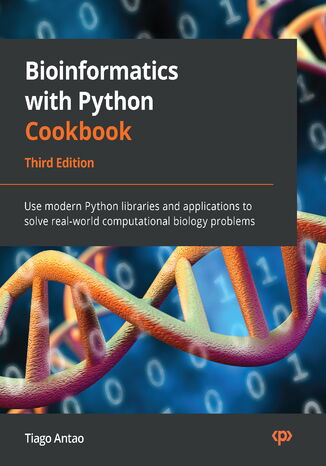
Tiago Antao
Bioinformatics is an active research field that uses a range of simple-to-advanced computations to extract valuable information from biological data, and this book will show you how to manage these tasks using Python.This updated third edition of the Bioinformatics with Python Cookbook begins with a quick overview of the various tools and libraries in the Python ecosystem that will help you convert, analyze, and visualize biological datasets. Next, you'll cover key techniques for next-generation sequencing, single-cell analysis, genomics, metagenomics, population genetics, phylogenetics, and proteomics with the help of real-world examples. You'll learn how to work with important pipeline systems, such as Galaxy servers and Snakemake, and understand the various modules in Python for functional and asynchronous programming. This book will also help you explore topics such as SNP discovery using statistical approaches under high-performance computing frameworks, including Dask and Spark. In addition to this, you’ll explore the application of machine learning algorithms in bioinformatics.By the end of this bioinformatics Python book, you'll be equipped with the knowledge you need to implement the latest programming techniques and frameworks, empowering you to deal with bioinformatics data on every scale.
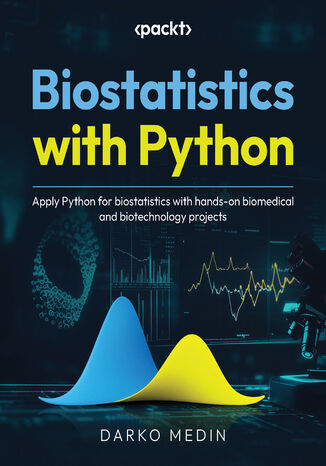
Darko Medin
This book leverages the author’s decade-long experience in biostatistics and data science to simplify the practical use of biostatistics with Python. The chapters show you how to clean and describe your data effectively, setting a solid foundation for accurate analysis and proficiency in biostatistical inference to help you draw meaningful conclusions from your data through hypothesis testing and effect size analysis.The book walks you through predictive modeling to harness the power of Python to create robust predictive analytics that can drive your research and professional projects forward. You'll explore clinical biostatistics, learn how to design studies, conduct survival analysis, and synthesize evidence from multiple studies with meta-analysis – skills that are crucial for making informed decisions based on comprehensive data reviews. The concluding chapters will enhance your ability to analyze biological variables, enabling you to perform detailed and accurate data analysis for biological research. This book's unique blend of biostatistics and Python helps you find practical solutions that make complex concepts easy to grasp and apply.By the end of this biostatistics book, you’ll have moved from theoretical knowledge to practical experience, allowing you to perform biostatistical analysis confidently and accurately.