
Programowanie
Niezależnie czy dopiero rozpoczynacie swoją przygodę z programowaniem, czy jesteście już uznanymi na rynku profesjonalistami, to w kategorii Programowanie na pewno znajdziecie podręczniki, które pomogą Wam w przebiegu pracy, czy też w nauce podstaw programowania.
W książkach z tego działu zawarta jest wiedza zarówno związana z czysto technicznymi sprawami typu składnia języków, ale także z umiejętnościami bardziej "miękkimi" jak obsługa i wykorzystanie pełnych możliwości środowisk programistycznych, czy też projektowanie oprogramowania lub metody numeryczne czy oraz struktury danych.
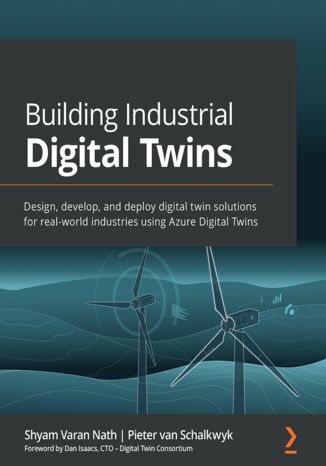
Shyam Varan Nath, Pieter van Schalkwyk
Digital twin technology enables organizations to create digital representations of physical entities such as assets, systems, and processes throughout their life cycle. It improves asset performance, utilization, and safe operations and reduces manufacturing, operational, and maintenance costs.The book begins by introducing you to the concept of digital twins and sets you on a path to develop a digital twin strategy to positively influence business outcomes in your organization. You'll understand how digital twins relate to physical assets, processes, and technology and learn about the prerequisite conditions for the right platform, scale, and use case of your digital twins. You'll then get hands-on with Microsoft's Azure Digital Twins platform for your digital twin development and deployment. The book equips you with the knowledge to evaluate enterprise and specialty platforms, including the cloud and industrial IoT required to set up your digital twin prototype. Once you've built your prototype, you'll be able to test and validate it relative to the intended purpose of the twin through pilot deployment, full deployment, and value tracking techniques.By the end of this book, you'll have developed the skills to build and deploy your digital twin prototype, or minimum viable twin, to demonstrate, assess, and monitor your asset at specific stages in the asset life cycle.
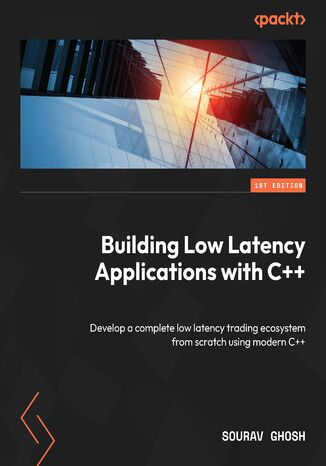
Sourav Ghosh
C++ is meticulously designed with efficiency, performance, and flexibility as its core objectives. However, real-time low latency applications demand a distinct set of requirements, particularly in terms of performance latencies.With this book, you’ll gain insights into the performance requirements for low latency applications and the C++ features critical to achieving the required performance latencies. You’ll also solidify your understanding of the C++ principles and techniques as you build a low latency system in C++ from scratch.You’ll understand the similarities between such applications, recognize the impact of performance latencies on business, and grasp the reasons behind the extensive efforts invested in minimizing latencies. Using a step-by-step approach, you’ll embark on a low latency app development journey by building an entire electronic trading system, encompassing a matching engine, market data handlers, order gateways, and trading algorithms, all in C++. Additionally, you’ll get to grips with measuring and optimizing the performance of your trading system.By the end of this book, you’ll have a comprehensive understanding of how to design and build low latency applications in C++ from the ground up, while effectively minimizing performance latencies.
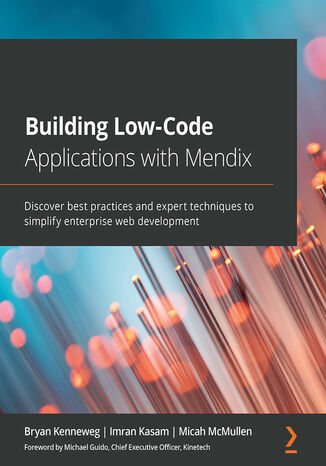
Bryan Kenneweg, Imran Kasam, Micah McMullen
Low-code is a visual approach to application development. It enables developers of varying experience levels to create web and mobile apps using drag-and-drop components and model-driven logic through a graphic user interface. Mendix is among the fastest-growing platforms that enable low-code enthusiasts to put their software ideas into practice without having to write much code, and Building Low-Code Applications with Mendix will help you get up and running with the process using examples and practice projects.The book starts with an introduction to Mendix, along with the reasons for using this platform and its tools for creating your first app. As you progress, you’ll explore Mendix Studio Pro, the visual environment that will help you learn Mendix app creation. Once you have your working app ready, you’ll understand how to enhance it with custom business logic and rules. Next, you’ll find out how to defend your app against bad data, troubleshoot and debug it, and finally, connect it with real-world business platforms. You’ll build practical skills as the book is filled with examples, real-world scenarios, and explanations of the tools needed to help you build low-code apps successfully.By the end of this book, you’ll have understood the concept of low-code development, learned how to use Mendix effectively, and developed a working app.
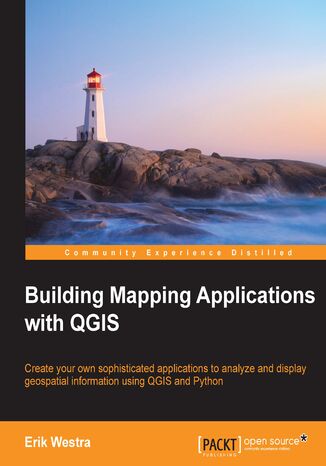
Erik Westra
If you are an experienced Python developer who wants to create your own geospatial applications with minimum fuss, this is the book for you. While some familiarity with mapping applications would be an advantage, no prior knowledge of geospatial concepts is required. Even if you've never used QGIS before, this book will quickly get you up to speed.
Vinci J Rufus
Although deservedly popular and highly performant tools for building modern web applications, React and single-page applications (SPAs) become more and more sluggish as your applications and teams grow. To solve this problem, many large web apps have started to break down monolith SPAs into independently deployable smaller apps and components—a pattern called micro frontends. But micro frontends aren't a perfect solution, but rather a double-edged sword. This book teaches you how to architect and build them with the right principles to reap all the benefits without the pitfalls.This book will take you through two patterns of building micro frontends, the multi-SPA pattern and the micro apps pattern. You’ll find out which patterns to use and when, as well as take a look at the nuances of deploying these micro frontends using cloud-native technologies such as Kubernetes and Firebase. With the help of this book, you’ll gain an in-depth understanding of state management, solving problems with routing, and deployment strategies between the different micro frontends.By the end of this book, you’ll have learned how to design and build a React-based micro frontend application using module federation and deploy it to the cloud efficiently.
Building Microservices with Go. Develop seamless, efficient, and robust microservices with Go
Nic Jackson
Microservice architecture is sweeping the world as the de facto pattern to build web-based applications. Golang is a language particularly well suited to building them. Its strong community, encouragement of idiomatic style, and statically-linked binary artifacts make integrating it with other technologies and managing microservices at scale consistent and intuitive. This book will teach you the common patterns and practices, showing you how to apply these using the Go programming language.It will teach you the fundamental concepts of architectural design and RESTful communication, and show you patterns that provide manageable code that is supportable in development and at scale in production. We will provide you with examples on how to put these concepts and patterns into practice with Go. Whether you are planning a new application or working in an existing monolith, this book will explain and illustrate with practical examples how teams of all sizes can start solving problems with microservices. It will help you understand Docker and Docker-Compose and how it can be used to isolate microservice dependencies and build environments. We finish off by showing you various techniques to monitor, test, and secure your microservices. By the end, you will know the benefits of system resilience of a microservice and the advantages of Go stack.
Nirmal Singh, Zack Dawood
The open source Micronaut® framework is a JVM-based toolkit designed to create microservices quickly and easily. This book will help full-stack and Java developers build modular, high-performing, and reactive microservice-based apps using the Micronaut framework.You'll start by building microservices and learning about the core components, such as ahead-of-time compilation, reflection-less dependency injection, and reactive baked-in HTTP clients and servers. Next, you will work on a real-time microservice application and learn how to integrate Micronaut projects with different kinds of relational and non-relational databases. You'll also learn how to employ different security mechanisms to safeguard your microservices and integrate microservices using event-driven architecture in the Apache Kafka ecosystem. As you advance, you'll get to grips with automated testing and popular testing tools. The book will help you understand how you can easily handle microservice concerns in Micronaut projects, such as service discovery, API documentation, distributed configuration management, fallbacks, and circuit breakers. Finally, you'll explore the deployment and maintenance aspects of microservices and get up to speed with the Internet of Things (IoT) using the Framework.By the end of this book, you'll be able to build, test, deploy, and maintain your own microservice apps using the framework.
Gaurav Aroraa
The microservices architectural style promotes the development of complex applications as a suite of small services based on business capabilities. This book will help you identify the appropriate service boundaries within your business. We'll start by looking at what microservices are and their main characteristics. Moving forward, you will be introduced to real-life application scenarios; after assessing the current issues, we will begin the journey of transforming this application by splitting it into a suite of microservices using C# 7.0 with .NET Core 2.0. You will identify service boundaries, split the application into multiple microservices, and define service contracts. You will find out how to configure, deploy, and monitor microservices, and configure scaling to allow the application to quickly adapt to increased demand in the future.With an introduction to reactive microservices, you’ll strategically gain further value to keep your code base simple, focusing on what is more important rather than on messy asynchronous calls.
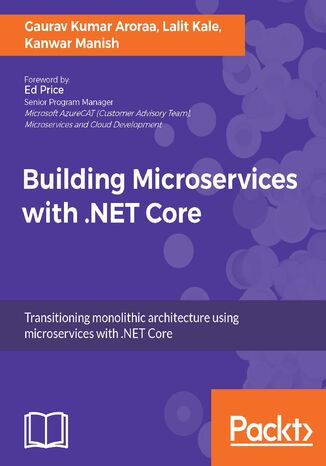
Soumya Mukherjee, Gaurav Aroraa, Lalit Kale, Manish...
Microservices is an architectural style that promotes the development of complex applications as a suite of small services based on business capabilities. This book will help you identify the appropriate service boundaries within the business. We'll start by looking at what microservices are, and what the main characteristics are. Moving forward, you will be introduced to real-life application scenarios, and after assessing the current issues, we will begin the journey of transforming this application by splitting it into a suite of microservices. You will identify the service boundaries, split the application into multiple microservices, and define the service contracts. You will find out how to configure, deploy, and monitor microservices, and configure scaling to allow the application to quickly adapt to increased demand in the future.With an introduction to the reactive microservices, you strategically gain further value to keep your code base simple, focusing on what is more important rather than the messy asynchronous calls.
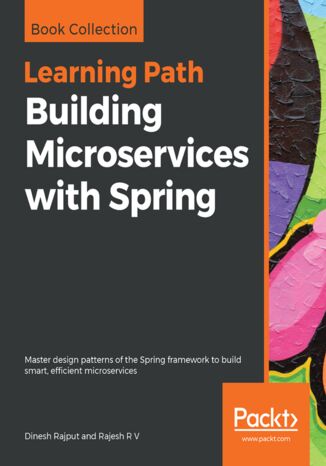
Dinesh Rajput, Rajesh R V
Getting Started with Spring Microservices begins with an overview of the Spring Framework 5.0, its design patterns, and its guidelines that enable you to implement responsive microservices at scale. You will learn how to use GoF patterns in application design. You will understand the dependency injection pattern, which is the main principle behind the decoupling process of the Spring Framework and makes it easier to manage your code. Then, you will learn how to use proxy patterns in aspect-oriented programming and remoting. Moving on, you will understand the JDBC template patterns and their use in abstracting database access. After understanding the basics, you will move on to more advanced topics, such as reactive streams and concurrency. Written to the latest specifications of Spring that focuses on Reactive Programming, the Learning Path teaches you how to build modern, internet-scale Java applications in no time. Next, you will understand how Spring Boot is used to deploying serverless autonomous services by removing the need to have a heavyweight application server. You’ll also explore ways to deploy your microservices to Docker and managing them with Mesos. By the end of this Learning Path, you will have the clarity and confidence for implementing microservices using Spring Framework.This Learning Path includes content from the following Packt products:• Spring 5 Microservices by Rajesh R V • Spring 5 Design Patterns by Dinesh Rajput
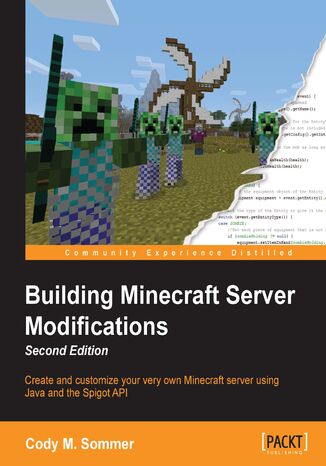
Cody M. Sommer
Minecraft is a sandbox game that allows you to play it in any way you want. Coupled with a multiplayer server powered by Spigot, you can customize the game even more! Using the Bukkit API, anyone interested in learning how to program can control their Minecraft world by developing server plugins.This book is a great introduction to software development through the wonderful world of Minecraft. We start by instructing you through how to set up your home PC for Minecraft server development. This includes an IDE complete with the required libraries as well as a Spigot server to test on. You will be guided through writing code for several different plugins. Each chapter teaches you new skills to create plugins of increasing complexity, and each plugin adds a new concept of the Bukkit API By the end of the book, you will have all the knowledge you need about the API to successfully create any type of plugin. You can then practice and build your Java skills through developing more mods for their server.
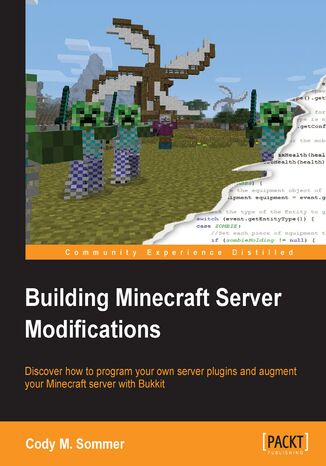
Cody M. Sommer
If you have ever played Minecraft on a public server then the chances are that the server was powered by Bukkit. Bukkit plugins allow a server to be modified in more ways than you can imagine. Learning to program your own server mods will allow you to customize the game to your own liking.Building Minecraft Server Modifications is a complete guide that walks you through the creation of Minecraft server mods. From setting up a server, to testing your newly made plugins, this book teaches you everything you need to know. With the help of this book you can start practising for a career in software development or simply create something awesome to play with your friends.This book walks you through installing your own Minecraft server for you and your friends. Once your server is running, it will aid you in modifying the game by programming Bukkit plugins. You will learn how to program simple plugin features such as player commands and permissions. You will also learn more complex features including listening for events, creating a configurable plugin, and utilizing the Bukkit scheduler. All of this will be accomplished while writing your own server mods.You will become familiar with the most important aspects of the Bukkit API. Additional API features will become a breeze to learn after tackling these more complicated tasks.
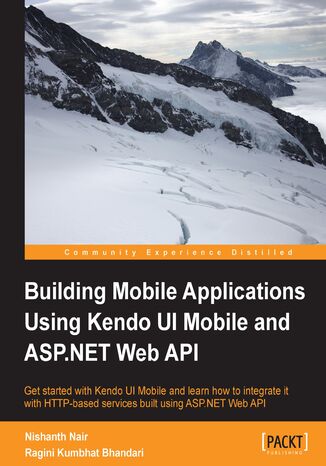
Nishanth Nair
With the world becoming more mobile, there is a growing need for mobile websites and applications. Building these from scratch is not a simple process. Kendo UI Mobile makes building websites and applications easier than ever before. Build applications for phones and tablets in no time at all and provide your user with a native look and feel.Building Mobile Applications Using Kendo UI Mobile and ASP.NET Web API helps you to understand the concept of building mobile applications using HTML5 based frameworks, specifically Kendo UI Mobile. It teaches you in a simple step-by-step manner how to create a service backend layer using ASP.NET Web API and how to integrate it with your front end mobile application, which is the missing piece of the puzzle for most developers who are new to mobile applications development. Learn everything from the basics of HTML5 to design and development of a mobile application using Kendo UI Mobile and ASP.NET Web API. Integrate them in the right way using extensible and maintainable JavaScript code.Starting with the basics of the Kendo UI platform, learn how to build a real world mobile application from scratch. You will explore the Kendo UI framework elements and integrate the sample mobile application with the ASP.NET Web API service. One of the most important things that you will learn from this book is how to organize your code using the JavaScript Revealing Module Pattern. You will also take a journey through Kendo UI Mobile widgets with lots of code samples hosted in jsFiddle. At the end of this book, you will complete the integration of the sample application and master fixing real world problems utilizing your newly acquired professional techniques that will save you time and effort.Building Mobile Applications Using Kendo UI Mobile and ASP.NET Web API will help you improve your mobile application development skills using hands-on examples, and will help you address the common problems faced by beginners as well as experienced web programmers.
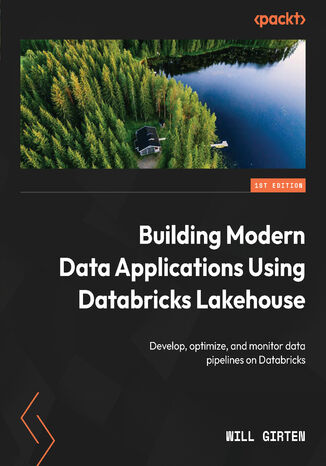
Will Girten
With so many tools to choose from in today’s data engineering development stack as well as operational complexity, this often overwhelms data engineers, causing them to spend less time gleaning value from their data and more time maintaining complex data pipelines. Guided by a lead specialist solutions architect at Databricks with 10+ years of experience in data and AI, this book shows you how the Delta Live Tables framework simplifies data pipeline development by allowing you to focus on defining input data sources, transformation logic, and output table destinations.This book gives you an overview of the Delta Lake format, the Databricks Data Intelligence Platform, and the Delta Live Tables framework. It teaches you how to apply data transformations by implementing the Databricks medallion architecture and continuously monitor the data quality of your pipelines. You’ll learn how to handle incoming data using the Databricks Auto Loader feature and automate real-time data processing using Databricks workflows. You’ll master how to recover from runtime errors automatically.By the end of this book, you’ll be able to build a real-time data pipeline from scratch using Delta Live Tables, leverage CI/CD tools to deploy data pipeline changes automatically across deployment environments, and monitor, control, and optimize cloud costs.
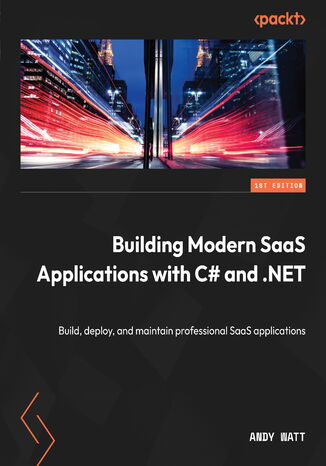
Andy Watt
There are several concepts that must be mastered to deliver functional and efficient SaaS applications. This book is perfect for developers and teams with experience in traditional application development looking to switch to SaaS and deliver slick and modern applications. You‘ll start with a general overview of SaaS as a concept and learn with the help of an example throughout the book to bring life to the technical descriptions. You’ll use the Microsoft .NET tech stack for development and C# as the programming language to develop your desired SaaS application.Delivering SaaS requires a deep understanding of all layers in the application stack. As you progress, you’ll learn how to approach the database layer, the API, and the UI to confidently approach application development using the SaaS model. Additionally, you’ll explore how to test, deploy, maintain, and upgrade each component of the application.By the end of this book, you will be well equipped to approach all aspects of delivering software using the SaaS paradigm.
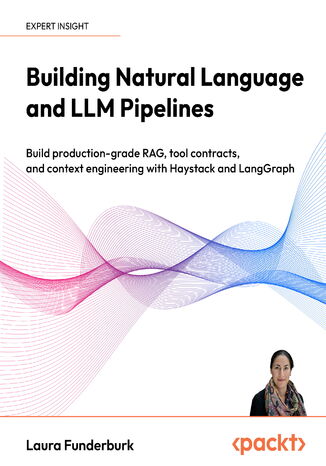
Laura Funderburk
Modern LLM applications often break in production due to brittle pipelines, loose tool definitions, and noisy context. This book shows you how to build production-ready, context-aware systems using Haystack and LangGraph. You’ll learn to design deterministic pipelines with strict tool contracts and deploy them as microservices. Through structured context engineering, you’ll orchestrate reliable agent workflows and move beyond simple prompt-based interactions. You'll start by understanding LLM behavior—tokens, embeddings, and transformer models—and see how prompt engineering has evolved into a full context engineering discipline. Then, you'll build retrieval-augmented generation (RAG) pipelines with retrievers, rankers, and custom components using Haystack’s graph-based architecture. You’ll also create knowledge graphs, synthesize unstructured data, and evaluate system behavior using Ragas and Weights & Biases. In LangGraph, you’ll orchestrate agents with supervisor-worker patterns, typed state machines, retries, fallbacks, and safety guardrails. By the end of the book, you’ll have the skills to design scalable, testable LLM pipelines and multi-agent systems that remain robust as the AI ecosystem evolves.*Email sign-up and proof of purchase required