
Programowanie
Niezależnie czy dopiero rozpoczynacie swoją przygodę z programowaniem, czy jesteście już uznanymi na rynku profesjonalistami, to w kategorii Programowanie na pewno znajdziecie podręczniki, które pomogą Wam w przebiegu pracy, czy też w nauce podstaw programowania.
W książkach z tego działu zawarta jest wiedza zarówno związana z czysto technicznymi sprawami typu składnia języków, ale także z umiejętnościami bardziej "miękkimi" jak obsługa i wykorzystanie pełnych możliwości środowisk programistycznych, czy też projektowanie oprogramowania lub metody numeryczne czy oraz struktury danych.
Sunil Gulabani
AWS is at the forefront of Cloud Computing today. Businesses are adopting AWS Cloud because of its reliability, versatility, and flexible design. The main focus of this book is teaching you how to build and manage highly reliable and scalable applications and services on AWS. It will provide you with all the necessary skills to design, deploy, and manage your applications and services on the AWS cloud platform. We’ll start by exploring Amazon S3, EC2, and so on to get you well-versed with core Amazon services. Moving on, we’ll teach you how to design and deploy highly scalable and optimized workloads. You’ll also discover easy-to-follow, hands-on steps, tips, and recommendations throughout the book and get to know essential security and troubleshooting concepts. By the end of the book, you’ll be able to create a highly secure, fault tolerant, and scalable environment for your applications to run on.

Amazon Web Services w akcji. Wydanie II
Andreas Wittig, Michael Wittig
Platforma Amazon Web Services jest uważana za największą i najdojrzalszą chmurę obliczeniową. Oferuje ponad setkę gotowych usług, praktycznie niewyczerpywalne zasoby mocy obliczeniowej, nieograniczone bezpieczne magazynowanie oraz pierwszorzędne możliwości automatyzacji. Jest przy tym nieustannie unowocześniana i udostępnia coraz to nowsze możliwości. Pozwala na tworzenie i utrzymanie aplikacji w elastyczny i niezawodny sposób. Dla wielu organizacji decyzja o migracji infrastruktury informatycznej na platformę AWS okazała się strzałem w dziesiątkę. Aby z powodzeniem przeprowadzić taką transformację, konieczne jest uzyskanie wiedzy na temat platformy Amazon Web Services i zrozumienie związanych z nią koncepcji. To drugie, uaktualnione wydanie kompletnego wprowadzenia do wdrażania aplikacji w chmurze AWS. Dokładnie opisano w nim usługi dostarczające instancje obliczeniowe, przestrzeń na dane i zapewniające pracę w sieci. Wyjaśniono koncepcje niezbędne do uruchomienia aplikacji WWW na platformie AWS: równoważenie obciążenia, maszyny wirtualne, magazynowanie plików, systemy baz danych i buforowanie w pamięci. Przedstawiono też zagadnienia wysokiej dostępności, odporności na błędy oraz dynamicznego skalowania infrastruktury. Dużą zaletą książki jest omówienie zautomatyzowanego zarządzania infrastrukturą za pomocą usługi AWS CloudFormation. Sporo uwagi poświęcono także różnym aspektom bezpieczeństwa w chmurze. Najciekawsze zagadnienia: koncepcje związane z Amazon Web Services, w tym maszyny wirtualne i EC2 automatyzacja infrastruktury i wdrażanie oprogramowania na platformie AWS skalowalność i bezpieczeństwo infrastruktury w chmurze AWS najprzydatniejsze usługi AWS: S3, EBS, EFS, RDS i wiele innych wysoka dostępność i niezawodność infrastruktury tworzenie odpornych na błędy usług sieciowych Amazon Web Services: już dziś zaprojektuj system przyszłości! Bracia Andreas Wittig i Michael Wittig są inżynierami oprogramowania. Stosują podejście DevOps i specjalizują się we wdrażaniu rozwiązań opartych na chmurze AWS. Koncentrują się na zagadnieniach infrastruktury jako kodu, ciągłego wdrażania, przetwarzania bezserwerowego, zabezpieczeń i tworzenia produktów typu SaaS. Obaj zdobyli certyfikaty AWS Certified Solutions Architect - Professional i AWS Certified DevOps Engineer - Professional. Ich wspólną pasją jest dzielenie się wiedzą.
Marcotte
Design patterns are a set of solutions to many of the common problems occurring in software development. Knowledge of these design patterns helps developers and professionals to craft software solutions of any scale.ASP.NET Core 5 Design Patterns starts by exploring basic design patterns, architectural principles, dependency injection, and other ASP.NET Core mechanisms. You’ll explore the component scale as you discover patterns oriented toward small chunks of the software, and then move to application-scale patterns and techniques to understand higher-level patterns and how to structure the application as a whole. The book covers a range of significant GoF (Gangs of Four) design patterns such as strategy, singleton, decorator, facade, and composite. The chapters are organized based on scale and topics, allowing you to start small and build on a strong base, the same way that you would develop a program. With the help of use cases, the book will show you how to combine design patterns to display alternate usage and help you feel comfortable working with a variety of design patterns. Finally, you’ll advance to the client side to connect the dots and make ASP.NET Core a viable full-stack alternative.By the end of the book, you’ll be able to mix and match design patterns and have learned how to think about architecture and how it works.
Michele Fadda
– SwiftUI transforms Apple Platform app development with intuitive Swift code for seamless UI design. – Explore SwiftUI's declarative programming: define what the app should look like and do, while the OS handles the heavy lifting. – Hands-on approach covers SwiftUI fundamentals and often-omitted parts in introductory guides. – Progress from creating views and modifiers to intricate, responsive UIs and advanced techniques for complex apps. – Focus on new features in asynchronous programming and architecture patterns for efficient, modern app design. – Learn UIKit and SwiftUI integration, plus how to run tests for SwiftUI applications. – Gain confidence to harness SwiftUI's full potential for building professional-grade apps across Apple devices.
Analiza danych behawioralnych przy użyciu języków R i Python
Florent Buisson
Wykorzystanie danych zorientowanych na użytkownika w celu uzyskania realnych wyników biznesowych Dzięki tej książce Czytelnik będzie mógł wykorzystać w swojej firmie pełną moc danych behawioralnych używając w tym celu wyspecjalizowanych narzędzi. Algorytmy często stosowane w danologii, a także programy służące do analizy predykcyjnej traktują jak zwykłe informacje dane behawioralne wygenerowane przez użytkowników, takie jak kliknięcia na stronie internetowej czy zakupy w supermarkecie. Ten praktyczny przewodnik zawiera opisy skutecznych metod, zaprojektowanych specjalnie w celu przeprowadzania analiz danych behawioralnych. Zaawansowana architektura umożliwiająca wykonywanie eksperymentów pomaga w pełni wykorzystać testy A/B. Diagramy przyczynowe pozwalają poznać przyczyny zachowań nawet w przypadku, gdy nie można przeprowadzać eksperymentów. Ta praktyczna książka, napisana przystępnym stylem i przeznaczona dla osób zajmujących się danymi, analityków biznesowych oraz behawiorystów, zawiera kompletne przykłady, a także ćwiczenia wykorzystujące języki R i Python, pozwalające od razu uzyskać lepszy wgląd w dane. Zagadnienia przeanalizowane w książce: - Poznanie specyfiki danych behawioralnych. - Przedstawienie różnic pomiędzy pomiarami a prognozami. - Wyjaśnienie, jak można oczyścić i przygotować dane behawioralne. - Zaprojektowanie i przeanalizowanie eksperymentów umożliwiających podejmowanie optymalnych decyzji biznesowych. - Wykorzystanie danych behawioralnych w celu zrozumienia i określenia przyczyny oraz skutku. - Zaprezentowanie kompleksowej metody pozwalającej na uzyskanie przejrzystego podziału klientów na grupy. "Ta książka jest wyjątkowa, ponieważ rozpoczyna się od przedstawienia pytań i problemów, a także wykorzystuje w postaci prawdziwych narzędzi odpowiednie techniki i języki programowania. Dzięki temu Czytelnicy poznają, jak można rozwiązywać niezwykle ważne i trudne zagadnienia. Czas poświęcony na jej przeczytanie będzie czystą inwestycją." -Eric Weber Kierownik Działu Eksperymentów, Yelp Florent Buisson jest ekonomistą behawioralnym z 10-letnim doświadczeniem związanych z biznesem, analityką i naukami behawioralnymi. W firmie ubezpieczeniowej Allstate założył zespół specjalizujący się w naukach behawioralnych i pełnił funkcję jego szefa przez cztery lata. Publikował artykuły naukowe w czasopismach takich jak recenzowany Journal of Real Estate Research. Posiada tytuł magistra ekonometrii oraz doktorat z ekonomii behawioralnej, uzyskany na uniwersytecie Sorbona w Paryżu.
Analiza i projektowanie obiektowe. Rusz głową!
Brett D. McLaughlin, Gary Pollice, David West
Współczesne systemy informatyczne mają niewiele wspólnego z tymi sprzed kilkunastu lat. Są skomplikowane, nafaszerowane wieloma technologiami, bywa też, że mają (zbyt) wielu autorów. Jak zapanować nad tym wszystkim? Jak projektować systemy szybko oraz bezbłędnie? Czujesz się zagubiony? Nic się nie martw! Po prostu... Otwórz swój umysł! Teraz dzięki nowatorskim metodom nauczania możesz błyskawicznie opanować wszystkie elementy projektowania obiektowego. Charakterystyczna dla serii "Rusz głową!" cecha to wymieszana w odpowiednich proporcjach wiedza, humor oraz wszystko wyjaśniające grafiki. Informacje zawarte w książce obejmują pełny zakres tematyki związanej z analizą i projektowaniem obiektowym. Tylko kilkaset stron dzieli Cię od opanowania metod zbierania wymagań, tworzenia przypadków użycia czy też projektowania diagramów klas. A to tylko początek - sprawdź spis treści i przekonaj się, jak szeroki materiał zawiera ta książka. Naprzód, głowo! Nikt ci tego nie potrafił wytłumaczyć? Wydaje Ci się, że to problem nie na Twoją głowę? Nie potrzebujesz elektrowstrząsów, żeby pobudzić swój mózg do aktywnego działania. Tylko żadnych gwałtownych gestów! Usiądź wygodnie, otwórz książkę, dopiero teraz się zacznie. Na początek - rusz głową! Precz z nudnymi wykładami i zakuwaniem bez zrozumienia! Nauka to znacznie więcej niż tylko czytanie suchego tekstu. Twój mózg jest niczym głodny rekin, cały czas prący naprzód w poszukiwaniu nowej, apetycznej przekąski. Jak karmimy Twój wygłodniały umysł? Używamy rysunków, bo obraz wart jest 1024 słów. Stosujemy powtórzenia, by zakodować na stałe dane w Twojej chłonnej głowie. Oddziałujemy na emocje, jesteśmy nieprzewidywalni, zaskakujący i zabawni. Stawiamy przed Tobą wyzwania i zadajemy pytania, które angażują Cię w proces studiowania przedstawianych zagadnień. Cały czas pobudzamy Twój umysł do aktywnego działania, zmuszamy go do posłuszeństwa... a za ciężką pracę nagrodzimy go smakowitym ciasteczkiem w postaci wiedzy - wisienka gratis! Rozgryź to sam! Zasady i cele projektowania obiektowego Metody zbierania wymagań Przypadki użycia i ich analiza Graficzna prezentacja systemu i zasad jego działania - diagramy UML Wzorce projektowe - sprawy skomplikowane stają się proste, a proste jeszcze prostsze Projektowanie architektury systemu Testowanie Książka należy serii "Rusz głową!", która jest kontynuacją serii "Head First". Książki z tej serii zdobyły uznanie czytelników dzięki swemu unikalnemu i nowatorskiemu podejściu do przekazywania wiedzy. Sprawdź na półce, może znajdziesz obok inne książki z tej serii. Dzięki nim nawet najbardziej skomplikowane dziedziny wiedzy stają się przystępne, przyjazne i prostsze.
Analytics for the Internet of Things (IoT). Intelligent analytics for your intelligent devices
Andrew Minteer
We start with the perplexing task of extracting value from huge amounts of barely intelligible data. The data takes a convoluted route just to be on the servers for analysis, but insights can emerge through visualization and statistical modeling techniques. You will learn to extract value from IoT big data using multiple analytic techniques. Next we review how IoT devices generate data and how the information travels over networks. You’ll get to know strategies to collect and store the data to optimize the potential for analytics, and strategies to handle data quality concerns. Cloud resources are a great match for IoT analytics, so Amazon Web Services, Microsoft Azure, and PTC ThingWorx are reviewed in detail next. Geospatial analytics is then introduced as a way to leverage location information. Combining IoT data with environmental data is also discussed as a way to enhance predictive capability. We’ll also review the economics of IoT analytics and you’ll discover ways to optimize business value.By the end of the book, you’ll know how to handle scale for both data storage and analytics, how Apache Spark can be leveraged to handle scalability, and how R and Python can be used for analytic modeling.
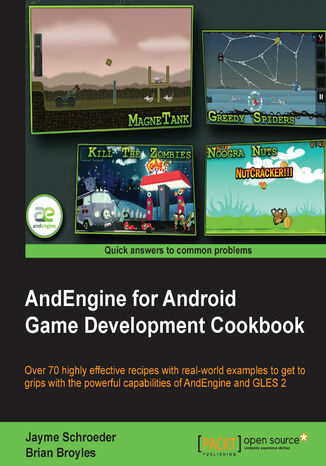
JAYME SCHROEDER, Brian Boyles
AndEngine is a broad 2D game engine which allows game developers, both experienced and inexperienced, to develop games for the Android platform with ease. Don't be fooled by the simplicity, though. As easy as it is to “pick up and go,” AndEngine includes enough functionality to bring any type of 2D game world to life.The AndEngine for Android Game Development Cookbook contains all of the necessary information and examples in order to build the games as you imagine them. The book's recipes will walk you through the various aspects of game design with AndEngine and provides detailed instructions on how to achieve some of the most desirable effects for your games.The AndEngine for Android Game Development Cookbook begins with detailed information on some of the more useful structuring techniques in game design and general aspects of resource management. Continuing on, the book will begin to discuss AndEngine entities, including sprites, text, meshes, and more. Everything from positioning, to modifiers, and even tips on improving entity functionality with raw OpenGL capabilities. From here on, everything from applying physics to your game, working with multi-touch events and gestures, game optimization, and even an overview of the various AndEngine extensions will be covered.The book has a widerange of recipes, from saving and loading game data, applying parallax backgrounds to create a seemingly 3D world, relying on touch events to zoom the game camera, taking screen-shots of the device's screen, and performance optimization using object pools. If physics-based games are more interesting to you, there's also a list of recipes ranging from controlling the world forces and calculating forces applied to bodies, creating destructible objects, and even creating rag-dolls.Pong styled games were fun 35 years ago, but it is time to take your game to the next level with the AndEngine for Android Game Development Cookbook.
Yossi Elkrief
Android 6 is the latest and greatest version of the Android operating system, and comes packed with cutting edge new features for you to harness for the benefit of building better applications.This step-by-step guide will take you through the basics of the Android Marshmallow permissions model and beyond into other crucial areas such as the Audio,Video,Camera API and Android’s at work features. Learn how to create, deploy, and manage Android applications with Marshmallow’s API and the latest functionalities. The combination of instructions and real-world examples will make your application deployment and testing a breeze.
Android. Aplikacje wielowątkowe. Techniki przetwarzania
Anders Göransson
Wykorzystaj w pełni potencjał wątków! Jeżeli chcesz tworzyć aplikacje dostarczające użytkownikom doskonałych wrażeń, jeżeli chcesz wykonywać skomplikowane zadania szybciej lub po prostu musisz jednocześnie wykonywać różne działania — naucz się korzystać z wątków. Tworzenie programów wielowątkowych jest trudne, ale opanowanie tej sztuki pozwoli Ci osiągnąć wymierne korzyści! Ta książka w całości poświęcona jest korzystaniu z wątków na platformie Android. Dzięki niej poznasz przeróżne sposoby asynchronicznego przetwarzania oraz ich zalety i wady. Jednak na samym początku zapoznasz się z podstawowymi informacjami dotyczącymi wielowątkowości w języku Java. Dowiesz się, w jaki sposób wątki komunikują się ze sobą i synchronizują dostęp do zasobów oraz jak nimi zarządzać. Kolejne rozdziały zawierają sporą dawkę wiedzy na temat różnych technik asynchronicznych. Zapoznanie się z ich treścią ułatwi Ci wybór techniki, która spełni Twoje wymagania, gdy sam zabierzesz się za tworzenie aplikacji wielowątkowej. Książka ta jest obowiązkową lekturą dla programistów chcących w pełni wykorzystać możliwości platformy Android. Podstawy wielowątkowości w Javie i systemie Android. Komunikacja wątków w obrębie procesu i pomiędzy procesami. Zastosowanie strategii redukowania ryzyka powstawania wycieków pamięci. Zarządzanie cyklem życia wątku podstawowego. Sekwencyjne uruchamianie zadań w wątku tła za pomocą klasy HandlerThread. Używanie frameworku wykonawcy Javy do kontrolowania i anulowania wątków. Obsługa wykonywania zadań w tle za pomocą klas AsyncTask oraz IntentService. Uzyskiwanie dostępu do dostawców treści za pomocą klasy AsyncQueryHandler. Używanie ładowarek do aktualizowania interfejsu użytkownika nowymi danymi. Przewodnik po świecie wątków platformy Android!
Rick Boyer, Kyle Mew
The Android OS has the largest installation base of any operating system in the world; there has never been a better time to learn Android development to write your own applications, or to make your own contributions to the open source community!This “cookbook” will make it easy for you to jump to a topic of interest and get what you need to implement the feature in your own application. If you are new to Android and learn best by “doing,” then this book will provide many topics of interest. Starting with the basics of Android development, we move on to more advanced concepts, and we’ll guide you through common tasks developers struggle to solve. The first few chapters cover the basics including Activities, Layouts, Widgets, and the Menu. From there, we cover fragments and data storage (including SQLite), device sensors, the camera, and GPS. Then we move on more advanced topics such as graphics and animation (including OpenGL), multi-threading with AsyncTask, and Internet functionality with Volley. We’ll also demonstrate Google Maps and Google Cloud Messaging (also known as Push Notifications) using the Google API Library.Finally, we’ll take a look at several online services designed especially for Android development. Take your application big-time with full Internet web services without having to become a server admin by leveraging the power of Backend as a Service (BaaS) providers.
Patroklos Papapetrou, Jonathan LALOU
Android Application Development with Maven is intended for Android developers or devops engineers who want to use Maven to effectively develop quality Android applications. It would be helpful, but not necessary, if you have some previous experience with Maven.
Kyle Mew
Are you an Android developer with some experience under your belt? Are you wondering how the experts create efficient and good-looking apps? Then your wait will end with this book! We will teach you about different Android development patterns that will enable you to write clean code and make your app stand out from the crowd. The book starts by introducing the Android development environment and exploring the support libraries. You will gradually explore the different design and layout patterns and get to know the best practices of how to use them together. Then you’ll then develop an application that will help you grasp activities, services, and broadcasts and their roles in Android development. Moving on, you will add user-detecting classes and APIs such as gesture detection, touch screen listeners, and sensors to your app. You will also learn to adapt your app to run on tablets and other devices and platforms, including Android Wear, auto, and TV. Finally, you will see how to connect your app to social media and explore deployment patterns as well as the best publishing and monetizing practices.The book will start by introducing the Android development environment and exploring the support libraries. You will gradually explore the different Design and layout patterns and learn the best practices on how to use them together. You will then develop an application that will help you grasp Activities, Services and Broadcasts and their roles in Android development. Moving on, you will add user detecting classes and APIs such as at gesture detection, touch screen listeners and sensors to our app. You will also learn to adapt your app to run on tablets and other devices and platforms, including Android Wear, Auto, and TV. Finally, you will learn to connect your app to social media and explore deployment patterns and best publishing and monetizing practices.
Android Development with Kotlin. Enhance your skills for Android development using Kotlin
Igor Wojda, Marcin Moskala
Nowadays, improved application development does not just mean building better performing applications. It has become crucial to find improved ways of writing code. Kotlin is a language that helps developers build amazing Android applications easily and effectively. This book discusses Kotlin features in context of Android development. It demonstrates how common examples that are typical for Android development, can be simplified using Kotlin. It also shows all the benefits, improvements and new possibilities provided by this language.The book is divided in three modules that show the power of Kotlin and teach you how to use it properly. Each module present features in different levels of advancement. The first module covers Kotlin basics. This module will lay a firm foundation for the rest of the chapters so you are able to read and understand most of the Kotlin code. The next module dives deeper into the building blocks of Kotlin, such as functions, classes, and function types. You will learn how Kotlin brings many improvements to the table by improving common Java concepts and decreasing code verbosity. The last module presents features that are not present in Java. You will learn how certain tasks can be achieved in simpler ways thanks to Kotlin.Through the book, you will learn how to use Kotlin for Android development. You will get to know and understand most important Kotlin features, and how they can be used. You will be ready to start your own adventure with Android development with Kotlin.
Liu Feipeng
Building Android applications would usually mean that you spend all of your time working in Java. There are however times when this is not the most efficient or best method for the application being built. This is where Android NDK comes in. Android NDK allows the developer to write in Native C/C++, giving you the power to reuse code and libraries and also, in most cases, increase the speed and efficiency of your application.The Android Native Development Kit Cookbook will help you understand the development, building, and debugging of your native Android applications. We will discover and learn JNI programming and essential NDK APIs such as OpenGL ES, and the native application API. We will then explore the process of porting existing libraries and software to NDK. By the end of this book you will be able to build your own apps in NDK apps.Android Native Development Kit Cookbook begins with basic recipes that will help you in the building and debugging of native apps, and JNI programming. The recipes cover various topics of application development with Android NDK such as OpenGL programming and Multimedia programming. We will begin with a simple recipe, Hello NDK, before moving on to cover advanced topics with recipes on OpenGL ES that focus on 2D and 3D graphics, as well as recipes that discuss working with NDK and external APIs. If you are looking for ways to make your application available in Android and take measures to boost your application's performance, then this Cookbook is for you.
Sylvain Ratabouil
Are you an Android Java programmer who needs more performance? Are you a C/C++ developer who doesn’t want to bother with the complexity of Java and its out-of-control garbage collector? Do you want to create fast intensive multimedia applications or games? If you’ve answered yes to any of these questions then this book is for you. With some general knowledge of C/C++ development, you will be able to dive headfirst into native Android development.