
Programowanie
Python. Zwięzłe kompendium dla programisty
David Beazley
Przez ostatnie trzydzieści lat Python intensywnie się rozwijał. Stał się dojrzałym językiem programowania, nadającym się do tworzenia zarówno niewielkich, wyspecjalizowanych narzędzi, jak i złożonych systemów. Zakres jego możliwości poszerzają liczne biblioteki i narzędzia. Ta wszechstronność i bogactwo stanowią jednak duże wyzwanie dla programistów, którzy chcieliby nie tyle poznać poszczególne funkcje tego języka, ile dogłębnie go zrozumieć i nauczyć się "pythonicznego" sposobu myślenia. Ta książka jest zwięzłym, skupionym na praktyce przewodnikiem po Pythonie w wersji 3.6 i nowszych. Dzięki niej skoncentrujesz się na rdzeniu języka i podstawowych zagadnieniach, które musisz doskonale opanować, jeśli chcesz pisać w nim dobry kod. Dowiesz się zatem, jak działa Python i jakich zasad należy przestrzegać podczas tworzenia programów, które później będą łatwe do przetestowania, debugowania i utrzymania. Dobrze zrozumiesz kluczowe kwestie, takie jak abstrakcja danych, kontrola przepływu programu, struktura programu, funkcje, obiekty i moduły. Poszczególne treści zostały zilustrowane przejrzystymi fragmentami kodu, pozwalającymi nie tylko łatwiej przyswoić opisane zagadnienia, ale i poczuć niezwykły urok Pythona - tę magię, która sprawia, że programowanie w tym języku daje mnóstwo przyjemności i satysfakcji! W książce: czym jest rdzeń Pythona praca z danymi i ich analiza zasady tworzenia przejrzystego i niezawodnego kodu funkcje i idiomy w programowaniu funkcjonalnym generatory, klasy, moduły, pakiety prawidłowa obsługa I/O i korzyści ze stosowania słowników Python? Zacznij od tego, co w nim najważniejsze!
Yuxi (Hayden) Liu
Reinforcement learning (RL) is a branch of machine learning that has gained popularity in recent times. It allows you to train AI models that learn from their own actions and optimize their behavior. PyTorch has also emerged as the preferred tool for training RL models because of its efficiency and ease of use.With this book, you'll explore the important RL concepts and the implementation of algorithms in PyTorch 1.x. The recipes in the book, along with real-world examples, will help you master various RL techniques, such as dynamic programming, Monte Carlo simulations, temporal difference, and Q-learning. You'll also gain insights into industry-specific applications of these techniques. Later chapters will guide you through solving problems such as the multi-armed bandit problem and the cartpole problem using the multi-armed bandit algorithm and function approximation. You'll also learn how to use Deep Q-Networks to complete Atari games, along with how to effectively implement policy gradients. Finally, you'll discover how RL techniques are applied to Blackjack, Gridworld environments, internet advertising, and the Flappy Bird game.By the end of this book, you'll have developed the skills you need to implement popular RL algorithms and use RL techniques to solve real-world problems.
Alex Mandel, Víctor Olaya Ferrero, Anita Graser,...
QGIS is a user-friendly, cross-platform desktop geographic information system used to make maps and analyze spatial data. QGIS allows users to understand, question, interpret, and visualize spatial data in many ways that reveal relationships, patterns, and trends in the form of maps. This book is a collection of simple to advanced techniques that are needed in everyday geospatial work, and shows how to accomplishthem with QGIS. You will begin by understanding the different types of data management techniques, as well as how data exploration works. You will then learn how to perform classic vector and raster analysis with QGIS, apart from creating time-based visualizations. Finally, you will learn how to create interactive and visually appealing maps with custom cartography. By the end of this book, you will have all the necessaryknowledge to handle spatial data management, exploration, and visualization tasks in QGIS.
QGIS 3.14. Tworzenie i analiza map
Bartłomiej Iwańczak
Książka "QGIS 3.14. Tworzenie i analiza map" Barłomieja Iwańczaka zdobyła wyróżnienie w kategorii podręczników w konkursie na Najlepszą Polską Książkę Informatyczną 2022r. organizowanym przez Polskie Towarzystwo Informatyczne. Świat w zasięgu Twojej mapy "Mam narysować mapę? Przecież ja nic nie pamiętam z geografii!" - znasz ten ból? Sama myśl o przedstawieniu jakichś danych przestrzennych, naniesieniu trasy na mapę albo wyborze na niej obiektów powoduje, że czujesz dreszcze? Czy jesteś informatykiem, dziennikarzem, psychologiem, handlowcem, czy logistykiem - te umiejętności mogą Ci się przydać. Jeżeli nie znasz tajników kartografii, dzięki tej książce odkryjesz je bezboleśnie. W dodatku będzie to całkiem przyjemne doświadczenie, bo w zasięgu jednego wskazania myszką czeka na Ciebie QGIS! Dla niewtajemniczonych: QGIS to otwarte, bezpłatne oprogramowanie pozwalające w intuicyjny sposób zarządzać istniejącymi zbiorami geograficznymi dostępnymi w internecie, tworzyć własne dane, wykonywać analizy przestrzenne i - przede wszystkim - publikować ciekawe mapy. Program jest niezwykle prosty w obsłudze, ma ogromną bibliotekę rozszerzeń do bardziej szczegółowych potrzeb, co więcej, występuje w polskiej wersji językowej i wspiera go także polskojęzyczna społeczność. Warto więc nauczyć się z niego korzystać, najlepiej z naszą sympatyczną przewodniczką Ulą, z którą między innymi: opanujesz zarówno podstawowe, jak i zaawansowane funkcje oprogramowania QGIS nauczysz się tworzyć w QGIS czytelne plany i mapy zapoznasz się z praktycznymi wskazówkami, jak poprawnie wykonać swoją pracę dowiesz się, jak przestrzennie przedstawiać i analizować dane z tabel zobaczysz, co jeszcze można zrobić z wykorzystaniem znajomości języków SQL, HTML i R będziesz się nieźle bawić przy odwzorowywaniu swojego świata w formie mapy w komputerze
QGIS Blueprints. Develop analytical location-based web applications with QGIS
Ben Mearns
QGIS, the world’s most popular free/open source desktop geographic information system software, enables a wide variety of use cases involving location – previously only available through expensive specialized commercial software. However, designing and executing a multi-tiered project from scratch on this complex ecosystem remains a significant challenge.This book starts with a primer on QGIS and closely related data, software, and systems. We’ll guide you through six use-case blueprints for geographic web applications. Each blueprint boils down a complex workflow into steps you can follow to reduce time lost to trial and error.By the end of this book readers should be able to build complex layered applications that visualize multiple data sets, employing different types of visualization, and give end users the ability to interact with and manipulate this data for the purpose of analysis.
Daria Svidzinska
If you are a beginner or an intermediate GIS user, this book is for you. It is ideal for practitioners, data analysts, and application developers who have very little or no familiarity with geospatial data and software.
Joel Lawhead
If you are a geospatial analyst who wants to learn more about automating everyday GIS tasks or a programmer who is responsible for building GIS applications,this book is for you. The short, reusable recipes make concepts easy to understand. You can build larger applications that are easy to maintain when they are put together.
QGIS Python Programming Cookbook, Second Edition. Automating geospatial development - Second Edition
Joel Lawhead
QGIS is a desktop geographic information system that facilitates data viewing, editing, and analysis. Paired with the most efficient scripting language—Python, we can write effective scripts that extend the core functionality of QGIS. Based on version QGIS 2.18, this book will teach you how to write Python code that works with spatial data to automate geoprocessing tasks in QGIS. It will cover topics such as querying and editing vector data and using raster data. You will also learn to create, edit, and optimize a vector layer for faster queries, reproject a vector layer, reduce the number of vertices in a vector layer without losing critical data, and convert a raster to a vector. Following this, you will work through recipes that will help you compose static maps, create heavily customized maps, and add specialized labels and annotations. As well as this, we’ll also share a few tips and tricks based on different aspects of QGIS.
QGIS Quick Start Guide. A beginner's guide to getting started with QGIS 3.4
Andrew Cutts
QGIS is a user friendly, open source geographic information system (GIS). The popularity of open source GIS and QGIS, in particular, has been growing rapidly over the last few years. This book is designed to help beginners learn about all the tools required to use QGIS 3.4.This book will provide you with clear, step-by-step instructions to help you apply your GIS knowledge to QGIS. You begin with an overview of QGIS 3.4 and its installation. You will learn how to load existing spatial data and create vector data from scratch. You will then be creating styles and labels for maps. The final two chapters demonstrate the Processing toolbox and include a brief investigation on how to extend QGIS. Throughout this book, we will be using the GeoPackage format, and we will also discuss how QGIS can support many different types of data.Finally, you will learn where to get help and how to become engaged with the GIS community.
Bartłomiej Iwańczak
Twórz mapy i wykorzystuj je do swoich celów! We współczesnych czasach znalezienie dowolnego punktu na mapie nie wymaga już od nas rozkładania wielkiej płachty i szukania w odpowiednim kwadracie. Powszechnie posługujemy się lokalizacją: korzystamy z map Google’a albo odczytujemy współrzędne z nawigacji satelitarnej w smartfonie. Często potrzebna jest nam jednak możliwość przeanalizowania i zaprezentowania informacji przestrzennych. Dzięki tej książce poznasz możliwości QGIS-a — darmowego, intuicyjnego programu do pracy z danymi przestrzennymi. Jeżeli jesteś urzędnikiem, logistykiem, informatykiem, marketingowcem, dziennikarzem albo badaczem, prędzej czy później zechcesz przedstawić wyniki swojej pracy w sposób wizualny, również na mapie. Dzięki tej książce zrobisz to bez większego trudu. Przygotowanie kartogramu czy utworzenie siatki dróg nie będzie już wymagało poszukiwania specjalisty — zrobisz to samodzielnie. To nie jest zwyczajny podręcznik. Podczas lektury będziesz z przyjemnością (i lekkim przymrużeniem oka) zdobywać nowe umiejętności. Towarzyszyć Ci będzie młoda dziewczyna, Ula. Czasem podsunie Ci użyteczną wskazówkę, innym razem podpowie, co warto zapamiętać. Dzięki atrakcyjnej formie graficznej i ponad 300 ilustracjom łatwo Ci będzie nauczyć się wykonywania kolejnych czynności, a analiza danych przestrzennych wkrótce nie będzie miała przed Tobą tajemnic. Do dzieła!
Zhuo Qingliang
OpenCV and Qt have proven to be a winning combination for developing cross-platform computer vision applications. By leveraging their power, you can create robust applications with both an intuitive graphical user interface (GUI) and high-performance capabilities. This book will help you learn through a variety of real-world projects on image processing, face and text recognition, object detection, and high-performance computing. You’ll be able to progressively build on your skills by working on projects of increasing complexity.You’ll begin by creating an image viewer application, building a user interface from scratch by adding menus, performing actions based on key-presses, and applying other functions. As you progress, the book will guide you through using OpenCV image processing and modification functions to edit an image with filters and transformation features. In addition to this, you’ll explore the complex motion analysis and facial landmark detection algorithms, which you can use to build security and face detection applications. Finally, you’ll learn to use pretrained deep learning models in OpenCV and GPUs to filter images quickly. By the end of this book, you will have learned how to effectively develop full-fledged computer vision applications with OpenCV and Qt.
Lee Zhi Eng
With the advancement of computer technology, the software market is exploding with tons of software choices for the user, making their expectations higher in terms of functionality and the look and feel of the application. Therefore, improving the visual quality of your application is vital in order to overcome the market competition and stand out from the crowd.This book will teach you how to develop functional and appealing software using Qt5 through multiple projects that are interesting and fun. This book covers a variety of topics such as look-and-feel customization, GUI animation, graphics rendering, implementing Google Maps, and more. You will learn tons of useful information, and enjoy the process of working on the creative projects provided in this book
Lee Zhi Eng
With the growing need to develop GUIs for multiple targets and multiple screens, improving the visual quality of your application becomes important so that it stands out from your competitors. With its cross-platform ability and the latest UI paradigms, Qt makes it possible to build intuitive, interactive, and user-friendly user interfaces for your applications.Qt5 C++ GUI Programming Cookbook, Second Edition teaches you how to develop functional and appealing user interfaces using the latest version of QT5 and C++. This book will help you learn a variety of topics such as GUI customization and animation, graphics rendering, implementing Google Maps, and more. You will also be taken through advanced concepts like asynchronous programming, event handling using signals and slots, network programming, various aspects of optimizing your application. By the end of the book, you will be confident to design and customize GUI applications that meet your clients' expectations and have an understanding of best practice solutions for common problems.
B. M. Harwani
PyQt is one of the best cross-platform interface toolkits currently available; it's stable, mature, and completely native. If you want control over all aspects of UI elements, PyQt is what you need. This book will guide you through every concept necessary to create fully functional GUI applications using PyQt, with only a few lines of code.As you expand your GUI using more widgets, you will cover networks, databases, and graphical libraries that greatly enhance its functionality. Next, the book guides you in using Qt Designer to design user interfaces and implementing and testing dialogs, events, the clipboard, and drag and drop functionality to customize your GUI. You will learn a variety of topics, such as look and feel customization, GUI animation, graphics rendering, implementing Google Maps, and more. Lastly, the book takes you through how Qt5 can help you to create cross-platform apps that are compatible with Android and iOS. You will be able to develop functional and appealing software using PyQt through interesting and fun recipes that will expand your knowledge of GUIs
Arunkumar Krishnakumar
Are quantum computing and Blockchain on a collision course or will they be the most important trends of this decade to disrupt industries and life as we know it?Fintech veteran and venture capitalist Arunkumar Krishnakumar cuts through the hype to bring us a first-hand look into how quantum computing and Blockchain together are redefining industries, including fintech, healthcare, and research. Through a series of interviews with domain experts, he also explores these technologies’ potential to transform national and global governance and policies – from how elections are conducted and how smart cities can be designed and optimized for the environment, to what cyberwarfare enabled by quantum cryptography might look like. In doing so, he also highlights challenges that these technologies have to overcome to go mainstream.Quantum Computing and Blockchain in Business explores the potential changes that quantum computing and Blockchain might bring about in the real world. After expanding on the key concepts and techniques, such as applied cryptography, qubits, and digital annealing, that underpin quantum computing and Blockchain, the book dives into how major industries will be impacted by these technologies. Lastly, we consider how the two technologies may come together in a complimentary way.
Alex Khan
Amazon Braket is a cloud-based pay-per-use platform for executing quantum algorithms on cutting-edge quantum computers and simulators. It is ideal for developing robust apps with the latest quantum devices.With this book, you'll take a hands-on approach to learning how to take real-world problems and run them on quantum devices. You'll begin with an introduction to the Amazon Braket platform and learn about the devices currently available on the platform, their benefits, and their purpose. Then, you'll review key quantum concepts and algorithms critical to converting real-world problems into a quantum circuit or binary quadratic model based on the appropriate device and its capability. The book also covers various optimization use cases, along with an explanation of the code. Finally, you'll work with a framework using code examples that will help to solve your use cases with quantum and quantum-inspired technologies. Later chapters cover custom-built functions and include almost 200 figures and diagrams to visualize key concepts. You’ll be able to scan the capabilities provided by Amazon Braket and explore the functions to adapt them for specific use cases.By the end of this book, you’ll have the tools to integrate your current business apps and AWS data with Amazon Braket to solve constrained and multi-objective optimization problems.
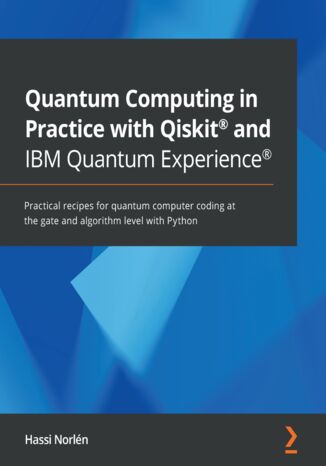
Hassi Norlen
IBM Quantum Experience® is a leading platform for programming quantum computers and implementing quantum solutions directly on the cloud. This book will help you get up to speed with programming quantum computers and provide solutions to the most common problems and challenges.You’ll start with a high-level overview of IBM Quantum Experience® and Qiskit®, where you will perform the installation while writing some basic quantum programs. This introduction puts less emphasis on the theoretical framework and more emphasis on recent developments such as Shor’s algorithm and Grover’s algorithm. Next, you’ll delve into Qiskit®, a quantum information science toolkit, and its constituent packages such as Terra, Aer, Ignis, and Aqua. You’ll cover these packages in detail, exploring their benefits and use cases. Later, you’ll discover various quantum gates that Qiskit® offers and even deconstruct a quantum program with their help, before going on to compare Noisy Intermediate-Scale Quantum (NISQ) and Universal Fault-Tolerant quantum computing using simulators and actual hardware. Finally, you’ll explore quantum algorithms and understand how they differ from classical algorithms, along with learning how to use pre-packaged algorithms in Qiskit® Aqua.By the end of this quantum computing book, you’ll be able to build and execute your own quantum programs using IBM Quantum Experience® and Qiskit® with Python.
Srinjoy Ganguly, Thomas Cambier
Quantum computing is a growing field, with many research projects focusing on programming quantum computers in the most efficient way possible. One of the biggest challenges faced with existing languages is that they work on low-level circuit model details and are not able to represent quantum programs accurately. Developed by researchers at ETH Zurich after analyzing languages including Q# and Qiskit, Silq is a high-level programming language that can be viewed as the C++ of quantum computers! Quantum Computing with Silq Programming helps you explore Silq and its intuitive and simple syntax to enable you to describe complex tasks with less code. This book will help you get to grips with the constructs of the Silq and show you how to write quantum programs with it. You’ll learn how to use Silq to program quantum algorithms to solve existing and complex tasks. Using quantum algorithms, you’ll also gain practical experience in useful applications such as quantum error correction, cryptography, and quantum machine learning. Finally, you’ll discover how to optimize the programming of quantum computers with the simple Silq.By the end of this Silq book, you’ll have mastered the features of Silq and be able to build efficient quantum applications independently.
Antoine Jacquier, Oleksiy Kondratyev, Alexander Lipton, Marcos...
As quantum machine learning (QML) continues to evolve, many professionals struggle to apply its powerful algorithms to real-world problems using noisy intermediate-scale quantum (NISQ) hardware. This book bridges that gap by focusing on hands-on QML applications tailored to NISQ systems, moving beyond the traditional textbook approaches that explore standard algorithms like Shor's and Grover's, which lie beyond current NISQ capabilities.You’ll get to grips with major QML algorithms that have been widely studied for their transformative potential in finance and learn hybrid quantum-classical computational protocols, the most effective way to leverage quantum and classical computing systems together.The authors, Antoine Jacquier, a distinguished researcher in quantum computing and stochastic analysis, and Oleksiy Kondratyev, a Quant of the Year awardee with over 20 years in quantitative finance, offer a hardware-agnostic perspective. They present a balanced view of both analog and digital quantum computers, delving into the fundamental characteristics of the algorithms while highlighting the practical limitations of today’s quantum hardware.By the end of this quantum book, you’ll have a deeper understanding of the significance of quantum computing in finance and the skills needed to apply QML to solve complex challenges, driving innovation in your work.
Jeremy Samuelson
Quantum computing is advancing rapidly, yet practical guidance for machine learning engineers remains limited. Most resources emphasize physics or theory, leaving practitioners unsure how quantum methods fit into real-world ML workflows. 'Quantum Machine Learning in Practice' addresses this gap with a hands-on, Python-first approach built for data scientists and ML engineers.Rather than presenting quantum models as replacements for classical ML, this book focuses on disciplined experimentation, hybrid architectures, and rigorous benchmarking. You will learn how classical data is encoded into quantum circuits, how variational models serve as classifiers and regressors, and how to evaluate quantum kernels and generative models responsibly. Concepts are grounded in simulator-based experiments using PennyLane, Qiskit, TensorFlow Quantum, and Cirq. Classical baselines are treated as first-class citizens throughout. You will design fair comparisons, analyze computational tradeoffs, and identify when classical ML remains superior. A complete end-to-end mini project reinforces transferable workflow skills, from problem framing through evaluation and interpretation.By the end, you will be able to design, implement, and critically assess hybrid quantum-classical machine learning systems with clarity and confidence.
Robert Loredo, Matt Broomhall
Prepare for a computing shift that will reshape security, optimization, and competitive advantage across every industry. This book helps you build a clear actionable approach to quantum readiness covering strategy, technology, talent, and risk in one framework.Written by Robert Loredo, Founder and CEO of Entangled Solutions Group, this book draws on 25 years of experience across IBM, academia, and enterprise innovation. As a former IBM Quantum Global Strategist, leader of the IBM Quantum Ambassador program, and holds over 275 patents, he translates this complex technology transition into decisions leaders can act on immediately.This book is organized as a complete strategic operating system for the quantum transition. Part One equips executives with investment frameworks, governance structures, and talent roadmaps. Part Two guides technical leaders through infrastructure assessment, workforce development, and quantum-era data strategy. Part Three delivers a security playbook covering post-quantum cryptography and adaptive architecture. Part Four maps the full quantum ecosystem and partnerships that will determine which institutions lead commercially.By the end, you’ll be able to define a quantum strategy, build the right capabilities, and lead your organization through quantum-driven change with clarity and control.
Quick Start Kubernetes. A Beginner's Guide to Container Orchestration in the Cloud - Third Edition
Nigel Poulton
This book is the backbone of modern cloud-native application deployment, but its complexity can be daunting for beginners. This book provides a practical and approachable guide to mastering Kubernetes, starting with fundamental concepts like microservices, orchestration, and cloud-native development. Readers will explore Kubernetes architecture, including control planes, worker nodes, and hosted solutions.Step-by-step instructions guide readers through setting up Kubernetes clusters on local and cloud platforms, containerizing applications, and pushing images to registries. Learn how to deploy containerized applications, connect them via services, and enable self-healing to ensure resilience.As you advance, discover how to scale applications dynamically, perform rolling updates for zero-downtime deployments, and troubleshoot real-world issues. The book concludes with resources for further learning, empowering readers to confidently manage Kubernetes environments in DevOps or cloud-native roles. Perfect for beginners, this hands-on guide simplifies Kubernetes for practical use.
Nigel Poulton
Begin with an introduction to Kubernetes, understanding its importance and architecture. These foundational chapters will set the stage for your exploration into Kubernetes' capabilities. As you progress, you'll learn how to set up Kubernetes and containerize an application, equipping you with practical skills for real-world application management.The course continues with a focus on running applications on Kubernetes, where you will delve into self-healing mechanisms, scaling, and performing rolling updates. Each chapter builds on the last, ensuring a seamless learning experience that integrates theoretical knowledge with hands-on practice. You'll understand how Kubernetes maintains application health and performance, providing a robust environment for modern applications.Concluding with advanced operational techniques and future steps, the course prepares you to leverage Kubernetes for continuous development and deployment. Whether you're scaling applications to meet demand or ensuring seamless updates with minimal downtime, you'll be equipped with the skills necessary for efficient and effective Kubernetes management. This course is your gateway to becoming proficient in one of the most essential tools in the DevOps toolkit.
Dan MacLean
The updated second edition of R Bioinformatics Cookbook takes a recipe-based approach to show you how to conduct practical research and analysis in computational biology with R. You’ll learn how to create a useful and modular R working environment, along with loading, cleaning, and analyzing data using the most up-to-date Bioconductor, ggplot2, and tidyverse tools.This book will walk you through the Bioconductor tools necessary for you to understand and carry out protocols in RNA-seq and ChIP-seq, phylogenetics, genomics, gene search, gene annotation, statistical analysis, and sequence analysis. As you advance, you'll find out how to use Quarto to create data-rich reports, presentations, and websites, as well as get a clear understanding of how machine learning techniques can be applied in the bioinformatics domain. The concluding chapters will help you develop proficiency in key skills, such as gene annotation analysis and functional programming in purrr and base R. Finally, you'll discover how to use the latest AI tools, including ChatGPT, to generate, edit, and understand R code and draft workflows for complex analyses.By the end of this book, you'll have gained a solid understanding of the skills and techniques needed to become a bioinformatics specialist and efficiently work with large and complex bioinformatics datasets.