
Programowanie
Skrypty powłoki systemu Linux. Zagadnienia zaawansowane. Wydanie II
Mokhtar Ebrahim, Andrew Mallett
Mimo że nowe wydania dystrybucji Linuksa są coraz łatwiejsze w obsłudze, a ważniejsze czynności administracyjne mogą być wykonywane za pomocą intuicyjnego interfejsu graficznego, wciąż nie można się obejść bez powłoki Bourne'a, znanej jako bash. Dobrze napisany skrypt powłoki pozwala na automatyzację nudnych obowiązków, umożliwia monitorowanie stanu systemu, optymalizację jego wydajności czy dostosowanie go do potrzeb. Warto też wypróbować ciekawą alternatywę dla tradycyjnych skryptów powłoki bash, czyli kod Pythona. Dzięki tej książce nauczysz się wszystkiego, co jest potrzebne do pisania profesjonalnych skryptów powłoki. Dowiesz się, czym są powłoki systemu Linux, dlaczego tak ważna jest powłoka bash i w jaki sposób edytuje się skrypty. Nauczysz się pracy na zmiennych, debugowania kodu i tworzenia skryptów interaktywnych. Będziesz korzystać z instrukcji warunkowych i pętli, a także z edytora vim, pakietu Visual Studio Code oraz edytora strumieniowego sed. Zapoznasz się z zasadami pisania funkcji, dzięki którym będziesz mógł wielokrotnie używać uniwersalnych fragmentów kodu. Ponadto zdobędziesz umiejętność przetwarzania danych tekstowych, zarówno za pomocą polecenia AWK, jak i wyrażeń regularnych. Na koniec przekonasz się, jak ciekawą alternatywą dla skryptów powłoki bash jest kod napisany w Pythonie! W tej książce między innymi: wyczerpujące wprowadzenie do tworzenia i debugowania skryptów powłoki składnia alternatywna i operacje arytmetyczne praca z blokami kodu i korzystanie z funkcji automatyzacja tworzenia hostów wirtualnych zaawansowane korzystanie z polecenia AWK skrypty do analizy plików dziennika i tworzenia raportów Opanuj sztukę pisania doskonałych skryptów powłoki!
Scott Meyers
Do opanowania języków C++11 i C++14 nie wystarcza zapoznanie się z wprowadzonymi w nich funkcjonalnościami (np. deklaracjami typu auto, semantyką operacji move, wyrażeniami lambda i obsługą współbieżności). Sztuką jest nauczenie się korzystania z tych funkcjonalności skutecznie tak, aby programy były poprawne, wydajne, łatwe w utrzymaniu i przenośne. Pomocna w tym będzie niniejsza książka, w której został opisany sposób tworzenia wspaniałego oprogramowania przy użyciu standardów C++11 i C++14 tj. nowoczesnego języka C++. Tematy: Zalety i wady inicjalizacji klamrowej, specyfikacji noexcept, technik doskonałego przekazywania argumentów oraz funkcji make służących do tworzenia wskaźników inteligentnych Związki między std::move, std::forward, odwołaniami do r-wartości i odwołaniami uniwersalnymi Techniki pisania czytelnych, poprawnych i skutecznych wyrażeń lambda Różnice między std::atomic a volatile, zalecane sposoby użycia każdej z tych deklaracji oraz ich związek z interfejsem API współbieżności w języku C++ Zmiany najlepszych rozwiązań znanych ze starego języka C++ (tj. C++98) wymagane podczas tworzenia oprogramowania w nowoczesnym języku C++ Książka Skuteczny nowoczesny C++ jest napisana zgodnie z wypróbowanym, opartym na wskazówkach i przykładach stylem wcześniejszych książek Scotta Meyersa, ale dotyczy całkowicie nowego materiału. Jest ważną pozycją dla każdego nowoczesnego twórcy oprogramowania w języku C++. Przed ponad 20 laty książki Scotta Meyersa z serii Effective C++ (Effective C++, More Effective C++ i Effective STL) wyznaczyły poziom odniesienia dla wskazówek dotyczących programowania w języku C++. Jego jasne, ujmujące wyjaśnienie skomplikowanego technicznego materiału przyniosły mu światową sławę, dzięki której stał się popularnym trenerem, konsultantem i prezenterem konferencyjnym. Scott Meyers zyskał tytuł doktora informatyki na uniwersytecie Brown. Kiedy już zapoznałem się z podstawami języka C++, sposobów programowania kodu produkcyjnego w tym języku nauczyłem się z serii książek Meyersa Effective C++. Książka Skuteczny nowoczesny C++ jest najważniejszym podręcznikiem dotyczącym istotnych wytycznych, stylów i idiomów przydatnych do skutecznego i dobrego stosowania nowoczesnego języka C++. Nie masz jej jeszcze? Kup ją. Teraz. Herb Sutter Przewodniczący komitetu standaryzacyjnego ISO C++ oraz architekt oprogramowania C++ w firmie Microsoft t
Skuteczny Rust. 35 konkretnych sposobów na ulepszenie kodu w języku Rust
David Drysdale
Popularność Rusta rośnie ze względu na jego cechy, takie jak bezpieczeństwo pamięci, bezpieczeństwo typów oraz bezpieczeństwo wątków. Jednak te same elementy sprawiają, że nauka Rusta stanowi wyzwanie nawet dla doświadczonych programistów. Ten praktyczny poradnik pomoże przejść do pisania idiomatycznego języka Rust. W efekcie będziemy mogli w pełni korzystać z systemu typów Rusta, gwarancji bezpieczeństwa oraz rozwijającego się ekosystemu. Adresatami tej książki są inżynierowie oprogramowania mający doświadczenie z istniejącym kompilowanym językiem lub borykający się z przekształceniem podstawowego zrozumienia składni Rusta w działające programy. Książka ta skupia się na koncepcyjnych różnicach między Rustem a innymi kompilowanymi językami i podaje konkretne zalecenia, łatwe do zastosowania przez programistów. Autor sprawi, że zamiast kiepskiego tłumaczenia z C++, wkrótce będziecie biegle pisać programy w języku Rust. Książka ta pomoże: - zrozumieć struktury podstawowego systemu typów Rusta; - nauczyć się idiomów Rusta służących do obsługi błędów, iteracji i innych elementów; - odkryć, jak działa ekosystem skrzynek Rusta; - wykorzystywać system typów Rusta do przedstawienia własnego projektu; - wygrywać pojedynki z funkcją borrow checker; - tworzyć rozbudowany projekt, w pełni wykorzystujący ekosystem narzędzi Rusta. David Drysdale jest inżynierem oprogramowania w firmie Google, który pracuje w języku Rust od 2019 roku, przede wszystkim w obszarze zabezpieczeń. Kierował pracami nad przepisaniem sprzętowego podsystemu kryptograficznego Androida na język Rust i jest autorem portu Rusta dla biblioteki kryptograficznej Tink. Pracował także w C/C++ i Go oraz nad tak zróżnicowanymi projektami jak jądro Linuksa i mobilne aplikacje wideokonferencji. "Skuteczny Rust to znakomity zbiór praktycznej wiedzy o języku, wykraczający poza podstawę. Porady zawarte w tej książce pomogą wam w osiągnięciu poziomu pewnego siebie i gruntownie wykształconego użytkownika Rusta". - Carol Nichols Współautorka książki The Rust Programming Language "Skuteczny Rust zagłębia się w większość zaleceń, które daję ludziom na temat sposobów ulepszania ich projektów. Jest to świetne źródło do podnoszenia swoich kwalifikacji w języku Rust". - Pietro Albini Były członek zespołu Rust Core
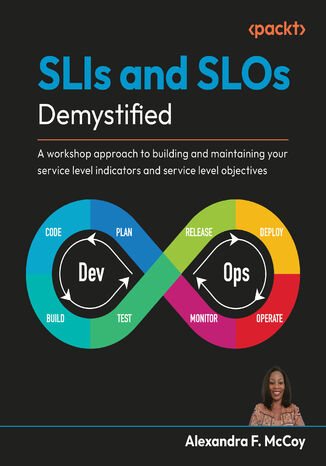
Alexandra F. McCoy
In today's digital landscape, ensuring service reliability is more than just a necessity—it’s a competitive advantage. SLIs and SLOs Demystified equips software engineers, SREs, and business leaders with the knowledge to build, measure, and manage service level indicators (SLIs) and service level objectives (SLOs) efficiently. Written by Alexandra F. McCoy—an experienced site reliability engineer with over a decade of experience in the cloud and technology industry—this book simplifies complex reliability concepts for engineers at all levels. Starting with a review of reliability engineering basics, Alexandra provides a step-by-step approach to defining impactful SLIs, facilitating productive SLO discussions, and integrating observability into your monitoring strategy. You'll also see how these principles apply to web applications, distributed systems, databases, and new features through real-world examples that can help you develop SLIs and SLOs for your specific environment. The book goes beyond implementation to explore the financial impact of reliability, alerting strategies, integration with incident management, and using error budgets for business decisions.By the end of this book, you’ll be able to drive operational excellence, minimize unplanned downtime, and optimize end user experiences with well-established reliability metrics.
Snowflake Cookbook. Techniques for building modern cloud data warehousing solutions
Hamid Mahmood Qureshi, Hammad Sharif
Snowflake is a unique cloud-based data warehousing platform built from scratch to perform data management on the cloud. This book introduces you to Snowflake's unique architecture, which places it at the forefront of cloud data warehouses.You'll explore the compute model available with Snowflake, and find out how Snowflake allows extensive scaling through the virtual warehouses. You will then learn how to configure a virtual warehouse for optimizing cost and performance. Moving on, you'll get to grips with the data ecosystem and discover how Snowflake integrates with other technologies for staging and loading data.As you progress through the chapters, you will leverage Snowflake's capabilities to process a series of SQL statements using tasks to build data pipelines and find out how you can create modern data solutions and pipelines designed to provide high performance and scalability. You will also get to grips with creating role hierarchies, adding custom roles, and setting default roles for users before covering advanced topics such as data sharing, cloning, and performance optimization.By the end of this Snowflake book, you will be well-versed in Snowflake's architecture for building modern analytical solutions and understand best practices for solving commonly faced problems using practical recipes.
SOA. Koncepcje, technologie i projektowanie
Thomas Erl
Czasy, kiedy użytkownicy otrzymywali zamknięte produkty, zapakowane w pudełko z nośnikiem i instrukcją, przemijają. Świat IT zmierza w kierunku SOA (ang. Service-Oriented Architecture). Producenci chcą nam sprzedawać wiele usług, które potrafią komunikować się między sobą i dostarczać użytkownikom wymierne korzyści. To podejście pozwala lepiej zarządzać procesem wytwarzania usługi, łatwiej wprowadzać zmiany i aktualizacje oraz elastyczniej rozliczać się z klientami. Od tej drogi nie ma już odwrotu - SOA to przyszłość branży IT! Ta książka to świetne źródło informacji na ten temat. W trakcie lektury poznasz podstawy i założenia tej architektury oraz dowiesz się, jakie narzędzia wykorzystać, żeby wytworzyć produkt spełniający zasady SOA. Książka ta jest bogata w analizy przypadków oraz przykłady z życia, które pozwolą Ci przekonać się, jak bardzo architektura ukierunkowana na usługi jest przydatna przy rozwiązywaniu codziennych problemów. SOA jest tworem żywym, który cały czas ewoluuje - wymaga to kontroli organizacji oraz ustalenia pewnych standardów, czyli określenia, jak takie usługi mają wyglądać. W trakcie lektury dowiesz się, kto sprawuje nad tym pieczę oraz jakie są kierunki rozwoju SOA. Książka ta będzie biblią każdego projektanta i dewelopera usług sieciowych. Nie możesz minąć jej obojętnie! Dzięki tej książce dowiesz się: jak SOA zmienia świat IT dlaczego warto wykorzystać SOA w Twoim projekcie jak projektować usługi sieciowe jak zapewnić bezpieczeństwo usługom w SOA Przekonaj się, jak SOA może zmienić Twój świat!
Rupert Anderson
This book is aimed at developers and technical testers who are looking for a quick way to take their SoapUI skills and understanding to the next level. Even if you are new to SoapUI but have basic Java skills and a reasonable grasp of RESTFul and Soap web services, then you should have no problem making use of this book.
Tyson Cadenhead
Socket.IO is a JavaScript library that provides you with the ability to implement real-time analytics, binary streaming, instant messaging, and document collaboration. It has two parts: a client-side library that runs in the browser, and a server-side library for node.js. Socket.IO is event-driven and primarily uses the WebSocket protocol that allows us to emit data bi-directionally from the server and the client. Socket.IO This book is a complete resource, covering topics from webSocket security to scaling the server-side of a Socket.IO application and everything in between.This book will provide real-world examples of how secure bi-directional, full-duplex connections that can be created using Socket.IO for different environments. It will also explain how the connection vulnerabilities can be resolved for large numbers of users and huge amounts of data/messages.By the end of the book, you will be a competent Socket.IO developer. With the help of the examples and real-world solutions,you will learn to create fast, scalable, and dynamic real-time apps by creating efficient messaging systems between the server side and the client side using Socket.IO.
Joseph Ingeno
The Software Architect’s Handbook is a comprehensive guide to help developers, architects, and senior programmers advance their career in the software architecture domain. This book takes you through all the important concepts, right from design principles to different considerations at various stages of your career in software architecture. The book begins by covering the fundamentals, benefits, and purpose of software architecture. You will discover how software architecture relates to an organization, followed by identifying its significant quality attributes. Once you have covered the basics, you will explore design patterns, best practices, and paradigms for efficient software development.The book discusses which factors you need to consider for performance and security enhancements. You will learn to write documentation for your architectures and make appropriate decisions when considering DevOps. In addition to this, you will explore how to design legacy applications before understanding how to create software architectures that evolve as the market, business requirements, frameworks, tools, and best practices change over time.By the end of this book, you will not only have studied software architecture concepts but also built the soft skills necessary to grow in this field.
Software Architecture and Design. The Practical Guide to Design Patterns
Rheinwerk Publishing, Inc, Kristian Köhler
The journey begins with foundational concepts, exploring the various programming paradigms, including structured, object-oriented, functional, and reactive programming. Early chapters dive deep into design patterns and software architecture, laying the groundwork for understanding core principles and concepts. As the reader progresses, they will grasp the significance of these patterns in creating efficient and scalable systems.The book unfolds by discussing key principles such as SOLID and clean code, providing tools to create maintainable software. It introduces essential patterns such as Factory, Strategy, and Singleton and explains their real-world applications in modern development environments. Each chapter is designed to build practical knowledge, empowering the reader with patterns that enhance system reliability and maintainability.The latter chapters of the book expand on distributed systems, with a focus on communication patterns between services, resilience, and managing state in cloud and microservice environments. By the end, readers will have developed a comprehensive understanding of software architecture, ready to apply design patterns in creating robust, scalable applications.
Gabriel Baptista, Francesco Abbruzzese
Software architecture is the practice of implementing structures and systems that streamline the software development process and improve the quality of an app. This fully revised and expanded third edition, featuring the latest features of .NET 6 and C# 10, enables you to acquire the key skills, knowledge, and best practices required to become an effective software architect.Software Architecture with C# 10 and .NET 6, Third Edition features new chapters that describe the importance of the software architect, microservices with ASP.NET Core, and analyzing the architectural aspects of the front-end in the applications, including the new approach of .NET MAUI. It also includes a new chapter focused on providing a short introduction to artificial intelligence and machine learning using ML.NET, and updated chapters on Azure Kubernetes Service, EF Core, and Blazor.You will begin by understanding how to transform user requirements into architectural needs and exploring the differences between functional and non-functional requirements. Next, you will explore how to choose a cloud solution for your infrastructure, taking into account the factors that will help you manage a cloud-based app successfully. Finally, you will analyze and implement software design patterns that will allow you to solve common development problems.By the end of this book, you will be able to build and deliver highly scalable enterprise-ready apps that meet your business requirements.
Gabriel Baptista, Francesco Abbruzzese
Designing enterprise software requires balancing scalability, resilience, security, and agility. This book helps developers and aspiring architects build production-ready applications using C# 14 and .NET 10.Written by Gabriel Baptista and Francesco Abbruzzese, this updated edition takes a practical approach to software architecture with real-world examples and case studies. You’ll learn how to design maintainable distributed systems, apply domain-driven design, and manage architectural decisions using tools such as GitHub Copilot and .NET Aspire.The book explores software architectural patterns with cloud-native microservices and SOA, along with CI/CD pipelines, DevSecOps automation, Kubernetes orchestration, and secure deployments. You’ll also build reusable frontend services and micro-frontends using Blazor and ASP.NET Core.By the end of this book, you’ll be able to architect scalable enterprise .NET applications with confidence.
Gabriel Baptista, Francesco Abbruzzese
Software architecture is the practice of implementing structures and systems that streamline the software development process and improve the quality of an app. This fully revised and expanded second edition, featuring the latest features of .NET 5 and C# 9, enables you to acquire the key skills, knowledge, and best practices required to become an effective software architect.This second edition features additional explanation of the principles of Software architecture, including new chapters on Azure Service Fabric, Kubernetes, and Blazor. It also includes more discussion on security, microservices, and DevOps, including GitHub deployments for the software development cycle.You will begin by understanding how to transform user requirements into architectural needs and exploring the differences between functional and non-functional requirements. Next, you will explore how to carefully choose a cloud solution for your infrastructure, along with the factors that will help you manage your app in a cloud-based environment.Finally, you will discover software design patterns and various software approaches that will allow you to solve common problems faced during development.By the end of this book, you will be able to build and deliver highly scalable enterprise-ready apps that meet your organization’s business requirements.
Adrian Ostrowski, Piotr Gaczkowski
Software architecture refers to the high-level design of complex applications. It is evolving just like the languages we use, but there are architectural concepts and patterns that you can learn to write high-performance apps in a high-level language without sacrificing readability and maintainability. If you're working with modern C++, this practical guide will help you put your knowledge to work and design distributed, large-scale apps. You'll start by getting up to speed with architectural concepts, including established patterns and rising trends, then move on to understanding what software architecture actually is and start exploring its components. Next, you'll discover the design concepts involved in application architecture and the patterns in software development, before going on to learn how to build, package, integrate, and deploy your components. In the concluding chapters, you'll explore different architectural qualities, such as maintainability, reusability, testability, performance, scalability, and security. Finally, you will get an overview of distributed systems, such as service-oriented architecture, microservices, and cloud-native, and understand how to apply them in application development.By the end of this book, you'll be able to build distributed services using modern C++ and associated tools to deliver solutions as per your clients' requirements.
Andrey Gavrilin, Adrian Ostrowski, Piotr Gaczkowski
Designing scalable and maintainable software with C++ requires more than language expertise—it demands strong architectural thinking. This practical guide equips you with the skills to design and build robust, distributed systems using modern C++.Starting with fundamental architectural principles and design philosophies, the book walks you through practical approaches to designing and deploying reliable systems. This edition contains significant updates across the book, including new chapters on observability, package management, and C++ modules to address real-world software challenges. You will explore software decomposition strategies, design and system patterns, fault tolerance, API management, and testability—all applied with C++.Additionally, the book covers modern CI/CD pipelines, cloud-native design, microservices, and modular development, helping developers navigate today's fast-evolving software landscape. With updated examples and a renewed emphasis on maintainable and observable architectures, this edition equips C++ professionals to architect modern systems. By the end of this book, you will be able to design, build, test, and deploy well-architected solutions using modern C++ and proven architectural techniques.*Email sign-up and proof of purchase required
Jason (Tsz Shun) Chow
Software Architecture with Kotlin explores the various styles of software architecture with a focus on using the Kotlin programming language. The author draws on their 20+ years of industry experience in developing large-scale enterprise distributed systems to help you grasp the principles, practices, and patterns that shape the architectural landscape of modern software systems.The book establishes a strong foundation in software architecture, explaining key concepts such as architectural qualities and principles, before teaching you how architectural decisions impact the quality of a system, such as scalability, reliability, and extendability. The chapters address modern architecture topics such as microservices, serverless, and event-driven architectures, providing insights into the challenges and trade-offs involved in adopting these architectural styles. You’ll also discover practical tools that’ll help you make informed decisions and mitigate risks. All architectural patterns in this book are demonstrated using Kotlin.By the end of this book, you’ll have gained practical expertise by using real-world examples, along with a solid understanding of Kotlin, to become a more proficient and impactful software architect.
Anand Balachandran Pillai
This book starts by explaining how Python fits into an application's architecture. As you move along, you will get to grips with architecturally significant demands and how to determine them. Later, you’ll gain a complete understanding of the different architectural quality requirements for building a product that satisfies business needs, such as maintainability/reusability, testability, scalability, performance, usability, and security.You will also use various techniques such as incorporating DevOps, continuous integration, and more to make your application robust. You will discover when and when not to use object orientation in your applications, and design scalable applications.The focus is on building the business logic based on the business process documentation, and understanding which frameworks to use and when to use them. The book also covers some important patterns that should be taken into account while solving design problems, as well as those in relatively new domains such as the Cloud.By the end of this book, you will have understood the ins and outs of Python so that you can make critical design decisions that not just live up to but also surpassyour clients’ expectations.
René Enríquez, Alberto Salazar
Spring 5 and its ecosystem can be used to build robust architectures effectively. Software architecture is the underlying piece that helps us accomplish our business goals whilst supporting the features that a product demands. This book explains in detail how to choose the right architecture and apply best practices during your software development cycle to avoid technical debt and support every business requirement. Choosing the right architecture model to support your business requirements is one of the key decisions you need to take when a new product is being created from scratch or is being refactored to support new business demands. This book gives you insights into the most common architectural models and guides you when and where they can be used. During this journey, you’ll see cutting-edge technologies surrounding the Spring products, and understand how to use agile techniques such as DevOps and continuous delivery to take your software to production effectively. By the end of this book, you’ll not only know the ins and outs of Spring, but also be able to make critical design decisions that surpass your clients’ expectations.
Wanderson Xesquevixos
Keep up with the fast-paced tech landscape with Software Architecture with Spring, your practical guide to making strategic architectural decisions that align seamlessly with your business objectives.Drawing from Wanderson's decades of experience, you'll journey through the complete software development lifecycle—from initial requirements gathering, through development and testing, to production deployment. You'll get hands-on with the evolution of an auction system, exploring its transformation through multiple architectural styles. You’ll discover how you can effectively transform a monolithic system into microservices using proven patterns and practices.As you progress, you’ll master advanced architectural paradigms such as Event-Driven Architecture, Filter-and-Pipeline Architecture, and Serverless Architecture.
Software Craftsman. Profesjonalizm, czysty kod i techniczna perfekcja
Sandro Mancuso
Coraz więcej mówi się o dobrych praktykach programistycznych, a mimo to wciąż zdarzają się przypadki wydania nieudanego produktu. Istnieje wiele przyczyn tego stanu rzeczy, np. postrzeganie procesu tworzenia oprogramowania jako linii produkcyjnej, brak właściwego zarządzania projektami, a także brak wypracowanych metod rekrutacji specjalistów i kierowania zespołem. Rozwój metodyk zwinnego programowania poprawił sytuację, lecz problem niskiej jakości samych projektów nie zniknął. Książka ta proponuje czysto rzemieślnicze podejście do pracy programisty. Idea ta, znana jako software craftsmanship, zakłada kompletną zmianę sposobu myślenia o programowaniu. Priorytetami stają się tu profesjonalizm, techniczna perfekcja i zadowolenie klienta, a osiąga się to, stosując pewne praktyki programistyczne, które zaczerpnięto m.in. z metodyk programowania ekstremalnego, zwinnego i odchudzonego. Autor, który jest współzałożycielem największej organizacji deweloperów-rzemieślników, dzieli się swoją wiedzą i doświadczeniem poprzez inspirujące przykłady i praktyczne rady. Okazuje się, że dzięki tej postawie zespół może osiągnąć najwyższy poziom technicznej doskonałości tworzonych projektów. Jest to książka o peofesjonalizmie programowania. Nie tylko o profesjonalizmie programisty, ale również o całej organizacji tworzenia oprogramowania Jest to książka o mistrzostwie w programowaniu. Na jej stronach autor przedstawia plan, srategię, podejścia i reguły, które mogą pomóc każdemu programiście, każdemu zespołowi programistów i każdej organizacji wytwarzającej oprogramowanie w wyrwaniu się z grzęzawiska mierności i we wkroczeniu na ścieżkę profesjonalizmu, jak również w zapewnieniu większej wydajności oraz poczucia dumy z tego, co się robi. / ze wstępu, Robert C. Martin Z książki dowiesz się: w jaki sposób podejście rzemieślnicze zwiększa jakość tworzonego oprogramowania i obsługi klientów, kiedy i jak mówić klientowi nie oraz jak proponować rozwiązania zastępcze, dlaczego dobrym deweloperom zdarza się pisać zły kod i jak można temu zapobiegać, jak być pragmatykiem — a nie dogmatykiem — w kwestii stosowania praktyk i narzędzi, w jaki sposób zatrudniać deweloperów-rzemieślników, jak nimi kierować, jak zaszczepić w zespole prawdziwy kult uczenia się, jak wprowadzać zmiany techniczne. Programuj profesjonalnie — liczą się pragmatyzm, perfekcja i cel! Sandro Mancuso programuje od dziecka. Pracował w wielu różnych firmach, również w korporacjach międzynarodowych i bankach inwestycyjnych. Jest zwolennikiem idei programowania mistrzowskiego i ekstremalnego. W październiku 2013 roku został współzałożycielem firmy konsultingowej o nazwie Codurance, w której za podstawę działania przyjęto zasady i wartości software craftsmanship. Mancuso jako cel zawodowy przyjął sobie podnoszenie jakości branży informatycznej przez pomaganie deweloperom w doskonaleniu rzemiosła programistycznego. Często bierze udział w konferencjach informatycznych w różnych miejscach świata.
Jamil Hallal
Understanding solution architecture is a must to build and integrate robust systems to meet your client’s needs. This makes it crucial for a professional .NET software engineer to learn the key skills of a .NET solution architect to create a unique digital journey and build solutions for a wide range of industries, from strategy and design to implementation. With this handbook, developers working with the .NET technology will be able to put their knowledge to work.The book takes a hands-on approach to help you become an effective solution architect. You’ll start by learning the principles of the software development life cycle (SDLC), the roles and responsibilities of a .NET solution architect, and what makes a great .NET solution architect. As you make progress through the chapters, you’ll understand the principles of solution architecture and how to design a solution, and explore designing layers and microservices. You'll complete your learning journey by uncovering modern design patterns and techniques for designing and building digital solutions.By the end of this book, you'll have learned how to architect your modern web solutions with ASP.NET Core and Microsoft Azure and be ready to automate your development life cycle with Azure DevOps.
Saurabh Shrivastava, Neelanjali Srivastav, Rajesh Sheth, Kamal...
Build a strong foundation in solution architecture and excel in your career with the Solutions Architect’s Handbook. Authored by seasoned AWS technology leaders Saurabh Shrivastav and Neelanjali Srivastav, this book goes beyond traditional certification guides, offering in-depth insights and advanced techniques to meet the specific needs and challenges of solutions architects today. This edition introduces exciting new features that keep you at the forefront of this evolving field. From large language models and generative AI to deep learning innovations, these cutting-edge advancements are shaping the future of technology. Key topics such as cloud-native architecture, data engineering architecture, cloud optimization, mainframe modernization, and building cost-efficient, secure architectures remain essential today. This book covers both emerging and foundational technologies, guiding you through solution architecture design with key principles and providing the knowledge you need to succeed as a Solutions Architect. It also sharpens your soft skills, providing career-accelerating techniques to stay ahead.By the end of this book, you will be able to harness cutting-edge technologies, apply practical insights from real-world scenarios, and enhance your solution architecture skills with the Solutions Architect's Handbook.
Saurabh Shrivastava, Neelanjali Srivastav
Becoming a solutions architect gives you the flexibility to work with cutting-edge technologies and define product strategies. This handbook takes you through the essential concepts, design principles and patterns, architectural considerations, and all the latest technology that you need to know to become a successful solutions architect.This book starts with a quick introduction to the fundamentals of solution architecture design principles and attributes that will assist you in understanding how solution architecture benefits software projects across enterprises. You'll learn what a cloud migration and application modernization framework looks like, and will use microservices, event-driven, cache-based, and serverless patterns to design robust architectures. You'll then explore the main pillars of architecture design, including performance, scalability, cost optimization, security, operational excellence, and DevOps. Additionally, you'll also learn advanced concepts relating to big data, machine learning, and the Internet of Things (IoT). Finally, you'll get to grips with the documentation of architecture design and the soft skills that are necessary to become a better solutions architect.By the end of this book, you'll have learned techniques to create an efficient architecture design that meets your business requirements.
Solutions Architect's Interview. Winning strategies and effective tactics for interview success
Saurabh Shrivastava, Neelanjali Srivastav, Dhiraj Thakur, Sanjeet...
The Solutions Architect role sits at the intersection of technology, business strategy, and communication. Excelling in it takes more than technical expertise—it demands architectural thinking, leadership, and problem-solving skills. This book guides you in achieving this balance, walking you through every stage of becoming a Solutions Architect.It begins by unpacking what the role truly involves and then progresses into the nuances of interview preparation across multiple domains. You’ll learn how to structure your responses to scenario-based questions, highlight both your technical proficiency and soft skills, and position yourself as a strategic problem solver. Each chapter offers practical exercises, frameworks, and real interview examples that help you build the confidence and insight to stand out. The final chapter guides you through your first 90 days as a new Solutions Architect, aligning with business goals, understanding organizational architecture, and building credibility.By the end of this book, you’ll have the technical, behavioral, and strategic foundation to ace your interviews and thrive in any Solutions Architect role.