
Programowanie
Gary Mak, Daniel Rubio, Josh Long
Najlepsze receptury na wykorzystanie Springa! Spring zadebiutował na rynku w 2004 roku, osiem lat po opublikowaniu pierwszej wersji języka Java i od tego czasu jest dynamicznie rozwijany. Dzięki licznym modułom pozwala on błyskawicznie tworzyć skomplikowane aplikacje i wyręcza programistów w trudzie ustawiania typowych konfiguracji. Jeżeli do tego dołożyć ogromną społecznoć i świetną dokumentację, to nie ma się co dziwić, że jest tak popularny! Jeżeli wykorzystujesz Springa w swojej codziennej pracy lub chcesz wypróbować jego możliwoci, to trafiłe na doskonałą książkę. Należy ona do cenionej wśród programistów serii Receptury. Znajdziesz w niej omówienie zarówno podstawowych zagadnień związanych ze Springiem, jak i tych zaawansowanych. Na samym początku poznasz kontener IoC (ang. Inversion of Control), nauczysz się tworzyć ziarna oraz wstrzykiwać je na różne sposoby. W kolejnych rozdziałach odkryjesz, jak korzystać z AspectJ, Spring WebFlow oraz Spring-WS. Ponadto zobaczysz, jak używać REST, testów jednostkowych i integracyjnych oraz ORM. Spring wspiera te i wiele innych obszarów codziennej pracy programisty. Książka ta jest doskonałym omówieniem Springa na podstawie przykładów jego zastosowań. Dzięki tej książce: stworzysz kontener IoC skonstruujesz ziarna i wstrzykniesz je poznasz dostępne moduły przygotujesz usługi sieciowe i skorzystasz z tych usług Wykorzystaj potencjał Springa i zoptymalizuj swoją pracę!
Badr Nasslahsen
With experienced hackers constantly targeting apps, properly securing them becomes challenging when you integrate this factor with legacy code, new technologies, and other frameworks. Written by a Lead Cloud and Security Architect as well as CISSP, this book helps you easily secure your Java apps with Spring Security, a trusted and highly customizable authentication and access control framework.The book shows you how to implement different authentication mechanisms and properly restrict access to your app. You’ll learn to integrate Spring Security with popular web frameworks like Thymeleaf and Microservice and Cloud services like Zookeeper and Eureka, along with architecting solutions that leverage its full power while staying loosely coupled. You’ll also see how Spring Security defends against session fixation, moves into concurrency control, and how you can use session management for administrative functions. This fourth edition aligns with Java 17/21 and Spring Security 6, covering advanced security scenarios for RESTful web services and microservices. This ensures you fully understand the issues surrounding stateless authentication and discover a concise approach to solving those issues.By the end of this book, you’ll be able to integrate Spring Security 6 with GraalVM native images seamlessly, from start to finish.
Mick Knutson, Robert Winch, Peter Mularien
Knowing that experienced hackers are itching to test your skills makes security one of the most difficult and high-pressured concerns of creating an application. The complexity of properly securing an application is compounded when you must also integrate this factor with existing code, new technologies, and other frameworks. Use this book to easily secure your Java application with the tried and trusted Spring Security framework, a powerful and highly customizable authentication and access-control framework.The book starts by integrating a variety of authentication mechanisms. It then demonstrates how to properly restrict access to your application. It also covers tips on integrating with some of the more popular web frameworks. An example of how Spring Security defends against session fixation, moves into concurrency control, and how you can utilize session management for administrative functions is also included.It concludes with advanced security scenarios for RESTful webservices and microservices, detailing the issues surrounding stateless authentication, and demonstrates a concise, step-by-step approach to solving those issues. And, by the end of the book, readers can rest assured that integrating version 4.2 of Spring Security will be a seamless endeavor from start to finish.
Rodrigo Santiago, Shalini Goyal
Software system design goes beyond just writing code—it requires a structured approach to translating real-world requirements into scalable, maintainable solutions. With Rodrigo Santiago’s hands-on mentoring style and Java Spring expertise, he makes system design accessible to developers at all levels.Spring System Design in Practice guides you through building robust software architectures with Spring. From breaking down complex business needs into actionable use cases to implementing services using Spring Boot, this book equips you with the tools and best practices needed for developing secure, high-performance applications. You'll explore inter-service communication, security, and aspect-oriented programming to streamline development. Covering microservices architecture, the book demonstrates how to create self-configuring, resilient, and event-driven services that integrate seamlessly into the cloud. Through hands-on experience, you'll apply best practices to enhance reliability and scalability while tackling complex challenges such as state management, resilience patterns, concurrency issues, and distributed transactions—including bottlenecks related to asynchronous and reactive programming.By the end of this book, you'll have the confidence to analyze system requirements and design well-structured, scalable architectures.
Craig Walls
Kompletne źródło informacji o Spring Framework! Spring Framework odmienił sposób konstruowania aplikacji w języku Java. Prawdopodobnie jest on najczęściej wybieranym narzędziem do tworzenia aplikacji, niezależnie od tego, czy są one internetowe, czy biurkowe. Czym zasłużył sobie na taką popularność? Niezwykle wygodna konfiguracja, ogromna ilość różnego rodzaju bibliotek, przemyślana architektura to tylko niektóre z jego atutów. Jeżeli do tego dodać ogromną społeczność, chętną do udzielania wszelkich porad, otrzymujemy wyjątkowe narzędzie do zadań specjalnych. Kolejne wydanie książki uwzględnia wszystkie zmiany wprowadzone w trzeciej wersji Spring Framework. A jest ich sporo. Dzięki nim praca z tym narzędziem stała się jeszcze prostsza. W trakcie lektury dowiesz się, jak zminimalizować użycie XML do konfiguracji, wstrzykiwać zależności oraz korzystać z potencjału programowania aspektowego. Ponadto znajdziesz tu komplet informacji na temat współpracy z bazami danych, a pojęcia takie, jak transakcje, JPA, JDBC przestaną być Ci obce. Twoją ciekawość powinien wzbudzić rozdział poświęcony bezpieczeństwu - dzięki Spring Security implementacja tego kluczowego elementu aplikacji staje się o niebo przyjaźniejsza. Książka ta jest skarbnicą informacji o Spring Framework, którą powinien zainteresować się każdy programista języka Java! Dzięki Spring Framework: zbudujesz lepszą architekturę Twojej aplikacji wykorzystasz potencjał aspektów i wstrzykiwania zależności zagwarantujesz bezpieczeństwo Twoim rozwiązaniom stworzysz zaawansowaną aplikację! Sprawdź, jak Spring Framework ułatwia życie!
Craig Walls
Kompendium wiedzy na temat Spring Framework! Spring jest odpowiedzią na problemy trapiące programistów tworzących oprogramowanie przy użyciu EJB 2.x. Dzień, w którym został udostępniony szerokiemu gronu użytkowników, był punktem zwrotnym w historii języka Java. Od tej pory życie deweloperów stało się prostsze, a tworzenie nawet skomplikowanych aplikacji — zdecydowanie przyjemniejsze. Od tamtego czasu Spring jest wciąż rozwijany i oferuje coraz lepsze narzędzia programistom na całym świecie. Kolejne wydanie tej książki, w całości poświęconej frameworkowi Spring (w wersji 4), zostało poprawione, zaktualizowane i uzupełnione o nowe informacje. W trakcie lektury przekonasz się, jakie nowości zostały wprowadzone w czwartej wersji Springa, oraz zaznajomisz się z zaawansowanymi metodami wiązania komponentów. Ponadto zdobędziesz doświadczenie w stosowaniu aspektów, zobaczysz, jak działają Spring MVC czy Spring WebFlow, oraz nauczysz się uzyskiwać dostęp do baz danych — zarówno SQL, jak i NoSQL. Osobny rozdział został poświęcony bezpieczeństwu aplikacji tworzonych z wykorzystaniem Springa. Spring Security to potężne narzędzie, które pozwoli Ci bezboleśnie wprowadzić zaawansowane mechanizmy bezpieczeństwa w Twoich programach. Na sam koniec poznasz techniki obsługi komunikatów oraz możliwości modułu Spring Boot. Książka ta jest doskonałą lekturą dla programistów chcących w pełni wykorzystać potencjał Springa! Dzięki tej książce: poznasz komponenty składające się na Spring Framework zabezpieczysz aplikację z pomocą Spring Security błyskawicznie uruchomisz projekt ze Spring Boot z łatwością skorzystasz z baz danych SQL i NoSQL wykorzystasz potencjał najnowszej wersji Springa Niemal 100 tysięcy programistów sięgnęło po tę książkę, by nauczyć się Springa! Jej lektura wymaga praktycznej znajomości języka Java. Poznaj potencjał Springa!
Craig Walls
Spring jest frameworkiem ułatwiającym tworzenie nowoczesnych aplikacji w Javie. To narzędzie, które dynamicznie się rozwija i z każdym nowym wydaniem zapewnia programistom kolejne, ekscytujące możliwości. Piąta wersja Springa okazała się krokiem milowym. Obecnie projektanci mogą tworzyć mikrousługi, korzystać z funkcji programowania reaktywnego i doskonalić budowanie aplikacji zgodnie z modelem MVC. Dzięki pełnej integracji Springa ze Spring Boot nawet najbardziej złożone projekty wymagają minimalnej ilości kodu konfiguracyjnego. W efekcie tworzone aplikacje internetowe są w większym stopniu skalowalne i efektywniejsze w wykorzystywaniu wątków. To kolejne, uzupełnione i zaktualizowane wydanie przewodnika po frameworku Spring. Książka jest napisana w zwięzłym, przejrzystym i jasnym stylu, dzięki czemu szybko zrozumiesz zasady pracy ze Springiem i zbudujesz nowoczesną aplikację internetową współpracującą z bazą danych. Pokazano tu techniki programowania reaktywnego, pisania mikrousług, wykrywania usług, wyjaśniono również pracę z API RESTful i zasady wdrażania aplikacji. Nauczysz się też stosować najlepsze praktyki programowania w Springu. Książka jest znakomitą pomocą dla programistów Javy, którzy dopiero zaczynają pracę z tym frameworkiem, a także dla tych, którzy chcą opanować nowe rozwiązania oferowane przez kolejne wersje ekosystemu Springa. W tej książce między innymi: solidne wprowadzenie do frameworków Spring i Spring Boot integracja aplikacji Springa z innymi aplikacjami programowanie reaktywne w tworzeniu aplikacji internetowych tworzenie mikrousług i praca ze Spring Cloud wdrażanie aplikacji w środowisku produkcyjnym i korzystanie ze Spring Boot Admin Nowoczesna aplikacja w Javie? Sprawdź Springa!
Willie Wheeler, Joshua White
Lektura obowiązkowa dla programistów Javy! Spring Framework zrewolucjonizował sposób wytwarzania aplikacji w języku Java. Rzeczy trudne do wykonania stały się łatwe, a te łatwe w zasadzie zaczęły robić się same. Od pierwszej wersji ten framework jest cały czas rozwijany, a obecna, trzecia wersja, jest prawdopodobnie najczęściej wybieranym narzędziem do tworzenia aplikacji. Co sprawiło, że Spring zyskał taką popularność? Ogrom możliwości, świetna architektura, duża społeczność oraz ciągły rozwój i wsparcie dla nowych technologii to jego główne atuty. W tej książce znajdziesz najlepsze techniki pracy ze Spring Framework w wersji 3. Przekonasz się, jak skutecznie wykorzystać potencjał Spring MVC. Dowiesz się, jak uwierzytelniać użytkowników, korzystać ze Spring Web Flow oraz budować usługi sieciowe. Ponadto przekonasz się, jak proste może być pisanie testów integracyjnych oraz korzystanie z narzędzi do mapowania obiektowo-relacyjnego. Książka ta jest doskonałą lekturą dla wszystkich programistów korzystających z języka Java. Z pewnością wzbogaci ona ich warsztat oraz umiejętności. Dzięki tej książce: poznasz szkielet Spring w wersji 3 wykorzystasz potencjał Spring MVC napiszesz skuteczne testy integracyjne stworzysz lepszą aplikację! Najlepsze techniki pracy ze Spring 3!
Spring. Wstęp do programowania aplikacji
Paweł Kamiński
Poznaj jeden z najpopularniejszych frameworków do projektowania aplikacji w Javie Spring należy do rodziny frameworków Javy. Jego pierwsza edycja ujrzała światło dzienne w 2002 roku i od razu spotkał się z pozytywnym odbiorem programistów. Spring Framework zyskał uznanie i popularność, ponieważ działa na zasadzie lekkiego szablonu, umożliwiającego dużą dowolność, jeśli chodzi o wybór modelu programowania. W efekcie za jego pomocą można tworzyć szerokie spektrum aplikacji - od niewielkich i prostych po potężne i bardzo skomplikowane. To książka skierowana do programistów - przede wszystkim tych, którzy tworzą aplikacje internetowe i chcieliby zacząć pracować ze Spring Frameworkiem. Teorię ograniczono w niej do niezbędnego minimum, a główny nacisk położono na aspekty praktyczne, by Czytelnik po lekturze mógł swobodnie sam stworzyć aplikację internetową. Z książki dowiesz się między innymi: Jak zbudowany jest Spring Framework Czym się różni klasyczny Spring od Spring Boota Które elementy frameworka trzeba poznać, by zacząć projektować aplikacje Jakiego rodzaju projekty można zrealizować przy użyciu Spring Frameworka
Sprint projektowy. Tworzenie produktów cyfrowych
Richard Banfield, C. Todd Lombardo, Trace Wax
Innowacyjność pomaga budować pozycję rynkową firmy. Słowo to nie oznacza jedynie oferowania nowych produktów i usług, ale dotyczy również organizacji działania. Niestety, realizacja zasady ciągłego doskonalenia się najczęściej napotyka opory. Ludzie nie lubią zmian sposobu myślenia i niechętnie akceptują konieczność innego podejścia. Tymczasem dla wielu podmiotów, szczególnie tych z nowoczesnych branż, umiejętność szybkiej zmiany jest kluczem do sukcesu. Niniejsza książka prezentuje koncepcję sprintów projektowania produktu. Jest to nowe podejście do projektowania produktów, szczególnie zalecane firmom stawiającym na innowacyjność. Dzięki tej metodzie nowe pomysły dużo szybciej i skuteczniej przeradzają się w prototyp, który z kolei staje się gotowym rozwiązaniem. Powstaje produkt o wysokiej jakości. Co istotne, realizacja zadań w sprintach przebiega szybciej i jest bardziej wydajna. W zależności od specyfiki przedsiębiorstwa sprint projektowania może trwać od kilku godzin do kilku dni, w wyjątkowych przypadkach — kilka tygodni. W książce omówiono: koncepcję sprintu projektowania, jego zalety i wady sposoby planowania sprintu etapy sprintu projektowania i ich przebieg sposoby wykorzystania wyników przeprowadzonego sprintu Sprintem do sukcesu!
Tyler Keating
SproutCore is a framework that exists to allow developers to deliver on the promise of the Web with more than just simple attractive demos, but with complex software and remarkable user experiences. SproutCore’s creators recognized early on that developing real web software requires the same software development tools and practices that have evolved over decades in the native software field and thus SproutCore brings these to the Web.SproutCore Web Application Development is more than just a guide to one of the largest and most powerful web application frameworks out there, it’s also a guide to writing genre defining web applications and solving the unique problems that the web platform creates. Containing the results of thousands of hours of software development experience, this book is invaluable for anyone already writing software for the Web or just starting out.SproutCore Web Application Development comprises of three sections. In the first section we introduce SproutCore and walk through a simple SproutCore application. From there, we look in detail at all of the main components of the framework before finally working through a rigorous real-world example from start to finish. Learning about SproutCore means learning about writing software for the Web. In this book, you will not only learn what sets SproutCore apart from other web libraries and frameworks, you will also learn about solving the difficult challenges that web development poses. We will look at all the components of an application and how to translate wireframes, mocks, and design descriptions into clean, efficient, and maintainable code using MVC, data adaptors, statecharts, and more. We will look at SproutCore’s powerful binding and observing and watch how changes propagate across our app effortlessly and magically with very little code.By the time you complete SproutCore Web Application Development, you’ll be ready to develop your own application that redefines what it means to be a web application.
Jun Shan, Haibin Li, Matt Goldwasser, Upom...
SQL remains one of the most essential tools for modern data analysis and mastering it can set you apart in a competitive data landscape. This book helps you go beyond basic query writing to develop a deep, practical understanding of how SQL powers real-world decision-making. SQL for Data Analytics, Fourth Edition, is for anyone who wants to go beyond basic SQL syntax and confidently analyze real-world data. Whether you're trying to make sense of production data for the first time or upgrading your analytics toolkit, this book gives you the skills to turn data into actionable outcomes. You'll start by creating and managing structured databases before advancing to data retrieval, transformation, and summarization. From there, you’ll take on more complex tasks such as window functions, statistical operations, and analyzing geospatial, time-series, and text data. With hands-on exercises, case studies, and detailed guidance throughout, this book prepares you to apply SQL in everyday business contexts, whether you're cleaning data, building dashboards, or presenting findings to stakeholders. By the end, you'll have a powerful SQL toolkit that translates directly to the work analysts do every day. *Email sign-up and proof of purchase required
Baya Dewald
Microsoft SQL Server is a relational database management system. As a database, it is a software product whose primary function is to store and retrieve data as requested by other software applications. SQL Server Analysis Services adds OLAP and data mining capabilities for SQL Server databases. OLAP (online analytical processing) is a technique for analyzing business data for effective business intelligence.This practical guide teaches you how to build business intelligence solutions using Microsoft’s core product – SQL Server Analysis Services. The book covers the traditional multi-dimensional model which has been around for over a decade as well as the tabular model introduced with SQL Server 2012.Starting with comparing MultiDimensional and tabular models – discussing the values and limitations of each, you will then cover the essential techniques for building dimensions and cubes. Following on from this, you will be introduced to more advanced topics, such as designing partitions and aggregations, implementing security, and synchronizing databases for solutions serving many users.The book also covers administrative material, such as database backups, server configuration options, and monitoring and tuning performance. We also provide a primer on MultiDimensional eXpressions (MDX) as well as Data Analysis expressions (DAX) languages.This book provides you with data cube development techniques, and also the ongoing monitoring and tuning for Analysis Services.
Joey D'Antoni, Louis Davidson, Allan Hirt ,...
Deploying SQL Server on Azure virtual machines allows you to work on full versions of SQL Server in the cloud without having to maintain on-premises hardware. The book begins by introducing you to the SQL portfolio in Azure and takes you through SQL Server IaaS scenarios, before explaining the factors that you need to consider while choosing an OS for SQL Server in Azure VMs. As you progress through the book, you'll explore different VM options and deployment choices for IaaS and understand platform availability, migration tools, and best practices in Azure. In later chapters, you'll learn how to configure storage to achieve optimized performance. Finally, you'll get to grips with the concept of Azure Hybrid Benefit and find out how you can use it to maximize the value of your existing on-premises SQL Server.By the end of this book, you'll be proficient in administering SQL Server on Microsoft Azure and leveraging the tools required for its deployment.
Rheinwerk Publishing, Inc, Kerem Koseoglu
This book starts with an introduction to the fundamentals of SQL and relational databases, including key concepts like tables, schemas, and data types. It provides a solid foundation for beginners, guiding readers through the setup process, including local database installation and SQL IDE configuration.As the book progresses, it dives into SQL operations, such as creating and manipulating databases, tables, and views using Data Definition Language (DDL). Readers will explore Data Manipulation Language (DML) to insert, update, and delete data, as well as learn about stored procedures, triggers, and automation techniques.The final sections focus on advanced topics like transaction control, data querying, and data control. Readers will gain in-depth knowledge of SQL queries, including complex operations such as joins, subqueries, and window functions. The book concludes with database security, user access control, and best practices for maintaining data integrity. By the end, readers will be equipped to apply SQL in real-world applications, ensuring efficient, secure, and optimized database management.
Startup, scaleup, klęska. 42 ścieżki rozwijania biznesu w duchu Lean i Agile
Jurgen Appelo
Zakładaniu startupu towarzyszą marzenia. By mogły się spełnić, firma musi się rozwinąć i pomyślnie przejść proces skalowania. O tym, że nie jest to łatwe, przekonało się już wielu przedsiębiorców. Aby się udało, trzeba umieć tworzyć i utrzymywać modele biznesowe, a także wiedzieć, kiedy i jak się z nich wycofać. Każdy chce skalować swoją firmę, ale niekiedy deskalowanie jest najlepszym rozwiązaniem. Cóż więc zrobić? Poznać odpowiednie narzędzia i dowiedzieć się, kiedy i jak z nich skorzystać. Ta książka zawiera bezcenne rady dla każdego, kto chce wprowadzić na rynek nowy produkt czy usługę. Pokazuje, jak liderzy tworzą wizję innowacyjnego produktu i przedstawiają oczekiwane korzyści dla użytkowników. Opisano tu różne opcje finansowania, zasady budowania zespołu pracowników, a także problemy związane z wprowadzaniem produktu na rynek. Narzędzia i wskazówki, które tu znajdziesz, mają przyspieszać rozwój biznesu działającego w nurcie Lean i Agile. Odnoszą się one do takich tematów jak praca z zespołem rozproszonym, optymalizacja przepływu pracy czy mapy podróży użytkownika. W książce: jaki jest naturalny cykl życia firm i jak nim zwinnie zarządzać jak i po co tworzyć biznesowe patchworki, koła wartości i protopersony co to jest wir innowacyjności i co ma wspólnego refleksja z usprawnieniami które wskaźniki są przydatne przy kierowaniu biznesu na ścieżkę rozwoju lejki rekrutacji, testy behawioralne i zarządzanie talentami jak przygotować startup na skalowanie Zakładasz startup? Pilnuj, by tego nie schrzanić!
Statystyka praktyczna w data science. 50 kluczowych zagadnień w językach R i Python. Wydanie II
Peter Bruce, Andrew Bruce, Peter Gedeck
Metody statystyczne są kluczowym narzędziem w data science, mimo to niewielu analityków danych zdobyło wykształcenie w ich zakresie. Może im to utrudniać uzyskiwanie dobrych efektów. Zrozumienie praktycznych zasad statystyki okazuje się ważne również dla programistów R i Pythona, którzy tworzą rozwiązania dla data science. Kursy podstaw statystyki rzadko jednak uwzględniają tę perspektywę, a większość podręczników do statystyki w ogóle nie zajmuje się narzędziami wywodzącymi się z informatyki. To drugie wydanie popularnego podręcznika statystyki przeznaczonego dla analityków danych. Uzupełniono je o obszerne przykłady w Pythonie oraz wyjaśnienie, jak stosować poszczególne metody statystyczne w problemach data science, a także jak ich nie używać. Skoncentrowano się też na tych zagadnieniach statystyki, które odgrywają istotną rolę w data science. Wyjaśniono, które koncepcje są ważne i przydatne z tej perspektywy, a które mniej istotne i dlaczego. Co ważne, poszczególne koncepcje i zagadnienia praktyczne przedstawiono w sposób przyswajalny i zrozumiały również dla osób nienawykłych do posługiwania się statystyką na co dzień. W książce między innymi: analiza eksploracyjna we wstępnym badaniu danych próby losowe a jakość dużych zbiorów danych podstawy planowania eksperymentów regresja w szacowaniu wyników i wykrywaniu anomalii statystyczne uczenie maszynowe uczenie nienadzorowane a znaczenie danych niesklasyfikowanych Statystyka: klasyczne narzędzia w najnowszych technologiach!
Sterowanie programowalne. Od mikrokontrolera do sterownika PLC
Witold Krieser
Urządzenia elektryczne pod Twoją kontrolą Sterowanie jest procesem, w którym sygnały wejściowe odpowiednio oddziaływują na wyjścia – zgodnie z regułami sterowania, czyli odpowiednimi algorytmami. Owe algorytmy można realizować na wiele różnych sposobów, m.in. przez bramki logiczne i układy mikrokontrolerów, z czym wiąże się pojęcie sterowników swobodnie programowalnych PLC. Na nich właśnie skupia się autor niniejszej książki. Poradnik zapozna Cię m.in. z podstawami programowania w języku LD. Podpowie też kilka ciekawych projektów programów w tym języku. Znajdziesz tu ogólny opis technik sterowania – w szczególności sterowania programowalnego. Przydać może Ci się także zawarta w książce dokumentacja programów na sterowniki PLC w języku LD, stanowiąca listę przyporządkowań i schemat podłączeń elektrycznych do sterownika. UWAGA – ta książka stanowi świetne uzupełnienie wiedzy dla uczniów kształcących się w zawodach elektryk, technik elektryk, mechatronik, technik mechatronik i technik automatyk!
Brian O'Neill
A blueprints book with 10 different projects built in 10 different chapters which demonstrate the various use cases of storm for both beginner and intermediate users, grounded in real-world example applications. Although the book focuses primarily on Java development with Storm, the patterns are more broadly applicable and the tips, techniques, and approaches described in the book apply to architects, developers, and operations. Additionally, the book should provoke and inspire applications of distributed computing to other industries and domains. Hadoop enthusiasts will also find this book a good introduction to Storm, providing a potential migration path from batch processing to the world of real-time analytics.
Anindita Basak, Krishnaswamy Venkataraman, Ryan Murphy, Manpreet...
Microsoft Azure is a very popular cloud computing service used by many organizations around the world. Its latest analytics offering, Stream Analytics, allows you to process and get actionable insights from different kinds of data in real-time. This book is your guide to understanding the basics of how Azure Stream Analytics works, and building your own analytics solution using its capabilities. You will start with understanding what Stream Analytics is, and why it is a popular choice for getting real-time insights from data. Then, you will be introduced to Azure Stream Analytics, and see how you can use the tools and functions in Azure to develop your own Streaming Analytics. Over the course of the book, you will be given comparative analytic guidance on using Azure Streaming with other Microsoft Data Platform resources such as Big Data Lambda Architecture integration for real time data analysis and differences of scenarios for architecture designing with Azure HDInsight Hadoop clusters with Storm or Stream Analytics. The book also shows you how you can manage, monitor, and scale your solution for optimal performance.By the end of this book, you will be well-versed in using Azure Stream Analytics to develop an efficient analytics solution that can work with any type of data.
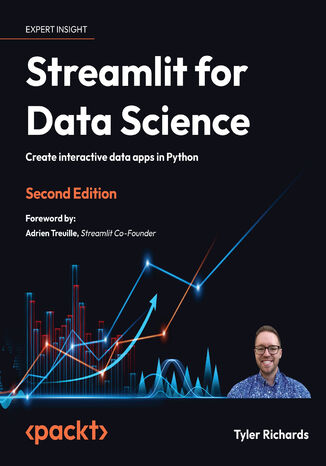
Streamlit for Data Science. Create interactive data apps in Python - Second Edition
Tyler Richards
If you work with data in Python and are looking to create data apps that showcase ML models and make beautiful interactive visualizations, then this is the ideal book for you. Streamlit for Data Science, Second Edition, shows you how to create and deploy data apps quickly, all within Python. This helps you create prototypes in hours instead of days!Written by a prolific Streamlit user and senior data scientist at Snowflake, this fully updated second edition builds on the practical nature of the previous edition with exciting updates, including connecting Streamlit to data warehouses like Snowflake, integrating Hugging Face and OpenAI models into your apps, and connecting and building apps on top of Streamlit databases. Plus, there is a totally updated code repository on GitHub to help you practice your newfound skills.You'll start your journey with the fundamentals of Streamlit and gradually build on this foundation by working with machine learning models and producing high-quality interactive apps. The practical examples of both personal data projects and work-related data-focused web applications will help you get to grips with more challenging topics such as Streamlit Components, beautifying your apps, and quick deployment.By the end of this book, you'll be able to create dynamic web apps in Streamlit quickly and effortlessly.
Struktury danych i algorytmy w języku C#. Projektowanie efektywnych aplikacji
Marcin Jamro
C# jest nowoczesnym i elastycznym językiem programowania. Aby w pełni skorzystać z jego zalet, trzeba płynnie posługiwać się dostępnymi w nim strukturami danych i algorytmami, pozwalają one bowiem na efektywnie organizowanie danych i mają znaczący wpływ na wydajność aplikacji. Z punktu widzenia programisty kluczowe jest ich właściwe zaimplementowanie: wybór właściwej struktury danych i związanego z nią algorytmu stanowi o jakości tworzonego kodu. Na przykład w celu wykonywania wysokowydajnych operacji na zbiorach warto użyć zbioru haszowanego. Inne konstrukcje umożliwiają rozwiązywanie kolejnych problemów. Dzięki tej książce nauczysz się używania struktur danych i implementacji najważniejszych algorytmów w języku C#. Najpierw zapoznasz się z najprostszymi strukturami danych o swobodnym dostępie - z tablicami oraz listami. Wyjaśniono tu również działanie struktur danych o dostępie sekwencyjnym, opartych na stosach i kolejkach. Przedstawiono zastosowanie słowników, dzięki którym można mapować klucze na wartości i prowadzić szybkie wyszukiwanie. Przystępnie opisano korzystanie z najbardziej zaawansowanych konstrukcji, takich jak drzewo binarne, binarne drzewo poszukiwań, drzewo samorównoważące się i kopiec. W końcowej części książki znajdziesz ciekawą analizę stosowania grafów i związanych z nimi algorytmów, takich jak przeszukiwanie grafu, minimalne drzewo rozpinające, kolorowanie węzłów oraz znajdowanie najkrótszej ścieżki. Najciekawsze zagadnienia ujęte w książce: różne typy danych w C#: wartościowe i referencyjne tablice i listy oraz algorytmy sortowania operacje na zbiorach oraz wbudowany typ HashSet struktury drzewiaste i kopce: binarne, dwumianowe oraz Fibonacciego algorytmy oparte na grafach, w tym algorytm Dijkstry C#. Liczy się algorytm i odpowiednia struktura danych!
Marcin Jamro
Projektowanie aplikacji jest wymagającym zadaniem, zwłaszcza jeśli trzeba rozwiązywać złożone problemy. W takich przypadkach należy mieć na uwadze również wydajność kodu, aby program działał płynnie na urządzeniach o ograniczonych zasobach. Takie zadania bywają naprawdę trudne i wymagają wiedzy, w tym dotyczącej struktur danych i algorytmów. Tę praktyczną książkę docenią programiści C#. Zaczniesz od zapoznania się z zasadami działania algorytmów, aby później przejść do różnych struktur danych: tablic, list, stosów, kolejek, słowników i zbiorów. Poszczególne przykłady zostały zilustrowane fragmentami kodu i rysunkami. Opanujesz także sortowanie tablic przy użyciu rozmaitych algorytmów, co solidnie ugruntuje Twoje umiejętności. Następnie poznasz bardziej złożone struktury danych i algorytmy służące do różnych zadań, jak wyznaczanie najkrótszej ścieżki w grafie czy rozwiązywanie łamigłówek. W ten sposób nauczysz się budować w języku C# komponenty algorytmiczne, które bez problemu zastosujesz w rozmaitych aplikacjach, również internetowych i na platformy mobilne. Z tą książką nauczysz się: podstaw algorytmów i ich klasyfikacji przechowywać dane w ustrukturyzowany sposób budować aplikacje wzbogacone o stosy, kolejki, tablice z haszowaniem, słowniki i zbiory tworzyć wydajne aplikacje z użyciem algorytmów związanych z drzewami podnosić wydajność swoich rozwiązań przy użyciu grafów implementować algorytmy pozwalające rozwiązywać łamigłówki i generować fraktale Kilkusetkrotne zwiększenie wydajności kodu na wyciągnięcie ręki!
Struktury danych i algorytmy w języku Java. Przewodnik dla początkujących
James Cutajar
Aby aplikacje mogły spełniać oczekiwania dotyczące wydajności i szybkości działania, programista musi orientować się w typowych problemach z wykonywaniem kodu i wiedzieć, które techniki sprawdzą się w danej sytuacji. W tym celu powinien biegle posługiwać się algorytmami i strukturami danych. Wiedza ta umożliwia rozpoznawanie typowych zagrożeń i wybór najlepszych rozwiązań. Warto pamiętać, że w przypadku większości codziennych problemów z kodem istnieją już wypróbowane rozwiązania. Znajomość tych zagadnień jest niezwykle ważna dla każdego inżyniera oprogramowania. To książka przeznaczona dla programistów, którzy chcą w praktyczny sposób posługiwać się popularnymi algorytmami i strukturami danych, zrozumieć ich działanie i skuteczniej poprawiać wydajność swojego kodu w Javie. Przedstawiono tu narzędzia przydatne w pracy z algorytmami i w tworzeniu efektywnych aplikacji. Opisano praktyczne aspekty złożoności algorytmów. Omówiono algorytmy sortowania oraz inne popularne wzorce programowania, a także takie struktury danych jak drzewa binarne, tablice z haszowaniem i grafy. Następnie zaprezentowano koncepcje bardziej zaawansowane, wśród nich paradygmaty projektowania algorytmów i teorię grafów. W tej książce między innymi: definiowanie algorytmu i złożoność algorytmiczna struktury danych i ich implementacje algorytmy sortowania i wyszukiwania wzorca w tekście paradygmaty projektowania algorytmów grafy i sposoby ich reprezentacji w programach komputerowych grafy jako moduły do budowy złożonych algorytmów Algorytm i struktura danych: tak działa optymalny kod!