
Programowanie
Niezależnie czy dopiero rozpoczynacie swoją przygodę z programowaniem, czy jesteście już uznanymi na rynku profesjonalistami, to w kategorii Programowanie na pewno znajdziecie podręczniki, które pomogą Wam w przebiegu pracy, czy też w nauce podstaw programowania.
W książkach z tego działu zawarta jest wiedza zarówno związana z czysto technicznymi sprawami typu składnia języków, ale także z umiejętnościami bardziej "miękkimi" jak obsługa i wykorzystanie pełnych możliwości środowisk programistycznych, czy też projektowanie oprogramowania lub metody numeryczne czy oraz struktury danych.
Vaughn Vernon
DDD w pigułce Modelowanie oprogramowania jest kojarzone z pojęciem programowania dziedzinowego, w skrócie zwanego DDD. Jest to dość nowatorskie podejście do tworzenia architektury oprogramowania, a jego największą zaletą jest wysoka pewność uzyskiwania bardzo dobrych rezultatów. Programiści często błyskawicznie dostrzegają zalety DDD i korzyści płynące ze stosowania odpowiednich narzędzi, stąd technika ta cieszy się coraz większym uznaniem. Dopiero jednak pełne zrozumienie zasad stosowania wzorców projektowych DDD przez wszystkich zaangażowanych w projekt pozwala na osiągnięcie imponujących wyników przy projektowaniu skomplikowanych systemów oprogramowania. Ten zwięzły i czytelnie napisany podręcznik jest przeznaczony dla programistów, ekspertów dziedzinowych, menedżerów, analityków biznesowych, architektów informacji i testerów. Koncentruje się na praktycznej wiedzy niezbędnej do uzyskania pożądanych rezultatów. Wyjaśniono, jak segregować modele dziedzin za pomocą wzorca kontekstu ograniczonego, jak rozwinąć język wszechobecny, a także w jaki sposób zintegrować wiele kontekstów ograniczonych poprzez wykorzystanie relacji zespołowych i mechanizmów technicznych. Co najważniejsze, dowiesz się, jak podejście DDD działa w rzeczywistości i co zrobić, aby jak najszybciej cieszyć się jego zaletami. W książce przedstawiono następujące zagadnienia: wprowadzenie do DDD i zalety tego podejścia do projektowania projektowanie strategiczne DDD integrowanie istniejących systemów w ramach tworzenia nowych aplikacji modelowanie taktyczne - agregaty i zdarzenia dziedziny narzędzia do zarządzania projektami i przyśpieszania prac Narzędzia DDD - ciesz się udanym wdrożeniem!
Debugging Teams. Przez współpracę do lepszej produktywności
Brian W. Fitzpatrick, Ben Collins-Sussman
Debugging Teams. Przez współpracę do lepszej produktywności Programiści i inżynierowie oprogramowania spędzają mnóstwo czasu na zgłębianiu tajników algorytmów, kodu czy technik budowy aplikacji. Bardzo mało uwagi poświęcają jednak takim zagadnieniom, jak komunikacja, skuteczna praca w zespole czy prowadzenie wspólnych projektów. Tymczasem programowanie jest jednym z zadań, które realizuje się w grupie. Oznacza to, że sposób pracy zespołu ma bezpośredni i znaczący wpływ na produktywność i zadowolenie jego członków. Zaniedbanie tej kwestii stało się przyczyną niepowodzenia wielu obiecujących projektów. Niniejsza książka, choć pozornie adresowana do liderów zespołów programistów, tak naprawdę przyda się każdemu, kto bierze udział w dowolnym twórczym grupowym przedsięwzięciu: począwszy od studenckiego klubu, na korporacji architektów skończywszy. Znalazły się tu bardzo praktyczne wskazówki dotyczące efektywnego kierowania zespołem, poruszania się w ramach organizacji oraz budowania zdrowych relacji z użytkownikami. Nie zabrakło porad dotyczących różnych sposobów komunikowania się i skutecznego wpływania na drugiego człowieka, a także metod radzenia sobie z trudnymi ludźmi. Jest to znakomita lektura dla każdego twórczego człowieka! W tej książce: wzorce komunikacyjne a kultura zespołu przywództwo: wzorce i antywzorce skuteczne strategie współpracy z innymi zespołami w ramach organizacji identyfikacja i zażegnywanie zagrożeń związanych z komunikacją zarządzanie opinią publiczną Mniej czasu na kłótnie, więcej na współpracę! Brian Fitzpatrick przez kilka lat prowadził duże projekty inżynieryjne dla firmy Google, takie jak Data Liberation Front i Transparency Engineering. Przed przejściem do Google Fitzpatrick pracował m.in. w Apple i CollabNet. Jest autorem wielu artykułów. Mieszka w Chicago. Ben Collins-Sussman tworzył system kontroli wersji Subversion. Od lat pracuje dla firmy Google, zainicjował projekt Google Code, zajmował się technologią wyświetlania reklam oraz infrastrukturą wyszukiwarki. W wolnych chwilach gra na banjo i komponuje musicale. Mieszka w Chicago z żoną, dziećmi i kotami.
![Deciphering Object-Oriented Programming with C++ [WARNING: NOT FOR USE IN OTHER MATERIAL/SEE CONTRACT]. A practical, in-depth guide to implementing object-oriented design principles to create robust code](https://static01.helion.com.pl/global/okladki/326x466/e_39y5.jpg)
Dorothy R. Kirk
Even though object-oriented software design enables more easily maintainable code, companies choose C++ as an OO language for its speed. Object-oriented programming in C++ is not automatic – it is crucial to understand OO concepts and how they map to both C++ language features and OOP techniques. Distinguishing your code by utilizing well-tested, creative solutions, which can be found in popular design patterns, is crucial in today’s marketplace. This book will help you to harness OOP in C++ to write better code.Starting with the essential C++ features, which serve as building blocks for the key chapters, this book focuses on explaining fundamental object-oriented concepts and shows you how to implement them in C++. With the help of practical code examples and diagrams, you’ll learn how and why things work. The book’s coverage furthers your C++ repertoire by including templates, exceptions, operator overloading, STL, and OO component testing. You’ll discover popular design patterns with in-depth examples and understand how to use them as effective programming solutions to solve recurring OOP problems.By the end of this book, you’ll be able to employ essential and advanced OOP concepts to create enduring and robust software.
Cuantum Technologies LLC
Dive into the world of deep learning with this comprehensive guide that bridges theory and practice. From foundational neural networks to advanced architectures like CNNs, RNNs, and Transformers, this book equips you with the tools to build, train, and optimize AI models using TensorFlow, Keras, and PyTorch. Clear explanations of key concepts such as gradient descent, loss functions, and backpropagation are combined with hands-on exercises to ensure practical understanding.Explore cutting-edge AI frameworks, including generative adversarial networks (GANs) and autoencoders, while mastering real-world applications like image classification, text generation, and natural language processing. Detailed chapters cover transfer learning, fine-tuning pretrained models, and deployment strategies for cloud and edge computing. Practical exercises and projects further solidify your skills as you implement AI solutions for diverse challenges.Whether you're deploying AI models on cloud platforms like AWS or optimizing them for edge devices with TensorFlow Lite, this book provides step-by-step guidance. Designed for developers, AI enthusiasts, and data scientists, it balances theoretical depth with actionable insights, making it the ultimate resource for mastering modern deep learning frameworks and advancing your career in AI
Ahmed Menshawy
Deep learning is a popular subset of machine learning, and it allows you to build complex models that are faster and give more accurate predictions. This book is your companion to take your first steps into the world of deep learning, with hands-on examples to boost your understanding of the topic.This book starts with a quick overview of the essential concepts of data science and machine learning which are required to get started with deep learning. It introduces you to Tensorflow, the most widely used machine learning library for training deep learning models. You will then work on your first deep learning problem by training a deep feed-forward neural network for digit classification, and move on to tackle other real-world problems in computer vision, language processing, sentiment analysis, and more. Advanced deep learning models such as generative adversarial networks and their applications are also covered in this book.By the end of this book, you will have a solid understanding of all the essential concepts in deep learning. With the help of the examples and code provided in this book, you will be equipped to train your own deep learning models with more confidence.
Dr. Pablo Rivas
With information on the web exponentially increasing, it has become more difficult than ever to navigate through everything to find reliable content that will help you get started with deep learning. This book is designed to help you if you're a beginner looking to work on deep learning and build deep learning models from scratch, and you already have the basic mathematical and programming knowledge required to get started.The book begins with a basic overview of machine learning, guiding you through setting up popular Python frameworks. You will also understand how to prepare data by cleaning and preprocessing it for deep learning, and gradually go on to explore neural networks. A dedicated section will give you insights into the working of neural networks by helping you get hands-on with training single and multiple layers of neurons. Later, you will cover popular neural network architectures such as CNNs, RNNs, AEs, VAEs, and GANs with the help of simple examples, and learn how to build models from scratch. At the end of each chapter, you will find a question and answer section to help you test what you've learned through the course of the book.By the end of this book, you'll be well-versed with deep learning concepts and have the knowledge you need to use specific algorithms with various tools for different tasks.
Karthiek Reddy Bokka, Shubhangi Hora , Tanuj...
Applying deep learning approaches to various NLP tasks can take your computational algorithms to a completely new level in terms of speed and accuracy. Deep Learning for Natural Language Processing starts by highlighting the basic building blocks of the natural language processing domain.The book goes on to introduce the problems that you can solve using state-of-the-art neural network models. After this, delving into the various neural network architectures and their specific areas of application will help you to understand how to select the best model to suit your needs. As you advance through this deep learning book, you’ll study convolutional, recurrent, and recursive neural networks, in addition to covering long short-term memory networks (LSTM). Understanding these networks will help you to implement their models using Keras. In later chapters, you will be able to develop a trigger word detection application using NLP techniques such as attention model and beam search.By the end of this book, you will not only have sound knowledge of natural language processing, but also be able to select the best text preprocessing and neural network models to solve a number of NLP issues.
David Foster
Techniki uczenia głębokiego rozwijają się w imponującym tempie, a sieci neuronowe znajdują zastosowanie w przeróżnych branżach. Coraz częściej komputer wykonuje zadania, które do niedawna były zarezerwowane dla człowieka. Dobrym przykładem jest tworzenie dzieł sztuki: ostatnie postępy w dziedzinie modelowania generatywnego sprawiają, że maszyny tworzą oryginalne obrazy w określonym stylu, piszą spójne akapity tekstu, komponują przyjemną w odbiorze muzykę i generują prawdopodobne scenariusze zdarzeń. Ta "generatywna rewolucja" już się zaczęła, a jej efekty przekraczają najśmielsze wyobrażenia. Ta książka jest praktycznym przewodnikiem przeznaczonym dla inżynierów uczenia maszynowego i analityków danych. W jasny i przystępny sposób omówiono w niej zasadnicze zagadnienia teorii modelowania generatywnego, a następnie zaprezentowano techniki stosowane do budowy modeli generatywnych, włącznie z ogólnym opisem uczenia głębokiego, wariacyjnych autoenkoderów i generatywnych sieci antagonistycznych (GAN). Na tej podstawie - z wykorzystaniem biblioteki Keras - pokazano wewnętrzne funkcjonowanie każdej z tych technik, łącznie z najbardziej nowatorskimi architekturami. Opisano krok po kroku sposoby rozwiązywania takich twórczych zadań jak malowanie, pisanie i komponowanie muzyki, a także zastosowania modelowania generatywnego do optymalizacji strategii grania w gry (modele World). W książce między innymi: działanie autoenkoderów wariacyjnych tworzenie sieci GAN, w tym CycleGAN i MuseGAN rekurencyjne modele generatywne do tworzenia tekstu oraz mechanizmy uwagi modele generatywne w środowiskach uczenia przez wzmacnianie architektura Transformer (BERT, GPT-2) oraz modele generowania obrazu Czy potrafisz stworzyć... twórcę?
Deep Learning. Praca z językiem Python i biblioteką Keras
Francois Chollet
W skrócie uczenie maszynowe polega na wyodrębnianiu informacji z surowych danych i budowie modelu, który służy do przetwarzania kolejnych surowych danych. Technologia ta od kilku lat intensywnie się rozwija, a w miarę wzrostu jej możliwości rosną również zainteresowanie i oczekiwania architektów i użytkowników. Niektórzy widzą w głębokim uczeniu poważne zagrożenie, jednak obietnice, jakie daje ten rodzaj sztucznej inteligencji, są fascynujące. Narzędzia służące do programowania uczenia maszynowego, takie jak zaimplementowana w Pythonie biblioteka Keras, są dostępne dla każdego, kto chce wykorzystać tę technologię do własnych celów. Niniejsza książka jest praktycznym przewodnikiem po uczeniu głębokim. Znalazły się tu dokładne informacje o istocie uczenia głębokiego, o jego zastosowaniach i ograniczeniach. Wyjaśniono zasady rozwiązywania typowych problemów uczenia maszynowego. Pokazano, jak korzystać z pakietu Keras przy implementacji rozpoznawania obrazu, przetwarzania języka naturalnego, klasyfikacji obrazów, przewidywania danych szeregu czasowego, analizy sentymentu, generowania tekstu i obrazu. Nawet dość skomplikowane zagadnienia, włączając w to koncepcje i dobre praktyki, zostały wyjaśnione w sposób bardzo przystępny i zrozumiały, tak aby umożliwić samodzielne stosowanie technik uczenia głębokiego w kolejnych projektach. W tej książce między innymi: kontekst i ogólne koncepcje sztucznej inteligencji, uczenia maszynowego i uczenia głębokiego sieci neuronowe i pakiet Keras typowe sposoby pracy nad projektami uczenia głębokiego rozbudowane modele uczenia głębokiego oraz modele generatywne perspektywy i ograniczenia technologii Uczenie głębokie. Nikt nie zna granic tej technologii!
Deep Learning. Praca z językiem R i biblioteką Keras
Francois Chollet, J. J. Allaire
W ostatnich latach byliśmy świadkami ogromnego postępu technik sztucznej inteligencji, uczenia maszynowego oraz uczenia głębokiego. Konsekwencje tego błyskawicznego rozwoju są odczuwalne w niemal każdej dziedzinie. Wydaje się, że to jedna z tych technologii, które powinny być dostępne dla jak najszerszej grupy ludzi. Dopiero wtedy uczenie głębokie wykorzysta w pełni swój potencjał i stanie się prawdziwym impulsem rozwoju naszej cywilizacji. Co prawda na pierwszy rzut oka ta niesamowita technologia może wydawać się wyjątkowo skomplikowana i trudna do zrozumienia, warto jednak wykorzystać dostępne narzędzia, takie jak biblioteka Keras i język R, aby implementować mechanizmy uczenia głębokiego wszędzie tam, gdzie okażą się przydatne. Ta książka jest znakomitym przewodnikiem po technikach uczenia głębokiego. Poza wyczerpująco przedstawionymi podstawami znajdziesz tu zasady implementacji tych technik z wykorzystaniem języka R i biblioteki Keras. Dzięki przystępnym wyjaśnieniom i praktycznym przykładom szybko zrozumiesz nawet bardziej skomplikowane zagadnienia uczenia głębokiego. Poznasz koncepcje i dobre praktyki związane z tworzeniem mechanizmów analizy obrazu, przetwarzania języka naturalnego i modeli generatywnych. Przeanalizujesz ponad 30 przykładów kodu uzupełnionego dokładnymi komentarzami. W efekcie szybko przygotujesz się do korzystania z uczenia głębokiego w rozwiązywaniu konkretnych problemów. W tej książce między innymi: podstawowe koncepcje sztucznej inteligencji, uczenia maszynowego i uczenia głębokiego wprowadzenie do budowy i trenowania sieci neuronowych uczenie głębokie w przetwarzaniu obrazów modele generatywne tworzące obrazy i tekst perspektywy i ograniczenia uczenia głębokiego Uczenie głębokie: zafascynuj się i zaimplementuj!
Deep Learning. Uczenie głębokie z językiem Python. Sztuczna inteligencja i sieci neuronowe
Valentino Zocca, Gianmario Spacagna, Daniel Slater, Peter...
Na naszych oczach dokonuje się przełom: technologie wykorzystujące rozmaite formy sztucznej inteligencji zaczynają się pojawiać w różnych branżach. Niektórzy nawet nie zdają sobie sprawy, jak często i jak powszechnie stosuje się algorytmy uczenia głębokiego. Możliwości w tym zakresie stale rosną. Wzrasta też zapotrzebowanie na inżynierów, którzy swobodnie operują wiedzą o uczeniu głębokim i są w stanie zaimplementować potrzebne algorytmy w konkretnym oprogramowaniu. Uczenie głębokie jest jednak dość złożonym zagadnieniem, a przyswojenie sobie potrzebnych umiejętności wymaga wysiłku. Ta książka stanowi doskonałe wprowadzenie w temat uczenia głębokiego. Wyjaśniono tu najważniejsze pojęcia uczenia maszynowego. Pokazano, do czego mogą się przydać takie narzędzia jak pakiet scikit-learn, biblioteki Theano, Keras czy TensorFlow. Ten praktyczny przewodnik znakomicie ułatwi zrozumienie zagadnień rozpoznawania wzorców, dokładnego skalowania danych, pozwoli też na rzetelne zapoznanie się z algorytmami i technikami uczenia głębokiego. Autorzy zaproponowali wykorzystanie w powyższych celach języka Python - ulubionego narzędzia wielu badaczy i pasjonatów nauki. W książce między innymi: Solidne podstawy uczenia maszynowego i sieci neuronowych Trening systemów sztucznej inteligencji w grach komputerowych Rozpoznawanie obrazów Rekurencyjne sieci neuronowej w modelowaniu języka Budowa systemów wykrywania oszustw i włamań Uczenie głębokie: zajrzyj w przyszłość programowania! Dr Valentino Zokka opracował wiele algorytmów matematycznych i modeli prognostycznych dla firmy Boeing. Obecnie jest konsultantem w branży finansowej. Gianmario Spacagna pracuje w firmie Pirelli, gdzie buduje systemy maszynowego uczenia się i kompletne rozwiązania do produktów informacyjnych. Daniel Slater tworzył oprogramowanie do oceny ryzyka dla branży finansowej. Obecnie zajmuje się systemami do przetwarzania dużych ilości danych i analizy zachowań użytkowników. Peter Roelants specjalizuje się w stosowaniu technik uczenia głębokiego do badań spektralnych obrazów, rozpoznawania mowy czy ekstrakcji danych z dokumentów.
Deep Learning with C++. Design and deploy neural networks using CUDA for high-performance AI in C++
Bill Chen, Vikash Gupta
Deep learning systems often struggle to meet performance demands in real-time and production environments. This book shows you how to build high-performance deep learning systems in C++, enabling efficient and scalable artificial intelligence (AI) in resource-constrained environments where performance matters.You’ll start by setting up a complete C++ deep learning environment and implementing core neural networks from scratch. As you progress, you’ll build advanced architectures, including Convolutional Neural Networks (CNNs), Recurrent Neural Networks (RNNs), Long Short-Term Memory Networks (LSTMs), Generative Adversarial Networks (GANs), and Transformers, using C++, CUDA, and PyTorch’s C++ API. The book then focuses on model quantization and compression. It will guide you through the model deployment process in production with robust monitoring and explainability. You’ll also explore distributed training and techniques for real-time inference in performance-critical domains.By the end of this book, you’ll be able to design, optimize, and deploy deep learning systems in C++ that are production-ready, scalable, and efficient across multiple industries.*Email sign-up and proof of purchase required
Mark Ryan
fastai is an easy-to-use deep learning framework built on top of PyTorch that lets you rapidly create complete deep learning solutions with as few as 10 lines of code. Both predominant low-level deep learning frameworks, TensorFlow and PyTorch, require a lot of code, even for straightforward applications. In contrast, fastai handles the messy details for you and lets you focus on applying deep learning to actually solve problems.The book begins by summarizing the value of fastai and showing you how to create a simple 'hello world' deep learning application with fastai. You'll then learn how to use fastai for all four application areas that the framework explicitly supports: tabular data, text data (NLP), recommender systems, and vision data. As you advance, you'll work through a series of practical examples that illustrate how to create real-world applications of each type. Next, you'll learn how to deploy fastai models, including creating a simple web application that predicts what object is depicted in an image. The book wraps up with an overview of the advanced features of fastai.By the end of this fastai book, you'll be able to create your own deep learning applications using fastai. You'll also have learned how to use fastai to prepare raw datasets, explore datasets, train deep learning models, and deploy trained models.
Willem Meints
Cognitive Toolkit is a very popular and recently open sourced deep learning toolkit by Microsoft. Cognitive Toolkit is used to train fast and effective deep learning models. This book will be a quick introduction to using Cognitive Toolkit and will teach you how to train and validate different types of neural networks, such as convolutional and recurrent neural networks.This book will help you understand the basics of deep learning. You will learn how to use Microsoft Cognitive Toolkit to build deep learning models and discover what makes this framework unique so that you know when to use it. This book will be a quick, no-nonsense introduction to the library and will teach you how to train different types of neural networks, such as convolutional neural networks, recurrent neural networks, autoencoders, and more, using Cognitive Toolkit. Then we will look at two scenarios in which deep learning can be used to enhance human capabilities. The book will also demonstrate how to evaluate your models' performance to ensure it trains and runs smoothly and gives you the most accurate results. Finally, you will get a short overview of how Cognitive Toolkit fits in to a DevOps environment
Andrés P. Torres, Paul Newman
Explore the capabilities of the open-source deep learning framework MXNet to train and deploy neural network models and implement state-of-the-art (SOTA) architectures in Computer Vision, natural language processing, and more. The Deep Learning with MXNet Cookbook is your gateway to constructing fast and scalable deep learning solutions using Apache MXNet.Starting with the different versions of MXNet, this book helps you choose the optimal version for your use and install your library. You’ll work with MXNet/Gluon libraries to solve classification and regression problems and gain insights into their inner workings. Venturing further, you’ll use MXNet to analyze toy datasets in the areas of numerical regression, data classification, picture classification, and text classification. From building and training deep-learning neural network architectures from scratch to delving into advanced concepts such as transfer learning, this book covers it all. You'll master the construction and deployment of neural network architectures, including CNN, RNN, LSTMs, and Transformers, and integrate these models into your applications.By the end of this deep learning book, you’ll wield the MXNet and Gluon libraries to expertly create and train deep learning networks using GPUs and deploy them in different environments.
Kunal Sawarkar, Dheeraj Arremsetty
Building and implementing deep learning (DL) is becoming a key skill for those who want to be at the forefront of progress.But with so much information and complex study materials out there, getting started with DL can feel quite overwhelming.Written by an AI thought leader, Deep Learning with PyTorch Lightning helps researchers build their first DL models quickly and easily without getting stuck on the complexities. With its help, you’ll be able to maximize productivity for DL projects while ensuring full flexibility – from model formulation to implementation.Throughout this book, you’ll learn how to configure PyTorch Lightning on a cloud platform, understand the architectural components, and explore how they are configured to build various industry solutions. You’ll build a neural network architecture, deploy an application from scratch, and see how you can expand it based on your specific needs, beyond what the framework can provide.In the later chapters, you’ll also learn how to implement capabilities to build and train various models like Convolutional Neural Nets (CNN), Natural Language Processing (NLP), Time Series, Self-Supervised Learning, Semi-Supervised Learning, Generative Adversarial Network (GAN) using PyTorch Lightning.By the end of this book, you’ll be able to build and deploy DL models with confidence.
Antonio Gulli, Dr. Amita Kapoor, Sujit Pal
Deep Learning with TensorFlow 2 and Keras, Second Edition teaches neural networks and deep learning techniques alongside TensorFlow (TF) and Keras. You’ll learn how to write deep learning applications in the most powerful, popular, and scalable machine learning stack available.TensorFlow is the machine learning library of choice for professional applications, while Keras offers a simple and powerful Python API for accessing TensorFlow. TensorFlow 2 provides full Keras integration, making advanced machine learning easier and more convenient than ever before.This book also introduces neural networks with TensorFlow, runs through the main applications (regression, ConvNets (CNNs), GANs, RNNs, NLP), covers two working example apps, and then dives into TF in production, TF mobile, and using TensorFlow with AutoML.
Deep Learning with Theano. Perform large-scale numerical and scientific computations efficiently
Christopher Bourez
This book offers a complete overview of Deep Learning with Theano, a Python-based library that makes optimizing numerical expressions and deep learning models easy on CPU or GPU.The book provides some practical code examples that help the beginner understand how easy it is to build complex neural networks, while more experimented data scientists will appreciate the reach of the book, addressing supervised and unsupervised learning, generative models, reinforcement learning in the fields of image recognition, natural language processing, or game strategy.The book also discusses image recognition tasks that range from simple digit recognition, image classification, object localization, image segmentation, to image captioning. Natural language processing examples include text generation, chatbots, machine translation, and question answering. The last example deals with generating random data that looks real and solving games such as in the Open-AI gym. At the end, this book sums up the best -performing nets for each task. While early research results were based on deep stacks of neural layers, in particular, convolutional layers, the book presents the principles that improved the efficiency of these architectures, in order to help the reader build new custom nets.
Maxim Lapan
Start your journey into reinforcement learning (RL) and reward yourself with the third edition of Deep Reinforcement Learning Hands-On. This book takes you through the basics of RL to more advanced concepts with the help of various applications, including game playing, discrete optimization, stock trading, and web browser navigation. By walking you through landmark research papers in the field, this deep RL book will equip you with practical knowledge of RL and the theoretical foundation to understand and implement most modern RL papers. The book retains its approach of providing concise and easy-to-follow explanations from the previous editions. You'll work through practical and diverse examples, from grid environments and games to stock trading and RL agents in web environments, to give you a well-rounded understanding of RL, its capabilities, and its use cases. You'll learn about key topics, such as deep Q-networks (DQNs), policy gradient methods, continuous control problems, and highly scalable, non-gradient methods. If you want to learn about RL through a practical approach using OpenAI Gym and PyTorch, concise explanations, and the incremental development of topics, then Deep Reinforcement Learning Hands-On, Third Edition, is your ideal companion*Email sign-up and proof of purchase required
Maxim Lapan
Deep Reinforcement Learning Hands-On, Second Edition is an updated and expanded version of the bestselling guide to the very latest reinforcement learning (RL) tools and techniques. It provides you with an introduction to the fundamentals of RL, along with the hands-on ability to code intelligent learning agents to perform a range of practical tasks.With six new chapters devoted to a variety of up-to-the-minute developments in RL, including discrete optimization (solving the Rubik's Cube), multi-agent methods, Microsoft's TextWorld environment, advanced exploration techniques, and more, you will come away from this book with a deep understanding of the latest innovations in this emerging field.In addition, you will gain actionable insights into such topic areas as deep Q-networks, policy gradient methods, continuous control problems, and highly scalable, non-gradient methods. You will also discover how to build a real hardware robot trained with RL for less than $100 and solve the Pong environment in just 30 minutes of training using step-by-step code optimization.In short, Deep Reinforcement Learning Hands-On, Second Edition, is your companion to navigating the exciting complexities of RL as it helps you attain experience and knowledge through real-world examples.
Oleg Vasilev, Maxim Lapan, Martijn van Otterlo,...
Deep Reinforcement Learning Hands-On is a comprehensive guide to the very latest DL tools and their limitations. You will evaluate methods including Cross-entropy and policy gradients, before applying them to real-world environments. Take on both the Atari set of virtual games and family favorites such as Connect4.The book provides an introduction to the basics of RL, giving you the know-how to code intelligent learning agents to take on a formidable array of practical tasks. Discover how to implement Q-learning on 'grid world' environments, teach your agent to buy and trade stocks, and find out how natural language models are driving the boom in chatbots.
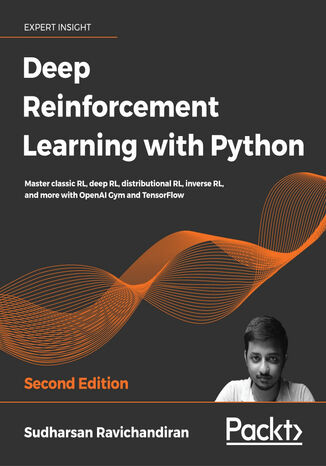
Sudharsan Ravichandiran
With significant enhancements in the quality and quantity of algorithms in recent years, this second edition of Hands-On Reinforcement Learning with Python has been revamped into an example-rich guide to learning state-of-the-art reinforcement learning (RL) and deep RL algorithms with TensorFlow 2 and the OpenAI Gym toolkit.In addition to exploring RL basics and foundational concepts such as Bellman equation, Markov decision processes, and dynamic programming algorithms, this second edition dives deep into the full spectrum of value-based, policy-based, and actor-critic RL methods. It explores state-of-the-art algorithms such as DQN, TRPO, PPO and ACKTR, DDPG, TD3, and SAC in depth, demystifying the underlying math and demonstrating implementations through simple code examples.The book has several new chapters dedicated to new RL techniques, including distributional RL, imitation learning, inverse RL, and meta RL. You will learn to leverage stable baselines, an improvement of OpenAI’s baseline library, to effortlessly implement popular RL algorithms. The book concludes with an overview of promising approaches such as meta-learning and imagination augmented agents in research.By the end, you will become skilled in effectively employing RL and deep RL in your real-world projects.
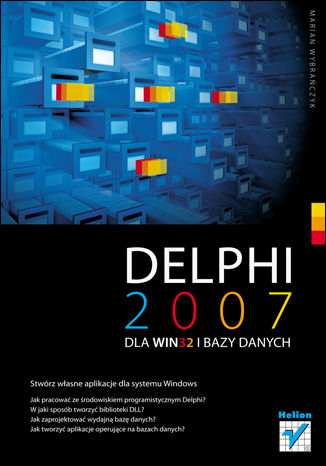
Delphi 2007 dla WIN32 i bazy danych
Marian Wybrańczyk
Stwórz własne aplikacje dla systemu Windows Jak pracować ze środowiskiem programistycznym Delphi? W jaki sposób tworzyć biblioteki DLL? Jak zaprojektować wydajną bazę danych? Jak tworzyć aplikacje operujące na bazach danych? Wśród wszystkich środowisk programistycznych umożliwiających tworzenie aplikacji Delphi jest jednym z najbardziej znanych i popularnych. To narzędzie, obecne na rynku od ponad dwunastu lat, cieszy się zasłużonym uznaniem twórców oprogramowania -- dzięki sporym możliwościom, ogromnej bibliotece komponentów i czytelnej składni języka Object Pascal, będącego podstawą tego środowiska. Najnowsza wersja Delphi, oznaczona symbolem RAD Studio 2007, nie tylko umożliwia tworzenie "klasycznych" aplikacji dla Windows, opartych o Windows API, ale także udostępnia kontrolki platformy .NET. Książka "Delphi 2007 dla WIN32 i bazy danych" to podręcznik opisujący zasady tworzenia aplikacji dla systemu Windows w najnowszej wersji Delphi. Przedstawia ona techniki tworzenia aplikacji bazodanowych w oparciu o mechanizmy Windows API i kontrolki VCL. Czytając ją, poznasz komponenty, jakie Delphi oferuje programiście, i dowiesz się, jak korzystać z nich we własnych aplikacjach. Opanujesz mechanizmy komunikacji z niemal wszystkimi systemami zarządzania bazami danych dostępnymi na rynku. Przeczytasz także o tworzeniu wersji instalacyjnych napisanych przez siebie aplikacji. Interfejs użytkownika Delphi 2007 Komponenty dostępne w Delphi Przetwarzanie grafiki Korzystanie z komponentów VCL Aplikacje wielowątkowe Tworzenie bibliotek DLL Operacje na plikach Obsługa dokumentów XML Projektowanie bazy danych i struktury tabel Komunikacja z bazami danych Mechanizmy blokowania rekordów Tworzenie wersji instalacyjnych aplikacji Wykorzystaj możliwości najnowszej wersji środowiska programistycznego, które zrewolucjonizowało proces tworzenia aplikacji!
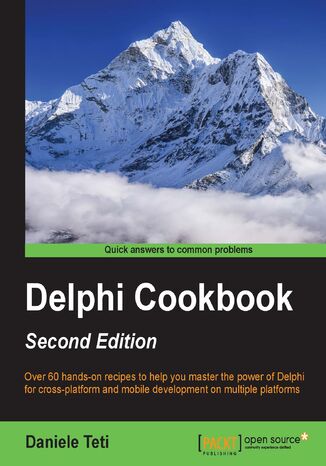
Daniele Teti
Delphi is a cross-platform Integrated Development Environment (IDE) that supports rapid application development for Microsoft Windows, Apple Mac OS X, Google Android, and Apple iOS. It helps you to concentrate on the real business and save yourself the pain of wandering amid GUI widget details, or having to tackle inter-platform incompatibilities. It also has a wide range of drag-and-drop controls, helping you code your business logic into your business model, and it compiles natively for desktop and mobile platforms.This book will teach you how to design and develop applications, deploy them on the cloud platform, and distribute them within an organization via Google Play and other similar platforms.You will begin with the basics of Delphi and get acquainted with JSON format strings, XSLT transformations, unicode encodings and various types of streams. We then move on to more advanced topics such as developing higher-order functions and using enumerators and RTTI. You will get an understanding of how Delphi RTL functions and how to use FireMonkey in a VCL application. We will then cover topics such as multithreading, using the parallel programming library and putting Delphi on a server. We will also take a look at the new feature of WebBroker Apache modules and then ride the mobile revolution with FireMonkey. By the end of the book, you will be able to develop and deploy cross-platform applications using Delphi .