
Programowanie
Niezależnie czy dopiero rozpoczynacie swoją przygodę z programowaniem, czy jesteście już uznanymi na rynku profesjonalistami, to w kategorii Programowanie na pewno znajdziecie podręczniki, które pomogą Wam w przebiegu pracy, czy też w nauce podstaw programowania.
W książkach z tego działu zawarta jest wiedza zarówno związana z czysto technicznymi sprawami typu składnia języków, ale także z umiejętnościami bardziej "miękkimi" jak obsługa i wykorzystanie pełnych możliwości środowisk programistycznych, czy też projektowanie oprogramowania lub metody numeryczne czy oraz struktury danych.
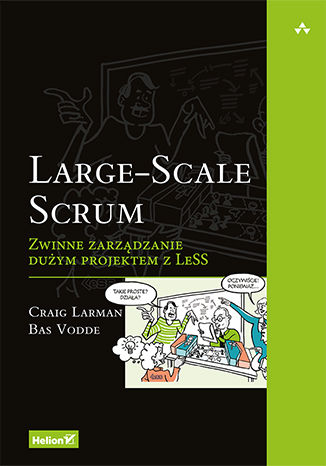
Large-Scale Scrum. Zwinne zarządzanie dużym projektem z LeSS
Craig Larman, Bas Vodde
Large-Scale Scrum. Zwinne zarządzanie dużym projektem Scrum stoi w opozycji do tradycyjnych, hierarchicznych sposobów zarządzania procesami rozwoju oprogramowania. Pozwala na uzyskanie elastyczności i szybkości działania, dzięki czemu możliwe jest zaspokojenie coraz bardziej złożonych wymagań klientów. Metody zwinne doskonale sprawdzają się również w większej skali. Large-Scale Scrum, czyli LeSS, umożliwia pomyślne zarządzanie olbrzymimi międzynarodowymi projektami o dużej złożoności technicznej dzięki prostocie, skupieniu się na najistotniejszych aspektach zagadnień, a przede wszystkim dzięki ciągłemu zwracaniu uwagi na doskonałość techniczną. Niniejsza książka jest przeznaczona dla każdego, kto chce poznać praktyczne aspekty wdrażania LeSS w procesach rozwijania oprogramowania. Jest szczególnie wartościowa dla osób zarządzających dużymi, skomplikowanymi projektami. Poza wyjaśnieniem koncepcji i zasad Scruma przedstawiono tu wnioski płynące z wielu lat doświadczeń wdrażania LeSS w przeróżnych organizacjach. Pokazano, jak można zapewnić, że dostarczony produkt będzie wyższej jakości, będzie prezentował wartości szczególnie cenne dla klienta, zespół będzie pracował wydajniej, elastyczniej i w o wiele prostszy sposób, a poszczególne cele będą osiągane przy znacznie mniejszej formalizacji! Najważniejsze zagadnienia: podstawowe pojęcia LeSS, obowiązujące reguły i zasady techniki skalowania procesów zwinnych zarządzanie pracą zespołów stosujących Scrum stosowanie frameworka LeSS Huge zasady pracy Mistrza Młyna sprinty LeSS Craig Larman urodził się w Kanadzie. Specjalizuje się w kilku technikach projektowania oprogramowania, w tym również w metodykach zwinnych. Jest uznanym konsultantem i autorem wielu książek dotyczących rozwoju oprogramowania. Jako współtwórca LeSS od kilku lat angażuje się we wdrażanie tej metody w różnych organizacjach. Bas Vodde urodził się w Holandii, obecnie mieszka w Singapurze. Jest trenerem, konsultantem, programistą i autorem książek. Specjalizuje się we wdrażaniu nowoczesnych technik rozwijania aplikacji, przede wszystkim w metodykach zwinnych. Wdrażał metodę Scrum w wielu różnych firmach, w tym w Nokia Networks. LeSS: przygotuj swój zespół na sukces w dużej skali!

Marcin Szpyrka
Poznaj profesjonalny system składu dokumentów technicznych i naukowych LaTeX to system składu - zarówno oprogramowanie, jak i zestaw instrukcji - umożliwiający tworzenie dowolnego typu dokumentów o wysokiej jakości typograficznej. Sprawdza się szczególnie w pracy z treściami technicznymi i naukowymi. Dokumenty złożone w LaTeX-u cechuje determinizm, co oznacza, że niezależnie od systemu operacyjnego, pod którym odbywa się ich kompilacja, czy też drukarki użytej do drukowania tych materiałów uzyskuje się ten sam, w pełni przewidywalny efekt. Ten podręcznik, bazujący na bogatym doświadczeniu praktycznym i dydaktycznym autora, powstał z myślą o osobach, które chcą rozpocząć pracę w systemie LaTeX. Dzięki lekturze: Poznasz popularne środowiska pracy z systemem LaTeX Dowiesz się, jak dostosować wygląd dokumentu - od formatowania fragmentów tekstu po szczegóły kompozycji całych stron Opanujesz umiejętność składania tabel, wzorów matematycznych i eleganckich listingów z kodem Nauczysz się tworzyć grafikę w narzędziach najlepiej współpracujących z systemem LaTeX i zarządzać nią z perspektywy dokumentu Przygotujesz swoją pierwszą prezentację w LaTeX-u Wszystkie poruszone w podręczniku tematy zostały zilustrowane licznymi i szczegółowo omówionymi przykładami, a złożone zagadnienia wyjaśniono krok po kroku, prostym językiem, co czyni tę książkę przystępną dla każdego czytelnika - bez względu na obszar zainteresowań.
Vladimir Dementyev
Rails accelerates web development with its convention-over-configuration principle and MVC pattern. But as your app grows, that simplicity can turn into tangled complexity, making it harder to maintain and extend. The second edition of Layered Design for Ruby on Rails Applications helps tackle this challenge head on, guiding you toward a more scalable and maintainable architecture.Written by a seasoned software engineer and open source contributor to Ruby on Rails, this updated edition refines the proven techniques from the first edition and introduces timely new topics that reflect today’s development challenges. You’ll dive deeper into state machines and workflows, learning how to identify, embed, and eventually isolate them for clarity and resilience. You’ll also explore the exciting frontier of abstractions in the AI era, treating LLMs as APIs, structuring agent layers, and integrating third-party libraries to keep your AI features organized and testable.By embracing layered abstractions, you’ll not only reduce complexity but also improve your ability to adapt to change - whether adding new features, scaling systems, or weaving AI capabilities into your applications.By the end of the book, you’ll be equipped to design clean, extensible, and future-ready Rails applications.*Email sign-up and proof of purchase required
Mike van Drongelen, Aravind Krishnaswamy, Adam Dennis
Lean is the ultimate methodology for creating a startup that succeeds. Sounds great from a theoretical point of view, but what does that mean for you as an a technical co-founder or mobile developer? By applying the Lean Start-up methodology to your mobile App development, it will become so much easier to build apps that take Google Play or the App Store by storm. This book shows you how to bring together smarter business processes with technical know-how.It makes no sense to develop a brilliant app for six months or longer only to find out later that nobody is interested in it. Build a Minimum Viable Product (MVP) first. Validate your hypotheses early and often. Discover effective product development strategies that let you put Facebook's famous axiom move fast and break thingsinto practice. A great app without visibility and marketing clout is nothing, so use this book to market your app, making use of effective metrics that help you track and iterate all aspects of project performance.
Lean UX dla zespołów Agile. Projektowane doskonałych wrażeń użytkownika. Wydanie II
Jeff Gothelf, Josh Seiden
Zaprojektowanie doświadczeń użytkownika (UX) jest najłatwiejsze, jeśli do pracy i testów angażuje się... rzeczywistych userów i pozyskuje od nich informację zwrotną. Podejście lean UX łączy podstawy myślenia projektowego i programowania zwinnego. Myślenie projektowe rozszerza zakres pracy poza interfejsy i artefakty, opierając się na współpracy, iteracjach, budowaniu i empatii. Metodologie zwinne polegają na przeorientowaniu wytwarzania oprogramowania na krótsze cykle, regularnym dostarczaniu wartości i ciągłym uczeniu się. Ważne jest szybkie zapoznawanie klientów z pomysłami i ciągłe dostosowywanie się do nowo zdobytej wiedzy. W ten sposób lean UX znakomicie sprawdza się w projektowaniu wrażeń użytkownika w środowiskach zwinnych. Ta książka jest drugim wydaniem znakomitego podręcznika, w którym opisano wartościowe zasady, taktyki i techniki polecane dla zespołów pracujących nad produktem, aby mogły one w zwinnym procesie ująć projektowanie, eksperymenty oraz nieustanne doskonalenie rozwiązań. W książce pokazano, jak ściśle współpracować oraz wcześnie i odpowiednio często pozyskiwać informacje zwrotne. Praktyczne wskazówki ułatwią wdrożenie zasad kierowania projektowaniem w krótkich, powtarzalnych cyklach, co pozwoli na ocenę, które działania są najlepsze dla firmy i użytkownika. To cenna pozycja zarówno dla projektantów UX, jak i dla programistów czy menedżerów, którzy znajdą w niej źródło pożytecznych wskazówek ułatwiających uzyskanie doskonałych wrażeń użytkownika. W tej książce: zarys metodologii lean UX i zasady projektowania doświadczeń użytkownika etapy cyklu lean UX pozyskiwanie informacji zwrotnych i ich wykorzystywanie integracja praktyk lean UX w obrębie organizacji rola podejścia lean UX w typowym środowisku zwinnego wytwarzania oprogramowania Lean UX: zwinne zespoły projektują najlepsze interakcje!
Mischa Spiegelmock
Leap Motion is a company developing advanced motion sensing technology for human–computer interaction. Originally inspired by the level of difficulty of using a mouse and keyboard for 3D modeling, Leap Motion believe that moulding virtual clay should be as easy as moulding clay in your hands. Leap Motion now focus on bringing this motion sensing technology closer to the real world.Leap Motion Development Essentials explains the concepts and practical applications of gesture input for developers who want to take full advantage of Leap Motion technology. This guide explores the capabilities available to developers and gives you a clear overview of topics related to gesture input along with usable code samples.Leap Motion Development Essentials shows you everything you need to know about the Leap Motion SDK, from creating a working program with gesture input to more sophisticated applications covering a range of relevant topics. Sample code is provided and explained along with details of the most important and central API concepts.This book teaches you the essential information you need to design a gesture-enabled interface for your application, from specific gesture detection to best practices for this new input. You will be given guidance on practical considerations along with copious runnable demonstrations of API usage which are explained in step-by-step, reusable recipes.
Julien Simon
Amazon SageMaker enables you to quickly build, train, and deploy machine learning (ML) models at scale, without managing any infrastructure. It helps you focus on the ML problem at hand and deploy high-quality models by removing the heavy lifting typically involved in each step of the ML process. This book is a comprehensive guide for data scientists and ML developers who want to learn the ins and outs of Amazon SageMaker.You’ll understand how to use various modules of SageMaker as a single toolset to solve the challenges faced in ML. As you progress, you’ll cover features such as AutoML, built-in algorithms and frameworks, and the option for writing your own code and algorithms to build ML models. Later, the book will show you how to integrate Amazon SageMaker with popular deep learning libraries such as TensorFlow and PyTorch to increase the capabilities of existing models. You’ll also learn to get the models to production faster with minimum effort and at a lower cost. Finally, you’ll explore how to use Amazon SageMaker Debugger to analyze, detect, and highlight problems to understand the current model state and improve model accuracy.By the end of this Amazon book, you’ll be able to use Amazon SageMaker on the full spectrum of ML workflows, from experimentation, training, and monitoring to scaling, deployment, and automation.
Julien Simon
Amazon SageMaker enables you to quickly build, train, and deploy machine learning models at scale without managing any infrastructure. It helps you focus on the machine learning problem at hand and deploy high-quality models by eliminating the heavy lifting typically involved in each step of the ML process. This second edition will help data scientists and ML developers to explore new features such as SageMaker Data Wrangler, Pipelines, Clarify, Feature Store, and much more.You'll start by learning how to use various capabilities of SageMaker as a single toolset to solve ML challenges and progress to cover features such as AutoML, built-in algorithms and frameworks, and writing your own code and algorithms to build ML models. The book will then show you how to integrate Amazon SageMaker with popular deep learning libraries, such as TensorFlow and PyTorch, to extend the capabilities of existing models. You'll also see how automating your workflows can help you get to production faster with minimum effort and at a lower cost. Finally, you'll explore SageMaker Debugger and SageMaker Model Monitor to detect quality issues in training and production.By the end of this Amazon book, you'll be able to use Amazon SageMaker on the full spectrum of ML workflows, from experimentation, training, and monitoring to scaling, deployment, and automation.