
Programowanie
Imran Ahmad
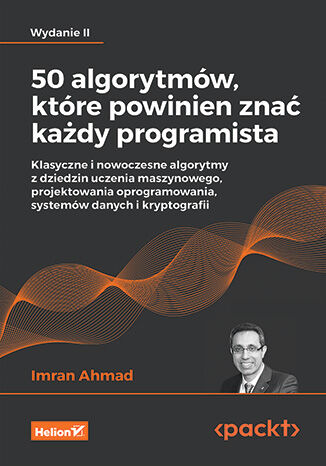
Wiedza o algorytmach jest niezbędna przy rozwiązywaniu problemów programistycznych i prowadzeniu złożonych obliczeń. Każdy programista powinien dobrze znać algorytmy, musi też umieć je zaprojektować, modyfikować i stosować. Niezależnie od tego, czy zajmujesz się uczeniem maszynowym, kwestiami bezpieczeństwa, czy inżynierią danych, rzetelne zrozumienie algorytmów jest Ci bardzo potrzebne. Dzięki tej książce nauczysz się stosować algorytmy w praktycznych sytuacjach i zrozumiesz mechanizmy ich działania. Liczne przykłady pozwolą Ci się zapoznać z kilkoma sposobami ich projektowania i implementacji. Następnie poznasz algorytm określania pozycji stron w wynikach wyszukiwarek internetowych, związane z nimi grafy i algorytmy uczenia maszynowego, a także logikę. Zaznajomisz się ponadto z nowoczesnymi modelami sekwencyjnymi i ich wariantami, jak również algorytmami, metodykami i architekturami implementacji dużych modeli językowych, takich jak ChatGPT. W ostatniej części tego przewodnika znajdziesz opis technik przetwarzania równoległego, przydatnego w zadaniach wymagających dużej mocy obliczeniowej. W książce między innymi: projektowanie algorytmów przeznaczonych do złożonych zadań sieci neuronowe i techniki uczenia głębokiego struktury danych i algorytmy dostępne w bibliotekach Pythona algorytm grafowy służący do wykrywania oszustw za pomocą analizy sieciowej najnowocześniejsze algorytmy przetwarzania języka naturalnego tworzenie systemu rekomendacji filmów sekwencyjne modele uczenia maszynowego i nowoczesne modele LLM Algorytmy: klucz do sukcesu w programowaniu!
Michael Levan
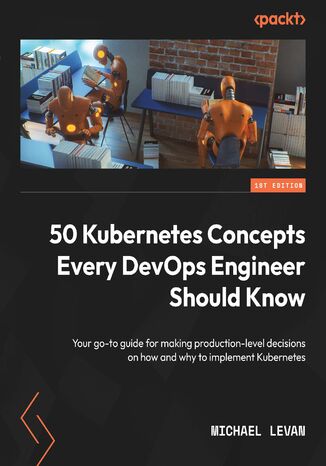
Kubernetes is a trending topic among engineers, CTOs, CIOs, and other technically sound professionals. Due to its proliferation and importance for all cloud technologies, DevOps engineers nowadays need a solid grasp of key Kubernetes concepts to help their organization thrive.This book equips you with all the requisite information about how Kubernetes works and how to use it for the best results. You’ll learn everything from why cloud native is important to implementing Kubernetes clusters to deploying applications in production. This book takes you on a learning journey, starting from what cloud native is and how to get started with Kubernetes in the cloud, on-premises, and PaaS environments such as OpenShift. Next, you’ll learn about deploying applications in many ways, including Deployment specs, Ingress Specs, and StatefulSet specs. Finally, you’ll be comfortable working with Kubernetes monitoring, observability, and security. Each chapter of 50 Kubernetes Concepts Every DevOps Engineer Should Know is built upon the previous chapter, ensuring that you develop practical skills as you work through the code examples in GitHub, allowing you to follow along while giving you practical knowledge.By the end of this book, you’ll be able to implement Kubernetes in any environment, whether it’s an existing environment, a greenfield environment, or your very own lab running in the cloud or your home.
Philip Jones
A Blueprint for Production-Ready Web Applications will help you expand upon your coding knowledge and teach you how to create a complete web application. Unlike other guides that focus solely on a singular technology or process, this book shows you how to combine different technologies and processes as needed to meet industry standards.You’ll begin by learning how to set up your development environment, and use Quart and React to create the backend and frontend, respectively. This book then helps you get to grips with managing and validating accounts, structuring relational tables, and creating forms to manage data. As you progress through the chapters, you’ll gain a comprehensive understanding of web application development by creating a to-do app, which can be used as a base for your future projects. Finally, you’ll find out how to deploy and monitor your application, along with discovering advanced concepts such as managing database migrations and adding multifactor authentication.By the end of this web development book, you’ll be able to apply the lessons and industry best practices that you’ve learned to both your personal and work projects, allowing you to further develop your coding portfolio.
Hamida Rebai
Companies face several challenges during cloud adoption, with developers and architects needing to migrate legacy applications and build cloud-oriented applications using Azure-based technologies in different environments. A Developer’s Guide to Cloud Apps Using Microsoft Azure helps you learn how to migrate old apps to Azure using the Cloud Adoption Framework and presents use cases, as well as build market-ready secure and reliable applications.The book begins by introducing you to the benefits of moving legacy apps to the cloud and modernizing existing ones using a set of new technologies and approaches. You’ll then learn how to use technologies and patterns to build cloud-oriented applications. This app development book takes you on a journey through three major services in Azure, namely Azure Container Registry, Azure Container Instances, and Azure Kubernetes Service, which will help you build and deploy an application based on microservices. Finally, you’ll be able to implement continuous integration and deployment in Azure to fully automate the software delivery process, including the build and release processes.By the end of this book, you’ll be able to perform application migration assessment and planning, select the right Azure services, and create and implement a new cloud-oriented application using Azure containers and orchestrators.
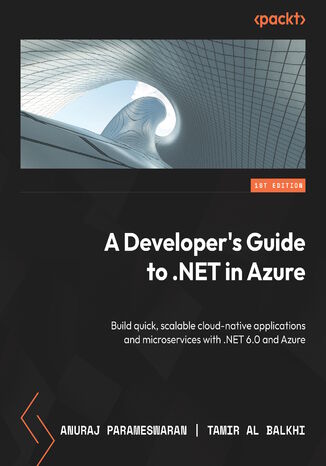
Anuraj Parameswaran, Tamir Al Balkhi
A Developer’s Guide to .NET in Azure helps you embark on a transformative journey through Microsoft Azure that is tailored to .NET developers. This book is a curated compendium that’ll enable you to master the creation of resilient, scalable, and highly available applications.The book is divided into four parts, with Part 1 demystifying Azure for you and emphasizing the portal's utility and seamless integration. The chapters in this section help you configure your workspace for optimal Azure synergy. You’ll then move on to Part 2, where you’ll explore serverless computing, microservices, containerization, Dapr, and Azure Kubernetes Service for scalability, and build pragmatic, cost-effective applications using Azure Functions and Container apps. Part 3 delves into data and storage, showing you how to utilize Azure Blob Storage for unstructured data, Azure SQL Database for structured data, and Azure Cosmos DB for document-oriented data. The final part teaches you about messaging and security, utilizing Azure App Configuration, Event Hubs, Service Bus, Key Vault, and Azure AD B2C for robust, secure applications.By the end of this book, you’ll have mastered Azure's responsive infrastructure for exceptional applications.
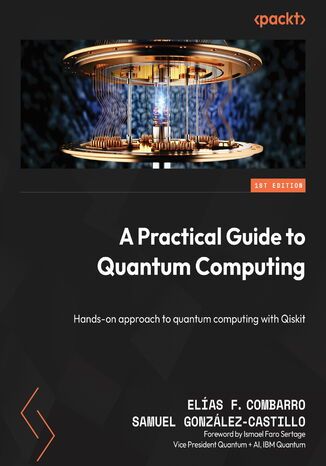
A Practical Guide to Quantum Computing. Hands-on approach to quantum computing with Qiskit
Elías F. Combarro, Samuel González-Castillo, Ismael Faro...
This book is an introduction, from scratch, to quantum computing and the most important and foundational quantum algorithms—ranging from humble protocols such as Deutsch’s algorithm to ones with far-reaching potential, such as Shor’s factoring algorithm—offering clear explanations and a hands-on approach with runnable code on simulators and real hardware. The book is self-contained and does not assume any previous experience in quantum computing. Starting with a single qubit, it scales to algorithms using superposition and entanglement.At every step, examples of applications are provided, including how to create quantum money that is impossible to forge, quantum cryptography that cannot be broken, and algorithms for searching and factoring that are much faster than those that regular, non-quantum computers can use. Code for each of these algorithms is provided (and explained in detail) using Qiskit 2.1.After reading this book, you will understand how quantum algorithms work, how to write your own quantum programs, and how to run them on quantum simulators and actual quantum computers. You will also be prepared to take the jump into quantum algorithms for optimization and artificial intelligence, like those presented in our previous book, A Practical Guide to Quantum Machine Learning and Quantum Optimization.
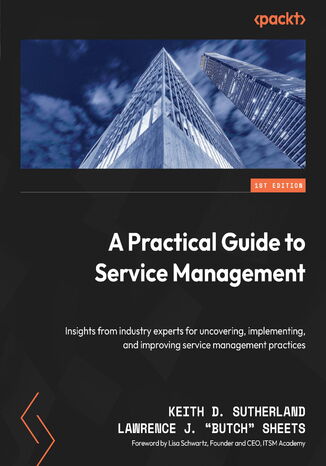
Keith D. Sutherland, Lawrence J. "Butch" Sheets
Many organizations struggle to find practical guidance that can help them to not only understand but also apply service management best practices. Packed with expert guidance and comprehensive coverage of the essential frameworks, methods, and techniques, this book will enable you to elevate your organization’s service management capability.You’ll start by exploring the fundamentals of service management and the role of a service provider. As you progress, you’ll get to grips with the different service management frameworks used by IT and enterprises. You'll use system thinking and design thinking approaches to learn to design, implement, and optimize services catering to diverse customer needs.This book will familiarize you with the essential process capabilities required for an efficient service management practice, followed by the elements key to its practical implementation, customized to the organization’s business needs in a sustainable and repeatable manner. You’ll also discover the critical success factors that will enhance your organization’s ability to successfully implement and sustain a service management practice.By the end of this handy guide, you’ll have a solid grasp of service management concepts, making this a valuable resource for on-the-job reference.
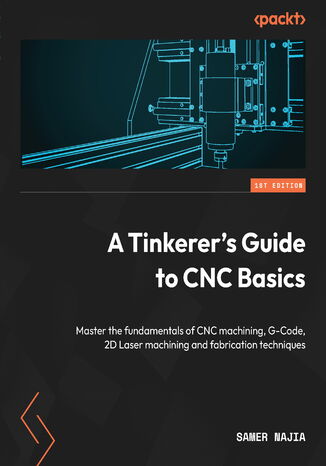
Samer Najia
Until recently, Computer Numerical Control (CNC) machines belonged to the realm of heavy industry, but as technology becomes cheaper and smaller, these machines now can be used in home workshops. It’s not easy to get started, though, but thanks to this guide, you’ll be ready to take on a variety of projects in no time.A Tinkerer’s Guide to CNC Basics contains everything you need to get set up at home with computer-controlled machining and fabrication. Sparing you the theory, this project-laden guide helps you learn by doing.Once you’ve got to grips with the principles of CNC and installed the 3018 Pro CNC machine, you’ll gradually move from simple projects such as basic engraving to more complex milling and machining techniques. You’ll even learn how to upgrade your machine to accomplish more sophisticated designs. The plethora of projects in this book will keep you busy and give you the practice you need to get started with your computerized workshop.By the end of the book, your computerized home workshop will be one step closer to realization, and your machining skills will be taken to the next level.