
Programowanie
Niezależnie czy dopiero rozpoczynacie swoją przygodę z programowaniem, czy jesteście już uznanymi na rynku profesjonalistami, to w kategorii Programowanie na pewno znajdziecie podręczniki, które pomogą Wam w przebiegu pracy, czy też w nauce podstaw programowania.
W książkach z tego działu zawarta jest wiedza zarówno związana z czysto technicznymi sprawami typu składnia języków, ale także z umiejętnościami bardziej "miękkimi" jak obsługa i wykorzystanie pełnych możliwości środowisk programistycznych, czy też projektowanie oprogramowania lub metody numeryczne czy oraz struktury danych.

Linear Algebra. Learn the Foundations and Applications of Vector Spaces
Mercury Learning and Information, L. Shen, Haohao...
This book introduces the fundamental concepts of linear algebra and applies the theorems in computation-oriented applications. It is suitable for a one-semester course and combines definitions and proofs with a focus on computational applications. Examples illustrate the use of software packages such as Mathematica, Maple, and Sage.The journey begins with vector spaces and progresses through linear transformations and operators. It then covers orthogonal bases and matrix decomposition. The material includes a brief introduction to aspects of abstract algebra related to linear algebra, such as groups, rings, modules, fields, and polynomials over fields.Understanding these concepts is crucial for solving complex problems in various fields. This book transitions readers from basic definitions to advanced computational applications, blending theoretical knowledge with practical skills. It is an essential resource for mastering linear algebra and its applications.
Linear Regression With Python. A Tutorial Introduction to the Mathematics of Regression Analysis
James V Stone
This book offers a detailed yet approachable introduction to linear regression, blending mathematical theory with Python-based practical applications. Beginning with fundamentals, it explains the best-fitting line, regression and causation, and statistical measures like variance, correlation, and the coefficient of determination. Clear examples and Python code ensure readers can connect theory to implementation.As the journey continues, readers explore statistical significance through concepts like t-tests, z-tests, and p-values, understanding how to assess slopes, intercepts, and overall model fit. Advanced chapters cover multivariate regression, introducing matrix formulations, the best-fitting plane, and methods to handle multiple variables. Topics such as Bayesian regression, nonlinear models, and weighted regression are explored in depth, with step-by-step coding guides for hands-on practice.The final sections tie together these techniques with maximum likelihood estimation and practical summaries. Appendices provide resources such as matrix tutorials, key equations, and mathematical symbols. Designed for both beginners and professionals, this book ensures a structured learning experience. Basic mathematical knowledge or foundation is recommended.
Linux Command Reference. Shell Commands from A to Z
Rheinwerk Publishing, Inc, Michael Kofler
This guide takes readers through the essentials of Linux commands, starting with basic commands and progressing to advanced techniques. The first few sections focus on foundational commands and their practical applications. As the book progresses, it introduces more complex concepts, including bash scripting, advanced command usage, and system management techniques. This ensures readers build a strong command-line proficiency step by step.The book’s structure is organized alphabetically from A to Z, making it easy to find and reference commands. It also covers important special bash characters and configuration files, essential for system administrators. Readers will also learn about efficient keyboard shortcuts that can enhance productivity when working in the terminal.By the end of the book, readers will be equipped with the tools to effectively manage Linux systems, automate tasks with scripts, and troubleshoot common issues. With this knowledge, users will gain confidence in navigating and optimizing their Linux environments.
Kamil Błasiak, Marek Czerwik
Linux dla każdego Technika IT to książka w głównej myśli kierowana do każdego ucznia oraz studenta uczącego się na kierunku informatycznym lub pokrewnym. Krótko mówiąc dla wszystkich, którzy na co dzień nie pracują z systemem Linux, a chcą się nauczyć jego obsługi zarówno za pośrednictwem interfejsu graficznego jak i tekstowego. Tematyka książki jest bardzo szeroka. Przygotowuje użytkownika do instalacji systemu i konfiguracji: sprzętu, sieci, środowiska pracy, użytkowników. Pokazuje jak pracować z plikami, stosować uprawnienia, a także tworzyć skrypty systemowe. W treści poruszone też zostały kwestie związane z bezpieczeństwem sytemu oraz danych. Na końcu książki znajduje się próbny egzamin zawodowy, w którym każde pytanie poddane zostaje szczegółowej analizie w wyniku której, prezentowana jest poprawna odpowiedź, co stanowi wartość dodaną zarówno dla ucznia jak i nauczyciela. Znajdziemy tutaj również wykaz najważniejszych poleceń systemowych – niezbędnych do codziennej pracy.
Linux Magazine (czerwiec 2022)
Praca zbiorowa
Miesięcznik ten dedykowany jest przede wszystkim profesjonalistom z branży IT, którzy na co dzień pracują z systemem Linux, w tym administratorom systemów, programistom oraz zaawansowanym użytkownikom. Publikacja ta została również stworzona z myślą o menedżerach IT oraz specjalistach technologicznych, którzy poszukują efektywnych sposobów wykorzystania Linuxa w swoich infrastrukturach informatycznych. Zawartość miesięcznika skupia się na dostarczaniu praktycznych wskazówek oraz strategicznych porad, które pomagają w podejmowaniu decyzji dotyczących implementacji Linuxa w różnorodnych środowiskach. Czytelnicy znajdą tu szczegółowe analizy przypadków użycia (real life deployments), obiektywne testy porównawcze produktów oraz dogłębne opracowania na temat technologii open source i systemu Linux. W najnowszym wydaniu: "Czyste IT - Kierunek na Eko-Programowanie i Zarządzanie Systemami" W kontekście zrównoważonego rozwoju, dyskusje w branży IT często koncentrują się na aspekcie sprzętowym, lecz równie ważny jest wpływ, jaki oprogramowanie i systemy IT mają na środowisko. W naszym najnowszym artykule, skupiamy się na tym, jak programiści i administratorzy systemów mogą przyczynić się do tworzenia i zarządzania bardziej efektywnymi energetycznie systemami IT. W artykule omawiamy innowacyjne podejścia i praktyki, które mogą być wdrożone w procesie tworzenia oprogramowania i zarządzania infrastrukturą IT, aby zmniejszyć ich ślad węglowy i zużycie energii. Poruszamy kwestie takie jak efektywność energetyczna w kodowaniu, wybór odpowiednich technologii i platform, a także strategie zarządzania serwerami i danymi, które wspierają zrównoważony rozwój. Artykuł ten stanowi przewodnik po tym, jak pracownicy IT mogą aktywnie wpływać na ekologiczne aspekty swojej pracy, zachęcając do myślenia o programowaniu i zarządzaniu IT z perspektywy ekologicznej. Jest to kluczowy krok w kierunku bardziej zrównoważonego przemysłu IT, który uwzględnia nie tylko efektywność, ale również odpowiedzialność ekologiczną.
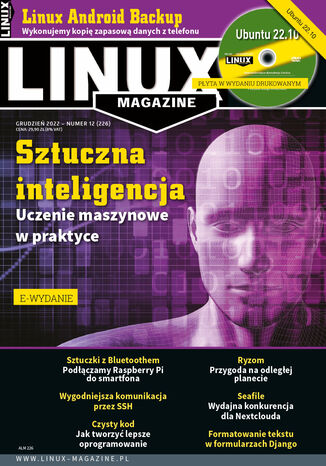
Linux Magazine (grudzień 2022)
Praca zbiorowa
Miesięcznik ten dedykowany jest przede wszystkim profesjonalistom z branży IT, którzy na co dzień pracują z systemem Linux, w tym administratorom systemów, programistom oraz zaawansowanym użytkownikom. Publikacja ta została również stworzona z myślą o menedżerach IT oraz specjalistach technologicznych, którzy poszukują efektywnych sposobów wykorzystania Linuxa w swoich infrastrukturach informatycznych. Zawartość miesięcznika skupia się na dostarczaniu praktycznych wskazówek oraz strategicznych porad, które pomagają w podejmowaniu decyzji dotyczących implementacji Linuxa w różnorodnych środowiskach. Czytelnicy znajdą tu szczegółowe analizy przypadków użycia (real life deployments), obiektywne testy porównawcze produktów oraz dogłębne opracowania na temat technologii open source i systemu Linux. Temat numeru: Mądrość płynąca z doświadczenia - czym jest uczenie maszynowe? Ludzie czasem sobie obiecują: "Nigdy więcej nie popełnię tego błędu"- jest to typowy przykład nauki na bazie przeszłych doświadczeń. Jeśli zamienimy doświadczenia na dane, okaże się, że nauka nie jest jedynie domeną ludzi. W niniejszym artykule przedstawimy podstawowe formy uczenia maszynowego
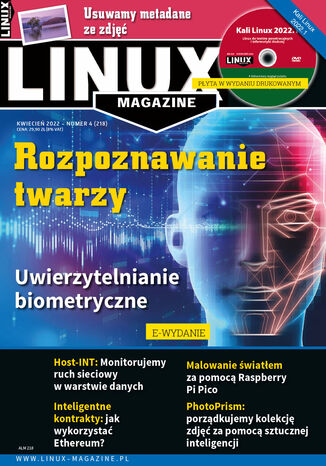
Linux Magazine (kwiecień 2022)
Praca zbiorowa
Miesięcznik ten dedykowany jest przede wszystkim profesjonalistom z branży IT, którzy na co dzień pracują z systemem Linux, w tym administratorom systemów, programistom oraz zaawansowanym użytkownikom. Publikacja ta została również stworzona z myślą o menedżerach IT oraz specjalistach technologicznych, którzy poszukują efektywnych sposobów wykorzystania Linuxa w swoich infrastrukturach informatycznych. Zawartość miesięcznika skupia się na dostarczaniu praktycznych wskazówek oraz strategicznych porad, które pomagają w podejmowaniu decyzji dotyczących implementacji Linuxa w różnorodnych środowiskach. Czytelnicy znajdą tu szczegółowe analizy przypadków użycia (real life deployments), obiektywne testy porównawcze produktów oraz dogłębne opracowania na temat technologii open source i systemu Linux. W najnowszym numerze m.in.: "Witaj, przyjacielu - Howdy i Rewolucja Rozpoznawania Twarzy w Linuxie" Uwierzytelnianie biometryczne od dłuższego czasu fascynuje futurystów i przedsiębiorców ze względu na jego unikalny i bezpieczny charakter. Każdy człowiek posiada unikalne cechy fizyczne, ale czy można je wykorzystać do skutecznej weryfikacji tożsamości? Metody takie jak odciski palców są powszechnie stosowane przez organy ścigania, a niektóre systemy komputerowe już teraz umożliwiają autoryzację za pomocą linii papilarnych. Jednak to rozpoznawanie twarzy od dawna uznawane jest za najbardziej zaawansowaną formę uwierzytelniania biometrycznego. W tym wydaniu przyglądamy się rewolucyjnemu krokowi w dziedzinie bezpieczeństwa Linuxa - wprowadzeniu przez Howdy technologii rozpoznawania twarzy. Howdy przekształca sposób, w jaki użytkownicy Linuxa mogą zabezpieczać swoje urządzenia i dane, oferując nowy, bardziej intuicyjny sposób na uwierzytelnianie. Dowiedz się więcej o tym, jak Howdy wykorzystuje zaawansowane algorytmy do analizy cech twarzy i jak ta technologia może zmienić sposób, w jaki postrzegamy bezpieczeństwo w świecie open source. Zapraszamy do zapoznania się z pełną analizą i dyskusją na temat potencjału i wyzwań związanych z tą innowacyjną technologią w środowisku Linuxa.
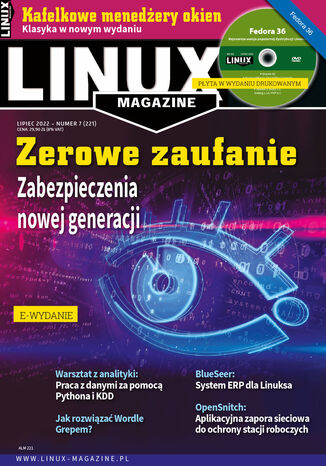
Praca zbiorowa
Miesięcznik ten dedykowany jest przede wszystkim profesjonalistom z branży IT, którzy na co dzień pracują z systemem Linux, w tym administratorom systemów, programistom oraz zaawansowanym użytkownikom. Publikacja ta została również stworzona z myślą o menedżerach IT oraz specjalistach technologicznych, którzy poszukują efektywnych sposobów wykorzystania Linuxa w swoich infrastrukturach informatycznych. Zawartość miesięcznika skupia się na dostarczaniu praktycznych wskazówek oraz strategicznych porad, które pomagają w podejmowaniu decyzji dotyczących implementacji Linuxa w różnorodnych środowiskach. Czytelnicy znajdą tu szczegółowe analizy przypadków użycia (real life deployments), obiektywne testy porównawcze produktów oraz dogłębne opracowania na temat technologii open source i systemu Linux. Tematem tego wydania jest : "Dążenie do Zera - Nowa Era Zabezpieczeń z Zero Trust" Współczesne podejście do bezpieczeństwa sieciowego przechodzi ewolucję, odchodząc od tradycyjnych koncepcji sieci wewnętrznych uważanych za bezpieczne. Eksperci z branży IT skupiają się teraz na strategiach opartych na koncepcji Zero Trust, które oferują skuteczniejszą ochronę przed różnorodnymi zagrożeniami, zarówno tymi pochodzącymi z wnętrza sieci, jak i z zewnątrz. W naszym artykule zagłębiamy się w ideę architektur o zerowym zaufaniu (Zero Trust), wyjaśniając, jak ten model może zmienić sposób, w jaki organizacje podchodzą do zabezpieczeń swoich sieci. Zero Trust opiera się na założeniu, że żaden element sieci - niezależnie od tego, czy jest wewnętrzny, czy zewnętrzny - nie powinien być domyślnie uznawany za bezpieczny. To podejście wymaga kompleksowej, warstwowej strategii zabezpieczeń, która obejmuje zarówno weryfikację tożsamości, jak i ciągłe monitorowanie i kontrolę dostępu do zasobów sieciowych. Przedstawiamy w nim, jak administratorzy i specjaliści IT mogą wdrożyć te zasady w swoich organizacjach, aby zwiększyć ogólną odporność na cyberzagrożenia. Artykuł ten stanowi cenny przewodnik dla tych, którzy chcą zrozumieć i zastosować model Zero Trust, aby zapewnić wyższy poziom ochrony w dynamicznie zmieniającym się środowisku cyberbezpieczeństwa.