
Programowanie
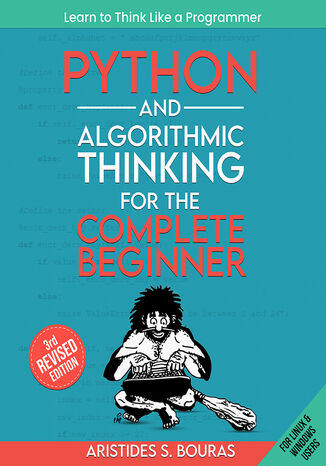
Aristides Bouras
This course is meticulously designed to take beginners on a journey through the fascinating world of Python programming and algorithmic thinking. The initial chapters lay a strong foundation, starting with the basics of how computers operate, moving into Python programming, and familiarizing learners with integrated development environments like IDLE and Visual Studio Code.Further, the course delves into essential programming constructs such as variables, constants, input/output handling, and operators. You'll gain practical experience with trace tables, sequence control structures, and decision control structures through comprehensive exercises and examples. The curriculum emphasizes hands-on learning with chapters dedicated to manipulating numbers, strings, and understanding complex mathematical expressions. By mastering these concepts, you'll be well-prepared to tackle more advanced topics.The final chapters introduce you to object-oriented programming and file manipulation, rounding out your skill set. Throughout the course, practical tips and tricks are provided to enhance your coding efficiency and problem-solving skills. By the end of this course, you will have a robust understanding of Python programming and the ability to apply algorithmic thinking to solve real-world problems.
Cuantum Technologies LLC
Embark on a transformative journey with this course designed to equip you with robust Python and SQL skills. Starting with an introduction to Python, you'll delve into fundamental building blocks, control flow, functions, and object-oriented programming. As you progress, you'll master data structures, file I/O, exception handling, and the Python Standard Library, ensuring a solid foundation in Python.The course then transitions to SQL, beginning with an introduction and covering basics, and proceeding to advanced querying techniques. You'll learn about database administration and how Python integrates seamlessly with SQL, enhancing your data manipulation capabilities. By combining Python with SQLAlchemy, you'll perform advanced database operations and execute complex data analysis tasks, preparing you for real-world challenges.By the end of this course, you will have developed the expertise to utilize Python and SQL for scientific computing, data analysis, and database management. This comprehensive learning path ensures you can tackle diverse projects, from basic scripting to sophisticated data operations, making you a valuable asset in the tech industry. You'll also gain hands-on experience with real-world datasets, enhancing your problem-solving skills and boosting your confidence.
Python API Development Fundamentals. Develop a full-stack web application with Python and Flask
Jack Chan, Ray Chung , Jack Huang
Python is a flexible language that can be used for much more than just script development. By knowing the Python RESTful APIs work, you can build a powerful backend for web applications and mobile applications using Python.You'll take your first steps by building a simple API and learning how the frontend web interface can communicate with the backend. You'll also learn how to serialize and deserialize objects using the marshmallow library. Then, you'll learn how to authenticate and authorize users using Flask-JWT. You'll also learn how to enhance your APIs by adding useful features, such as email, image upload, searching, and pagination. You'll wrap up the whole book by deploying your APIs to the cloud.By the end of this book, you'll have the confidence and skill to leverage the power of RESTful APIs and Python to build efficient web applications.
Jaime Buelta
Developing large-scale systems that continuously grow in scale and complexity requires a thorough understanding of how software projects should be implemented. Software developers, architects, and technical management teams rely on high-level software design patterns such as microservices architecture, event-driven architecture, and the strategic patterns prescribed by domain-driven design (DDD) to make their work easier.This book covers these proven architecture design patterns with a forward-looking approach to help Python developers manage application complexity—and get the most value out of their test suites.Starting with the initial stages of design, you will learn about the main blocks and mental flow to use at the start of a project. The book covers various architectural patterns like microservices, web services, and event-driven structures and how to choose the one best suited to your project. Establishing a foundation of required concepts, you will progress into development, debugging, and testing to produce high-quality code that is ready for deployment. You will learn about ongoing operations on how to continue the task after the system is deployed to end users, as the software development lifecycle is never finished.By the end of this Python book, you will have developed architectural thinking: a different way of approaching software design, including making changes to ongoing systems.
Jaime Buelta
In this updated and extended version of Python Automation Cookbook, each chapter now comprises the newest recipes and is revised to align with Python 3.8 and higher. The book includes three new chapters that focus on using Python for test automation, machine learning projects, and for working with messy data.This edition will enable you to develop a sharp understanding of the fundamentals required to automate business processes through real-world tasks, such as developing your first web scraping application, analyzing information to generate spreadsheet reports with graphs, and communicating with automatically generated emails.Once you grasp the basics, you will acquire the practical knowledge to create stunning graphs and charts using Matplotlib, generate rich graphics with relevant information, automate marketing campaigns, build machine learning projects, and execute debugging techniques.By the end of this book, you will be proficient in identifying monotonous tasks and resolving process inefficiencies to produce superior and reliable systems.
Jaime Buelta
Have you been doing the same old monotonous office work over and over again? Or have you been trying to find an easy way to make your life better by automating some of your repetitive tasks? Through a tried and tested approach, understand how to automate all the boring stuff using Python. The Python Automation Cookbook helps you develop a clear understanding of how to automate your business processes using Python, including detecting opportunities by scraping the web, analyzing information to generate automatic spreadsheets reports with graphs, and communicating with automatically generated emails. You’ll learn how to get notifications via text messages and run tasks while your mind is focused on other important activities, followed by understanding how to scan documents such as résumés. Once you’ve gotten familiar with the fundamentals, you’ll be introduced to the world of graphs, along with studying how to produce organized charts using Matplotlib. In addition to this, you’ll gain in-depth knowledge of how to generate rich graphics showing relevant information. By the end of this book, you’ll have refined your skills by attaining a sound understanding of how to identify and correct problems to produce superior and reliable systems.
Jaime Buelta
Ile czasu marnujesz na wykonywanie monotonnych, długotrwałych zadań? Mowa o przeglądaniu setek stron czy plików, ręcznym przekształcaniu danych, rozsyłaniu e-maili, tworzeniu wykresów i wielu innych nudnych czynnościach. A gdyby tak zlecić tę pracę komputerowi, a samemu zająć się bardziej odpowiedzialnymi i kreatywnymi zadaniami? To jest do zrobienia — trzeba tylko poświęcić nieco czasu i odpowiednio wykorzystać dostępne rozwiązania, takie jak Python i imponująca kolekcja opracowanych dla tego języka narzędzi, bibliotek i rozszerzeń. Ta książka jest praktycznym zbiorem gotowych receptur, przeznaczonym dla początkujących użytkowników Pythona. Wydanie zostało dostosowane do wersji 3.8 języka, dodano też nowy materiał dotyczący automatyzowania testów, uczenia maszynowego i pracy z nieuporządkowanymi danymi. Dzięki lekturze zaczniesz automatyzować procesy biznesowe — napiszesz aplikację do pobierania informacji ze stron internetowych, tworzenia raportów z wykresami i diagramami na podstawie arkuszów kalkulacyjnych, a także automatycznego generowania e-maili. Będziesz również tworzyć zaawansowane grafiki z potrzebnymi informacjami, automatyzować kampanie marketingowe oraz stosować techniki testowania i debugowania. W książce znajdziesz receptury, dzięki którym: przekształcisz dane na potrzeby data science za pomocą biblioteki pandas zautomatyzujesz klasyfikowanie tekstu, filtrowanie e-maili i pobieranie informacji ze stron WWW użyjesz biblioteki Matplotlib do generowania wykresów, diagramów i map zautomatyzujesz różne zadania związane z generowaniem raportów nauczysz się pracy z Beautiful Soup, programem cron, a także z dziennikami i wyrażeniami regularnymi napiszesz bot dla komunikatora Telegram, czytnik kanałów RSS i model uczenia maszynowego Automatyzacja: monotonne zadania zostaw Pythonowi!
Python, C++, JavaScript. Zadania z programowania
Marek Luliński, Gniewomir Sarbicki
Zadania z programowania? Zbiór programów do napisania! Pascal, C++, JavaScript i Python — oto zbiór języków, które przećwiczysz dzięki zadaniom w tej książce. Każdy z nich ma nieco inne zastosowania, wszystkie zaś są lub będą w najbliższym czasie wykorzystywane na lekcjach informatyki i na egzaminach, a ich zastosowanie w obliczu realnych problemów może wydatnie uprościć Ci życie. Jak najłatwiej i najszybciej nauczyć się programować w tych językach? Oczywiście dzięki ćwiczeniom! Z tą książką napiszesz konkretne programy rozwiązujące zadania numeryczne, logiczne i matematyczne — w każdym z powyższych języków. Z praktycznym zestawem zawartych tu zadań spróbujesz znaleźć permutacje zbioru, zaszyfrować tekst szyfrem Cezara, zbudować trójkąt Pascala i wskazać punkty kratowe wewnątrz koła o promieniu r. Napiszesz według własnego pomysłu programy odpowiadające na postawione w zadaniach pytania. Jeśli jesteś uczniem, będziesz mógł w ten sposób ćwiczyć nie tylko umiejętności programistyczne, lecz także matematyczne. Jeśli jesteś nauczycielem, znajdziesz tu wiele inspiracji dla swoich uczniów. Gotowy pogram będziesz mógł później porównać z rozwiązaniami proponowanymi przez autorów. Dogadaj się z komputerem — w każdym z czterech języków! --- UWAGA: Skala trudności zadań odpowiada poziomowi szkoły średniej.