
Programowanie
Niezależnie czy dopiero rozpoczynacie swoją przygodę z programowaniem, czy jesteście już uznanymi na rynku profesjonalistami, to w kategorii Programowanie na pewno znajdziecie podręczniki, które pomogą Wam w przebiegu pracy, czy też w nauce podstaw programowania.
W książkach z tego działu zawarta jest wiedza zarówno związana z czysto technicznymi sprawami typu składnia języków, ale także z umiejętnościami bardziej "miękkimi" jak obsługa i wykorzystanie pełnych możliwości środowisk programistycznych, czy też projektowanie oprogramowania lub metody numeryczne czy oraz struktury danych.
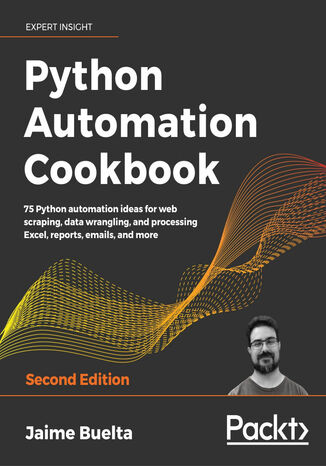
Jaime Buelta
In this updated and extended version of Python Automation Cookbook, each chapter now comprises the newest recipes and is revised to align with Python 3.8 and higher. The book includes three new chapters that focus on using Python for test automation, machine learning projects, and for working with messy data.This edition will enable you to develop a sharp understanding of the fundamentals required to automate business processes through real-world tasks, such as developing your first web scraping application, analyzing information to generate spreadsheet reports with graphs, and communicating with automatically generated emails.Once you grasp the basics, you will acquire the practical knowledge to create stunning graphs and charts using Matplotlib, generate rich graphics with relevant information, automate marketing campaigns, build machine learning projects, and execute debugging techniques.By the end of this book, you will be proficient in identifying monotonous tasks and resolving process inefficiencies to produce superior and reliable systems.
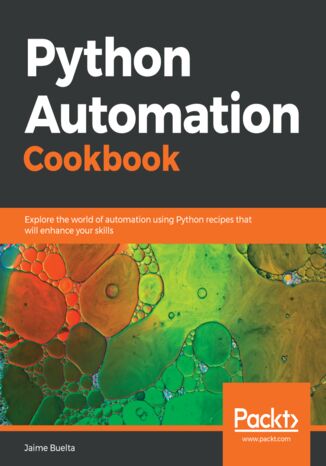
Jaime Buelta
Have you been doing the same old monotonous office work over and over again? Or have you been trying to find an easy way to make your life better by automating some of your repetitive tasks? Through a tried and tested approach, understand how to automate all the boring stuff using Python. The Python Automation Cookbook helps you develop a clear understanding of how to automate your business processes using Python, including detecting opportunities by scraping the web, analyzing information to generate automatic spreadsheets reports with graphs, and communicating with automatically generated emails. You’ll learn how to get notifications via text messages and run tasks while your mind is focused on other important activities, followed by understanding how to scan documents such as résumés. Once you’ve gotten familiar with the fundamentals, you’ll be introduced to the world of graphs, along with studying how to produce organized charts using Matplotlib. In addition to this, you’ll gain in-depth knowledge of how to generate rich graphics showing relevant information. By the end of this book, you’ll have refined your skills by attaining a sound understanding of how to identify and correct problems to produce superior and reliable systems.
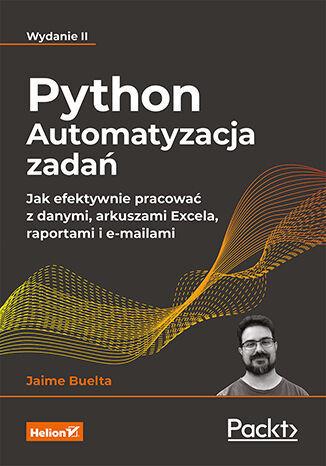
Jaime Buelta
Ile czasu marnujesz na wykonywanie monotonnych, długotrwałych zadań? Mowa o przeglądaniu setek stron czy plików, ręcznym przekształcaniu danych, rozsyłaniu e-maili, tworzeniu wykresów i wielu innych nudnych czynnościach. A gdyby tak zlecić tę pracę komputerowi, a samemu zająć się bardziej odpowiedzialnymi i kreatywnymi zadaniami? To jest do zrobienia — trzeba tylko poświęcić nieco czasu i odpowiednio wykorzystać dostępne rozwiązania, takie jak Python i imponująca kolekcja opracowanych dla tego języka narzędzi, bibliotek i rozszerzeń. Ta książka jest praktycznym zbiorem gotowych receptur, przeznaczonym dla początkujących użytkowników Pythona. Wydanie zostało dostosowane do wersji 3.8 języka, dodano też nowy materiał dotyczący automatyzowania testów, uczenia maszynowego i pracy z nieuporządkowanymi danymi. Dzięki lekturze zaczniesz automatyzować procesy biznesowe — napiszesz aplikację do pobierania informacji ze stron internetowych, tworzenia raportów z wykresami i diagramami na podstawie arkuszów kalkulacyjnych, a także automatycznego generowania e-maili. Będziesz również tworzyć zaawansowane grafiki z potrzebnymi informacjami, automatyzować kampanie marketingowe oraz stosować techniki testowania i debugowania. W książce znajdziesz receptury, dzięki którym: przekształcisz dane na potrzeby data science za pomocą biblioteki pandas zautomatyzujesz klasyfikowanie tekstu, filtrowanie e-maili i pobieranie informacji ze stron WWW użyjesz biblioteki Matplotlib do generowania wykresów, diagramów i map zautomatyzujesz różne zadania związane z generowaniem raportów nauczysz się pracy z Beautiful Soup, programem cron, a także z dziennikami i wyrażeniami regularnymi napiszesz bot dla komunikatora Telegram, czytnik kanałów RSS i model uczenia maszynowego Automatyzacja: monotonne zadania zostaw Pythonowi!
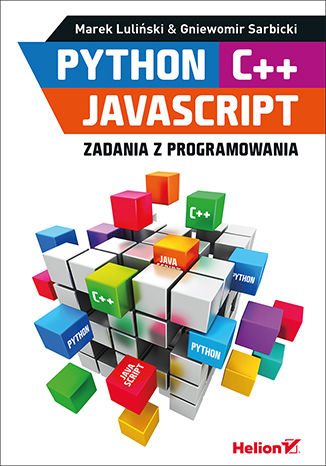
Python, C++, JavaScript. Zadania z programowania
Marek Luliński, Gniewomir Sarbicki
Zadania z programowania? Zbiór programów do napisania! Pascal, C++, JavaScript i Python — oto zbiór języków, które przećwiczysz dzięki zadaniom w tej książce. Każdy z nich ma nieco inne zastosowania, wszystkie zaś są lub będą w najbliższym czasie wykorzystywane na lekcjach informatyki i na egzaminach, a ich zastosowanie w obliczu realnych problemów może wydatnie uprościć Ci życie. Jak najłatwiej i najszybciej nauczyć się programować w tych językach? Oczywiście dzięki ćwiczeniom! Z tą książką napiszesz konkretne programy rozwiązujące zadania numeryczne, logiczne i matematyczne — w każdym z powyższych języków. Z praktycznym zestawem zawartych tu zadań spróbujesz znaleźć permutacje zbioru, zaszyfrować tekst szyfrem Cezara, zbudować trójkąt Pascala i wskazać punkty kratowe wewnątrz koła o promieniu r. Napiszesz według własnego pomysłu programy odpowiadające na postawione w zadaniach pytania. Jeśli jesteś uczniem, będziesz mógł w ten sposób ćwiczyć nie tylko umiejętności programistyczne, lecz także matematyczne. Jeśli jesteś nauczycielem, znajdziesz tu wiele inspiracji dla swoich uczniów. Gotowy pogram będziesz mógł później porównać z rozwiązaniami proponowanymi przez autorów. Dogadaj się z komputerem — w każdym z czterech języków! --- UWAGA: Skala trudności zadań odpowiada poziomowi szkoły średniej.
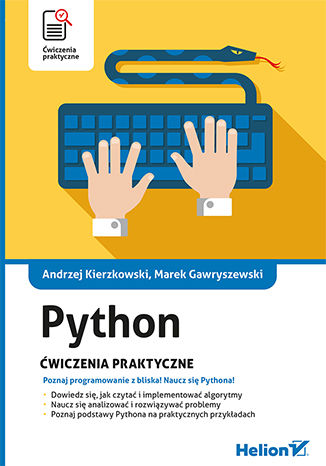
Andrzej Kierzkowski, Marek Gawryszewski
Poznaj programowanie z bliska! Naucz się Pythona! Dowiedz się, jak czytać i implementować algorytmy Naucz się analizować i rozwiązywać problemy Poznaj podstawy Pythona na praktycznych przykładach Python to niezwykle wydajny i wszechstronny język programowania, który znajduje zastosowanie w różnych dziedzinach informatyki. Stanowi fundament rozwiązań wykorzystywanych przez YouTube’a czy aplikacje Google'a. Czytelność i zwięzłość kodu, szeroki wybór bibliotek standardowych oraz wsparcie ze strony producentów różnych systemów operacyjnych sprawiają, że język ten z roku na rok zyskuje coraz większą popularność wśród profesjonalnych programistów i wśród osób amatorsko tworzących wtyczki czy skrypty uruchamiane w aplikacjach komercyjnych. Czas do nich dołączyć! Sięgnij po książkę Python. Ćwiczenia praktyczne, która w prosty i przystępny sposób wprowadzi Cię w świat programowania komputerów przy użyciu jednego z najpopularniejszych języków! Naucz się czytać algorytmy i implementować je na praktycznych przykładach, poznaj podstawy Pythona, odkryj składnię oraz konstrukcje stosowane w tym języku i zacznij myśleć jak zawodowy programista! Tylko krok dzieli Cię od rozpoczęcia przygody z programowaniem, więc nie trać czasu i już dziś weź się do ćwiczeń! Wprowadzenie do algorytmiki Analiza i rozwiązywanie problemów Instalacja i korzystanie z IDE Struktura programu i instrukcje Pythona Zmienne, proste typy danych i operatory Korzystanie z bibliotek standardowych Złożone typy danych i programowanie obiektowe Praktyczne zadania do samodzielnego wykonania Dowiedz się, jak oswoić Pythona!
Avinash Navlani, Cornellius Yudha Wijaya
Data analysis enables you to generate value from small and big data by discovering new patterns, and Python is one of the most popular tools for analyzing a wide variety of data. With this book, you'll get up and running using Python for data analysis by exploring the different phases used in data analysis and learning how to use modern libraries from the Python ecosystem to create efficient data pipelines.Starting with the essential statistical and data analysis fundamentals using Python, you'll perform complex data analysis and modeling, data manipulation, data cleaning, and data visualization using easy-to-follow examples. You'll then understand how to conduct time series analysis and signal processing using ARMA models. As you advance, you'll get to grips with smart processing and data analytics using machine learning algorithms such as regression, classification, Principal Component Analysis (PCA), and clustering. You'll also work on real-world examples to analyze textual and image data using natural language processing (NLP) and image analytics techniques, respectively. Finally, the book will demonstrate parallel computing using Dask.By the end of this data analysis book, you'll be equipped with the skills you need to prepare data for analysis and create meaningful data visualizations for forecasting values from data.
Avinash Navlani, Ivan Idris
Data analysis enables you to generate value from small and big data by discovering new patterns and trends, and Python is one of the most popular tools for analyzing a wide variety of data. With this book, you’ll get up and running using Python for data analysis by exploring the different phases and methodologies used in data analysis and learning how to use modern libraries from the Python ecosystem to create efficient data pipelines.Starting with the essential statistical and data analysis fundamentals using Python, you’ll perform complex data analysis and modeling, data manipulation, data cleaning, and data visualization using easy-to-follow examples. You’ll then understand how to conduct time series analysis and signal processing using ARMA models. As you advance, you’ll get to grips with smart processing and data analytics using machine learning algorithms such as regression, classification, Principal Component Analysis (PCA), and clustering. In the concluding chapters, you’ll work on real-world examples to analyze textual and image data using natural language processing (NLP) and image analytics techniques, respectively. Finally, the book will demonstrate parallel computing using Dask.By the end of this data analysis book, you’ll be equipped with the skills you need to prepare data for analysis and create meaningful data visualizations for forecasting values from data.
Armando Fandango
Data analysis techniques generate useful insights from small and large volumes of data. Python, with its strong set of libraries, has become a popular platform to conduct various data analysis and predictive modeling tasks. With this book, you will learn how to process and manipulate data with Python for complex analysis and modeling. We learn data manipulations such as aggregating, concatenating, appending, cleaning, and handling missing values, with NumPy and Pandas. The book covers how to store and retrieve data from various data sources such as SQL and NoSQL, CSV fies, and HDF5. We learn how to visualize data using visualization libraries, along with advanced topics such as signal processing, time series, textual data analysis, machine learning, and social media analysis.The book covers a plethora of Python modules, such as matplotlib, statsmodels, scikit-learn, and NLTK. It also covers using Python with external environments such as R, Fortran, C/C++, and Boost libraries.