
Programowanie
Niezależnie czy dopiero rozpoczynacie swoją przygodę z programowaniem, czy jesteście już uznanymi na rynku profesjonalistami, to w kategorii Programowanie na pewno znajdziecie podręczniki, które pomogą Wam w przebiegu pracy, czy też w nauce podstaw programowania.
W książkach z tego działu zawarta jest wiedza zarówno związana z czysto technicznymi sprawami typu składnia języków, ale także z umiejętnościami bardziej "miękkimi" jak obsługa i wykorzystanie pełnych możliwości środowisk programistycznych, czy też projektowanie oprogramowania lub metody numeryczne czy oraz struktury danych.
Python. Kurs dla nauczycieli i studentów. Wydanie II
Gniewomir Sarbicki
Python - prosto, szybko, skutecznie Konstrukcje języka Python Sposoby ich użycia Zadania z rozwiązaniami Python to nowoczesny, potężny i uniwersalny język programowania, który zdobył dużą popularność zarówno wśród zawodowców z branży IT, jak i w szkołach i na uczelniach - jako doskonałe narzędzie do nauki programowania na różnych poziomach. Duże możliwości, prostota i zwartość składni, czytelność kodu, wszechstronność zastosowań i wsparcie wielu paradygmatów sprawiają, że co najmniej podstawowa znajomość Pythona stanowi jedno z najczęstszych wymagań wobec poszukujących pracy programistów i inżynierów, nawet jeśli na co dzień mają oni używać zupełnie innych technologii. Ta książka pomoże nauczycielom, uczniom, studentom i wszystkim zainteresowanym poznaniem Pythona opanować podstawy tego języka i rozpocząć stosowanie go w praktyce. Krok po kroku uczy czytać i pisać kod, przedstawiając zarówno konstrukcje i funkcje języka, jak i możliwości ich praktycznego użycia do rozwiązywania typowych problemów programistycznych. Programowanie interfejsów graficznych, programowanie wielowątkowe, programowanie sieciowe, tworzenie stron WWW, obliczenia numeryczne - w tym wszystkim świetnie sprawdzi się Python. I wszystko to można znaleźć w tej książce! Pisanie i uruchamianie programów w Pythonie Podstawowe typy danych i ich zastosowanie Instrukcje warunkowe, pętle i funkcje Obsługa wyjątków i używanie plików Programowanie obiektowe w Pythonie Graficzny interfejs użytkownika Wielowątkowość, sieci, bazy danych i strony WWW Funkcje wyższych rzędów Iteratory, generatory, koprocedury Programowanie asynchroniczne i współbieżne Programowanie w Pythonie w praktyce
Python. Leksykon kieszonkowy. Wydanie IV
Mark Lutz
Jakie możliwości kryją standardowe moduły biblioteczne? Jak wykonywać operacje na plikach? Jak stworzyć graficzny interfejs użytkownika? Python to wyjątkowo praktyczny język programowania, idealnie nadający się do szybkiego rozwiązywania niecodziennych problemów, z którymi często borykają się koderzy. Nie wymusza on stosowania jednego stylu programowania, co pozwala na dużo większą elastyczność w trakcie pisania kodu. Umożliwia programowanie obiektowe, strukturalne i funkcyjne, a ponadto udostępnia zaawansowane mechanizmy zarządzania pamięcią, zapewnia dynamiczne sprawdzanie typów oraz czytelną składnię. Te wszystkie zalety powodują, że Python ma grupę swoich wiernych fanów. Niniejsza książka należy do popularnej serii "Leksykon kieszonkowy", dzięki której zawsze i wszędzie możesz przypomnieć sobie wybrane zagadnienia, związane z różną tematyką. Pozycja, którą właśnie trzymasz w rękach, została poświęcona językowi Python. W trakcie jej lektury zapoznasz się z takimi zagadnieniami, jak sterowanie przepływem programu, wykorzystanie pętli, list, słowników oraz operacje na plikach. Ponadto w każdej chwili będziesz mógł sprawdzić składnię oraz sposoby wykorzystania funkcji i wyjątków wbudowanych. Książka stanowi znakomite kompendium wiedzy na temat języka Python. Sprawdzi się ona w rękach początkującego użytkownika - jako przewodnik, a w rękach zaawansowanego programisty - jako pomocnik. Wbudowane typy i operatory Działania na liczbach Operacje na łańcuchach znaków Wykorzystanie Unicode w Pythonie Obsługa list oraz słowników Operacje na zbiorach i plikach Sterowanie przepływem programu Konwersja typów Obsługa wyjątków Wykorzystanie przestrzeni nazw Zasięgi zmiennych Przeciążanie operatorów Standardowe moduły biblioteczne Zastosowanie wyrażeń regularnych Tworzenie graficznego interfejsu użytkownika Wyciśnij jeszcze więcej z języka Python!
Python. Leksykon kieszonkowy. Wydanie V
Mark Lutz
Język Python obecny jest na rynku od ponad 20 lat. Opracowany został na początku lat dziewięćdziesiątych XX wieku i błyskawicznie zaczął zdobywać uznanie programistów na całym świecie. Python sprawdza się doskonale w pisaniu skryptów oraz narzędzi, a w dużym projekcie także nie zawiedzie oczekiwań. Język ten korzysta z automatycznego zarządzania pamięcią oraz umożliwia obiektowe i funkcyjne podejście do tworzonego programu. Jednym z jego najważniejszych atutów jest bardzo silna społeczność programistów, wymieniająca się na bieżąco informacjami na temat praktycznych zastosowań tego języka. Dzięki temu uzyskanie odpowiedzi na trapiące Cię pytania nie powinno stanowić problemu. Jeżeli jednak chcesz mieć zawsze pod ręką sprawdzone źródło informacji, które pozwoli Ci w każdej sytuacji rozwiać wątpliwości, to trafiłeś na doskonałą pozycję. Należy ona do serii Leksykon kieszonkowy i charakteryzuje się niezwykle zwięzłym, przejrzystym układem najważniejszych treści oraz poręczną formą. Znajdziesz tu szczegółowe informacje na temat typów wbudowanych, wyjątków, programowania obiektowego oraz przetwarzania nazw i reguł zasięgu. Kolejne wydanie tej książki zostało ulepszone i zaktualizowane o mnóstwo nowych informacji, takich jak wykorzystanie Python Launcher w systemie Windows czy formalne reguły dziedziczenia. To doskonałe źródło informacji na temat języka Python! Dzięki tej książce: poznasz podstawy Pythona zapoznasz się z zasadami programowania w tym języku poznasz typy wbudowane wykorzystasz standardowe moduły będziesz mieć zawsze pod ręką solidne źródło informacji o Pythonie Najlepsze rozwiązania typowych problemów!
Alexander Combs, Saurabh Chhajed, Michael Roman
Machine learning is transforming the way we understand and interact with the world around us. This book is the perfect guide for you to put your knowledge and skills into practice and use the Python ecosystem to cover key domains in machine learning. This second edition covers a range of libraries from the Python ecosystem, including TensorFlow and Keras, to help you implement real-world machine learning projects.The book begins by giving you an overview of machine learning with Python. With the help of complex datasets and optimized techniques, you’ll go on to understand how to apply advanced concepts and popular machine learning algorithms to real-world projects. Next, you’ll cover projects from domains such as predictive analytics to analyze the stock market and recommendation systems for GitHub repositories. In addition to this, you’ll also work on projects from the NLP domain to create a custom news feed using frameworks such as scikit-learn, TensorFlow, and Keras. Following this, you’ll learn how to build an advanced chatbot, and scale things up using PySpark. In the concluding chapters, you can look forward to exciting insights into deep learning and you'll even create an application using computer vision and neural networks.By the end of this book, you’ll be able to analyze data seamlessly and make a powerful impact through your projects.
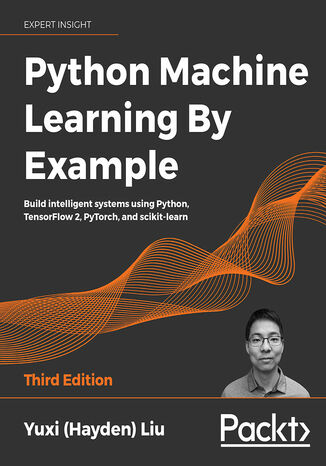
Yuxi (Hayden) Liu
Python Machine Learning By Example, Third Edition serves as a comprehensive gateway into the world of machine learning (ML).With six new chapters, on topics including movie recommendation engine development with Naïve Bayes, recognizing faces with support vector machine, predicting stock prices with artificial neural networks, categorizing images of clothing with convolutional neural networks, predicting with sequences using recurring neural networks, and leveraging reinforcement learning for making decisions, the book has been considerably updated for the latest enterprise requirements.At the same time, this book provides actionable insights on the key fundamentals of ML with Python programming. Hayden applies his expertise to demonstrate implementations of algorithms in Python, both from scratch and with libraries.Each chapter walks through an industry-adopted application. With the help of realistic examples, you will gain an understanding of the mechanics of ML techniques in areas such as exploratory data analysis, feature engineering, classification, regression, clustering, and NLP.By the end of this ML Python book, you will have gained a broad picture of the ML ecosystem and will be well-versed in the best practices of applying ML techniques to solve problems.
Yuxi (Hayden) Liu
The surge in interest in machine learning (ML) is due to the fact that it revolutionizes automation by learning patterns in data and using them to make predictions and decisions. If you’re interested in ML, this book will serve as your entry point to ML.Python Machine Learning By Example begins with an introduction to important ML concepts and implementations using Python libraries. Each chapter of the book walks you through an industry adopted application. You’ll implement ML techniques in areas such as exploratory data analysis, feature engineering, and natural language processing (NLP) in a clear and easy-to-follow way.With the help of this extended and updated edition, you’ll understand how to tackle data-driven problems and implement your solutions with the powerful yet simple Python language and popular Python packages and tools such as TensorFlow, scikit-learn, gensim, and Keras. To aid your understanding of popular ML algorithms, the book covers interesting and easy-to-follow examples such as news topic modeling and classification, spam email detection, stock price forecasting, and more.By the end of the book, you’ll have put together a broad picture of the ML ecosystem and will be well-versed with the best practices of applying ML techniques to make the most out of new opportunities.
Python Machine Learning By Example. The easiest way to get into machine learning
Yuxi (Hayden) Liu, Ivan Idris
Data science and machine learning are some of the top buzzwords in the technical world today. A resurging interest in machine learning is due to the same factors that have made data mining and Bayesian analysis more popular than ever. This book is your entry point to machine learning. This book starts with an introduction to machine learning and the Python language and shows you how to complete the setup. Moving ahead, you will learn all the important concepts such as, exploratory data analysis, data preprocessing, feature extraction, data visualization and clustering, classification, regression and model performance evaluation. With the help of various projects included, you will find it intriguing to acquire the mechanics of several important machine learning algorithms – they are no more obscure as they thought. Also, you will be guided step by step to build your own models from scratch. Toward the end, you will gather a broad picture of the machine learning ecosystem and best practices of applying machine learning techniques. Through this book, you will learn to tackle data-driven problems and implement your solutions with the powerful yet simple language, Python. Interesting and easy-to-follow examples, to name some, news topic classification, spam email detection, online ad click-through prediction, stock prices forecast, will keep you glued till you reach your goal.
Giuseppe Ciaburro, Prateek Joshi
This eagerly anticipated second edition of the popular Python Machine Learning Cookbook will enable you to adopt a fresh approach to dealing with real-world machine learning and deep learning tasks.With the help of over 100 recipes, you will learn to build powerful machine learning applications using modern libraries from the Python ecosystem. The book will also guide you on how to implement various machine learning algorithms for classification, clustering, and recommendation engines, using a recipe-based approach. With emphasis on practical solutions, dedicated sections in the book will help you to apply supervised and unsupervised learning techniques to real-world problems. Toward the concluding chapters, you will get to grips with recipes that teach you advanced techniques including reinforcement learning, deep neural networks, and automated machine learning.By the end of this book, you will be equipped with the skills you need to apply machine learning techniques and leverage the full capabilities of the Python ecosystem through real-world examples.