
Programowanie
Niezależnie czy dopiero rozpoczynacie swoją przygodę z programowaniem, czy jesteście już uznanymi na rynku profesjonalistami, to w kategorii Programowanie na pewno znajdziecie podręczniki, które pomogą Wam w przebiegu pracy, czy też w nauce podstaw programowania.
W książkach z tego działu zawarta jest wiedza zarówno związana z czysto technicznymi sprawami typu składnia języków, ale także z umiejętnościami bardziej "miękkimi" jak obsługa i wykorzystanie pełnych możliwości środowisk programistycznych, czy też projektowanie oprogramowania lub metody numeryczne czy oraz struktury danych.
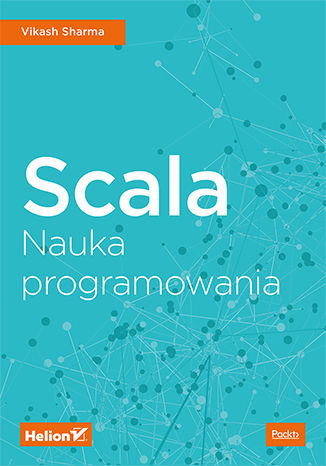
Vikash Sharma
Scala jest językiem programowania ogólnego przeznaczenia, który łączy cechy języków funkcyjnych i obiektowych. Jego twórcy postawili sobie za cel skalowalność napisanych w nim aplikacji - stąd wzięła się nazwa Scala. Scala jest oparta na wirtualnej maszynie Javy, umożliwia programowanie funkcyjne i oferuje bogaty wybór typów. Dzięki tym cechom można tworzyć kod mniej podatny na występowanie błędów w trakcie działania programu. Po uzyskaniu pewnej biegłości w kodowaniu praca z tym językiem staje się prawdziwą przyjemnością, nawet podczas tworzenia frameworków czy bibliotek. Ten przystępny podręcznik przeznaczono dla programistów, którzy chcą poznać język Scala, aby wykorzystywać go do pisania współbieżnych, skalowalnych i reaktywnych aplikacji. Przedstawiono tu podstawy niezbędne do rozpoczęcia kodowania w Scali: składnię języka, podstawowe typy danych, literały czy zmienne. Następnie omówiono struktury danych w Scali i sposoby korzystania z funkcji wyższego rzędu. Zaprezentowano również takie koncepcje jak dopasowanie wzorca, klasy przypadku oraz zagadnienia związane z programowaniem funkcyjnym i programowaniem zorientowanym obiektowo. Opisano techniki programowania asynchronicznego i reaktywnego. Znalazło się tu także obszerne wprowadzenie do frameworka Akka. W tej książce między innymi: paradygmaty programowania a korzystanie ze Scali kolekcje modyfikowalne i niemodyfikowalne koncepcja domniemania i praca z wyjątkami programowanie równoległe, asynchroniczne i reaktywne programowanie sterowane testami w Scali Scala: nowoczesność i prostota w każdej skali!
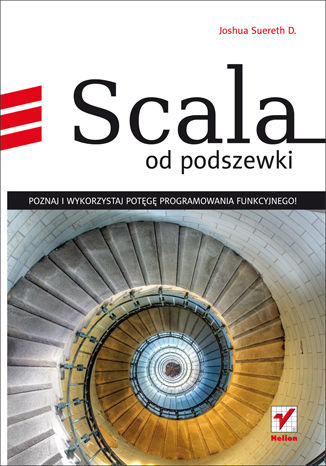
Joshua Suereth D.
Scala to słowo, które ostatnio nie schodzi z ust programistów Javy. Pod tą nazwą kryje się język łączący światy programowania funkcyjnego i obiektowego. Jego ogromną zaletą jest działanie w oparciu o wirtualną maszynę Javy. Pozwala to między innymi na bezproblemową komunikację i współdzielenie kodu między oboma językami. James Gosling, twórca Javy, zapytany o to, jakiego języka oprogramowania działającego w ten sposób użyłby obecnie (gdyby nie mógł wykorzystać Javy), odparł bez zastanowienia: „Scala!”. To chyba najlepszy dowód na to, że ten język wart jest Twojego czasu! Dzięki tej książce opanujesz Scalę szybko i bezboleśnie, więc będziesz mógł wykorzystać jej zalety już w najbliższym projekcie. W trakcie lektury poznasz składnię, fundamentalne zasady tworzenia oprogramowania w Scali oraz konwencje kodowania w tym języku. W kolejnych rozdziałach dowiesz się, czym są niejawne widoki, jakie typy danych masz do dyspozycji i jakie są ich ograniczenia. Co jeszcze? Integracja Scali z Javą to niezwykle istotny temat, dający Ci pole do popisu! Ponadto poznasz wzorce stosowane w programowaniu funkcyjnym. Słowo wstępne do tej niezwykłej książki napisał sam Martin Odersky - twórca języka Scala! Niniejsza książka jest najlepszym kompendium wiedzy na temat programowania w tym języku. Musisz ją mieć! Poznaj: konwencje obowiązujące w Scali składnię języka najlepsze wzorce projektowe stosowane w programowaniu funkcyjnym potencjał języka Scala! Poznaj i wykorzystaj potęgę programowania funkcyjnego!
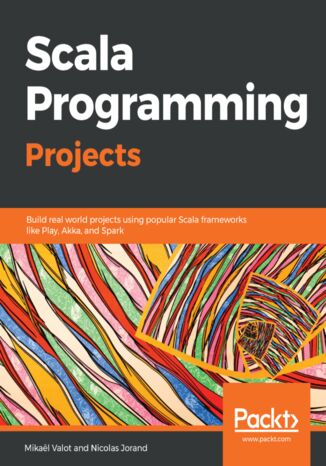
Mikael Valot, Nicolas Jorand
Scala Programming Projects is a comprehensive project-based introduction for those who are new to Scala. Complete with step-by-step instructions and easy-to-follow tutorials that demonstrate best practices when building applications, this Scala book will have you building real-world projects in no time.Starting with the fundamentals of software development, you’ll begin with simple projects, such as developing a financial independence calculator, and then advance to more complex projects, such as a building a shopping application and a Bitcoin transaction analyzer. You’ll explore a variety of Scala features, including its OOP and FP capabilities, and learn how to write concise, reactive, and concurrent applications in a type-safe manner. You’ll also understand how to use libraries such as Akka and Play. Furthermore, you’ll be able to integrate your Scala apps with Kafka, Spark, and Zeppelin, along with deploying applications on a cloud platform.By the end of the book, you’ll have a firm foundation in Java programming that’ll enable you to solve a variety of real-world problems, and you’ll have built impressive projects to add to your professional portfolio.
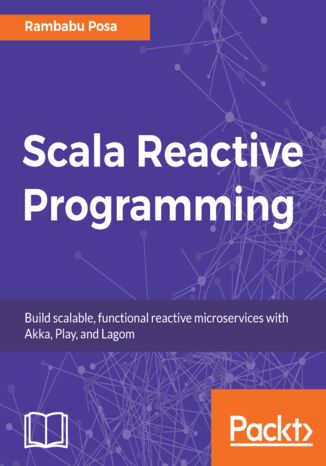
Rambabu Posa
Reactive programming is a scalable, fast way to build applications, and one that helps us write code that is concise, clear, and readable. It can be used for many purposes such as GUIs, robotics, music, and others, and is central to many concurrent systems. This book will be your guide to getting started with Reactive programming in Scala.You will begin with the fundamental concepts of Reactive programming and gradually move on to working with asynchronous data streams. You will then start building an application using Akka Actors and extend it using the Play framework. You will also learn about reactive stream specifications, event sourcing techniques, and different methods to integrate Akka Streams into the Play Framework. This book will also take you one step forward by showing you the advantages of the Lagom framework while working with reactive microservices. You will also learn to scale applications using multi-node clusters and test, secure, and deploy your microservices to the cloud.By the end of the book, you will have gained the knowledge to build robust and distributed systems with Scala and Akka.
Scala Test-Driven Development. Write clean scala code that works
Gaurav Sood
Test-driven development (TDD) produces high-quality applications in less time than is possible with traditional methods. Due to the systematic nature of TDD, the application is tested in individual units as well as cumulatively, right from the design stage, to ensure optimum performance and reduced debugging costs. This step-by-step guide shows you how to use the principles of TDD and built-in Scala testing modules to write clean and fully tested Scala code and give your workflow the change it needs to let you create better applications than ever before. After an introduction to TDD, you will learn the basics of ScalaTest, one of the most flexible and most popular testing tools around for Scala, by building your first fully test-driven application. Building on from that you will learn about the ScalaTest API and how to refactor code to produce high-quality applications. We’ll teach you the concepts of BDD (Behavior-driven development) and you’ll see how to add functional tests to the existing suite of tests. You’ll be introduced to the concepts of Mocks and Stubs and will learn to increase test coverage using properties. With a concluding chapter on miscellaneous tools, this book will enable you to write better quality code that is easily maintainable and watch your apps change for the better.
Jason Myerscough
Azure Data Explorer (ADX) enables developers and data scientists to make data-driven business decisions. This book will help you rapidly explore and query your data at scale and secure your ADX clusters.The book begins by introducing you to ADX, its architecture, core features, and benefits. You'll learn how to securely deploy ADX instances and navigate through the ADX Web UI, cover data ingestion, and discover how to query and visualize your data using the powerful Kusto Query Language (KQL). Next, you'll get to grips with KQL operators and functions to efficiently query and explore your data, as well as perform time series analysis and search for anomalies and trends in your data. As you progress through the chapters, you'll explore advanced ADX topics, including deploying your ADX instances using Infrastructure as Code (IaC). The book also shows you how to manage your cluster performance and monthly ADX costs by handling cluster scaling and data retention periods. Finally, you'll understand how to secure your ADX environment by restricting access with best practices for improving your KQL query performance.By the end of this Azure book, you'll be able to securely deploy your own ADX instance, ingest data from multiple sources, rapidly query your data, and produce reports with KQL and Power BI.
Tarik Makota, Brian Maguire, Danny Gagne, Rajeev...
Amazon Kinesis is a collection of secure, serverless, durable, and highly available purpose-built data streaming services. This data streaming service provides APIs and client SDKs that enable you to produce and consume data at scale.Scalable Data Streaming with Amazon Kinesis begins with a quick overview of the core concepts of data streams, along with the essentials of the AWS Kinesis landscape. You'll then explore the requirements of the use case shown through the book to help you get started and cover the key pain points encountered in the data stream life cycle. As you advance, you'll get to grips with the architectural components of Kinesis, understand how they are configured to build data pipelines, and delve into the applications that connect to them for consumption and processing. You'll also build a Kinesis data pipeline from scratch and learn how to implement and apply practical solutions. Moving on, you'll learn how to configure Kinesis on a cloud platform. Finally, you’ll learn how other AWS services can be integrated into Kinesis. These services include Redshift, Dynamo Database, AWS S3, Elastic Search, and third-party applications such as Splunk.By the end of this AWS book, you’ll be able to build and deploy your own Kinesis data pipelines with Kinesis Data Streams (KDS), Kinesis Data Firehose (KFH), Kinesis Video Streams (KVS), and Kinesis Data Analytics (KDA).
Dean MacNeil, Aslam Cader
Jira Align is a platform purpose-built for enterprises to connect strategy with execution and drive transparency, consistency, and predictability at all levels of scale. The platform supports business value delivery in agile frameworks such as LeSS, DAD, and SAFe. It also caters to organizations that mix agile with waterfall to support scaled bimodal delivery.Starting with an introduction to the platform and its features, this book takes you through the foundational building blocks of Jira Align. You’ll learn how an organization can benefit from implementing Jira Align and understand how to connect dimensions such as people, work, time, and outcomes. The book takes you through the typical steps for implementing Jira Align for maximizing outcomes and helps you solve common team, program, and portfolio-level challenges by enhancing visibility, tracking dependencies and risks, and using reports for real-time, distributed decision making. Throughout the book, you’ll explore features such as remote agile ceremonies, live roadmaps, and objectives and key results (OKRs). You’ll also get to grips with lean portfolio management, financial reporting, and using the program board for planning and execution.By the end of this book, you’ll be well versed in the key features of Jira Align and be able to leverage them to support all levels of agile at scale.