
Programowanie
Robert Nagy
Sharing code between platforms can help developers gain a competitive edge, and Kotlin Multiplatform Mobile (KMM) offers a sensible way to do it. KMM helps mobile teams share code between Android and iOS in a flexible way, leaving room for native development.The book begins by helping you to gain a clear understanding of the Kotlin Multiplatform approach, how it works, and how it is different from cross-platform technologies, such as React Native and Flutter, and code sharing options, such as C++. You'll then see how your team can use this software development kit (SDK) to build native applications more effectively by learning timeless concepts and working through practical examples. As you advance, you'll get to grips with the core concepts, understand why UI sharing fails, and get hands-on with developing a small KMM application. Finally, you'll discover expert tips and best practices, along with production- and adoption-related questions, that will help you take the next step in your project and career.By the end of this Kotlin book, you'll have gained a solid understanding of the capabilities of KMM and be able to share code between Android and iOS flexibly.
Robert E. Jackson
Within the elastic and dynamic nature of cloud computing, efficient and accurate service discovery provides the cornerstone for all communications. HashiCorp Consul facilitates this service discovery efficiently and securely, independent of the operating environment. This book will help you build a solid understanding of both the concepts and applications of HashiCorp Consul.You'll begin by finding out what you can do with Consul, focusing on the conceptual views of configuration samples along with Terraform code to expedite lab environment and hands-on experimentation, which will enable you to apply Consul effectively in your everyday lives. As you advance, you'll learn how to set up your own Consul cluster and agents in a single datacenter or location and understand how Consul utilizes RAFT and GOSSIP protocols for communication. You'll also explore the practical applications of primary Consul use cases, including communication flows and configuration and code examples. With that knowledge, you'll extend Consul across datacenters to discuss the applicability of multiple regions, multiple clouds, and hybrid cloud environments.By the end of this Consul book, you will have the tools needed to create and operate your own Consul cluster and be able to facilitate your service discovery and communication.
Aleksandra Desmurs-Linczewska
Managing state in a React Native app can be challenging as it is one of the most difficult concepts to grasp while learning React Native. This is because there are so many ways to do it, and because there is a lack of clear guidelines on what should be used and why.Simplifying State Management in React Native is a comprehensive introduction for those who are new to creating robust React Native apps that will have you up to speed in no time. You’ll get to grips with the different state management strategies and libraries available. As you progress through the chapters, you’ll try out different solutions, as well as compare and choose which solution is perfectly suited to your future projects and personal preferences. Finally, you’ll create a social media clone app using all the concepts and examples that you’ve learned in this book.By the end of this book, you’ll be able to take on existing projects that use various state management strategies and libraries, and confidently make decisions about state management.
Simulation for Data Science with R. Effective Data-driven Decision Making
Matthias Templ
Data Science with R aims to teach you how to begin performing data science tasks by taking advantage of Rs powerful ecosystem of packages. R being the most widely used programming language when used with data science can be a powerful combination to solve complexities involved with varied data sets in the real world.The book will provide a computational and methodological framework for statistical simulation to the users. Through this book, you will get in grips with the software environment R. After getting to know the background of popular methods in the area of computational statistics, you will see some applications in R to better understand the methods as well as gaining experience of working with real-world data and real-world problems. This book helps uncover the large-scale patterns in complex systems where interdependencies and variation are critical. An effective simulation is driven by data generating processes that accurately reflect real physical populations. You will learn how to plan and structure a simulation project to aid in the decision-making process as well as the presentation of results.By the end of this book, you reader will get in touch with the software environment R. After getting background on popular methods in the area, you will see applications in R to better understand the methods as well as to gain experience when working on real-world data and real-world problems.
Skrypty powłoki systemu Linux. Zagadnienia zaawansowane. Wydanie II
Mokhtar Ebrahim, Andrew Mallett
Mimo że nowe wydania dystrybucji Linuksa są coraz łatwiejsze w obsłudze, a ważniejsze czynności administracyjne mogą być wykonywane za pomocą intuicyjnego interfejsu graficznego, wciąż nie można się obejść bez powłoki Bourne'a, znanej jako bash. Dobrze napisany skrypt powłoki pozwala na automatyzację nudnych obowiązków, umożliwia monitorowanie stanu systemu, optymalizację jego wydajności czy dostosowanie go do potrzeb. Warto też wypróbować ciekawą alternatywę dla tradycyjnych skryptów powłoki bash, czyli kod Pythona. Dzięki tej książce nauczysz się wszystkiego, co jest potrzebne do pisania profesjonalnych skryptów powłoki. Dowiesz się, czym są powłoki systemu Linux, dlaczego tak ważna jest powłoka bash i w jaki sposób edytuje się skrypty. Nauczysz się pracy na zmiennych, debugowania kodu i tworzenia skryptów interaktywnych. Będziesz korzystać z instrukcji warunkowych i pętli, a także z edytora vim, pakietu Visual Studio Code oraz edytora strumieniowego sed. Zapoznasz się z zasadami pisania funkcji, dzięki którym będziesz mógł wielokrotnie używać uniwersalnych fragmentów kodu. Ponadto zdobędziesz umiejętność przetwarzania danych tekstowych, zarówno za pomocą polecenia AWK, jak i wyrażeń regularnych. Na koniec przekonasz się, jak ciekawą alternatywą dla skryptów powłoki bash jest kod napisany w Pythonie! W tej książce między innymi: wyczerpujące wprowadzenie do tworzenia i debugowania skryptów powłoki składnia alternatywna i operacje arytmetyczne praca z blokami kodu i korzystanie z funkcji automatyzacja tworzenia hostów wirtualnych zaawansowane korzystanie z polecenia AWK skrypty do analizy plików dziennika i tworzenia raportów Opanuj sztukę pisania doskonałych skryptów powłoki!
Scott Meyers
Do opanowania języków C++11 i C++14 nie wystarcza zapoznanie się z wprowadzonymi w nich funkcjonalnościami (np. deklaracjami typu auto, semantyką operacji move, wyrażeniami lambda i obsługą współbieżności). Sztuką jest nauczenie się korzystania z tych funkcjonalności skutecznie tak, aby programy były poprawne, wydajne, łatwe w utrzymaniu i przenośne. Pomocna w tym będzie niniejsza książka, w której został opisany sposób tworzenia wspaniałego oprogramowania przy użyciu standardów C++11 i C++14 tj. nowoczesnego języka C++. Tematy: Zalety i wady inicjalizacji klamrowej, specyfikacji noexcept, technik doskonałego przekazywania argumentów oraz funkcji make służących do tworzenia wskaźników inteligentnych Związki między std::move, std::forward, odwołaniami do r-wartości i odwołaniami uniwersalnymi Techniki pisania czytelnych, poprawnych i skutecznych wyrażeń lambda Różnice między std::atomic a volatile, zalecane sposoby użycia każdej z tych deklaracji oraz ich związek z interfejsem API współbieżności w języku C++ Zmiany najlepszych rozwiązań znanych ze starego języka C++ (tj. C++98) wymagane podczas tworzenia oprogramowania w nowoczesnym języku C++ Książka Skuteczny nowoczesny C++ jest napisana zgodnie z wypróbowanym, opartym na wskazówkach i przykładach stylem wcześniejszych książek Scotta Meyersa, ale dotyczy całkowicie nowego materiału. Jest ważną pozycją dla każdego nowoczesnego twórcy oprogramowania w języku C++. Przed ponad 20 laty książki Scotta Meyersa z serii Effective C++ (Effective C++, More Effective C++ i Effective STL) wyznaczyły poziom odniesienia dla wskazówek dotyczących programowania w języku C++. Jego jasne, ujmujące wyjaśnienie skomplikowanego technicznego materiału przyniosły mu światową sławę, dzięki której stał się popularnym trenerem, konsultantem i prezenterem konferencyjnym. Scott Meyers zyskał tytuł doktora informatyki na uniwersytecie Brown. Kiedy już zapoznałem się z podstawami języka C++, sposobów programowania kodu produkcyjnego w tym języku nauczyłem się z serii książek Meyersa Effective C++. Książka Skuteczny nowoczesny C++ jest najważniejszym podręcznikiem dotyczącym istotnych wytycznych, stylów i idiomów przydatnych do skutecznego i dobrego stosowania nowoczesnego języka C++. Nie masz jej jeszcze? Kup ją. Teraz. Herb Sutter Przewodniczący komitetu standaryzacyjnego ISO C++ oraz architekt oprogramowania C++ w firmie Microsoft t
Skuteczny Rust. 35 konkretnych sposobów na ulepszenie kodu w języku Rust
David Drysdale
Popularność Rusta rośnie ze względu na jego cechy, takie jak bezpieczeństwo pamięci, bezpieczeństwo typów oraz bezpieczeństwo wątków. Jednak te same elementy sprawiają, że nauka Rusta stanowi wyzwanie nawet dla doświadczonych programistów. Ten praktyczny poradnik pomoże przejść do pisania idiomatycznego języka Rust. W efekcie będziemy mogli w pełni korzystać z systemu typów Rusta, gwarancji bezpieczeństwa oraz rozwijającego się ekosystemu. Adresatami tej książki są inżynierowie oprogramowania mający doświadczenie z istniejącym kompilowanym językiem lub borykający się z przekształceniem podstawowego zrozumienia składni Rusta w działające programy. Książka ta skupia się na koncepcyjnych różnicach między Rustem a innymi kompilowanymi językami i podaje konkretne zalecenia, łatwe do zastosowania przez programistów. Autor sprawi, że zamiast kiepskiego tłumaczenia z C++, wkrótce będziecie biegle pisać programy w języku Rust. Książka ta pomoże: - zrozumieć struktury podstawowego systemu typów Rusta; - nauczyć się idiomów Rusta służących do obsługi błędów, iteracji i innych elementów; - odkryć, jak działa ekosystem skrzynek Rusta; - wykorzystywać system typów Rusta do przedstawienia własnego projektu; - wygrywać pojedynki z funkcją borrow checker; - tworzyć rozbudowany projekt, w pełni wykorzystujący ekosystem narzędzi Rusta. David Drysdale jest inżynierem oprogramowania w firmie Google, który pracuje w języku Rust od 2019 roku, przede wszystkim w obszarze zabezpieczeń. Kierował pracami nad przepisaniem sprzętowego podsystemu kryptograficznego Androida na język Rust i jest autorem portu Rusta dla biblioteki kryptograficznej Tink. Pracował także w C/C++ i Go oraz nad tak zróżnicowanymi projektami jak jądro Linuksa i mobilne aplikacje wideokonferencji. "Skuteczny Rust to znakomity zbiór praktycznej wiedzy o języku, wykraczający poza podstawę. Porady zawarte w tej książce pomogą wam w osiągnięciu poziomu pewnego siebie i gruntownie wykształconego użytkownika Rusta". - Carol Nichols Współautorka książki The Rust Programming Language "Skuteczny Rust zagłębia się w większość zaleceń, które daję ludziom na temat sposobów ulepszania ich projektów. Jest to świetne źródło do podnoszenia swoich kwalifikacji w języku Rust". - Pietro Albini Były członek zespołu Rust Core
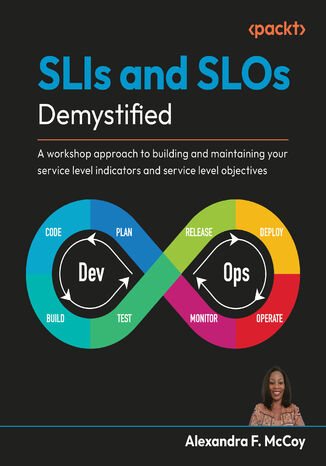
Alexandra F. McCoy
In today's digital landscape, ensuring service reliability is more than just a necessity—it’s a competitive advantage. SLIs and SLOs Demystified equips software engineers, SREs, and business leaders with the knowledge to build, measure, and manage service level indicators (SLIs) and service level objectives (SLOs) efficiently. Written by Alexandra F. McCoy—an experienced site reliability engineer with over a decade of experience in the cloud and technology industry—this book simplifies complex reliability concepts for engineers at all levels. Starting with a review of reliability engineering basics, Alexandra provides a step-by-step approach to defining impactful SLIs, facilitating productive SLO discussions, and integrating observability into your monitoring strategy. You'll also see how these principles apply to web applications, distributed systems, databases, and new features through real-world examples that can help you develop SLIs and SLOs for your specific environment. The book goes beyond implementation to explore the financial impact of reliability, alerting strategies, integration with incident management, and using error budgets for business decisions.By the end of this book, you’ll be able to drive operational excellence, minimize unplanned downtime, and optimize end user experiences with well-established reliability metrics.