
Programowanie

Damian Wojsław, Grzegorz Adamowicz
The Linux DevOps Handbook is a comprehensive resource that caters to both novice and experienced professionals, ensuring a strong foundation in Linux. This book will help you understand how Linux serves as a cornerstone of DevOps, offering the flexibility, stability, and scalability essential for modern software development and operations.You’ll begin by covering Linux distributions, intermediate Linux concepts, and shell scripting to get to grips with automating tasks and streamlining workflows. You’ll then progress to mastering essential day-to-day tools for DevOps tasks. As you learn networking in Linux, you’ll be equipped with connection establishment and troubleshooting skills. You’ll also learn how to use Git for collaboration and efficient code management.The book guides you through Docker concepts for optimizing your DevOps workflows and moves on to advanced DevOps practices, such as monitoring, tracing, and distributed logging. You’ll work with Terraform and GitHub to implement continuous integration (CI)/continuous deployment (CD) pipelines and employ Atlantis for automated software delivery. Additionally, you’ll identify common DevOps pitfalls and strategies to avoid them.By the end of this book, you’ll have built a solid foundation in Linux fundamentals, practical tools, and advanced practices, all contributing to your enhanced Linux skills and successful DevOps implementation.
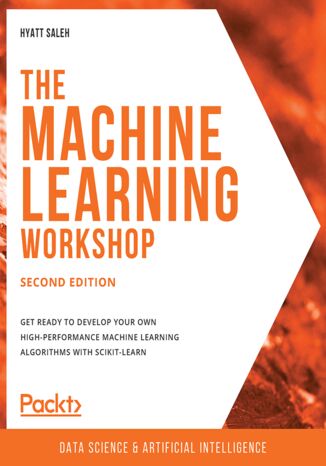
Hyatt Saleh , John Wesley Doyle ,...
Machine learning algorithms are an integral part of almost all modern applications. To make the learning process faster and more accurate, you need a tool flexible and powerful enough to help you build machine learning algorithms quickly and easily. With The Machine Learning Workshop, you'll master the scikit-learn library and become proficient in developing clever machine learning algorithms.The Machine Learning Workshop begins by demonstrating how unsupervised and supervised learning algorithms work by analyzing a real-world dataset of wholesale customers. Once you've got to grips with the basics, you'll develop an artificial neural network using scikit-learn and then improve its performance by fine-tuning hyperparameters. Towards the end of the workshop, you'll study the dataset of a bank's marketing activities and build machine learning models that can list clients who are likely to subscribe to a term deposit. You'll also learn how to compare these models and select the optimal one.By the end of The Machine Learning Workshop, you'll not only have learned the difference between supervised and unsupervised models and their applications in the real world, but you'll also have developed the skills required to get started with programming your very own machine learning algorithms.
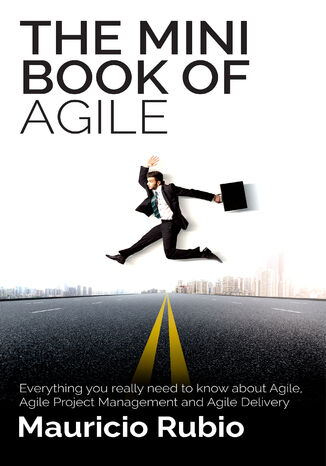
Mauricio Rubio Parra
Think of this book as Agile for Dummies (or Agile for anyone and everyone). This Agile book will allow you to master the most important concepts of Agile development, Agile project delivery, and Agile project management. This mini book has been designed to enable you to manage your projects in an Agile way.This mini book will walk you through the fundamentals, principles, and key concepts of Agile, Agile project management, and Agile Delivery.The book includes valuable resources, graphics, and examples that will allow you to grasp the key essence of Agile, Agile rituals, Agile practices, Agile concepts, and the key differences between Agile and traditional project management.After reading this book, you will have a thorough understanding of Agile and how to put Agile into practice at work and in your personal projects.
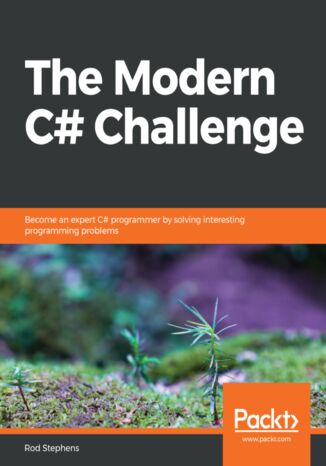
The Modern C# Challenge. Become an expert C# programmer by solving interesting programming problems
Rod Stephens
C# is a multi-paradigm programming language. The Modern C# Challenge covers with aspects of the .NET Framework such as the Task Parallel Library (TPL) and CryptoAPI. It also encourages you to explore important programming trade-offs such as time versus space or simplicity. There may be many ways to solve a problem and there is often no single right way, but some solutions are definitely better than others. This book has combined these solutions to help you solve real-world problems with C#.In addition to describing programming trade-offs, The Modern C# Challenge will help you build a useful toolkit of techniques such as value caching, statistical analysis, and geometric algorithms.By the end of this book, you will have walked through challenges in C# and explored the .NET Framework in order to develop program logic for real-world applications.
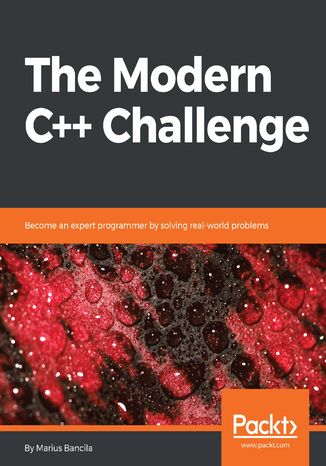
The Modern C++ Challenge. Become an expert programmer by solving real-world problems
Marius Bancila
C++ is one of the most widely-used programming languages and has applications in a variety of fields, such as gaming, GUI programming, and operating systems, to name a few. Through the years, C++ has evolved into (and remains) one of the top choices for software developers worldwide. This book will show you some notable C++ features and how to implement them to meet your application needs. Each problem is unique and doesn't just test your knowledge of the language; it tests your ability to think out of the box and come up with the best solutions. With varying levels of difficulty, you'll be faced with a wide variety of challenges. And in case you're stumped, you don't have to worry: we've got the best solutions to the problems in the book. So are you up for the challenge?
The Music Producer's Ultimate Guide to FL Studio 20. Create production-quality music with FL Studio
Joshua Au-Yeung
FL Studio is a cutting-edge software music production environment and an extremely powerful and easy-to-use tool for creating music. This book will give you everything you need to produce music with FL Studio like a professional.You'll begin by exploring FL Studio 20's vast array of tools, and discover best practices, tips, and tricks for creating music. You'll then learn how to set up your studio environment, create a beat, compose a melody and chord progression, mix sounds with effects, and export songs. As you advance, you'll find out how to use tools such as the Piano roll, mixer console, audio envelopes, types of compression, equalizers, vocoders, vocal chops, and tools for increasing stereo width. The book introduces you to mixing best practices, and shows you how to master your songs. Along the way, you'll explore glitch effects and create your own instruments and custom-designed effect chains. You'll also cover ZGameEditor Visualizer, a tool used for creating reactive visuals for your songs. Finally, you'll learn how to register, sell, and promote your music.By the end of this FL Studio book, you'll be able to utilize cutting-edge tools to fuel your creative ideas, mix music effectively, and publish your songs.
Pieter Nijs, David Ortinau
In today's fast-paced world of modern software development, teams need to be efficient, productive, and capable of rapidly adapting to changes to deliver high-quality products, making it crucial for developers to write maintainable and easy-to-test code.The MVVM Pattern in .NET MAUI helps you to thoroughly explore the Model-View-View Model (MVVM) design pattern. The chapters show you how this pattern helps in structuring code to embrace the separation of concerns, allowing for loosely coupled user interface and application logic, which ultimately empowers you to write more robust, maintainable, and testable code. The book also highlights .NET MAUI's capabilities and features, and enables you to delve into the essential components within the framework that facilitate the application of the MVVM pattern. With the help of a sample application, this definitive guide takes a hands-on approach to walk you through both the essential and advanced usages of the MVVM pattern to ensure that you successfully apply the practical aspects of the pattern to your .NET MAUI projects.By the end of this book, you’ll have gained a comprehensive understanding of the MVVM design pattern and its relevance in the context of .NET MAUI, as well as developed the skills needed to successfully apply it in practice.
Rohan Chopra , Aniruddha M. Godbole ,...
Do you want to learn how to communicate with computer systems using Natural Language Processing (NLP) techniques, or make a machine understand human sentiments? Do you want to build applications like Siri, Alexa, or chatbots, even if you’ve never done it before?With The Natural Language Processing Workshop, you can expect to make consistent progress as a beginner, and get up to speed in an interactive way, with the help of hands-on activities and fun exercises.The book starts with an introduction to NLP. You’ll study different approaches to NLP tasks, and perform exercises in Python to understand the process of preparing datasets for NLP models. Next, you’ll use advanced NLP algorithms and visualization techniques to collect datasets from open websites, and to summarize and generate random text from a document. In the final chapters, you’ll use NLP to create a chatbot that detects positive or negative sentiment in text documents such as movie reviews.By the end of this book, you’ll be equipped with the essential NLP tools and techniques you need to solve common business problems that involve processing text.