
Programowanie
Niezależnie czy dopiero rozpoczynacie swoją przygodę z programowaniem, czy jesteście już uznanymi na rynku profesjonalistami, to w kategorii Programowanie na pewno znajdziecie podręczniki, które pomogą Wam w przebiegu pracy, czy też w nauce podstaw programowania.
W książkach z tego działu zawarta jest wiedza zarówno związana z czysto technicznymi sprawami typu składnia języków, ale także z umiejętnościami bardziej "miękkimi" jak obsługa i wykorzystanie pełnych możliwości środowisk programistycznych, czy też projektowanie oprogramowania lub metody numeryczne czy oraz struktury danych.
Gigi Sayfan
Frustrated by opaque agent frameworks that hide how things work? This book gives you complete control by guiding you through building a fully functional, extensible agentic AI framework in Python without relying on external orchestration tools.You’ll begin by implementing a simple tool-using agent, and then gradually extend its capabilities with structured tool schemas, user interfaces, and memory via the Model Context Protocol (MCP). From there, you’ll build collaborative multi-agent systems powered by Agent-to-Agent (A2A) messaging and deploy them in realistic environments. Along the way, you’ll explore secure tool invocation, message routing, observability, and human-in-the-loop workflows.With annotated code, deep engineering insights, and practical deployment patterns, this hands-on guide equips you to build AI agents that reason, plan, act, and adapt, whether you’re shipping production systems or experimenting with cutting-edge LLM-based architectures.Written by Gigi Sayfan, who builds AI agent infrastructure at Perplexity and is a bestselling author with decades of experience in AI and distributed systems, this book gives you the tools and knowledge to engineer your own advanced agentic systems.*Email sign-up and proof of purchase required
Kamalmeet Singh, Ianculescu, Lucian-Paul Torje
Having a knowledge of design patterns enables you, as a developer, to improve your code base, promote code reuse, and make the architecture more robust. As languages evolve, new features take time to fully understand before they are adopted en masse. The mission of this book is to ease the adoption of the latest trends and provide good practices for programmers.We focus on showing you the practical aspects of smarter coding in Java. We'll start off by going over object-oriented (OOP) and functional programming (FP) paradigms, moving on to describe the most frequently used design patterns in their classical format and explain how Java’s functional programming features are changing them.You will learn to enhance implementations by mixing OOP and FP, and finally get to know about the reactive programming model, where FP and OOP are used in conjunction with a view to writing better code. Gradually, the book will show you the latest trends in architecture, moving from MVC to microservices and serverless architecture. We will finish off by highlighting the new Java features and best practices. By the end of the book, you will be able to efficiently address common problems faced while developing applications and be comfortable working on scalable and maintainable projects of any size.
Evan Williams, Scott McKay
Many Rust developers run into problems when they try to apply familiar object-oriented or cross-language patterns to Rust projects. These mismatches often lead to confusing compiler errors, awkward workarounds, or brittle code. This book helps you avoid those traps by thinking in Rust and applying idiomatic design patterns that embrace ownership, borrowing, and type safety.The book begins with anti-patterns and common mistakes Rust developers often encounter, including misusing object-oriented thinking, over-relying on Clone, or treating the borrow checker as an obstacle. From there, you’ll explore how to rethink traditional design solutions for Rust, including creational, structural, and behavioral design patterns. You’ll also dive into architectural strategies, type-driven design, and Rust-specific techniques such as TypeState. The final chapter brings these ideas together into a design mindset rooted in idiomatic Rust.By the end of this book, you’ll know how to avoid costly mistakes, apply effective patterns confidently, and design Rust applications that are clean, scalable, and reliable.*Email sign-up and proof of purchase required
Matjaz B Juric, Sven Bernhardt, Danilo Schmiedel,...
This book is intended for BPM and SOA architects, analysts, developers, and project managers who are responsible for, or involved in, business process development, modelling, monitoring, or the implementation of composite, process-oriented applications. The principles are relevant for the design of on-premise and cloud solutions.
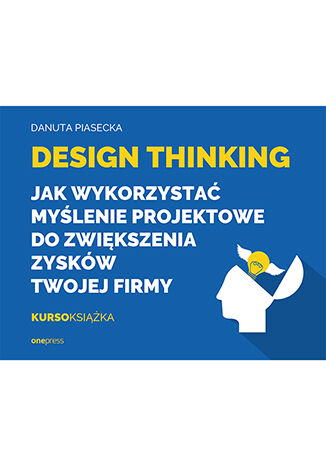
Design Thinking. Jak wykorzystać myślenie projektowe do zwiększenia zysków Twojej firmy
Danuta Piasecka
Zweryfikuj swoje pomysły biznesowe. Szybko i skutecznie! Design thinking, czyli myślenie projektowe. Wbrew pozorom ten sposób podejścia do biznesu nie jest przypisany wyłącznie do wielkich korporacji. Pracować w duchu design thinking może i powinna każda firma, której właścicielowi zależy na zwiększeniu wydajności, szybkim realizowaniu dobrych pomysłów i jeszcze szybszym wycofywaniu się z tych nietrafionych. Jeżeli zatem myślisz o tym, by w swojej - małej lub większej - firmie działać szybciej, a tym samym skuteczniej i z większym zyskiem, ta kursoksiążka jest dla Ciebie. Dlaczego kursoksiążka? Ponieważ jest to pozycja, w której informacje teoretyczne dotyczące samego pojęcia myślenia projektowego ograniczono do minimum. Autorka, bizneswoman, trenerka i moderatorka DT, stawia na wiedzę praktyczną i umiejętność myślenia projektowego, a także dostarczenie Ci narzędzi gotowych do zastosowania od zaraz. Za pośrednictwem kursoksiążki krok po kroku przeprowadzi Cię przez proces projektowania nowych produktów i usług, dzięki którym zwiększysz zyski Twojej firmy.
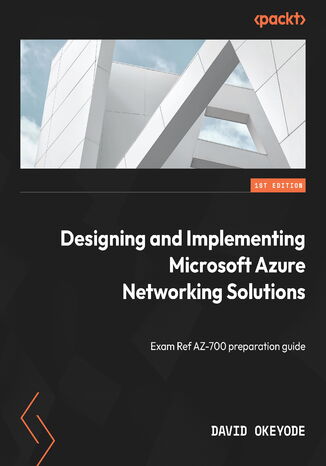
Designing and Implementing Microsoft Azure Networking Solutions. Exam Ref AZ-700 preparation guide
David Okeyode
Designing and Implementing Microsoft Azure Networking Solutions is a comprehensive guide that covers every aspect of the AZ-700 exam to help you fully prepare to take the certification exam.Packed with essential information, this book is a valuable resource for Azure cloud professionals, helping you build practical skills to design and implement name resolution, VNet routing, cross-VNet connectivity, and hybrid network connectivity using the VPN Gateway and the ExpressRoute Gateway. It provides step-by-step instructions to design and implement an Azure Virtual WAN architecture for enterprise use cases.Additionally, the book offers detailed guidance on network security design and implementation, application delivery services, private platform service connectivity, and monitoring networks in Azure. Throughout the book, you’ll find hands-on labs carefully integrated to align with the exam objectives of the Azure Network Engineer certification (AZ-700), complemented by practice questions at the end of each chapter, allowing you to test your knowledge.By the end of this book, you’ll have mastered the fundamentals of Azure networking and be ready to take the AZ-700 exam.
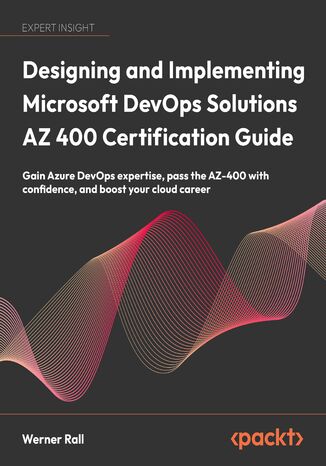
Werner Rall
The AZ-400 certification proves your ability to design and implement DevOps practices on Microsoft Azure, making it a key step forward for cloud engineers and DevOps professionals. This comprehensive study guide is designed to help you pass the AZ-400 exam on your first attempt, covering every objective in detail.You’ll find clear explanations, end-of-chapter review questions, full-length mock exams, and hands-on solutions that reinforce your understanding. Key topics include continuous integration, continuous delivery, infrastructure as code, containerization, security, and automation.Through practical labs and real-world scenarios, you'll gain the experience needed to apply these concepts in live environments. The book also explores advanced topics such as site reliability engineering, cloud transformation strategies, and compliance.By the end, you will have a solid foundation in Azure DevOps, the ability to deliver secure and reliable deployments, and the confidence to excel in the AZ-400 exam and your DevOps career.
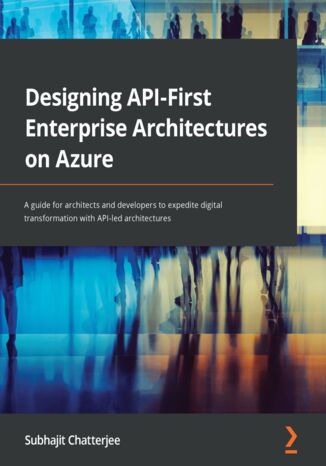
Subhajit Chatterjee
API-centric architectures are foundational to delivering omnichannel experiences for an enterprise. With this book, developers will learn techniques to design loosely coupled, cloud-based, business-tier interfaces that can be consumed by a variety of client applications.Using real-world examples and case studies, the book helps you get to grips with the cloudbased design and implementation of reliable and resilient API-centric solutions. Starting with the evolution of enterprise applications, you'll learn how API-based integration architectures drive digital transformation. You'll then learn about the important principles and practices that apply to cloud-based API architectures and advance to exploring the different architecture styles and their implementation in Azure. This book is written from a practitioner's point of view, so you'll discover ideas and practices that have worked successfully in various customer scenarios.By the end of this book, you'll be able to architect, design, deploy, and monetize your API solutions in the Azure cloud while implementing best practices and industry standards.