
Programowanie gier
Alan Thorn
Mastering Unity Scripting is an advanced book intended for students, educators, and professionals familiar with the Unity basics as well as the basics of scripting. Whether you've been using Unity for a short time or are an experienced user, this book has something important and valuable to offer to help you improve your game development workflow.
Penny de Byl
Matematyka jest niezbędna do zrozumienia reguł rządzących tworzeniem grafiki komputerowej w czasie rzeczywistym, a także zasad manipulowania obiektami i środowiskami 3D. Idealnym narzędziem ułatwiającym uchwycenie tych zależności jest język Python wraz z bibliotekami Pygame i PyOpenGL. Dzięki nim łatwo zrozumiesz, w jaki sposób komputery tworzą i wprowadzają zmiany w środowiskach trójwymiarowych. Ta książka wyjaśni Ci rolę matematyki w tworzeniu, renderowaniu i zmienianiu wirtualnych środowisk 3D, a ponadto pozwoli odkryć tajemnice najpopularniejszych dzisiaj silników gier. Za sprawą licznych praktycznych ćwiczeń zorientujesz się, co się kryje za rysowaniem linii i kształtów graficznych, stosowaniem wektorów i wierzchołków, budowaniem i renderowaniem siatek, jak również przekształcaniem wierzchołków. Nauczysz się używać kodu Pythona, a także bibliotek Pygame i PyOpenGL do budowy własnych silników. Dowiesz się też, jak tworzyć przydatne API i korzystać z nich podczas pisania własnych aplikacji. W książce między innymi: praca w Pythonie z edytorem PyCharm, bibliotekami Pygame i PyOpenGL różne polecenia rysowania z różnych graficznych API najważniejsze zagadnienia trygonometrii w odniesieniu do środowisk 3D wektory i matryce w przenoszeniu, ustawianiu kierunku i skalowaniu obiektów 3D renderowanie obiektów 3D z teksturami, kolorami, cieniami i oświetleniem przekształcanie wierzchołków w celu przyspieszenia renderowania opartego na GPU Matematyka: najlepszy sprzymierzeniec programisty i grafika!
Mercury Learning and Information, D. P. Kothari,...
This book explains the mathematical concepts in computer graphics, ideal for courses in graphics, engineering, game development, and industry professionals. It starts with how images are generated on screens and covers algorithms for creating simple geometry. The book progresses through two-dimensional and three-dimensional transformations, parametric representation of planar and space curves like cubic splines and Bezier curves. It also includes programming in C, OpenGL, and methods for generating 3D models.The course begins with an introduction to computer graphics and vector representation of geometric entities. It then covers 2D and 3D transformations, parametric representation of curves and surfaces, windowing and clipping, and generating 3D models. The final chapters focus on projections and programming graphics using C and OpenGL.Understanding these concepts is crucial for mastering computer graphics. This book transitions readers from basic concepts to advanced techniques, blending theoretical knowledge with practical skills. It is an essential resource for mastering the mathematical foundations and programming techniques in computer graphics.
Janusz Mrzigod
Przetłumacz mi, jak w to grać, proszę! Lokalizacja gry w taki sposób, by dostosować ją do znanych graczowi realiów, to prawdziwa sztuka. Więcej ― to warunek sukcesu gry na danym rynku! Gracze bowiem chętnie grają w gry, które "znają i lubią", czyli takie, z których bohaterami, a także ich powiedzonkami, miejscami, gdzie rozgrywa się akcja, i innymi detalami mogą się utożsamiać. Pamiętacie, jak w filmie Shrek osioł wspomina o kremówkach? Że każdy je lubi? W wersji anglojęzycznej mowa była o pasztecikach. Dla nas paszteciki nie mają potencjału komicznego, prawda? Stąd lokalizator gry to nie prosty tłumacz, rzemieślnik, który po prostu bierze na warsztat obcojęzyczne słowa i wstawia w ich miejsce swojskie zwroty. Lokalizator to prawdziwy artysta, magik, na którym spoczywa spora odpowiedzialność. Brzmi groźnie? Nie, bo na końcu drogi czeka wysoka nagroda. I wcale nie chodzi o finanse ― choć życzymy, by zlecenia tłumaczeń gier były jak najwyżej wyceniane. Chodzi o satysfakcję ze świetnie zrealizowanego zadania. Nie ma bowiem nic przyjemniejszego niż pozytywne opinie, wystawiane lokalizacji gry przez jej użytkowników.
Tim Abraham
Metabase is an open source business intelligence tool that helps you use data to answer questions about your business. This book will give you a detailed introduction to using Metabase in your organization to get the most value from your data.You’ll start by installing and setting up Metabase on your local computer. You’ll then progress to handling the administration aspect of Metabase by learning how to configure and deploy Metabase, manage accounts, and execute administrative tasks such as adding users and creating permissions and metadata. Complete with examples and detailed instructions, this book shows you how to create different visualizations, charts, and dashboards to gain insights from your data. As you advance, you’ll learn how to share the results with peers in your organization and cover production-related aspects such as embedding Metabase and auditing performance. Throughout the book, you’ll explore the entire data analytics process—from connecting your data sources, visualizing data, and creating dashboards through to daily reporting.By the end of this book, you’ll be ready to implement Metabase as an integral tool in your organization.
Rob Miles
Każdy pasjonat gier komputerowych zadawał sobie czasem pytania typu: "Niesamowite, jak oni to zrobili?" albo "Jak można uzyskać taki efekt?". A co się dzieje, jeśli to pytanie przychodzi do głowy programiście? Jego następną myślą zwykle jest: "Muszę spróbować sam to zrobić!". Na co czekasz? Dziś już nic nie stoi na przeszkodzie! Odkąd Microsoft udostępnił framework XNA, każdy może wymyślić i stworzyć swoją własną profesjonalną grę komputerową, uruchomić ją na prawdziwej konsoli, a nawet wprowadzić na rynek dzięki usłudze Xbox Live lub Windows Phone Marketplace. Jeśli zawsze marzyłeś o profesjonalnym programowaniu gier, ale nie do końca wiedziałeś, jak się za to zabrać, oto książka, która wszystko zmieni! Ten podręcznik będzie dla Ciebie doskonałym przewodnikiem, prowadzącym od opanowania podstaw frameworku XNA, przez zasady programowania w użytecznym języku C#, aż po tworzenie własnych gier. Przejdziesz niezwykłą drogę: na jej początku czeka Cię instalacja i przygotowanie środowiska programistycznego, potem projektowanie realistycznej grafiki gry i jej ciekawe udźwiękowienie, a uwieńczeniem Twoich działań będzie stworzenie profesjonalnych projektów dla konsoli Xbox 360®, telefonów z systemem Windows® Phone 7 czy komputerów PC. Co ważne, nie musisz być zaawansowanym i doświadczonym programistą. Wszystko, czego będziesz potrzebował do realizacji tej misji, znajdziesz w tej książce! Nauczysz się m.in.: pisać kod tworzący zachowania w grze i sterujący nimi projektować wygląd gry - grafikę, czcionki, kolory, oświetlenie i efekty trójwymiarowe budować obiekty gry, tzw. sprajty nagrywać i odtwarzać dźwięki przetwarzać dane wejściowe uzyskiwane z padów i klawiatur korzystać z ekranu dotykowego i akcelerometru w systemie Windows Phone dodawać stopery, systemy punktacji, elementy zagrażające graczowi i postęp w rozgrywce tworzyć gry wieloosobowe i sieciowe Opanuj sztukę programowania gier i zmieniaj własne pomysły w ekscytującą rzeczywistość!
Spencer Grey
Blender is an incredibly powerful, free computer graphics program that provides a world-class, open-source graphics toolset for creating amazing assets in 3D. With Mind-Melding Unity and Blender for 3D Game Development, you'll discover how adding Blender to Unity can help you unlock unlimited new possibilities and reduce your reliance on third parties for creating your game assets.This game development book will broaden your knowledge of Unity and help you to get to grips with Blender's core capabilities for enhancing your games. You'll become familiar with creating new assets and modifying existing assets in Blender as the book shows you how to use the Asset Store and Package Manager to download assets in Unity and then export them to Blender for modification. You'll also learn how to modify existing and create new sci-fi-themed assets for a minigame project. As you advance, the book will guide you through creating 3D model props, scenery, and characters and demonstrate UV mapping and texturing. Additionally, you'll get hands-on with rigging, animation, and C# scripting.By the end of this Unity book, you'll have developed a simple yet exciting mini game with audio and visual effects, and a GUI. More importantly, you'll be ready to apply everything you've learned to your Unity game projects.
Młody mistrz programowania. Języki Baltie i Scratch dla dzieci
Agnieszka Borkowska, Paweł Borkowski
Czarowanie na ekranie! W krainie Baltiego, czyli poznaj świat czarodzieja Na Skreczowisku, czyli zaprogramuj sobie grę Gry komputerowe to jedna z tych rzeczy, które dzieci lubią najbardziej. Zwykle mogłyby bez końca siedzieć przed ekranem i zabijać kolejne smoki, projektować domy, przedzierać się przez dżunglę lub jeździć wyścigówkami. Jednak rzadko przychodzi im do głowy, że równie wielką przyjemność może sprawić zaprojektowanie i zbudowanie własnej gry! Tu zaczyna się Twoje zadanie. Nie musisz być programistą, żeby pomóc swojemu dziecku odkryć fascynujący świat programowania — wystarczy Ci ta książka. Zainstaluj proste, przyjazne dzieciom środowiska Baltie i Scratch, by rozpocząć podróż po czarodziejskiej krainie. Z pierwszymi zadaniami z powodzeniem poradzą sobie nawet kilkulatki, a im dalej w las, tym ciekawsze stają się wyzwania. Dzieci szybko uczą się, jak działać w świecie duszków, obiektów i poleceń. Co więcej, sprawia im to dużą frajdę. I wreszcie nadchodzi ten moment, gdy wiedzą już, o co chodzi w tym całym programowaniu — a jest to wiedza niezwykle cenna w dzisiejszych czasach! Na pomoc czarodziejowi Korespondencja To, czego nigdy nie było Drugi stopień wtajemniczenia Porwanie Karciane pola Księga Czarów Hokus, fokus, pokus Pierwsze spotkanie z kotem Budujemy grę Najtrudniejsze zagadnienia Łagodnie wprowadź dziecko w świat programowania!
Młodzi giganci programowania. Roblox z Lua
Dawid Leśniakiewicz, Piotr Pełka, Sebastian Langa, Radosław...
Naucz się tworzyć prawdziwe gry komputerowe! Uwielbiasz grać? Interesujesz się programowaniem? Nie możesz się oderwać od komputera? Świetnie! Uwolnij swoją kreatywność i zacznij tworzyć własne gry z Robloxem. Ta książka pomoże Ci postawić pierwsze kroki w środowisku Roblox Studio i poprowadzi Cię przez wszystkie etapy pracy nad grą. Stworzysz wirtualny świat, powołasz do życia barwne postaci, przygotujesz ciekawe scenariusze i przeżyjesz niesamowitą przygodę, jaką jest programowanie. Odkryj niezbędne narzędzia, naucz się języka Lua i rozwiń swoje umiejętności programistyczne. Sprawdź, ile satysfakcji daje tworzenie. Dowiedz się, jak osiągnąć najlepsze efekty. Pokaż światu, na co Cię stać! Poznaj Robloxa od podszewki! Instalacja Roblox Studio i tworzenie projektu Kreowanie scen i dodawanie postaci Działanie podstawowych narzędzi Edytowanie terenu i postaci Dodawanie efektów specjalnych Podstawy programowania w języku Lua Tworzenie własnych skryptów Dodawanie tablic, dialogów i interakcji Gotowe skrypty przydatne w grach Tworzenie prawdziwej gry krok po kroku Sprawdzony sposób na zarabianie przy użyciu wirtualnej waluty robux Przekonaj się, że programowanie to świetna zabawa!
Młodzi giganci programowania. Scratch
Radosław Kulesza, Sebastian Langa, Dawid Leśniakiewicz, Piotr...
Nauka programowania? Ze Scratchem to nic trudnego! Nudzą Cię już gry komputerowe i zwykłe przeglądanie internetu? Uważasz, że stać Cię na więcej? Masz ochotę zaskoczyć kolegów z klasy? A może po prostu... chcesz nauczyć się programować? Jeśli tak, to dobrze trafiłeś! Scratch to doskonałe narzędzie, dzięki któremu młodzi pasjonaci na całym świecie bez trudu poznają tajniki programowania komputerów od podstaw. Scratch ułatwia rozpoczęcie nauki i umożliwia szybkie tworzenie atrakcyjnych gier, animacji i aplikacji, będąc przy tym narzędziem zupełnie bezpłatnym. Jeśli chcesz dołączyć do społeczności użytkowników Scratcha, jesteś na dobrym tropie! Książka Młodzi giganci programowania. Scratch szybko i bezboleśnie wprowadzi Cię w niezwykły świat. Krok po kroku poznasz sposób tworzenia gier komputerowych i przeżyjesz przy tym wspaniałą przygodę! Ta publikacja sprawdzi się zarówno w przypadku młodych adeptów sztuki programowania, jak i nauczycieli zainteresowanych prowadzeniem zajęć z informatyki dla najmłodszych. Pierwsza część zawiera bardzo dokładny opis środowiska, a druga to doskonałe pomysły na rozbudowane gry komputerowe. Elementy środowiska Scratch i sposoby ich wykorzystania Używanie i edycja postaci, kostiumów oraz teł Korzystanie z możliwości ruchu i efektów dźwiękowych Posługiwanie się danymi, blokami i wyrażeniami Obsługa zdarzeń i czujników, korzystanie z możliwości kontroli Praktyczne pomysły na prawdziwe gry komputerowe Zacznij programować już dziś i szybko opracuj swoją pierwszą grę komputerową!
Dmytro Shpakovskyi
TestCafe is an open source end-to-end testing framework that combines unmatched ease of use with advanced automation and robust built-in stability mechanisms. This book is a comprehensive, project-based introduction to TestCafe that will show you how to use the TestCafe framework and enable you to write fast and reliable tests; plus you’ll have a proof of concept ready to demonstrate the practical potential of TestCafe.You’ll begin by learning how to write end-to-end web tests using the TestCafe syntax and features of the TestCafe framework. You’ll then go from setting up the environment all the way through to writing production-ready tests. You’ll also find out how to build a sample set of tests in a step-by-step manner and use TestCafe to log in to the website, verify the elements present on different pages, create/delete entities, and run custom JavaScript code. As you advance, you’ll delve into several stages of refactoring that will take you through the showcase setup/teardown and PageObject patterns. While this test suite is relatively simple to build, it showcases some of the most prominent features of TestCafe. Finally, this TestCafe book will show you how the tests can be run on a free and simple-to-use website, without requiring you to build and deploy your own servers or backend services.By the end of this book, you’ll have learned how to write and enhance end-to-end tests with TestCafe to solve real-world problems and deliver results.
MonoGame. Podstawowe koncepcje grafiki 3D
Damian Kaniewski, Tomasz Dziubak, Jacek Matulewski
Książka "MonoGame. Podstawowe koncepcje grafiki 3D" Damiana Kaniewskiego, Tomasza Dziubaka, Jacka matulewskiego zdobyła wyróżnienie w konkursie na Najlepszą Polską Książkę Informatyczną 2024r. organizowanym przez Polskie Towarzystwo Informatyczne. Poznaj tajniki programowania grafiki 3D we frameworku MonoGame, dzięki któremu powstały takie hity jak Stardew Valley czy Carrion. Monogame jako kontynuator XNA oferuje twórcom gier ogromne perspektywy, swobodę i możliwość dostarczania gier na wszystkie najpopularniejsze systemy operacyjne, łącznie z mobilnymi, pozostając przy tym całkowicie darmowym. Książka adresowana jest do wszystkich zainteresowanych tworzeniem gier i mających przynajmniej podstawową wiedzę o wykorzystywanym w Monogame języku programowania C#. MonoGame. Podstawowe koncepcje grafiki 3D dotyczy programowania grafiki 3D, co oznacza, że do jej tworzenia wykorzystuje się kod, a nie edytor sceny obsługiwany myszką. Autorzy wyczerpująco omówili kluczowe zagadnienia, jak rozdzielenie definiowanie figur i brył, poruszanie nimi na scenie, oświetlenie i cienie, mieszanie kolorów czy odwzorowanie tekstur. Wyjaśnione są także kwestie wykraczające poza podstawy grafiki 3D i dotykające tworzenia gier, jak komponentyzacja produkcji gier czy kwestie projektowania systemów sterowania. W rezultacie Czytelnik otrzymuje książkę na temat grafiki 3D w MonoGame łączącą teorię z wykorzystaniem praktycznych przykładów. Dzięki książce: zgłębisz programowanie grafiki 3D zaczniesz tworzyć trójwymiarowe gry wideo poznasz tajniki frameworka MonoGame dowiesz się o wykorzystaniu C# w gamedevie
Marco Secchi
If you’re fascinated by the immersive gaming experiences that enable multiple users to engage in collaborative or competitive gameplay, this Unreal Engine 5 game development book is for you.In this book, you’ll learn the foundational principles behind multiplayer games. Starting with a sample project, you’ll learn how to set up a networked system and make it work. Once the prototype of the project is functional, you’ll start adding game logic, including obstacles and AI opponents, to heighten the challenges and engagement, offering a captivating experience for players. Next, you’ll learn how to debug and optimize the project, before finally deploying the game build and integrating it with cloud services such as the Epic Online Services system.By the end of this book, you’ll have the confidence to develop and manage multiplayer experiences using the Unreal Engine environment, taking your newfound programming skills in your upcoming projects.
Michael Cummings, Daniel Hindrikes, Johan Karlsson, Samantha...
This third edition of .NET MAUI Projects explores the features of .NET MAUI, a lightweight multi-platform development toolkit for building apps with a rich user interface. Updated to cover the latest features of .NET MAUI, including CollectionView and Shell, this book delves into concepts such as machine learning and cloud services.Starting with an overview of .NET Core and how it works, this book shares tips for choosing the right development environment for planning multi-platform apps. You'll then build your first .NET MAUI app and advance to learning how to use Shell to implement app architecture. Progressing in complexity, the projects guide you through creating apps, ranging from a location tracker and weather map to machine learning and multiplayer games. Further, the book will take you through modern mobile development frameworks such as SQLite, .NET Core, and ML.NET, empowering you to customize your apps for Windows, macOS, Android, and iOS platforms for native-like performance. Engaging examples are woven throughout the book so you can grasp essential concepts by writing code rather than extensive theory.By the end of this book, you'll be ready to develop your own native apps using .NET MAUI and associated technologies such as .NET Core, Visual Studio 2022, and C#.
David Wolff
OpenGL 4 Shading Language Cookbook, Third Edition provides easy-to-follow recipes that first walk you through the theory and background behind each technique, and then proceed to showcase and explain the GLSL and OpenGL code needed to implement them.The book begins by familiarizing you with beginner-level topics such as compiling and linking shader programs, saving and loading shader binaries (including SPIR-V), and using an OpenGL function loader library. We then proceed to cover basic lighting and shading effects. After that, you'll learn to use textures, produce shadows, and use geometry and tessellation shaders. Topics such as particle systems, screen-space ambient occlusion, deferred rendering, depth-based tessellation, and physically based rendering will help you tackle advanced topics.OpenGL 4 Shading Language Cookbook, Third Edition also covers advanced topics such as shadow techniques (including the two of the most common techniques: shadow maps and shadow volumes). You will learn how to use noise in shaders and how to use compute shaders.The book provides examples of modern shading techniques that can be used as a starting point for programmers to expand upon to produce modern, interactive, 3D computer-graphics applications.
OpenGL. Księga eksperta. Wydanie VII
Graham Sellers, Richard S. Wright Jr., Nicholas...
Biblioteka OpenGL jest potężnym systemem graficznym, doskonałym API do generowania grafiki trójwymiarowej w czasie rzeczywistym. System ten nadaje się znakomicie do wizualizacji wszelkiego rodzaju odwzorowań zjawisk fizycznych czy obiektów technicznych, a także do przedstawiania symulacji ze zmieniającymi się parametrami. Często jest wykorzystywany do pisania gier komputerowych. Daje możliwość tworzenia świetnej grafiki na wiele różnych platform z wykorzystaniem tych samych zestawów instrukcji. Co ważne, OpenGL jest całkowicie darmową biblioteką, a dostępność licznych rozszerzeń znakomicie zwiększa wachlarz jej zastosowań. Niniejsza książka stanowi doskonałe wprowadzenie w tematykę OpenGL dla każdego programisty, nawet dla osób niezbyt biegłych w zagadnieniach grafiki komputerowej. Zawiera opis całego głównego API, kluczowych rozszerzeń i wszystkich typów shaderów z uwzględnieniem najnowszych elementów biblioteki. Wyjaśniono tu zasady działania OpenGL i opisano zagadnienia potoków graficznych. Stopniowo czytelnik jest zaznajamiany z coraz bardziej złożonymi technikami. W książce znalazły się liczne przykłady kodu działającego na kilku popularnych platformach. Warto podkreślić, że autorzy poza API przedstawili również najlepsze praktyki programistyczne. W tej książce opisano między innymi: podstawy (w tym matematyczne) grafiki 3D czasu rzeczywistego najważniejsze techniki renderowania, przekształcania i teksturowania obiektów shadery i język GLSL (OpenGL Shading Language) kwestie zarządzania danymi i kontroli dostępu do tych danych techniki budowania większych aplikacji i wdrażania ich na wielu platformach rendering zaawansowany: symulację oświetlenia i efekty artystyczne sposoby poprawiania wydajności, redukcji narzutu CPU i analizy zachowania GPU nowości w OpenGL, takie jak kompresja tekstur, rysowanie tekstu, rendering czcionek za pomocą pól odległości, wysokiej jakości filtrowanie tekstur i użycie OpenMP OpenGL? Kreatywnych ogranicza tylko wyobraźnia!
OpenGL. Podstawy programowania grafiki 3D
Janusz Ganczarski
OpenGL na scenę! Podstawy OpenGL, czyli co trzeba wiedzieć, żeby zacząć tworzyć grafikę trójwymiarową przy użyciu tej biblioteki Programowanie w Open GL, czyli jakie elementy należy wziąć pod uwagę przy tworzeniu realistycznego obrazu Bez matmy ani rusz, czyli jak zaprząc geometrię i arytmetykę do pracy przy scenie Darmowa biblioteka OpenGL jest świetnym narzędziem do tworzenia grafiki trójwymiarowej na różnych platformach sprzętowych i w różnych systemach operacyjnych. Jej legendarne możliwości, doskonalone od 1992 roku do dziś, znakomicie sprawdzają się na przykład w grach komputerowych. Z kolei otwarty interfejs programistyczny pozwolił na zbudowanie wokół niej mnóstwa narzędzi uzupełniających i rozszerzeń, które przydadzą się każdemu użytkownikowi pragnącemu wykreować swój własny świat w formacie 3D. Jeśli masz ochotę spróbować sił w programowaniu grafiki i zobaczyć na ekranie to, co na razie pozostaje jedynie w Twojej wyobraźni, ta książka pomoże Ci zrealizować cel. Dowiesz się z niej, jak zbudowana jest biblioteka, jakie zasady rządzą pisaniem programów w OpenGL oraz do czego służą obiekty i co możesz z nimi zrobić. Nauczysz się przekształcać scenę, budować modele oświetlenia i obsługiwać tekstury. Poznasz różne rodzaje buforów i zobaczysz, na czym polega antyaliasing. Odkryjesz też, jak przetwarzać geometrię obiektów i jak tworzyć realistyczne cienie. W dodatkach do książki znajdziesz natomiast informacje, które pomogą Ci rozpocząć pracę z tą biblioteką. Poznaj OpenGL i zachwyć świat swoimi grafikami! Co to jest OpenGL? Historia i perspektywy OpenGL Pierwszy program Rzutowanie i transformacje Cieniowanie i oświetlenie Tekstury i antyaliasing Zaawansowane przekształcanie geometrii Cienie Odwzorowanie środowiska i nierówności powierzchni Rozszerzenia Macierze i wektory Język GLSL Wykreuj swój świat z OpenGL!
OpenGL. Receptury dla programisty
Muhammad Mobeen Movania
Ponad 40 gotowych przepisów pokazujących możliwości zastosowania biblioteki OpenGL w nowoczesnych aplikacjach OpenGL dostarcza programistom API do renderowania zaawansowanych grafik i animacji. To oprogramowanie umożliwia im tworzenie niezwykle atrakcyjnych gier, prezentacji oraz efektów graficznych. Jeżeli chcesz poznać możliwości OpenGL, jeżeli szukasz odpowiedzi na nurtujące Cię pytania, to trafiłeś na świetną książkę! Znajdziesz w niej zbiór receptur cenionych przez programistów. Dzięki nim błyskawicznie rozwiążesz typowe problemy oraz zobaczysz, jak podejść do przeróżnych zagadnień związanych z OpenGL. Sięgnij po tę lekturę, a nauczysz się wybierać obiekty na podstawie ich różnych właściwości, mapować środowisko, filtrować obraz oraz tworzyć realne scenerie za pomocą odpowiedniej gry światła i cienia. Ponadto zobaczysz, jak śledzić promienie, ścieżki oraz tworzyć animacje szkieletowe i symulacje fizyczne. Ta książka to kopalnia najlepszych przepisów na wykorzystanie OpenGL! Na licznych przykładach poznasz zasady: tworzenia renderingowego kontekstu w OpenGL 3.3, operowania wirtualną kamerą i wskazywania obiektów w scenie 3D, symulowania odbić lustrzanych za pomocą renderowania pozaekranowego i mapowania środowiska, stosowania technik mapowania cieni włącznie z mapowaniem wariancyjnym, implementowania systemów cząsteczkowych przy użyciu shaderów, realizacji globalnego oświetlenia w oparciu o GPU i z użyciem harmonik sferycznych oraz SSAO, symulowania przezroczystości metodami bazującymi na dualnym peelingu głębi, wykonywania renderingów wolumetrycznych metodą cięcia połówkowokątowego i symulacji fizycznych z transformacyjnym sprzężeniem zwrotnym. Najlepsze przepisy na OpenGL!
John Donovan
The OUYA console and development kit gives you the power to publish video games for the players, creating a console marketplace of the gamers, for the gamers, and by the gamers. Using the OUYA developer kit and the Unity3D game engine, even beginners with a captivating game idea can bring it to life with a hint of imagination.OUYA Game Development by Example uses a series of feature-based, step-by-step tutorials that teach beginners how to integrate essential elements into a game engine and then combine them to form a polished gaming experience.
Christoph Lang
Panda3D is a free and open source game engine. It has been used successfully by hobbyists as well as big studios to create games ranging from quick prototypes to full-scale commercial MMOs. Panda3D makes it easy to use models, textures, and sounds to create impressive interactive experiences. With this book, you too will be able to leverage the full power of the Panda3D engine.Panda3D 1.7 Game Developer's Cookbook will supply you with a set of recipes with step-by-step instructions to guide you to usable results quickly and take you through all the topics involved in developing games with Panda3D. First it takes a quick sweep through setting up a basic scene. Then focused articles covering advanced topics of game development carry you closer to your game development goals step by step. With each article you will be able to add more features, as the recipes guide you through getting user input from gamepads, keyboard, mouse, microphone, or even webcam, using shader effects, setting up custom render-to-texture pipelines, applying full-screen post-processing effects, adding physics with the ODE, PhysX, or Bullet physics engine, using the engine's networking capabilities with the event-driven Twisted server framework, debugging and performance profiling, and packaging your game for distribution. It will also put you in touch with other languages and technologies like C++, the Cg shading language, and the Twisted server framework.Panda3D 1.7 Game Developer's Cookbook provides a great reference for your Panda3D game development needs and helps you to deliver impressive results more quickly and with great ease.
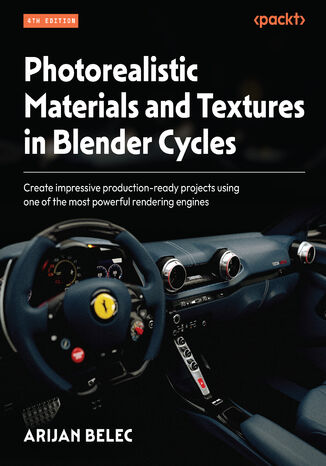
Arijan Belec
Blender is one of the most versatile tools in the 3D software industry, and with a growing audience and constantly expanding set of features, it has become more powerful, useful, and in demand than ever before. This updated fourth edition of Photorealistic Materials and Textures in Blender Cycles is an all-inclusive guide to procedural texturing, rendering, and designing materials in Blender, covering all aspects of the 3D texturing workflow.The book begins by introducing you to Blender’s material nodes and material property functions, and then helps you create photorealistic textures by understanding texture maps and mapping them to 3D models. As you advance, you’ll learn to design high-quality environments and lighting using HDRIs and Blender’s lighting options. By exploring, breaking down, and studying the underlying mechanics that allow you to develop these elements, you’ll create any material, texture, or environment and use it to improve your artwork and present them in a professional way. Finally, you’ll discover how to correctly set up scenes and render settings, and get to grips with the key elements of achieving realism.By the end of this book, you’ll have gained a solid understanding of materials, textures, shading, lighting, rendering, and all the critical aspects of achieving the highest quality with your 3D artwork.
Zhenyu George Li, Charles Shih-I Yeh, Dr....
Creating responsive, intelligent games takes more than just following engine tutorials. It requires solving real development challenges with practical, efficient code. This book bridges theory and practice with proven algorithms and techniques grounded in real-world production needs, emphasizing clean, portable C++ implementations.Starting with raylib and the custom Knight engine layer, you’ll be introduced to a simple object-oriented scene and game object system. From there, you'll build responsive gameplay systems using essential data structures and algorithms, progressing through 2D rendering, collision detection, effects, and camera control before advancing to 3D graphics environments built using shaders, lighting, quad-tree terrain, and dynamic camera setups.You’ll animate characters using skeletal rigs, interpolation, and inverse kinematics for fluid movement and then develop game AI using FSMs, behavior trees, A* pathfinding, and steering behaviors. The book also covers neural networks, exploring their underlying theories, training processes, and tools. Throughout, the code is written in legacy-compatible C++ to ensure broad support across platforms and compilers.By the end, you’ll have gained the skills to build game systems that not only work but also scale, perform, and adapt like professional-grade code.
Practical Game AI Programming. Unleash the power of Artificial Intelligence to your game
Micael DaGraça
The book starts with the basics examples of AI for different game genres and directly jumps into defining the probabilities and possibilities of the AI character to determine character movement. Next, you’ll learn how AI characters should behave within the environment created.Moving on, you’ll explore how to work with animations. You’ll also plan and create pruning strategies, and create Theta algorithms to find short and realistic looking game paths. Next, you’ll learn how the AI should behave when there is a lot of characters in the same scene.You'll explore which methods and algorithms, such as possibility maps, Forward Chaining Plan, Rete Algorithm, Pruning Strategies, Wall Distances, and Map Preprocess Implementation should be used on different occasions. You’ll discover how to overcome some limitations, and how to deliver a better experience to the player. By the end of the book, you think differently about AI.
Adam Kramarzewski, Ennio De Nucci
If you are looking for an up-to-date and highly applicable guide to game design, then you have come to the right place! Immerse yourself in the fundamentals of game design with this book, written by two highly experienced industry professionals to share their profound insights as well as give valuable advice on creating games across genres and development platforms.This book covers the basics of game design one piece at a time. Starting with learning how to conceptualize a game idea and present it to the development team, you will gradually move on to devising a design plan for the whole project and adapting solutions from other games. You will also discover how to produce original game mechanics without relying on existing reference material, and test and eliminate anticipated design risks. You will then design elements that compose the playtime of a game, followed by making game mechanics, content, and interface accessible to all players. You will also find out how to simultaneously ensure that the gameplay mechanics and content are working as intended.As the book reaches its final chapters, you will learn to wrap up a game ahead of its release date, work through the different challenges of designing free-to-play games, and understand how to significantly improve their quality through iteration, polishing and playtesting.