
Programowanie gier
Jacek Ross
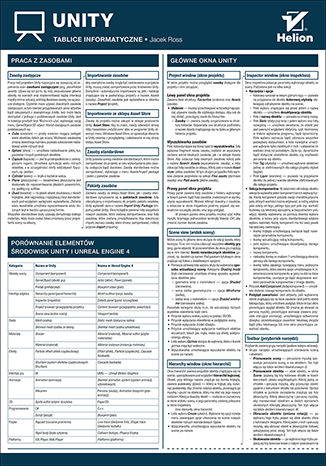
Projekt z Unity? Skorzystaj z tablic! Poznaj możliwości Unity Wyszukaj odpowiednie opcje Zastosuj właściwe narzędzia Unity to niezwykle popularne środowisko do tworzenia komputerowych gier 2D i 3D oraz innych materiałów interaktywnych, takich jak filmy, animacje, prezentacje i wizualizacje. Silnik ten działa pod kontrolą większości powszechnie używanych systemów operacyjnych, a powstałe dzięki niemu materiały mogą być uruchamiane na niemal wszystkich platformach komputerowych i mobilnych, co w połączeniu z dużymi możliwościami i praktycznym brakiem opłat licencyjnych zdecydowało o sukcesie rozwiązania. Nieocenioną pomocą w codziennej pracy z Unity są tablice informatyczne, które w telegraficznym skrócie i przystępnej formie prezentują najważniejsze narzędzia oraz funkcje środowiska. Dzięki tablicom bez konieczności wertowania grubych tomów i zaprzęgania do pracy wyszukiwarki internetowej dowiesz się, jak znaleźć odpowiednie opcje i szybko osiągnąć zamierzone cele! Interfejs środowiska Unity Przegląd najważniejszych narzędzi Sposoby tworzenia scen i obiektów Definiowanie akcji Korzystanie z zasobów Tworzenie skryptów Tablice informatyczne - zawsze pod ręką!
Tajniki projektowania gier w Unreal Engine 4
Matt Edmonds
Budowanie atrakcyjnych gier AAA przy użyciu UE 4 Aby zbudować prostą strzelankę od zera, wystarczy szybko nadpisać istniejące już klasy UE4, po czym dodać i zaim-plementować proste funkcje C++ w trakcie ich konstruowania. Prawdziwa zabawa zaczyna się później. Zbudujemy postać gracza z rozbudowanym sterowaniem, utworzymy logikę tej postaci, zmienianie broni, ataki i ruch, przechodzenie pomiędzy scenami i poziomami, zachowywanie ekwipunku i parametrów i wiele innych. Pokażemy też budowanie wroga kontrolowanego przez sztuczną inteligencję, jak i fizyczną symulację uderzeń pocisków. Czytelnik zapozna się też z zaawansowanymi funkcjami, jak Volumetric Lightmaps realizujące wstępnie obliczone oświetlenie albo Atmospheric i Volumetric Fog, pozwalające tworzyć zaawansowane efeky wizualne. W dalszym ciągu przedstawiane są narzędzia potrzebne do zbudowania filmowych przerywników zapewniających pro-fesjonalne wrażenia w rozgrywce i prowadzące opowieść. Po drodze zostanie zaimplementowany solidny interfejs użytkownika, w tym możliwość zapisu i ładowania stanu gry w dowolnym momencie. Pokazane też zostanie przygotowanie i budowanie wersji VR i AR oraz przeniesienie ich z edyto-ra do rzeczywistego świata, przy czym zbudujemy dwa nowe projekty dla tych całkiem nowych obszarów UE4 i zinte-grujemy z AR klasy z głównego projektu ! Po ukończeniu książki Czytelnik będzie znał wszystkie główne funkcje UE4 i będzie w stanie sprawić, że wymarzona przez niego gra stanie się rzeczywistością dzięki Unreal Engine 4.18+. Umiejętności, które można zdobyć: Podstawy tworzenia gry bitewnej, pozwalające na pracę z innymi systemami krytycznymi dla rozgrywki: sterowanie, obsługa ekwipunku, przeciwnicy sterowani przez AI, interfejs użytkownika oraz dźwięk Korzystanie z narzędzi wydajności i dobieranie efektów stosowanie do możliwości platformy w edytorze materiałów Ulepszanie efektów wizualnych przy użyciu takich systemów UE4, jak Volumetric Lightmaps, Precomputed Lighting lub przerywniki filmowe Poznanie metod przechodzenia pomiędzy scenami lub poziomami u strategie zarządzania Implementacja zgodności czasowej dźwięku i animacji Integracja Augmented Reality z grą przy użyciu nowego narzędzia ARKit i wsparcia dla ARCore Wykonywanie niemal dowolnej logiki gry poprzez skryptowanie blueprintów i rozumienie, kiedy należy ją implemen-tować w C++
Ruan Lotter
If you're ready to start exploring the more advanced workflows and processes in Blender to create intricate 3D models, then Taking Blender to the Next Level is for you.This book focuses on a few different VFX-related workflows such as geometry nodes, organic modeling, 3D camera tracking, photogrammetry, sculpting, compositing, and physics simulations. You’ll learn how to use geometry nodes to create dynamic motion graphic scenes as well as perform 3D scanning of real-world objects using photogrammetry. You’ll also find out how to model, rig, and animate your own 3D characters from scratch. Next, you’ll progress to using simulations to break objects apart and then use cloth and hair simulations to add realism to your 3D creations. Finally, you’ll go over the final render settings and export your 3D animation masterpiece as a video.By the end of this Blender book, you’ll be able to model your own 3D characters, objects, and landscapes; rig, animate, and texture your characters; 3D track live-action footage; and composite your 3D characters into live-action scenes.
Michael Zhang
Google Classroom is designed to help you manage and deliver online and in-person courses in an interactive manner. Using Google Classroom saves time organizing and communicating information to students and parents. This updated second edition of Teaching with Google Classroom covers the modern features of Google Classroom that meet the current needs of online teaching.The book is written from the high-school perspective but is applicable to teachers and educators of all age groups. If you’re new to Google Classroom or an experienced user who wants to explore more advanced methods with Google Classroom, this book is for you.With hands-on tutorials, projects, and self-assessment questions, you’ll learn how to create classes, add students to those classes, send announcements, and assign classwork. The book also demonstrates how to start an online discussion with your students. Later, you’ll discover how you can involve parents by inviting them to receive guardian emails and sharing Google Calendar with a URL. This will help them to view assignment deadlines and other important information. The book goes step by step through all the features available and examples of how best to use them to manage your classroom.By the end of this book, you’ll be able to do more with Google Classroom, managing your online or in-person school classes effectively.
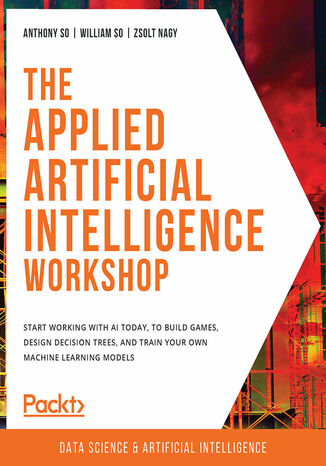
Anthony So, William So, Zsolt Nagy
You already know that artificial intelligence (AI) and machine learning (ML) are present in many of the tools you use in your daily routine. But do you want to be able to create your own AI and ML models and develop your skills in these domains to kickstart your AI career?The Applied Artificial Intelligence Workshop gets you started with applying AI with the help of practical exercises and useful examples, all put together cleverly to help you gain the skills to transform your career.The book begins by teaching you how to predict outcomes using regression. You will then learn how to classify data using techniques such as k-nearest neighbor (KNN) and support vector machine (SVM) classifiers. As you progress, you’ll explore various decision trees by learning how to build a reliable decision tree model that can help your company find cars that clients are likely to buy. The final chapters will introduce you to deep learning and neural networks. Through various activities, such as predicting stock prices and recognizing handwritten digits, you’ll learn how to train and implement convolutional neural networks (CNNs) and recurrent neural networks (RNNs).By the end of this applied AI book, you’ll have learned how to predict outcomes and train neural networks and be able to use various techniques to develop AI and ML models.
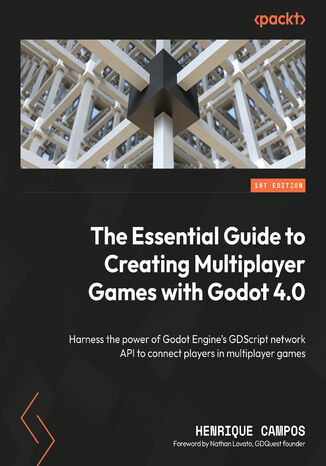
Henrique Campos, Nathan Lovato
The Essential Guide to Creating Multiplayer Games with Godot 4.0 guides you in exploring the built-in network API for online multiplayer games, offering practical knowledge through concrete use cases.Throughout the book, you'll assume the role of a network engineer in a fictional indie game studio, tackling real-world requests from your peers and gaining expertise in adding new network features to the studio's games. Following step-by-step instructions, you’ll go from making your first network handshake to optimizing online gameplay. You’ll learn how to sync players and pass data over the internet as you add online multiplayer features to a top-down shooter adventure game.This book puts you in a fictional game project team where you set up your first online server before advancing to creating an online chat system and transitioning local gameplay to go online. With a focus on implementing multiplayer features, you’ll create shared world adventures and learn optimization techniques to allow more players to join your virtual world.By the end of this book, you’ll have learned how to set up a client-server network, implement remote procedure calls (RPCs), sync node properties remotely, and optimize your games to create smooth online multiplayer experiences.
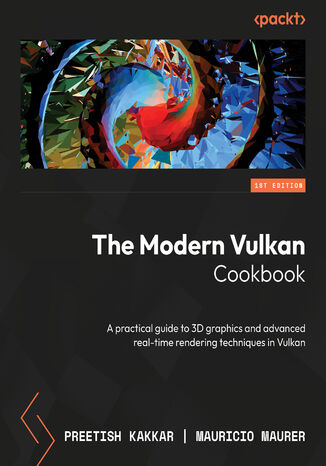
Preetish Kakkar, Mauricio Maurer
Vulkan is a graphics API that gives the program total control of the GPU, allowing the GPU to be used to its full potential. This cookbook will uncover useful techniques for emerging new technologies, such as hybrid rendering, extended reality – mixed reality (MR), augmented reality (AR), virtual reality (VR) – and GPU-driven rendering, and even features a dedicated chapter to help you debug and profile your graphics applications with tips and tricks tested in real-world scenarios.The book starts by explaining basic Vulkan concepts while guiding you through the implementation of a basic graphics engine. The building blocks presented in the first few chapters will then help you implement more advanced techniques and algorithms, while getting you acquainted with the inner workings of Vulkan. Gradually, you’ll discover how Vulkan can be used to build hybrid renderers as well as leveraged for the future of graphics with AR/VR/MR. Moreover, you’ll gain an understanding of how it can be debugged or measured for performance.By the end of this book, you’ll be well versed in how to use Vulkan to write graphics applications and how graphics algorithms are implemented using Vulkan.
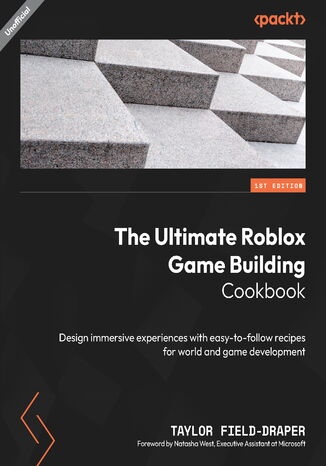
Taylor Field-Draper, Natasha West
Roblox is a massively popular online gaming platform, but it can be challenging to maneuver for beginners who don’t know where to start, as well as seasoned developers who tend to struggle with limited scripting tools that make transitioning from other platforms such as Unity more difficult.The Ultimate Roblox Game Building Cookbook is an invaluable asset for any Roblox developer looking to take their skills to the next level. With a wide range of recipes, this Roblox book covers everything from the basics of game development on the platform to advanced techniques for creating immersive experiences.As you progress through the chapters, you'll gain a deep understanding of the proper workflow and building methods that will enable you to create extraordinary virtual worlds. You'll gain insights into creating complex game mechanics, such as multiplayer games, working with textures, and special effects in games. This cookbook will also provide you with tips from top Roblox developers, as well as valuable guidance on how to monetize your games and stay up to date with the latest trends in the Roblox development community.By the end of this book, you’ll have gained a comprehensive understanding of Roblox game development and design.