
Techniki programowania
W kategorii Techniki programowania znajdziecie książki dobrane pod względem merytorycznym zarówno dla amatorów jak i profesjonalistów z dziedziny programowania.
Dowiecie się jak poprawnie napisać i udokumentować własny kod oraz przeczytacie o najskuteczniejszych metodach refaktoryzacji czyli w jaki sposób poprawiać i optymalizować kod napisany przez innych programistów. Poznacie sposoby optymalizacji algorytmów, analizy złożoności, kompresji danych czy elementy algorytmiki grafów. Zaznajomicie się nie tylko z najlepszymi wzorcami w wytwarzaniu oprogramowania ale także nauczycie się rozpoznawać najczęstsze błędy i czyhające na Was pułapki.
Safeer CM
Serverless computing has emerged as a mainstream paradigm in both cloud and on-premises computing, with AWS Lambda playing a pivotal role in shaping the Function-as-a-Service (FaaS) landscape. However, with the explosion of serverless technologies and vendors, it has become increasingly challenging to comprehend the foundational services and their offerings.Architecting Cloud Native Serverless Solutions lays a strong foundation for understanding the serverless landscape and technologies in a vendor-agnostic manner. You'll learn how to select the appropriate cloud vendors and technologies based on your specific needs. In addition, you'll dive deep into the serverless services across AWS, GCP, Azure, and Cloudflare followed by open source serverless tools such as Knative, OpenFaaS, and OpenWhisk, along with examples. You'll explore serverless solutions on Kubernetes that can be deployed on both cloud-hosted clusters and on-premises environments, with real-world use cases. Furthermore, you'll explore development frameworks, DevOps approaches, best practices, security considerations, and design principles associated with serverless computing.By the end of this serverless book, you'll be well equipped to solve your business problems by using the appropriate serverless vendors and technologies to build efficient and cost-effective serverless systems independently.
Solomon Eseme
Building enterprise-ready Vue.js apps entails following best practices for creating high-performance and scalable applications. Complete with step-by-step explanations and best practices outlined, this Vue.js book is a must-read for any developer who works with a large Vue.js codebase where performance and scalability are indispensable.Throughout this book, you’ll learn how to configure and set up Vue.js 3 and the composition API and use it to build real-world applications. You’ll develop the skills to create reusable components and scale performance in Vue.js 3 applications. As you progress, the book guides you in scaling performance with asynchronous lazy loading, image compression, code splitting, and tree shaking. Furthermore, you’ll see how to use the Restful API, Docker, GraphQL, and different types of testing to ensure that your Vue.js 3 application is scalable and maintainable.By the end of this book, you’ll be well-versed in best practices for implementing Restful API, Docker, GraphQL, and testing methods to build and deploy an enterprise-ready Vue.js 3 application of any scale.
Architektura ewolucyjna. Projektowanie oprogramowania i wsparcie zmian
Neal Ford, Rebecca Parsons, Patrick Kua
Przez długi czas uważano, że architektura oprogramowania powinna powstać przed rozpoczęciem pisania kodu i pozostać niezmieniona aż do zakończenia projektu. Pojawienie się zwinnych metod tworzenia oprogramowania spowodowało, że taką koncepcję zaczęto podawać w wątpliwość. Niektórzy nawet kwestionowali potrzebę tworzenia architektury, gdyż utrudniała reakcję na zmiany wymagań. Istnieje jednak inne podejście do architektury, zgodnie z którym jest ona ściśle powiązana z fazą programowania i dynamicznie odpowiada na zmiany pojawiające się podczas tworzenia kodu. W ten sposób architektura ewolucyjna, pomimo nieprzewidywalności zmian, zapewnia rozwój projektu we właściwym kierunku. Dzięki tej książce architekci oprogramowania zapoznają się z nowym podejściem do powiązań architektury z czasem. Przekonają się też, że tworzenie architektury ewolucyjnej sprowadza się do trzech głównych zagadnień: funkcji dopasowania, zmian przyrostowych i prawidłowego sprzęgania. W tej książce uwzględniono analizę każdego z tych aspektów, ukazano też mechanizm budowania architektury wspierającej ciągłe zmiany. Szczegółowo wyjaśniono zasady wprowadzania pętli informacji zwrotnej pozwalających całemu zespołowi na spójne rozwijanie systemu w zgodzie z zasadą ciągłego dostarczania. Pokazano metody monitorowania stanu architektury. Sporo uwagi poświęcono problemom danych długowiecznych - jest to często pomijane zagadnienie. W tej książce: Funkcje dopasowania w architekturze Zmiany przyrostowe wprowadzane za pomocą projektowania i operacji Sprzężenie architektury i wprowadzanie zmian bez utraty stabilności systemu Dane ewolucyjne oraz zmiany wymogów i architektury w miarę upływu czasu Budowanie architektur ewolucyjnych Praktyczne wdrażanie architektury ewolucyjnej w korporacji Architektura korporacyjna: wysoka sztuka projektowania!
Architektura ewolucyjna. Projektowanie oprogramowania i wsparcie zmian. Wydanie II
Neal Ford, Rebecca Parsons, Patrick Kua, Pramod...
Jeszcze kilka lat temu koncepcja ewoluowania architektury była uznawana za zbyt odważną. Uważano, że architektura powinna pozostawać elementem niezmiennym w czasie. Jednak rzeczywistość udowadnia, że systemy muszą ewoluować, aby spełniać wymogi użytkowników i odzwierciedlać zmiany w dynamicznym środowisku tworzenia oprogramowania. Innymi słowy, konieczne się staje budowanie architektur ewolucyjnych. Dzięki tej książce dowiesz się, w jaki sposób uczynić architekturę oprogramowania wystarczająco plastyczną, aby mogła odzwierciedlać zachodzące zmiany biznesowe i technologiczne. W nowym wydaniu rozbudowano pojęcia zmiany kierowanej i przyrostowej, a także przedstawiono najnowsze techniki dotyczące funkcji dopasowania, automatycznego zarządzania architekturą i danych ewolucyjnych. Zaprezentowano praktyki inżynieryjne umożliwiające ewoluowanie systemów oprogramowania, jak również podejścia strukturalne, w tym zasady projektowe, które ułatwiają zarządzanie tą ewolucją. Opisano ponadto, w jaki sposób zasady i praktyki architektury ewolucyjnej wiążą się z różnymi elementami procesu tworzenia oprogramowania. Naucz się postrzegać architekturę systemową jako plastyczny wyzwalacz. Sam Newman, architekt, autor książki Budowanie mikrousług Najciekawsze zagadnienia: mechanika architektury ewolucyjnej zarządzanie projektami oprogramowania i ich ewolucją style architektoniczne i zasady projektowania sprzęganie i wieloużywalność łączenie praktyk inżynieryjnych z kwestiami strukturalnymi Poznaj techniki umożliwiające tworzenie architektur oprogramowania na tyle zwinnych, aby dotrzymywały kroku ciągłym zmianom. Mark Richards, developertoarchitect.com
Architektura oprogramowania w praktyce. Wydanie IV
Len Bass, Paul Clements, Rick Kazman
To kompletny, praktyczny i sprawdzony przewodnik po tworzeniu architektury nowoczesnego oprogramowania, w pełni zaktualizowany o nowe materiały poświęcone rozwiązaniom mobilnym, chmurze, zarządzaniu energią, podejściu DevOps, przetwarzaniu kwantowemu i innym zagadnieniom. Zaktualizowana o 11 nowych rozdziałów książka Architektura oprogramowania w praktyce, wydanie czwarte dokładnie wyjaśnia, czym jest architektura oprogramowania, dlaczego ma ona znaczenie, a także jak ją projektować, tworzyć, analizować i modyfikować oraz jak nią zarządzać w zdyscyplinowany i skuteczny sposób. Trzech poważanych architektów oprogramowania omawia cały cykl życia, prezentując praktyczne wskazówki, metody stosowane przez ekspertów i sprawdzone modele przydatne w każdym projekcie niezależnie od poziomu jego złożoności. Dowiesz się, jak za pomocą architektury radzić sobie z coraz większymi wymaganiami i systemami oraz wyższym poziomem abstrakcji, a także jak uzyskiwać emergentne atrybuty jakościowe, gdy systemy są dynamicznie łączone na nowe sposoby. W tym podręczniku znajdziesz informacje na temat optymalizowania za pomocą architektury najważniejszych atrybutów jakościowych (w tym wydajności, modyfikowalności, zabezpieczeń, dostępności, współdziałania, testowalności, użyteczności, łatwości wdrażania itd.), co pomoże Ci zrozumieć, jak zarządzać istniejącymi architekturami, dopracowywać je, przekształcać w celu rozwiązywania nowych problemów i tworzyć architektury wielokrotnego użytku, które stają się strategicznymi aktywami biznesowymi. Zobacz, jak architektura wpływa na środowisko techniczne, cykle życia projektów, profile biznesowe i Twoją pracę, a także jak te czynniki wpływają na architekturę. Wykorzystaj sprawdzone wzorce, interfejsy i praktyki do optymalizowania jakości za pomocą architektury. Twórz architekturę z myślą o rozwiązaniach mobilnych, chmurze, uczeniu maszynowym i przetwarzaniu kwantowym. Projektuj systemy pod kątem coraz ważniejszych atrybutów takich jak wydajność energetyczna i bezpieczeństwo. Skaluj systemy, odkrywając czynniki istotne architektonicznie, stosując podejście DevOps i potoki wdrażania oraz zarządzając długiem architektonicznym. Poznaj rolę architektury w organizacji, co pozwoli Ci tworzyć bardziej wartościowe rozwiązania.
Samarth Shah, Utsav Shah
Arduino is an open-source prototyping platform based on easy-to-use hardware and software. Arduino has been used in thousands of different projects and applications by a wide range of programmers and artists, and their contributions have added up to an incredible amount of accessible knowledge that can be of great help to novices and experts alike.Want to build exciting LED projects with Arduino? This book will be your companion to bring out the creative genius in you. To begin with, you will get introduced to the maker movement and the open source hardware development Arduino boards. You will then move on to develop a mood lamp and a remote-controlled TV backlight. As you progress through the book, you will develop an LED cube and will learn to use sound visualization to develop a sound-controlled LED Christmas tree. You will then move on to build a persistence of vision wand.At the end of each chapter, you’ll see some common problems, their solutions, and some workarounds.
Adith Jagdish Boloor, Samarth Shah, Utsav Shah,...
An Arduino might be a tiny computer but it can be used as the foundation for a huge range of projects. In this course, we’ll show you how just some of the projects that are possible with an Arduino. From robotics to secret agent gadgets, we’re pretty confident that this course will get you thinking creatively – and inspire you to create your very own new projects using the Arduino hacking skills you learn.This course, combines both text and video content – it’s made up of three modules to help organize your learning. In the first module we’ll show you how to build three different Arduino projects. All of these will not only get you up and running with something practical, they’ll also help you better understand how the Arduino works. Find out how to develop a home automation system and even build a robot!In the second module we’ll go one step further to help you get creative as you learn how to program LEDs with your Arduino. You’ll find out how to build a mood lamp and a remote-controlled TV backlight, before going on to make a sound controlled LED Christmas tree that makes use of sound visualization.Finally, the third module takes you from stylish design into espionage, as you learn how to create neat secret agent gadgets with your Arduino. Find out how to build an alarm system, a fingerprint sensor, even open a lock with a text message. And that’s not all – but to find out more you’ll have to dive in!This Learning Path combines some of the best that Packt has to offer in one complete, curated package. It includes content from the following Packt products:?Arduino By Example by Adith Jagdish Boloor?Arduino BLINK Blueprints by Samarth Shah, Utsav Shah?Arduino for Secret Agents by Marco Shwartz

Marco Schwartz
Q might have Bond’s gadgets– but he doesn’t have an Arduino (not yet at least). Find out how the tiny Arduino microcomputer can be used to build an impressive range of neat secret agent projects that can help you go undercover and get to grips with the cutting-edge of the world of espionage with this book, created for ardent Arduino fans and anyone new to the powerful device.Each chapter shows you how to construct a different secret agent gadget, helping you to unlock the full potential of your Arduino and make sure you have a solution for every tricky spying situation.You’ll find out how to build everything from an alarm system to a fingerprint sensor, each project demonstrating a new feature of Arduino, so you can build your expertise as you complete each project. Learn how to open a lock with a text message, monitor top secret data remotely, and even create your own Arduino Spy Robot, Spy Microphone System, and Cloud Spy Camera This book isn’t simply an instruction manual – it helps you put your knowledge into action so you can build every single project to completion.
Mercury Learning and Information, Oswald Campesato
This book introduces AI, then explores machine learning, deep learning, natural language processing (NLP), and reinforcement learning. Readers learn about classifiers like logistic regression, k-NN, decision trees, random forests, and SVMs. It delves into deep learning architectures such as CNNs, RNNs, LSTMs, and autoencoders, with Keras-based code samples supplementing the theory.Starting with a foundational AI overview, the course progresses into machine learning, explaining classifiers and their applications. It continues with deep learning, focusing on architectures like CNNs and RNNs. Advanced topics include LSTMs and autoencoders, essential for modern AI. The book also covers NLP and reinforcement learning, emphasizing their importance.Understanding these concepts is vital for developing advanced AI systems. This book transitions you from beginner to proficient AI practitioner, combining theoretical knowledge and practical skills. Appendices on Keras, TensorFlow 2, and Pandas enrich the learning experience. By the end, readers will understand AI principles and be ready to apply them in real-world scenarios.
James Singleton
ASP.NET Core is the new, open source, and cross-platform, web-application framework from Microsoft. It's a stripped down version of ASP.NET that's lightweight and fast. This book will show you how to make your web apps deliver high performance when using it.We'll address many performance improvement techniques from both a general web standpoint and from a C#, ASP.NET Core, and .NET Core perspective. This includes delving into the latest frameworks and demonstrating software design patterns that improve performance.We will highlight common performance pitfalls, which can often occur unnoticed on developer workstations, along with strategies to detect and resolve these issues early. By understanding and addressing challenges upfront, you can avoid nasty surprises when it comes to deployment time.We will introduce performance improvements along with the trade-offs that they entail. We will strike a balance between premature optimization and inefficient code by taking a scientific- and evidence-based approach. We'll remain pragmatic by focusing on the big problems.By reading this book, you'll learn what problems can occur when web applications are deployed at scale and know how to avoid or mitigate these issues. You'll gain experience of how to write high-performance applications without having to learn about issues the hard way.You'll see what's new in ASP.NET Core, why it's been rebuilt from the ground up, and what this means for performance. You will understand how you can now develop on and deploy to Windows, Mac OS X, and Linux using cross-platform tools, such as Visual Studio Code.
Luke Avedon, Garry Cabrera
Discover what makes ASP.NET Core 9 a powerful and versatile framework for building modern web APIs that are both scalable and secure. This comprehensive, recipe-based guide leverages the authors’ decade-long experience in software development to equip developers with the knowledge to create robust web API solutions using the framework's most powerful features.Designed for intermediate to advanced .NET developers, this cookbook contains hands-on recipes that demonstrate how to efficiently build, optimize, and secure APIs using this cutting-edge technology. You'll master essential topics, such as creating RESTful APIs, implementing advanced data access strategies, securing your APIs, creating custom middleware, and enhancing your logging capabilities. The book goes beyond traditional API development by introducing GraphQL, SignalR, and gRPC, offering insights into how these technologies can extend the reach of your APIs. To prepare you for real-world challenges, the recipes cover testing methodologies, cloud deployment, legacy system integration, and advanced concepts like microservices and Hangfire.By the end of this book, you’ll gain the expertise needed to build and manage enterprise-grade web APIs with ASP.NET Core 9.*Email sign-up and proof of purchase required
Mugilan T. S. Ragupathi, James Singleton, Valerio...
ASP.NET Core is the new, open source, and cross-platform, web-application framework from Microsoft. ASP.NET Core MVC helps you build robust web applications using the Model-View-Controller design. This guide will help you in building applications that can be deployed on non-Windows platforms such as Linux. Starting with an overview of the MVC pattern, you will quickly dive into the aspects that you need to know to get started with ASP.NET. You will learn about the core architecture of model, view, and control. Integrating your application with Bootstrap, validating user input, interacting with databases, and deploying your application are some of the things that you will learn to execute with this fast-paced guide. You will test your knowledge as you build a fully working sample application using the skills you’ve learned throughout the book.Moving forward, this guide will teach you to combine the impressive capabilities of ASP.NET Core and Angular 2. Not only will you learn how Angular 2 can complement your .NET skills and toolkit, you'll also learn everything you need to build a complete, dynamic single-page application. Find out how to get your data model in place and manage an API, before styling and designing your frontend for an exceptional user experience. You will find out how to optimize your application for SEO, identify and secure vulnerabilities, and how to successfully deploy and maintain your application. From here, you will delve into the latest frameworks and software design patterns to improve your application performance. The course offers premium, highly practical content on the recently released ASP.NET Core, and includes material from the following Packt books: Learning ASP.NET Core MVC Programming, ASP.NET Core and Angular 2, and ASP.NET Core 1.0 High Performance.
Sonal Aneel Allana
jQuery is a lightweight JavaScript library that has changed the landscape of client scripting in web applications. Developed by John Resig in 2006, it has taken the web by storm because of its cross-browser compatibility and the ability to get more done with less code. It has gained popularity with ASP.NET developers and is now distributed with Visual Studio and the NuGet package manager. ASP.NET jQuery Cookbook explores the wide range of utilities that the jQuery library provides. It teaches you the nitty-gritty of plugging in these features in ASP.NET web applications. It covers every aspect of interfacing the library, right from downloading and including jQuery on web pages to selecting controls, handling events, and creating animations. This book also walks you through DOM traversal and manipulation in ASP.NET and then through visual effects and graphics in ASP.NET sites. It explores advanced features such as posting AJAX requests and writing plugins. It will provide you with all the information you need to use this library confidently with ASP.NET.
Andrew Scott Meadows
The ASP.NET MVC 4 framework is used to build scalable web applications with the help of design patterns and .NET Framework. The Model-View-Controller (MVC) is a design principle which separates the components of a web application. This separation helps you to modify, develop, and test different components of a web application.ASP.NET MVC 4 Mobile App Development helps you to develop next generation applications, while guiding you to deal with the constraints the mobile web places on application development. By the end of the book, you will be well versed with all the aspects of mobile app development.ASP.NET MVC 4 Mobile App Development introduces you to developing mobile web apps using the ASP.NET MVC 4 framework. Walking you through the process of creating a homebrew recipe sharing application, this book teaches you the fundamentals and concepts relevant to developing Internet-ready mobile-enabled web apps. Through the sample application, you will learn how to secure your apps against XSS and CSRF attacks, open up your application to users using third party logins such as Google or Facebook, and how to use Razor, HTML 5, and CSS 3 to create custom views and content targeting mobile devices. Using these custom views, you will then learn how to create web apps with a native mobile device feel using jQuery mobile. By the end of the book, you will be presented with a set of challenges to prove to yourself that you now have the skills to extend your existing web applications to the mobile web or create new mobile web apps.
Steve Liles
With more than a million apps available from Google Play, it is more important than ever to build apps that stand out from the crowd. To be successful, apps must react quickly to user input, deliver results in a flash, and sync data in the background. The key to this is understanding the right way to implement asynchronous operations that work with the platform, instead of against it. Asynchronous Android is a practical book that guides you through the concurrency constructs provided by the Android platform, illustrating the applications, benefits, and pitfalls of each.Learn to use AsyncTask correctly to perform operations in the background, keeping user-interfaces running smoothly while avoiding treacherous memory leaks. Discover Handler, HandlerThread and Looper, the related and fundamental building blocks of asynchronous programming in Android. Escape from the constraints of the Activity lifecycle to load and cache data efficiently across your entire application with the Loader framework. Keep your data fresh with scheduled tasks, and understand how Services let your application continue to run in the background, even when the user is busy with something else.Asynchronous Android will help you to build well-behaved apps with smooth, responsive user-interfaces that delight users with speedy results and data that's always fresh, and keep the system happy and the battery charged by playing by the rules.
Helder Vasconcelos, Steve Liles
Asynchronous programming has acquired immense importance in Android programming, especially when we want to make use of the number of independent processing units (cores) available on the most recent Android devices. With this guide in your hands you’ll be able to bring the power of Asynchronous programming to your own projects, and make your Android apps more powerful than ever before!To start with, we will discuss the details of the Android Process model and the Java Low Level Concurrent Framework, delivered by Android SDK. We will also guide you through the high-level Android-specific constructs available on the SDK: Handler, AsyncTask, and Loader. Next, we will discuss the creation of IntentServices, Bound Services and External Services, which can run in the background even when the user is not interacting with it. You will also discover AlarmManager and JobScheduler APIs, which are used to schedule and defer work without sacrificing the battery life. In a more advanced phase, you will create background tasks that are able to execute CPU-intensive tasks in a native code-making use of the Android NDK. You will be then guided through the process of interacting with remote services asynchronously using the HTTP protocol or Google GCM Platform. Using the EventBus library, we will also show how to use the Publish-Subscribe software pattern to simplify communication between the different Android application components by decoupling the event producer from event consumer.Finally, we will introduce RxJava, a popular asynchronous Java framework used to compose work in a concise and reactive way. Asynchronous Android will help you to build well-behaved applications with smooth responsive user interfaces that delight the users with speedy results and data that’s always fresh.
Nicolas Bohorquez
Asynchronous programming is one of the most effective but often misunderstood techniques for building fast, scalable, and responsive systems in Python. While it can significantly improve performance, efficiency, and sustainability, using async without a clear understanding of its trade-offs can lead to fragile designs and hard-to-debug issues.This book offers a structured approach to applying asynchronous programming in Python. It begins with a conceptual framework to help you distinguish between synchronous and asynchronous execution models, and shows how async relates to other concurrency strategies such as multithreading and multiprocessing. From there, you will explore the core tools available for building async applications in Python.You will also learn how to measure the impact of async programming in practical scenarios, profile and debug asynchronous code, and evaluate performance improvements using real-world metrics. The final chapters focus on applying async techniques to common cloud-based systems, such as web frameworks, database interactions, and data-pipelines tools.Designed for developers looking to apply async programming with confidence, this book blends real-world examples with core concepts to help you write efficient, maintainable Python code.
Trevor Ward
Titanium Mobile has quickly become the platform of choice for many mobile developers and is growing and changing at a rapid rate. From the implementation of CommonJS, Cloud Services, MVC design patterns and more, the last year in Titanium development has been a roller coaster of change for the better. Augmented Reality is a hot area for mobile applications and this book along with the augmentedTi open source application will give a great start to all augmented applications. This book will show you how to build an Augmented Reality application, which is clean, efficient and usable. It shows how to hide the processing from the user and build a display which updates and rotates smoothly.Mobile devices have got more powerful, but they still have limitations. Augmented Reality applications test these devices to breaking point and without the correct coding techniques make the applications unresponsive and cumbersome.This book gives a solution, which will enable you to build an effective application, and is accompanied by a complete working application and source code. It's essential for anybody who is creating a multiple points of interest augmented reality application. It shows how to build this type of application efficiently and takes into consideration the devices limitations and processing capabilities.
Christopher Cowell, Nicholas Lotz, Chris Timberlake
Developers and release engineers understand the high stakes of building, packaging, and deploying code efficiently. Ensuring that your code is fast, secure, and functionally correct can be a time-consuming and complex task. GitLab CI/CD pipelines simplify these tasks, enabling automation and seamless deployment.Automating DevOps with GitLab CI/CD Pipelines starts with the fundamentals of Git and GitLab, guiding you through committing and reviewing code. You'll learn how to set up GitLab Runners to execute and autoscale CI/CD pipelines, configure pipelines for different stages of the software development lifecycle, and analyze pipeline results in GitLab. As you progress, you'll gain expertise in deploying code across environments, integrating GitLab with Kubernetes and Terraform, triggering pipelines, and improving pipeline performance. This book also includes troubleshooting techniques, best practices, real-world use cases, and self-assessments to reinforce key CI/CD concepts and help you prepare for GitLab-related interviews and certifications.By the end of this book, you'll have the skills to build and automate CI/CD pipelines in GitLab, streamline DevOps workflows, and deploy high-quality, secure code with confidence.
Akshay Kapoor
DevOps and AWS are the two key enablers for the success of any modern software-run business. DevOps accelerates software delivery, while AWS offers a plethora of services, allowing developers to prioritize business outcomes without worrying about undifferentiated heavy lifting. This book focuses on the synergy between them, equipping you with strong foundations, hands-on examples, and a strategy to accelerate your DevOps journey on AWS.AWS DevOps Simplified is a practical guide that starts with an introduction to AWS DevOps offerings and aids you in choosing a cloud service that fits your company's operating model. Following this, it provides hands-on tutorials on the GitOps approach to software delivery, covering immutable infrastructure and pipelines, using tools such as Packer, CDK, and CodeBuild/CodeDeploy. Additionally, it provides you with a deep understanding of AWS container services and how to implement observability and DevSecOps best practices to build and operate your multi-account, multi-Region AWS environments.By the end of this book, you’ll be equipped with solutions and ready-to-deploy code samples that address common DevOps challenges faced by enterprises hosting workloads in the cloud.
Wesley Haakman , Richard Hooper
Whether you’re working with a start-up or an enterprise, making decisions related to using different container technologies on Azure has a notable impact your app migration and modernization strategies. This is where companies face challenges, while choosing the right solutions and deciding when to move on to the next technology. Azure Containers Explained helps you make the right architectural choices for your solutions and get well-versed with the migration path to other platforms using practical examples.You’ll begin with a recap of containers as technology and where you can store them within Azure. Next, you’ll explore the different Microsoft Azure container technologies and understand how each platform, namely Azure Container Apps, Azure Kubernetes Service (AKS), Azure Container Instances (ACI), Azure Functions, and Azure App Services, work – you’ll learn to implement them by grasping their respective characteristics and use cases. Finally, you’ll build upon your own container solution on Azure using best practices from real-world examples and successfully transform your business from a start-up to a full-fledged enterprise.By the end of this book, you’ll be able to effectively cater to your business and application needs by selecting and modernizing your apps using various Microsoft Azure container services.
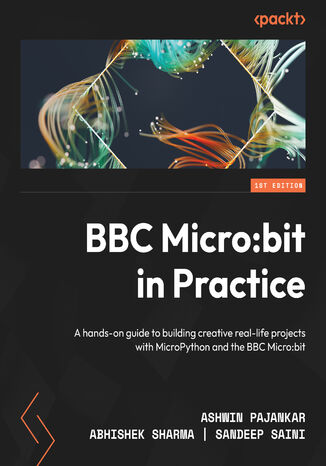
Ashwin Pajankar, Abhishek Sharma, Sandeep Saini
This book is a one-stop guide for learning BBC Micro:bit with MicroPython, exploring many hardware components and programming techniques to provide detailed insights into developing practical applications with the Micro:bit. It will also show you how hardware components can be manipulated using a combination of Micro:bit and MicroPython for developing practical projects. BBC Micro:bit in Practice will help you gain a holistic understanding of the BBC Micro:bit platform and MicroPython programming, guiding you through mini projects aimed at developing practical knowledge of circuit design and writing programs. You’ll learn how to write programs for working with built-in LEDs and buttons, interfacing external LEDs, buttons, motors, buzzers, and much more. You’ll also work with built-in radio, speakers, accelerometer, and a compass. You’ll dive into concepts related to the Micro:bit filesystem, interfacing external displays, and working with libraries in detail before exploring sewable circuits and wearable technology.After reading this Micro:bit book, you’ll understand how to apply principles in electronics and MicroPython to create interesting real-life projects from scratch.
Dmitry Galkin
The job market related to the cloud and cloud-native technologies is both growing and becoming increasingly competitive, making certifications like KCNA a great way to stand out from the crowd and learn about the latest advancements in cloud technologies.Becoming KCNA Certified doesn't just give you the practical skills needed to deploy and connect applications in Kubernetes, but it also prepares you to pass the Kubernetes and Cloud Native Associate (KCNA) exam on your first attempt.The book starts by introducing you to cloud-native computing, containers, and Kubernetes through practical examples, allowing you to test the theory out for yourself. You'll learn how to configure and provide storage for your Kubernetes-managed applications and explore the principles of modern cloud-native architecture and application delivery, giving you a well-rounded view of the subject. Once you've been through the theoretical and practical aspects of the book, you'll get the chance to test what you’ve learnt with two mock exams, with explanations of the answers, so you'll be well-prepared to appear for the KCNA exam.By the end of this Kubernetes book, you'll have everything you need to pass the KCNA exam and forge a career in Kubernetes and cloud-native computing.
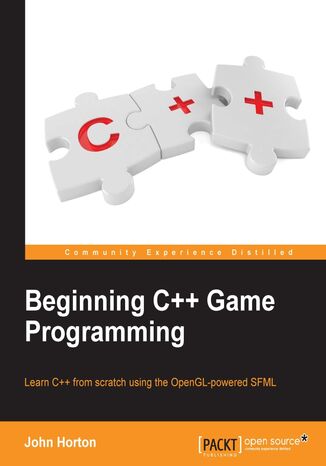
Beginning C++ Game Programming. Learn C++ from scratch and get started building your very own games
John Horton
This book is all about offering you a fun introduction to the world of game programming, C++, and the OpenGL-powered SFML using three fun, fully-playable games. These games are an addictive frantic two-button tapper, a multi-level zombie survival shooter, and a split-screen multiplayer puzzle-platformer.We will start with the very basics of programming, such as variables, loops, and conditions and you will become more skillful with each game as you move through the key C++ topics, such as OOP (Object-Orientated Programming), C++ pointers, and an introduction to the Standard Template Library. While building these games, you will also learn exciting game programming concepts like particle effects, directional sound (spatialization), OpenGL programmable Shaders, spawning thousands of objects, and more.