
Techniki programowania
W kategorii Techniki programowania znajdziecie książki dobrane pod względem merytorycznym zarówno dla amatorów jak i profesjonalistów z dziedziny programowania.
Dowiecie się jak poprawnie napisać i udokumentować własny kod oraz przeczytacie o najskuteczniejszych metodach refaktoryzacji czyli w jaki sposób poprawiać i optymalizować kod napisany przez innych programistów. Poznacie sposoby optymalizacji algorytmów, analizy złożoności, kompresji danych czy elementy algorytmiki grafów. Zaznajomicie się nie tylko z najlepszymi wzorcami w wytwarzaniu oprogramowania ale także nauczycie się rozpoznawać najczęstsze błędy i czyhające na Was pułapki.
F# 4.0 dla zaawansowanych. Wydanie IV
Don Syme, Adam Granicz, Antonio Cisternino
Język F# jest nowoczesnym, lecz dojrzałym językiem programowania, który zyskuje coraz większą popularność. Ułatwia on korzystanie z kilku paradygmatów programowania: programowania funkcyjnego, obiektowego i imperatywnego. Został zaprojektowany do pisania prostego, solidnego i wydajnego kodu, lecz przydaje się do rozwiązywania złożonych problemów. Kod w F# jest zwięzły i efektywny. Sam F# jest projektem open source, jednak stanowi część platformy .NET. To wszystko czyni z niego język przyszłości! Trzymasz w ręku kompletny przewodnik po języku F#, w którym wyczerpująco przedstawiono informacje niezbędne do rozpoczęcia pracy w tej technologii. Zwięźle opisano tu paradygmaty obsługiwane przez F#, a następnie pokazano, w jaki sposób można posłużyć się tym językiem do rozwiązywania problemów z siecią, danymi, programowaniem równoległym i analizami. W ten sposób nauczysz się stosować wspomniane paradygmaty i używać kwerend, co pozwoli Ci osiągnąć wysoką produktywność w pisaniu programów dla wielu systemów i technologii. W tej książce znajdziesz: wyjaśnienie paradygmatów programowania funkcyjnego, obiektowego i imperatywnego kompletne informacje na temat najnowszej wersji języka F# instrukcje dotyczące projektowania bibliotek języka F# wskazówki dotyczące pisania hermetycznego i uporządkowanego kodu zagadnienia programowania reaktywnego, asynchronicznego i równoległego techniki rozwiązywania problemów programistycznych za pomocą F# Z językiem F# rozwiązywanie problemów stanie się przyjemnością! Don Syme — jest architektem języka F#. Brał udział w rozwijaniu typów generycznych w C# i technologii .NET Common Language Runtime. W 2015 roku został odznaczony Srebrnym Medalem Królewskiej Akademii Inżynierii. Adam Granicz — ma 10-letnie doświadczenie w pracy z językiem F#. Pracuje nad narzędziem WebSharper — podstawowym środowiskiem dla języka F#. Regularnie pisze artykuły i zabiera głos na konferencjach. Antonio Cisternino — jest profesorem Uniwersytetu w Pizie we Włoszech. Zajmuje się głównie metaprogramowaniem i budową architektury systemów. Od kilku lat korzysta z F# i bierze udział w rozwijaniu tego języka.
Sudipta Mukherjee
The F# functional programming language enables developers to write simple code to solve complex problems. With F#, developers create consistent and predictable programs that are easier to test and reuse, simpler to parallelize, and are less prone to bugs.If you want to learn how to use F# to build machine learning systems, then this is the book you want. Starting with an introduction to the several categories on machine learning, you will quickly learn to implement time-tested, supervised learning algorithms. You will gradually move on to solving problems on predicting housing pricing using Regression Analysis. You will then learn to use Accord.NET to implement SVM techniques and clustering. You will also learn to build a recommender system for your e-commerce site from scratch. Finally, you will dive into advanced topics such as implementing neural network algorithms while performing sentiment analysis on your data.
Johan Astborg
F# is a functional programming language that allows you to write simple code for complex problems. Currently, it is most commonly used in the financial sector. Quantitative finance makes heavy use of mathematics to model various parts of finance in the real world. If you are interested in using F# for your day-to-day work or research in quantitative finance, this book is a must-have.This book will cover everything you need to know about using functional programming for quantitative finance. Using a functional programming language will enable you to concentrate more on the problem itself rather than implementation details. Tutorials and snippets are summarized into an automated trading system throughout the book.This book will introduce you to F#, using Visual Studio, and provide examples with functional programming and finance combined. The book also covers topics such as downloading, visualizing and calculating statistics from data.F# is a first class programming language for the financial domain.
Prasanna Vijayanathan
As generative AI moves into critical applications like hiring, credit decisions, education, and healthcare, the potential for real-world harm escalates. When systems perpetuate stereotypes or skew outcomes based on identity, the impact goes far beyond poor user experience. It results in lost opportunities, violated dignity, and erosion of trust. This book offers practical methods for evaluating and ensuring fairness across text, image, and multimodal GenAI systems. You'll begin with fairness principles that matter for GenAI and learn how to translate philosophical constructs into engineering artifacts. Abstract goals become measurable requirements: what constitutes harm, which groups are in scope, how fairness is defined, and which trade-offs are acceptable. Next, design a benchmarking framework that integrates with existing pipelines. Thereafter, create scenario and prompt libraries, model sensitive attributes and intersections, and run evaluations through an orchestrated pipeline. Implement quantitative metrics and qualitative rubrics, add human review with rater training and agreement checks, and publish results as scorecards and dashboards. Finally, integrate fairness checks into CI and model release gates, monitor drift, and run incident response playbooks so benchmarks stay credible as models and norms evolve.
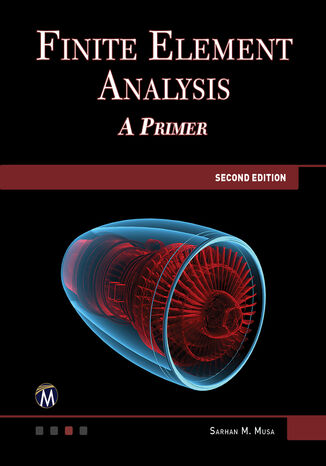
Finite Element Analysis. An Introductory Guide to FEM Techniques and Applications
Mercury Learning and Information, Sarhan M. Musa
This comprehensive guide explores the versatility and affordability of Finite Element Analysis (FEA) as a powerful tool for solving engineering problems. The book provides a practical introduction to FEA, covering applications in mechanical, civil, electrical engineering, and physics. It presents a balanced blend of theory and applications, catering to both beginners and those seeking to enhance their FEA skills.The journey begins with mathematical preliminaries and an introduction to the Finite Element Method. It progresses through various applications such as axially loaded members, trusses, beams, stress analysis, thermal analysis, fluid flow analysis, dynamic analysis, and engineering electromagnetics analysis. Each chapter includes comparisons of analytical methods, FEA hand calculations, and software-based solutions, helping readers understand the strengths and limitations of each approach.Understanding these concepts is crucial for effective problem-solving in engineering. This book transitions readers from fundamental principles to advanced engineering applications, blending theoretical knowledge with practical skills. Companion files with executable models and animations enhance the learning experience, making this guide an essential resource for mastering FEA techniques.
Maulik Soni
To gain a competitive edge in today's unpredictable economic climate, you’ll need to unravel the mystery of saving costs on Microsoft Azure Cloud. This book helps you do just that with proven strategies for building, running, and sustaining repeated cost optimization initiatives across your organization. You’ll learn how to collaborate with finance, procurement, product, and engineering teams to optimize your cloud spend and achieve cost savings that can make a significant impact on your bottom line.The book begins by showing you how to effectively monitor and manage your cloud usage, identify cost-saving opportunities, and implement changes that’ll reduce your overall spend. Whether you're a small start-up or a large enterprise, this book will equip you with the knowledge and skills needed to achieve cost savings and maintain a lean cloud infrastructure. As you advance, you'll find out how to benchmark your current cloud spend and establish a budget for cloud usage. Throughout the chapters, you’ll learn how to negotiate with your cloud provider to optimize your rate, allocate cost for the container, and gain a solid understanding of metric-driven cost optimization.By the end of this FinOps book, you’ll have become proficient in Azure Cloud financial management with the help of real-world examples, use cases, and scenarios.
Gareth Dwyer
This book will take you on a journey from learning about web development using Flask to building fully functional web applications. In the first major project, we develop a dynamic Headlines application that displays the latest news headlines along with up-to-date currency and weather information. In project two, we build a Crime Map application that is backed by a MySQL database, allowing users to submit information on and the location of crimes in order to plot danger zones and other crime trends within an area. In the final project, we combine Flask with more modern technologies, such as Twitter's Bootstrap and the NoSQL database MongoDB, to create a Waiter Caller application that allows restaurant patrons to easily call a waiter to their table. This pragmatic tutorial will keep you engaged as you learn the crux of Flask by working on challenging real-world applications.
Shalabh Aggarwal
Discover what makes Flask, the lightweight Python web framework, popular, as you delve into its modular design that enables the development of scalable web apps. With this practical guide, you'll explore modern solutions, recommended design patterns, and best practices for Flask web development.Updated to the latest version of Flask and Python, this third edition of the Flask Framework Cookbook moves away from the outdated libraries, updates content to incorporate new coding patterns, and introduces recipes for the latest tools. You'll explore different ways to integrate with GPT to build AI-ready Flask applications. The book starts with an exploration of Flask application configurations and then guides you through working with templates and understanding the ORM and view layers. You’ll also be able to write an admin interface and get to grips with testing using the factory pattern, debugging, and logging errors. Then you’ll discover different ways of using Flask to create, deploy, and manage microservices using AWS, GCP, and Kubernetes. Finally, you’ll gain insights into various deployment and post-deployment techniques for platforms such as Apache, Tornado, and Datadog.By the end of this book, you'll have acquired the knowledge necessary to write Flask applications that cater to a wide range of use cases in the best possible way and scale them using standard industry practices.