
Techniki programowania
W kategorii Techniki programowania znajdziecie książki dobrane pod względem merytorycznym zarówno dla amatorów jak i profesjonalistów z dziedziny programowania.
Dowiecie się jak poprawnie napisać i udokumentować własny kod oraz przeczytacie o najskuteczniejszych metodach refaktoryzacji czyli w jaki sposób poprawiać i optymalizować kod napisany przez innych programistów. Poznacie sposoby optymalizacji algorytmów, analizy złożoności, kompresji danych czy elementy algorytmiki grafów. Zaznajomicie się nie tylko z najlepszymi wzorcami w wytwarzaniu oprogramowania ale także nauczycie się rozpoznawać najczęstsze błędy i czyhające na Was pułapki.
Dusty Phillips
Python 3 is more versatile and easier to use than ever. It runs on all major platforms in a huge array of use cases. Coding in Python minimizes development time and increases productivity in comparison to other languages. Clean, maintainable code is easy to both read and write using Python's clear, concise syntax.Object-oriented programming is a popular design paradigm in which data and behaviors are encapsulated in such a way that they can be manipulated together. Many modern programming languages utilize the powerful concepts behind object-oriented programming and Python is no exception.Starting with a detailed analysis of object-oriented analysis and design, you will use the Python programming language to clearly grasp key concepts from the object-oriented paradigm. This book fully explains classes, data encapsulation, inheritance, polymorphism, abstraction, and exceptions with an emphasis on when you can use each principle to develop well-designed software.You'll get an in-depth analysis of many common object-oriented design patterns that are more suitable to Python's unique style. This book will not just teach Python syntax, but will also build your confidence in how to program.You will also learn how to create maintainable applications by studying higher level design patterns. Following this, you'll learn the complexities of string and file manipulation, and how Python distinguishes between binary and textual data. Not one, but two very powerful automated testing systems will be introduced in the book. After you discover the joy of unit testing and just how easy it can be, you'll study higher level libraries such as database connectors and GUI toolkits and learn how they uniquely apply object-oriented principles. You'll learn how these principles will allow you to make greater use of key members of the Python eco-system such as Django and Kivy.This new edition includes all the topics that made Python 3 Object-oriented Programming an instant Packt classic. It's also packed with updated content to reflect recent changes in the core Python library and covers modern third-party packages that were not available on the Python 3 platform when the book was first published.
Python 3 Using ChatGPT / GPT-4. Harnessing AI for Efficient Python Programming
Mercury Learning and Information, Oswald Campesato
This book is for people who want to learn Python 3 and how to use ChatGPT with Python. It starts with an introduction to Python programming, covering data types, number formatting, Unicode handling, and text manipulation. The book then covers loops, conditional logic, reserved words, user input, exception management, and command-line arguments.The journey continues into Generative AI, discussing its distinction from Conversational AI. Popular platforms like ChatGPT and GPT-4 are explored, along with their strengths, weaknesses, and potential applications. The book shows how to generate Python 3 code samples via ChatGPT using the “Code Interpreter” plugin.Understanding these concepts is crucial for navigating Python and AI. This book transitions readers from basic Python programming to advanced AI applications, blending theory with practical skills. Companion files with code samples and figures enhance learning, making this an essential resource for mastering Python and ChatGPT.
Avinash Navlani, Cornellius Yudha Wijaya
Data analysis enables you to generate value from small and big data by discovering new patterns, and Python is one of the most popular tools for analyzing a wide variety of data. With this book, you'll get up and running using Python for data analysis by exploring the different phases used in data analysis and learning how to use modern libraries from the Python ecosystem to create efficient data pipelines.Starting with the essential statistical and data analysis fundamentals using Python, you'll perform complex data analysis and modeling, data manipulation, data cleaning, and data visualization using easy-to-follow examples. You'll then understand how to conduct time series analysis and signal processing using ARMA models. As you advance, you'll get to grips with smart processing and data analytics using machine learning algorithms such as regression, classification, Principal Component Analysis (PCA), and clustering. You'll also work on real-world examples to analyze textual and image data using natural language processing (NLP) and image analytics techniques, respectively. Finally, the book will demonstrate parallel computing using Dask.By the end of this data analysis book, you'll be equipped with the skills you need to prepare data for analysis and create meaningful data visualizations for forecasting values from data.
Igor Milovanovic
Today, data visualization is a hot topic as a direct result of the vast amount of data created every second. Transforming that data into information is a complex task for data visualization professionals, who, at the same time, try to understand the data and objectively transfer that understanding to others. This book is a set of practical recipes that strive to help the reader get a firm grasp of the area of data visualization using Python and its popular visualization and data libraries.Python Data Visualization Cookbook will progress the reader from the point of installing and setting up a Python environment for data manipulation and visualization all the way to 3D animations using Python libraries. Readers will benefit from over 60 precise and reproducible recipes that guide the reader towards a better understanding of data concepts and the building blocks for subsequent and sometimes more advanced concepts.Python Data Visualization Cookbook starts by showing you how to set up matplotlib and the related libraries that are required for most parts of the book, before moving on to discuss some of the lesser-used diagrams and charts such as Gantt Charts or Sankey diagrams. During the book, we go from simple plots and charts to more advanced ones, thoroughly explaining why we used them and how not to use them. As we go through the book, we will also discuss 3D diagrams. We will peep into animations just to show you what it takes to go into that area. Maps are irreplaceable for displaying geo-spatial data, so we also show you how to build them. In the last chapter, we show you how to incorporate matplotlib into different environments, such as a writing system, LaTeX, or how to create Gantt charts using Python.This book will help those who already know how to program in Python to explore a new field – one of data visualization. As this book is all about recipes that explain how to do something, code samples are abundant, and they are followed by visual diagrams and charts to help you understand the logic and compare your own results with what is explained in the book.
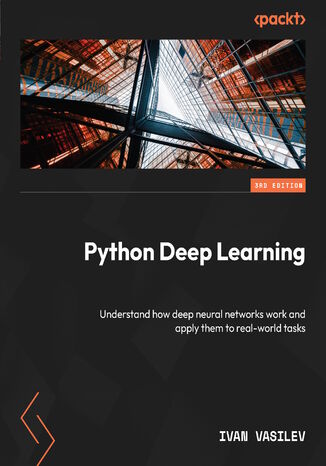
Ivan Vasilev, Valentino Zocca
The field of deep learning has developed rapidly recently and today covers a broad range of applications. This makes it challenging to navigate and hard to understand without solid foundations. This book will guide you from the basics of neural networks to the state-of-the-art large language models in use today.The first part of the book introduces the main machine learning concepts and paradigms. It covers the mathematical foundations, the structure, and the training algorithms of neural networks and dives into the essence of deep learning.The second part of the book introduces convolutional networks for computer vision. We’ll learn how to solve image classification, object detection, instance segmentation, and image generation tasks.The third part focuses on the attention mechanism and transformers – the core network architecture of large language models. We’ll discuss new types of advanced tasks they can solve, such as chatbots and text-to-image generation.By the end of this book, you’ll have a thorough understanding of the inner workings of deep neural networks. You'll have the ability to develop new models and adapt existing ones to solve your tasks. You’ll also have sufficient understanding to continue your research and stay up to date with the latest advancements in the field.
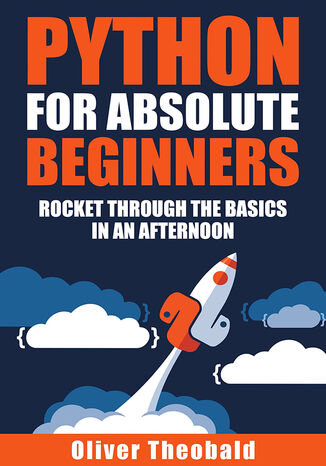
Oliver Theobald
This book provides a thorough introduction to Python, starting with basic operations like arithmetic and variable creation. As you progress, you'll delve into more complex topics such as loops, conditionals, functions, and object-oriented programming. By the end, you'll be able to write Python code and use libraries like Pandas to manipulate data efficiently. Practical challenges and exercises help solidify your learning. It’s designed to be engaging and easy to follow, making the Python learning experience as enjoyable as it is informative. As you build your skills, you will also gain hands-on experience by tackling coding exercises that reinforce each concept. Whether you're new to programming or looking to sharpen your Python skills, this book will guide you through every essential aspect of the language, preparing you for real-world applications.
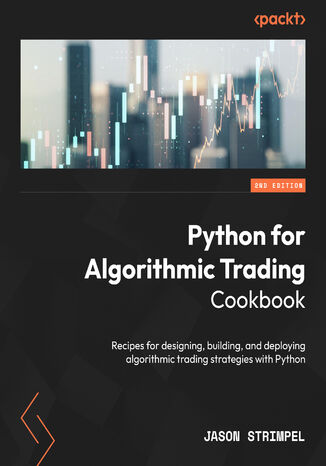
Jason Strimpel
Get Python code for algorithmic trading along with practical guidance from Jason Strimpel, founder of PyQuant News and a veteran of global trading and risk management. This highly practical book takes you from core algorithmic trading concepts and modern data acquisition to rigorous backtesting and strategy execution.Detailed recipes show you how to use the OpenBB Platform to source free equities, options, and futures data. Using that data, accelerate research with Parquet, Polars, DuckDB, and ArcticDB. You’ll engineer alpha factors with SciPy and statsmodels, using PCA to find latent factors, regression to hedge beta, and measure Fama-French exposures. Then optimize backtests with walk-forward analysis using VectorBT and build production-grade backtests with Zipline Reloaded. You’ll evaluate alpha with pro tools like Alphalens Reloaded and PyFolio and apply agentic AI workflows to automate research and code generation.For execution, you’ll connect to Interactive Brokers’ API to stream ticks, place and manage orders, retrieve portfolio state, and deploy strategies with monitoring and risk KPIs suitable for live trading. By the end of this book, you’ll not only understand the essentials, but you’ll also have the code templates and patterns to implement, evaluate, and operate Python-based algorithmic trading strategies.
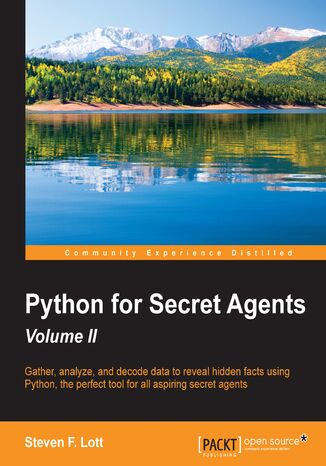
Steven F. Lott
Python is easy to learn and extensible programming language that allows any manner of secret agent to work with a variety of data. Agents from beginners to seasoned veterans will benefit from Python's simplicity and sophistication. The standard library provides numerous packages that move beyond simple beginner missions. The Python ecosystem of related packages and libraries supports deep information processing.This book will guide you through the process of upgrading your Python-based toolset for intelligence gathering, analysis, and communication. You'll explore the ways Python is used to analyze web logs to discover the trails of activities that can be found in web and database servers. We'll also look at how we can use Python to discover details of the social network by looking at the data available from social networking websites.Finally, you'll see how to extract history from PDF files, which opens up new sources of data, and you’ll learn about the ways you can gather data using an Arduino-based sensor device.